News
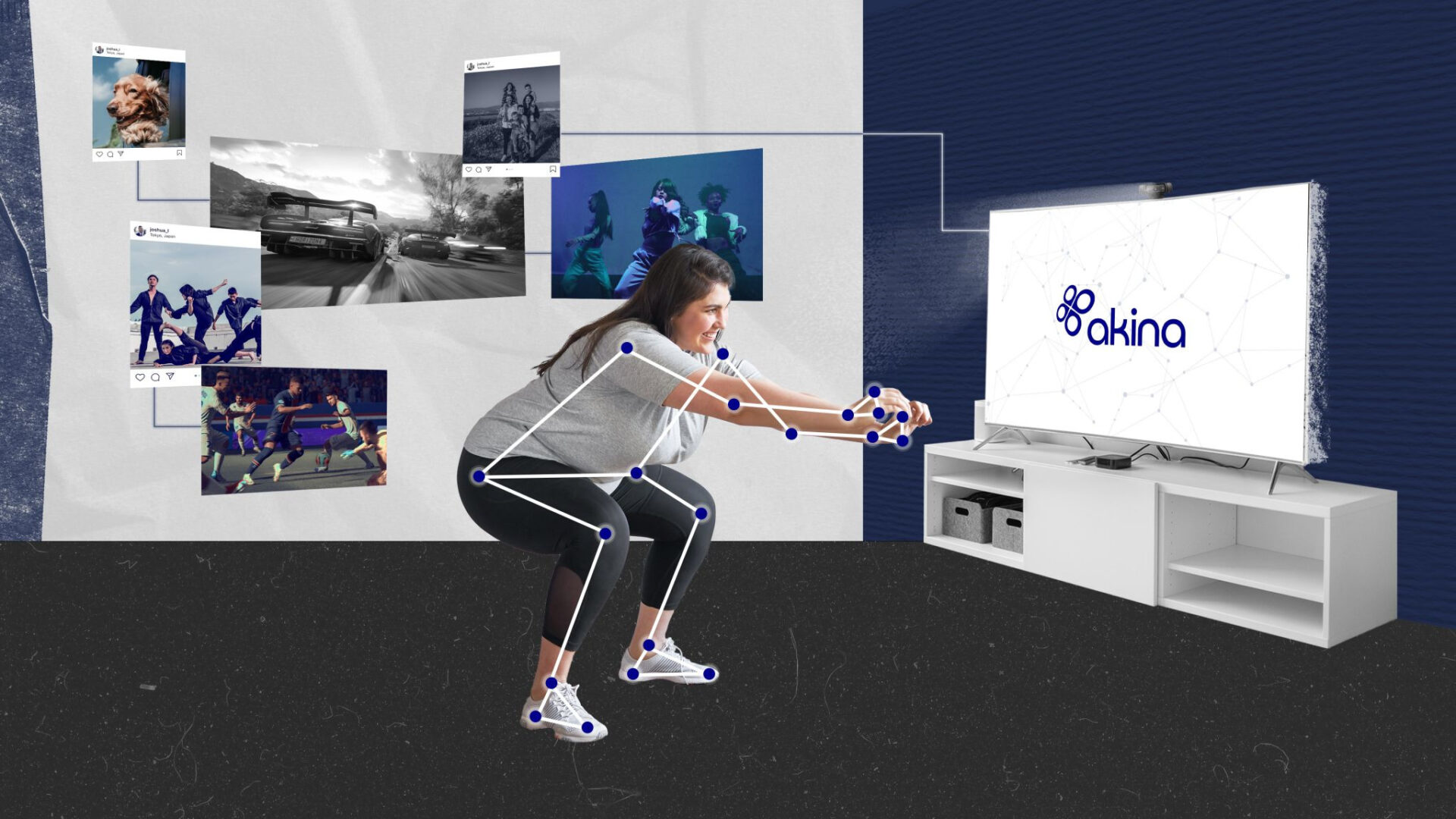
Venture Kick is supporting Akina in the canton of Zurich with pre-seed capital and expert guidance. The spin-off from the Swiss Federal Institute of Technology in Zurich is developing software that gamifies at-home physical therapy. The product launch is planned for 2023.
Akina impressed the jury of the startup accelerator program Venture Kick. The startup based in Zurich has been awarded pre-seed capital of 150,000 Swiss francs, as was reported in a press release. It will also benefit from access to support and an international network of successful entrepreneurs and investors.
Akina impressed with a digital therapy service, with software based on artificial intelligence. It aims to make physical therapy at home easier by placing a greater focus on gamification and guidance through feedback.
Akina will use the kick funding to hire key team members in the areas of business development, product management and regulatory affairs. The product launch is planned for 2023.
“Venture Kick offers two of the most essential resources that founders need at an early stage: venture financing and expert guidance on how to use it. For Akina, support from Venture Kick has been extremely valuable,” said Florian Haufe, Co-Founder and CEO of Akina. He founded the company together with Michele Xiloyannis after several years of research in the areas of rehabilitation technology and robotics at the Swiss Federal Institute of Technology in Zurich (ETH).
The Venture Kick accelerator program supports startups from idea to founding of a company. The Venture Kick Foundation assigned the mandate for its operational management to the IFJ Institut für Jungunternehmen, which is based in Schlieren, St.Gallen and Lausanne. ssp/Café Europe
News
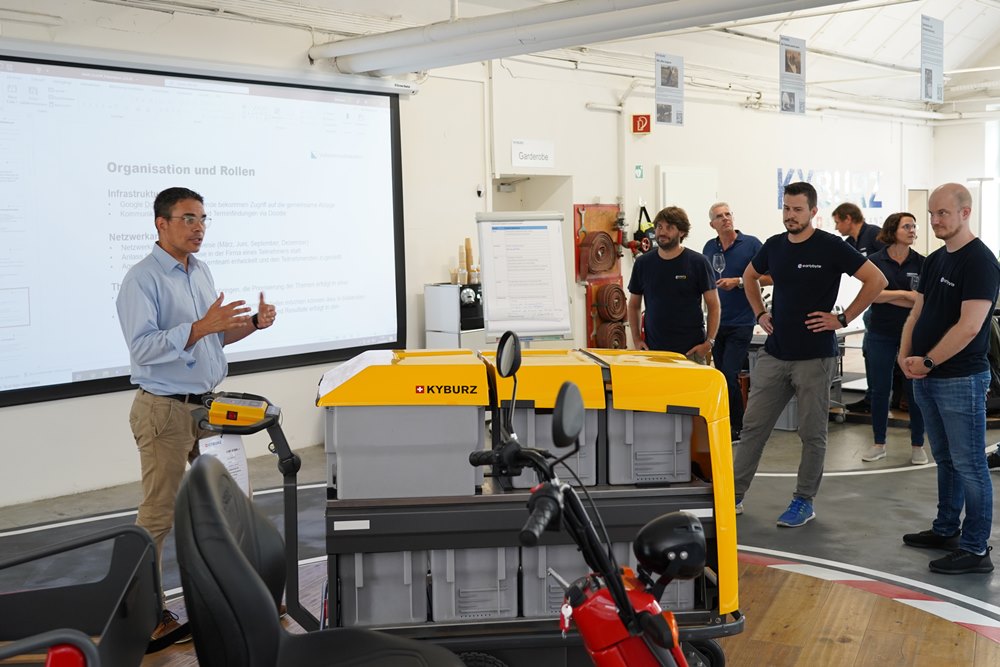
A short message on Linkedin caught our attention: A company network “Ground-based Autonomous Systems” held a kick-off meeting. What is behind this network? We asked Martin Kyburz, CEO of the company Kyburz, which is also represented in the network.
Mr Kyburz, the kick-off of the company network "Ground-based Autonomous Systems" recently took place. What is the idea behind this?
The idea behind the company network is cross-company and cross-sector learning in a relatively new technology area of autonomous systems. We see that universities and companies are working intensively on the topic of autonomous systems and recognise synergies in various places that we would like to exploit through networking.
Why a company network and how do you bind the companies to this network?
A company network offers participating companies a simple opportunity to exchange ideas on current topics on an informal level and without obligation. Involving companies in the network is very easy: companies that are interested and support the idea and values of the company network are welcome to participate and contribute.
Which companies are currently involved and why is Kyburz also committed to this network?
We have united representatives from globally active corporations to just founded start-ups and from product manufacturers to component manufacturers in our company network. Currently, there are about 12 companies that have participated in the founding of the company network. We know of further companies that are interested and over time the company network will continue to grow. Kyburz is involved in this network because we have a great interest in the topic of autonomous systems and are convinced that a company network can have an accelerating effect for specific questions.
Is it still possible to join as a company?
Yes, for sure, as mentioned we are an open and transparent company network and are very happy to accept other companies that share our idea and values into our network at any time.
What will be the next steps in this corporate network?
The central element of the company network are the meetings, which take place three to four times a year at a participating company. The first meeting took place at our premises in Freienstein-Teufen; the next meeting will be held at the premises of another participant. The meetings have a thematic focus on which the participants exchange ideas, learn from each other and work together on solutions.
In addition to the quarterly meetings, smaller working groups can be formed on specific topics to work on challenges and solutions in a very focused way. The working groups are largely self-organised, similar to the whole company network, and the results of the working groups are shared with all participants of the network. This creates a system in which companies get involved in terms of content and benefit from the existing know-how of the network - a typical win-win situation.
The big topic of the network is "Ground-based Autonomous Systems": What are the major challenges that still need to be overcome in this area?
There are several here. Among other things, there are the investments: New technologies mean high investments in development, resources and know-how, especially in sensor technology.
Then there is the lack of industry standards and interfaces. Companies generally work on their own technologies and there is a lack of coordination of interfaces to the infrastructure (traffic control system, building technology, etc...).
However, legislation and approval procedures for pilot trials also need to be adapted, standardised and simplified, or made more efficient for all parties involved.
Furthermore, one has to look at the responsibility in case of damage, because autonomous systems need new insurance models. And last but not least, social acceptance is needed, just as all new forms of mobility require the consent of the population
Is there a website or how do you find out about the network?
A website for the company network is being planned by the Canton of Zurich's location promotion agency, which is also a co-initiator of the company network.
The network was set up on the initiative of the Canton of Zurich's location promotion department. If you have any questions or would like more information, please contact Markus Müller (markus.mueller@vd.zh.ch), Hightech Project Manager, directly.
Author: Eugen Albisser
Technik und Wissen: Das Fachmagazin für die Industrie
Image source: Kyburz Switzerland AG
News
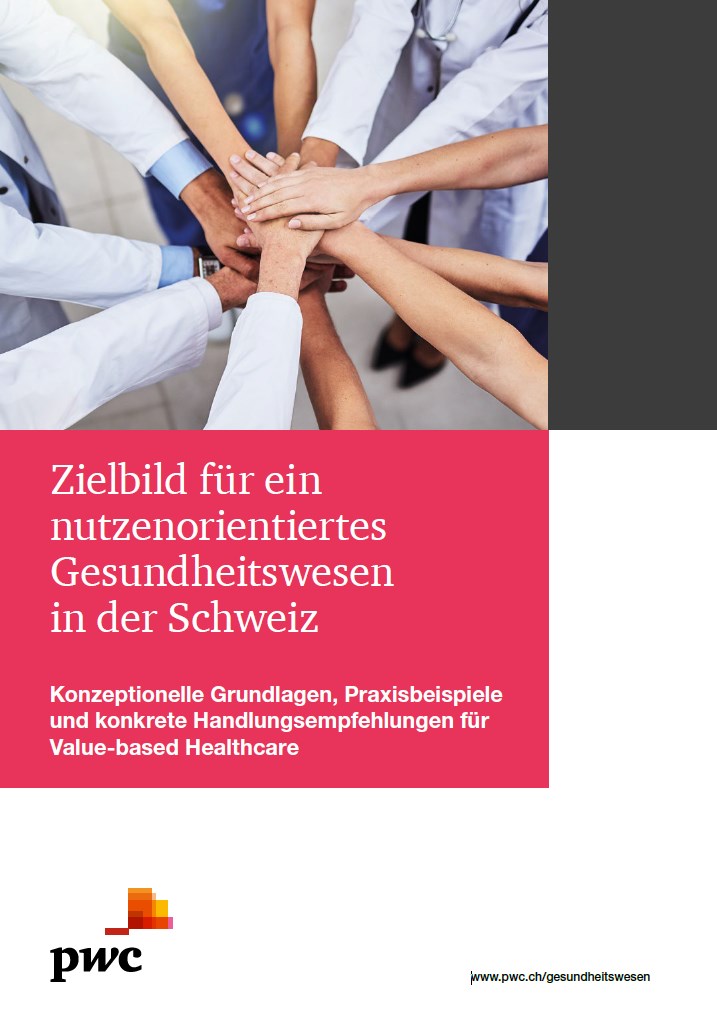
The Swiss health system is on the verge of a trend reversal: away from cost orientation towards quality orientation.
PWC Switzerland has developed a target picture with conceptual principles, practical examples and concrete recommendations for action for Value-based Healthcare. Because PWC considers Value-based Healthcare - VBHC for short - to be the most promising approach for the transformation from cost to quality orientation, they have developed their VBHC framework for all actors, regardless of whether they are service providers, insurers, producers or legislators, and have formulated concrete recommendations for action in their latest publication.
Image source: PWC Switzerland
News
Since the beginning of the Corona pandemic at the latest, the term “telemedicine” has probably become familiar to the whole world. Where once there were concerns about feasibility and the needs and acceptance of users, today there are questions about implementation in existing processes and remuneration for these services.
Gian-Andrea Degen, former master student at Alfred and currently consultant at PWC in the healthcare advisory area (with a focus on digital health and telemedicine), is just the right guest to roll up the topic together and discuss the current issues and challenges.
You are currently viewing a placeholder content from Default. To access the actual content, click the button below. Please note that doing so will share data with third-party providers.
More InformationThe podcast "Marketplace Healthcare" is the podcast on healthcare management and leadership. Alfred Angerer and Stefan Lienhard interview exciting people with whom they discuss current trends. In doing so, they are looking in a forward-looking direction, with topics such as digitalization and process optimization not neglected.
News
For his doctorate, Johannes Weichart is developing an artificial skin that could give robots a sense of touch similar to humans. This would make them much more adept at handling objects.
One of many special human qualities is the ability to handle objects with skill and precision. This is all down to our sense of touch, which is particularly acute in the tips of our fingers. Using our hands, we are able to explore the shape and composition of objects and to feel the texture of their surface – and all without ever clapping eyes on them.
Our sense of touch is incredibly refined. Just try and get a robot to achieve a similar degree of nuance. Production robots, for example, are able to pick up and move objects with impressive dexterity. To do so, however, they first need to know where the object is – or they require additional visual information to help with orientation. Ideally, too, they need to know how sturdy an object is, and its composition, before they grab it.
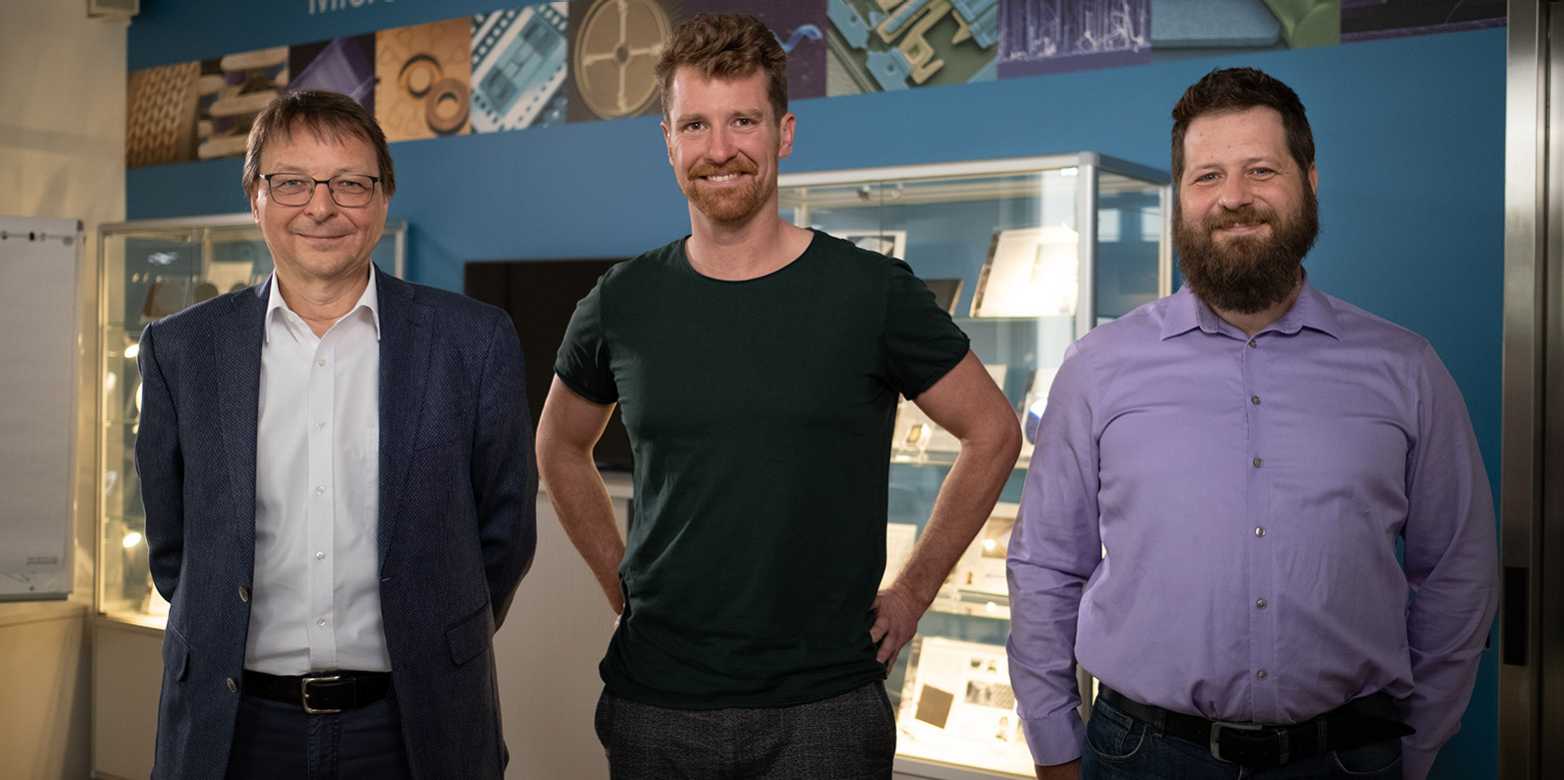
Johannes Weichart has an idea that could make robots much more adept at handling objects. Weichart, a doctoral student in the Micro- and Nanosystems (MNS) group at ETH Zurich, has developed an artificial skin that emulates the sense of touch in a human finger. He believes that this can endow robots with the ability to touch and feel. What’s more, the artificial skin is pliable, which means it can be used to cover soft and unevenly formed materials – a robot gripper, for example, in the shape of a human finger.
In common with its human equivalent, Weichart’s artificial skin is equipped with a large array of receptors. “You need around one sensor per square millimetre,” he explains. Each sensor comprises various layers. Two of these are a conductive membrane and subjacent electrodes, which springs hold apart at a distance of three to four micrometres. Changes in the distance between them causes changes to an electrical signal captured by the electrodes.
Connected to the conductive membrane is a small bead. When pressure is applied to the bead, the membrane deforms – and, with it, the signal measured by the sensor.
Half of the sensors are equipped with three electrodes rather than one. These measure not only the amount of force applied to the bead at any one point but also the angle of application. This gives the skin a much more nuanced sense of touch. “It means you can feel the quality and texture of a surface and recognise when an object is slipping over the surface of the skin by sampling the sensors at high enough frequencies,” Weichart explains.
Weichart has spent the first three years of his doctoral studies demonstrating that his idea functions in principle. The challenge now is to make the skin more robust and, crucially, suitable for concrete applications. This still requires some work. “To be able to use the artificial skin in an everyday context, the sensors require a protective layer which we developed,” Weichart says. “And we also need to radically simplify the output signal. All that raw input data would overwhelm a robot. Besides, even humans don’t perceive the output of each individual receptor. We just register the overall impression.”
Despite the work ahead, the project is already looking promising. Little wonder, then, that Weichart was among the nominees for the Spark Award, which was presented last week.
Weichart tends to favour a left-field approach – as his desk readily reveals. Unlike the functional workspaces of his fellow students, his is literally surrounded by a mini jungle of houseplants.
He was also quick to diverge from the initial suggestion of his supervisor, Christofer Hierold, and his advisor, Cosmin Roman. Their idea was to develop silicon-based touch sensors. But Weichart opted to embed the sensors in a flexible substrate. That way, it will be easier to mount them onto soft and uneven surfaces. “My advisors were a bit sceptical at first,” he grins. “But, in retrospect, I think it was the right decision!”
Ultimately, it was problems with red tape that nudged Weichart in the direction of artificial skin. Freshly graduated from ETH Zurich with a degree in mechanical engineering, he first joined the company Evatec AG, where he worked on plasma processes for coating and etching integrated circuits. However, at the end of three years, the time seemed ripe for a move back into research.
His work in industry had sparked an interest in fusion technology. “But, because I come from Liechtenstein, it was difficult for me to be considered for national research programs,” he explains. In search of a reference, he turned to Hierold, who had supervised his Master’s thesis. To his delight, Hierold proposed he start his project on tactile sensor technology.
“My experience in industry has turned out to be really valuable,” Weichart says. “You don’t always need to reinvent the wheel – in fact, it’s often better to build on a technology already known.” Rather than striving for academic perfection, he aims for practical relevance: “That’s what makes me tick.” And relying on established tech can be an advantage when it comes to commercialising a new development, he says. “As a start-up, you can never be in control of the entire process chain. There are always some parts you need to outsource.”
For now, his entrepreneurial ambitions are on hold. “I’ve still got another year or so as a doctoral student, and then I’ll start thinking about my next move.” Were he to take the project forward himself – perhaps as a Pioneer Fellow – he would need to think very carefully about which area to focus on. He spies potential applications in a variety of fields, including medical robotics, telerobotics, warehouse robotics and also prosthetics. But there’s no way he can do all of these options justice at this stage of development.
Staying focused may well be his biggest challenge over the coming months. “I’m not obsessed with details,” he admits, “and I can quickly start chasing new ideas. But that can soon get out of hand.” As it is, he already has plenty on his plate: microtechnology, electronics, precision mechanics, data processing, materials integration and AI pattern recognition – all of these fields will exercise his attention for some time to come.
Regular activity beyond the lab helps keep his eyes on the prize. “I go biking and ski touring in the mountains, swimming in the lake in winter, and do boxing and mixed martial arts to help with my coordination and self-confidence,” he says. “That frees my head and helps me refocus on the job in hand.”
Author: Felix Würsten, ETH Zürich
ETH-News
Bildquelle: ETH Zürich / ETH transfer
News
Digital health is driven by innovation, progress and growth and is therefore of great importance for Zurich as a business location. Products from this sector promote health and can make a significant contribution to reducing healthcare costs. With the “digital health centre bülach”, which opened today, Zurich is becoming even more attractive as a location for companies and start-ups from this sector.
The digital health sector has received a boost from the pandemic in the past two years. Digital solutions for medical and health problems are more in demand than ever. Social acceptance of the use of these products has also increased. Digital health products make it possible, for example, to accompany patients by means of long-term ECGs or sensor-based monitoring of the state of health of elderly people in their own homes. But the products are also widespread in the lifestyle sector, for example when it comes to tracking sleep or calorie consumption via smart devices.
The canton of Zurich is one of the most important hotspots for digital health in Switzerland. Around 70 companies and start-ups are already based in the canton. That is about a third of all Swiss companies in this field. With the "digital health centre bülach", which opened today, the industry now has its own hub in the canton of Zurich. "Many digital health innovations come from start-ups that exchange ideas and dare to try out new ways. I am therefore very pleased that we can contribute to better collaboration with the 'digital health centre bülach'," says Head of the Department for Economic Affairs Carmen Walker Späh. Head of the Departement of Health Natalie Rickli adds: "The pandemic has shown that there is a lot of catching up to do in the health sector with regard to digitalisation. Investments in the digitalisation of our healthcare system are important and increase patient safety."
In the "digital health centre bülach", start-ups, established IT service providers and companies from the healthcare industry connect with the aim of jointly developing practical, digital solutions for the healthcare sector. The "digital health centre bülach" is organised as an association that was founded in October 2021. Members of the board are the Bülach Hospital, the Winterthur Cantonal Hospital, the Hirslanden Group, the Zurich University of Applied Sciences (ZHAW), the Helsana health insurance company, the Zurich Cantonal Bank, the Division of Business and Economic Development of the Canton of Zurich and the City of Bülach. The latter was the initiator of the project. "I am convinced that the mutual inspiration and interdisciplinary collaboration of our members will provide a strong impetus in the digital transformation of the healthcare sector," says Mayor Mark Eberli. He has taken over the presidency of the association.
Already at the start, several start-ups and companies have joined, and over 60 others are expressing interest in becoming members. On 1 April, operations began in temporary offices. The physical proximity is important because it promotes regular and spontaneous exchange among the members. From winter 2023/2024, they will be able to move into the modern offices in the booming Glasi neighbourhood. There, around 120 workstations as well as seminar and workshop rooms will be available on an area of 1,600 square metres.
The direct contact person for start-ups, companies and partners is Stefan Lienhard. The former digital manager of the Schulthess Clinic took over the management of the association in February. "After 100 days, the 'digital health centre bülach' has already become a real affair of the heart for me. It's extremely fun and extremely interesting to experience first-hand the dynamics with which this new, heterogeneous ecosystem is developing," says Stefan Lienhard.

News
Dr. Christophe Vetterli is founder and Managing Partner at Vetterli Roth & Partners. He devotes himself in depth to the question of how design thinking can be used to provoke innovations in the environment of healthcare. In the podcast, the Design Thinking expert explains this successful concept in a very tangible way using a case study and shows how the proportion of interprofessional and integral collaboration in the context of a 45-minute visit between nursing and medical staff could be increased from 3 minutes to over 20 minutes and how this not only increased the satisfaction of the hospital staff.
You are currently viewing a placeholder content from Default. To access the actual content, click the button below. Please note that doing so will share data with third-party providers.
More InformationThe podcast "Marketplace Healthcare" is the podcast on healthcare management and leadership. Alfred Angerer is a professor at the ZHAW for Management in Healthcare and the founder of Marktplatz Gesundheitswesen. In the podcast he interviews exciting people with whom he discusses the current trends. In doing so, he is looking in a forward-thinking direction that does not neglect topics such as digitalization and process optimization.
News
The aim of the Innosuisse “Smart Urban Multihub Concept” flagship project is to develop a logistics concept that will sustainably reduce freight traffic in urban areas. In achieving this goal, the ZHAW, which is working together with partners from the realms of retail, logistics and science, wants to boost the quality of life in cities.
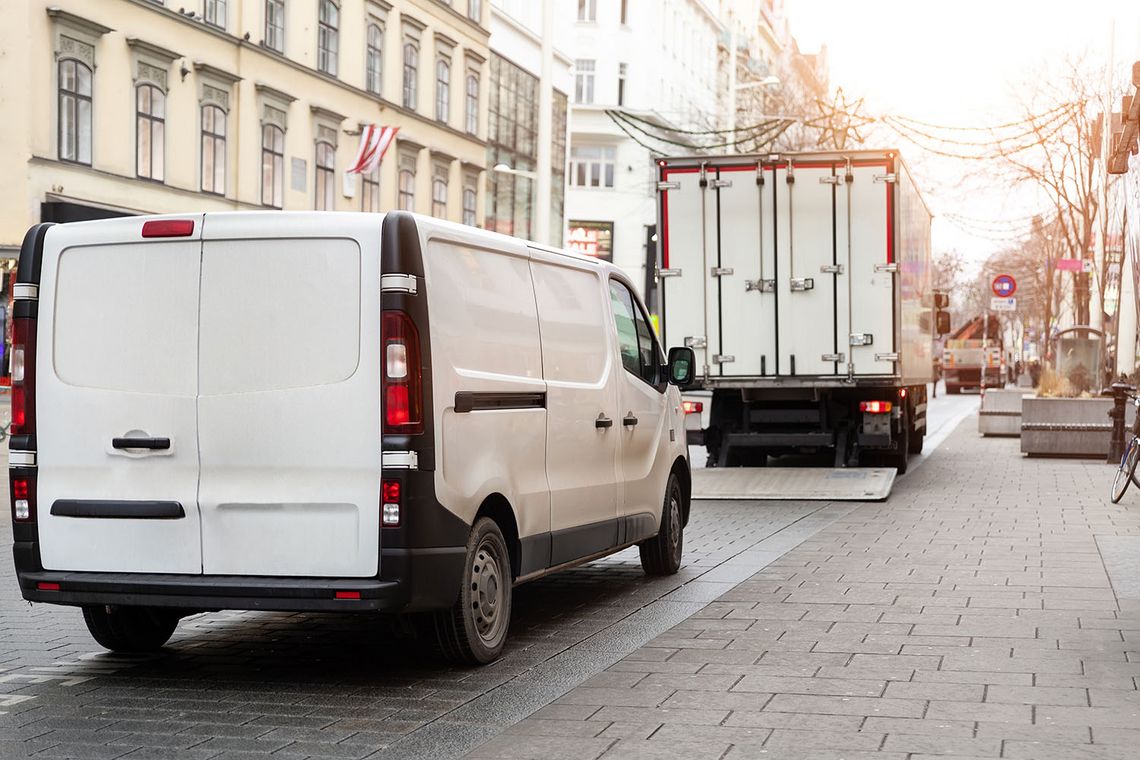
The growth in online retail in Switzerland is leading to an increase in the volume of deliveries in city areas – resulting in more congestion, air pollution and noise. The coronavirus pandemic has intensified this trend and there are no signs of this changing. According to the Swiss Federal Office for Spatial Development, parcel traffic will increase by a further 75 percent by 2040, with goods traffic subsequently rising by 37 percent. Headed up by the ZHAW, the new Innosuisse flagship project wants to address this issue and relieve cities of the burden caused by ever greater volumes of traffic on a sustainable basis. The companies involved in the “Smart Urban Multihub Concept” project include H&M, Zalando and IKEA, as well as Post Schweiz AG and Cargo Sous Terrain, who are also project partners.
The targeted solution envisages interaction between three hubs. Starting the journey at a distribution centre located outside the city, goods from various retailers will be transported to a multi-functional transhipping centre within the city’s congestion zone either via road, rail or the “Cargo Sous Terrain” tunnel. From here, they will be distributed to several microhubs within the city districts. “At present, every lorry travels through the city once, distributing goods. With a hub in the city centre from which goods can be distributed locally, deliveries can be bundled much easier,” explains Maike Scherrer from the Institute of Sustainable Development at the ZHAW, which is heading up the project.
A pilot project is set to take place in Zurich, with the city itself also being one of the project partners. A multihub designed to be able to accommodate a wide range of goods is to be set up close to Zurich main train station. “The aim is for the hub to be used by a large number of partners, whereby the users only pay for the space that they actually occupy,” says Maike Scherrer. The last mile to the customer should then be covered by microhubs located in the city’s various districts. Different models are to be tested to this end. “Package boxes can, for example, be integrated into VBZ bus and tram stops. In addition, a number of local stores can act as microhubs for other stores. We would also like to test the idea of a mobile hub,” comments the project manager. “It is important that the microhubs are as close to residential areas as possible so that the recipients of the packages are able to walk to them.” After all, it will ultimately be the customers who decide whether the concept works or not.
In the background meanwhile, the hub concept’s digital backbone will ensure that the interaction between the different providers runs smoothly and that there is a transparent overview of each individual delivery. “The digital backbone integrates all information from the sender to the recipient, and in doing so allows for customer-specific communication,” explains Scherrer. An algorithm based on artificial intelligence will help to organise the shipment allocation on different means of transport in such a way that the distance covered in urban areas is kept as low as possible. Using an online auction platform, shippers are also to be able to offer free transport capacities, which in turn can be purchased by other shippers with insufficient delivery options.
A sub-project is also looking at the question of how the different project partners, including H&M, Zalando, Swiss Post and DPD, can work together, use the same hubs and send out their goods together despite being competitors. CO2 certificates or sustainability labels could provide incentive to cooperate. A comprehensive assessment framework should in future help cities to find suitable locations for distribution centres and to evaluate the impact on social, environmental and economic sustainability. The flagship project will therefore make a significant contribution to making life in cities more liveable and thus more attractive.
Medienstelle ZHAW
Bildquelle: ZHAW
News
Traffic jams and long waiting times at junctions in city centres are part of our everyday lives – be it as pedestrians, public transport users or motorists. ETH spin-off Lumisera promises a significantly improved traffic flow with self-regulated traffic light systems.
Every major city is familiar with the problem: junctions where traffic jams and delays occur time and again. Engineers and authorities develop signal plans for the control of complex traffic light systems for every time of day and traffic volume. The aim is to find the best possible variant for all road users at any time of day. If required, green phases can be used to prioritise buses or pedestrians. This type of traffic signal control has been standard for the past 20-30 years.
Christian Heimgartner (CEO) and Stefan Lämmer (CTO) of Lumisera have taken the next step by planning the traffic flow second by second with their self-regulated traffic light systems. This means that the circuits are not programmed in advance but are continuously adapted to the traffic volume. This allows the auto-control to react quickly and flexibly to traffic situations.
The goal is still the same as before: road users should have few stops and waiting times, and traffic jams should be minimised. Of all the possibilities, the patented optimisation procedure selects the combination that achieves minimum stops and waiting times in the best possible way. The system allows prioritisation of different road users - and this completely independent of the time of day, as the traffic volume is continuously analysed. Even if unforeseeable traffic situations occur (e.g., diversions), the control system adjusts automatically.
For the continuous analysis of the traffic volume and optimisation of the steering commands, a technology is used that was originally developed and patented at the TU Dresden and the Chair of Computational Social Science with the participation of Professor Dirk Helbing. Pedestrians wanting to cross the road are detected by pressing the button at the traffic lights, as they have done until now. Buses automatically send information to the control system, and for the rest of the traffic there are cameras and/or induction loops in the asphalt. The transmitted data provide a dynamic image of the traffic volume, based on which the software controls the traffic lights.
The continuous data acquisition and the optimisation algorithm require more computing capacity than conventional traffic light systems. This is provided by an external processor that can be operated separately from the system in the control centre or on site. This means that software updates and extensions are possible at any time, independent of the life cycle of the traffic lights.
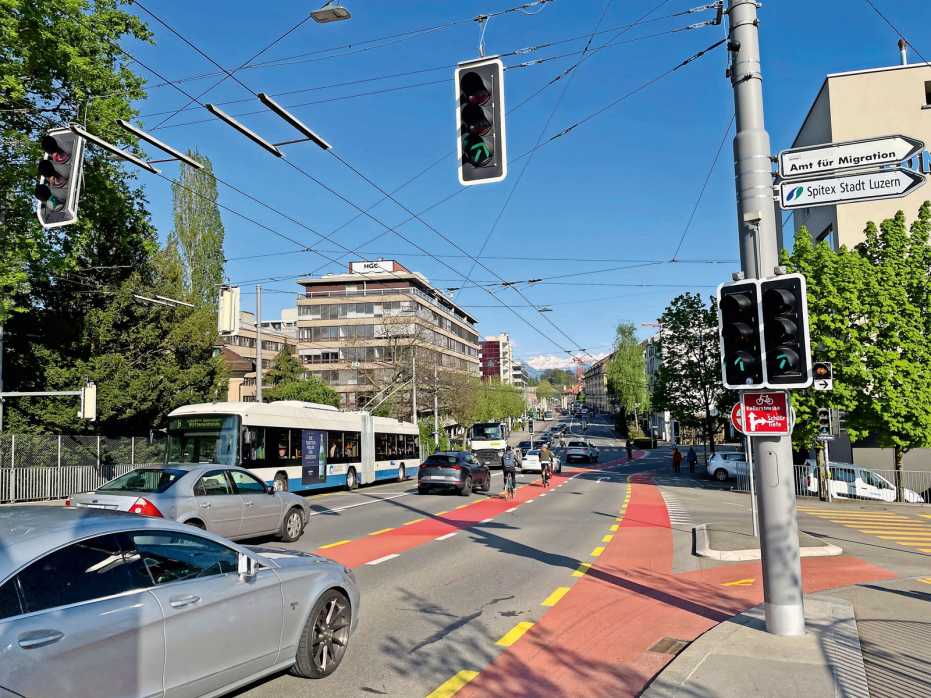
The city of Lucerne tested the system on a stretch of road with two junctions. Some 18,000 vehicles and around 700 buses travel there every day. As there are numerous workplaces in the area, there is also a considerable amount of pedestrian and bicycle traffic. Waiting times and traffic jams were common during peak hours.
A scientific analysis of the test phase in January 2020, carried out by the Institute for Transport Planning and Systems (IVT) at ETH Zurich, delivered encouraging results. The researchers compared the new and the original traffic light system. For all road users, the average waiting time at both junctions was reduced - depending on the time of day, the savings are even considerable.
The self-regulated system has proven to be excellent and has meanwhile replaced the old control system. Further installations are being planned.
Apart from the improved traffic flow, self-regulated traffic light systems have other advantages. For example, the time-consuming pre-configuration of different signal plans for different times of day is no longer necessary. Initial observations also indicate that safety for pedestrians is increased, as they are less likely to cross the road at red lights. The system would be really interesting in the context of interconnected or autonomous driving, where vehicles constantly send signals that could be received by the system even without induction loops.
However, that is still a vision for the future. For the time being, Heimgartner and Lämmer are concentrating on the further spread of self-regulated systems. Two projects are currently underway in Switzerland and three in Germany. They also specialise in traffic assessments for public authorities, for which they can draw on many years of experience in the industry.
Author: Karin Kelly, ETH Zürich
ETH News
Image source: Rolf Leeb, Redaktion «Strasse und Verkehr”, VSS, 2021
News
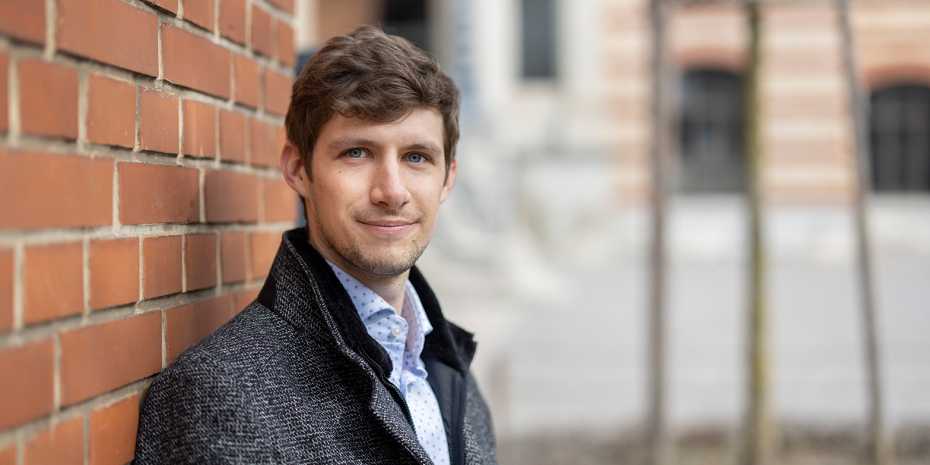
Data contains much more than just the information on the surface. With statistics, deeper cause-and-effect relationships can be brought to light. This is what Alexander Marx is researching as a Fellow at the ETH AI Center using artificial intelligence. One of his goals is to be able to make predictions regarding diabetes in children.
In diabetics, hypoglycaemia usually doesn’t occur randomly, just as a stock market price doesn’t crash for no reason. That means both are also predictable, at least theoretically. In practice, however, such forecasts have so far succeeded only in the rarest of cases. But if Alexander Marx’s project is successful, that will change for children with type 1 diabetes. “We’re working on predictive models that can detect early on if there is a risk of hypoglycaemia during the night,” explains the ETH AI Center Fellow, adding: “When children engage in vigorous physical activity during the day, their blood glucose levels can drop below a critical threshold while they sleep. With a reliable forecasting model, this risk could be avoided.”
Marx is exploring this hypothesis as part of Julia Vogt’s Medical Data Science Group. “I come from more of a theoretical background and have worked mostly with artificially generated data. The AI Center’s purpose is to bring together theory and practice, which I find exciting. I now have to make my theoretical concepts work with real data.”
Marx acquired his academic credentials at Saarland University in Saarbrücken, Germany. After completing a Master’s degree in bioinformatics, he stayed on there to write his doctoral thesis at the Max Planck Institute for Informatics. His thesis examined causal discovery – statistical methods that can be used to create causal graphs from observational data, which make cause-and-effect networks visible.
One way to apply these methods is to use survey data to identify all factors that are suspected of having an effect on a particular variable. A general example would be how a person’s income depends on their age, place of residence, gender, education, marital status or number of children. Based on the correlations found, predictions can then be made for individuals who were not surveyed. Marx clarifies that to do this, it’s not even necessary to define the entire dependency chains; it’s enough to elicit the smallest set of factors required to make a prediction.
With the help of artificial intelligence based on simulated data, Marx used these methods to study how the activities of about 500 selected genes in a human cell are related. Ideally, these methods can be scaled up in the future to include all of a cell’s 25,000 or so genes. Such computer analyses of gene networks would easily and quickly provide biological and medical research with a comprehensive understanding of the processes that take place in a cell. Achieving this through laboratory experiments would require enormous effort, as the scientists would have to switch off each gene individually using genetic engineering tools and then measure how this affects the activity of all the other genes.
For the projects Marx is tackling at the AI Center, he needs to take causal discovery methods to a new level of complexity. Instead of using full observational data sets or synthetic data, as with gene expression, he now works with real data from clinical practice. This makes the task markedly more difficult, as he soon found out: “In reality, individual pieces of information, measurements, or entire data sets are often missing, and how the data is collected also always differs from hospital to hospital and sometimes even from physician to physician.”
The clinical data that Marx analyses for his prediction model in collaboration with physicians at the University Children’s Hospital Basel (UKBB) includes time series of pulse rate and blood glucose levels, as well as information on physical activities, caloric intake, insulin injections and sleep quality. It’s then a matter of filtering the data to exclude any correlations from the model that are not related to the research question.
If the forecasts for a treating physician are to be robust and comprehensible, the number of factors must be kept as low as possible. Either way, it is too early to predict whether the model will be successful in practice: “With our project, we are venturing into areas that we haven’t mastered yet with the methods available.”
In any case, the young researcher has got off to a successful start in Zurich. “When I first came here in the autumn, I felt at home very quickly. The city is very beautiful and the mountains are really close by,” he says. A passionate rock climber, Marx particularly likes being so close to nature, especially the mountains. “Climbing lets me switch off and focus my attention completely on the grips. There’s also the climbing community – I like to do things together with other people.” In Saarbrücken, he was far away from the mountains and so mainly did bouldering indoors. Now that he’s based in Zurich, he’s looking forward to being able to visit alpine terrain more often.
Marx likes the AI Center just as much as he likes the city of Zurich and its surroundings: “The Center is extraordinarily international. There’s also a great variety of subject areas. It’s impressive and inspiring to be able to have peer-to-peer discussions with leading authorities from different scientific disciplines as a normal part of the daily routine.”
The AI Center’s interdisciplinary character is not limited to social interaction, however. Alongside bioinformatician Julia Vogt, Marx has a co-mentor in Peter Bühlmann, who specialises in high-dimensional statistics. These can be used to examine data sets in which many attributes are associated with each object. This includes the diabetes data that Marx analyses. In addition, there is also an established collaboration with the Biomedical Informatics Group led by Gunnar Rätsch, who conducts research at the interface of machine learning and bioinformatics.
Marx himself is active in multiple subject areas. He has another project in which he explores what’s known as multimodal learning. Here, the goal is to find commonalities in data from different sources. For example, he combines results from positron emission tomography (PET), which produces a 3D visualisation of anomalies in tissue metabolism, with results from X-ray-based computed tomography (CT), which reveals density anomalies in layers of tissue.
A combination of the analysis of the two imaging methods, automated by machine learning, could drive major advances in tumour diagnostics. The vision is an AI system that finds the commonalities in the two data sets and applies them to issue reliable diagnoses and prognoses.
At the moment, Marx is looking forward to his first lecture course, which he will give this coming Summer Semester together with colleagues from the AI Center. “I’ve always enjoyed working with students, and the Master’s students at ETH are at a very advanced level. The discussions always generate input that I hadn’t considered myself,” Marx says. His fellowship thus allows him not just to hone his scientific skills, but also to gain initial experience as a lecturer.
Marx doesn’t yet want to venture any concrete predictions about his own future, saying: “After my first experiences here, I’m confident that my time at ETH will prepare me excellently for both career options – academia and industry.”
Author: Daniel Meierhans, ETH Zurich
ETH News
Image source: ETH Zurich / Nicola Pitaro
News
A little over a year ago, the SAIROP partners announced their intention to jointly develop a Swiss research overview in the field of Artificial Intelligence. Now the time has finally come: SAIROP – the Swiss Artificial Intelligence Research Overview Platform – is online.
Switzerland has several internationally leading research institutions in the field of Artificial Intelligence (AI) spread all over the country. In addition to this, the importance and use of AI as a basic technology is steadily increasing in multiple research fields and application areas. For the first time, SAIROP now presents a detailed overview of the AI competencies in Switzerland all across the entire research landscape.
The ten partner organisations involved in the making of SAIROP surveyed the various research institutions in Switzerland and compiled information on current research projects from various publicly accessible data sources. The ongoing data preparation and curation process is complex due to the great diversity. However, thanks to the new platform, the information is becoming more accessible, and the level of detail is probably unique in Europe.
The platform is publicly accessible via sairop.swiss and was presented to an audience of industry representatives and researchers on 23 June at the Swiss Conference on Data Science (SDS2022) in the KKL Luzern. At the moment it contains data on research institutions, current AI projects started in 2021 and experts conducting research on and with AI in Switzerland. The data will be continuously complemented and updated. In addition, the platform will be enriched with further relevant information in the future to provide an even better overview of the research field and its impact on society.
SAIROP’s long-term goal is to further connect the AI research community, improve the national and international visibility of Swiss AI research organisations and provide new opportunities for domestic as well as foreign companies and research institutions to initiate joint innovation projects. For this purpose, dedicated events and further communication measures are planned.

News
Investor clubs Startup INVEST and SICTIC join forces. Startup INVEST’s activities, its angel investors and its large group of 32 institutional investors from Switzerland and abroad are merged into the non-profit association SICTIC. Furthermore, Startup INVEST is handing over the startup days conference to the company LINDEN 3L AG.
The Startup INVEST association decided at its general assembly in March 2022 to hand over the association's activities and to dissolve the association at the end of the business year 2022. As part of the merger, SICTIC will extend its startup verticals from primarily ICT and Fintech and also accept other technology-driven startups.
Jean-Pierre Vuilleumier and his partner Daniel Bermejo are devoting themselves to new challenges. Jean-Pierre comments: “After almost 20 years, it is about time for me to start the next journey of my life. I am very thankful for having been so privileged all these years and hopefully having contributed to the development of the Swiss Startup Ecosystem. I strongly believe in giving back, that is why I will be focusing on a social project in South Africa in the coming years.” Daniel Bermejo, co-managing director at Startup INVEST adds: “I feel grateful and honoured for the confidence and trust placed in me by our board, management and members and excited for the future ahead. Looking forward to many more years of Startup INVEST’s legacy under the SICTIC & LINDEN brands.”
This succession plan preserves the pioneering work done by Christian Wenger, Jean-Pierre Vuilleumier and Daniel Bermejo at Startup INVEST since 2003 and strengthens the Swiss ecosystem by consolidating complementary efforts into the Switzerland based investor platform.
SICTIC that has local and international angel investors and institutional investors in its large investor community of more than 500 investors. Dr. Thomas Dübendorfer, president and co-founder of SICTIC, welcomes the merger: “This merger allows us to better position Switzerland on the global map for startup investors by consolidating fragmented efforts into SICTIC that becomes a super strong Swiss investor platform with international visibility and a large investor base.”
The startup days are the leading networking platform for entrepreneurial topics in Switzerland. Every year, the conference gathers well over 1’000 relevant players of the startup ecosystem of Switzerland in Berne. The conference was organised by LINDEN already in 2021 and is now fully handed over to LINDEN. Representatives of the association's board will sit on the new advisory board and support the new owners of startup days with their know-how and network. Dominik Isler, Partner at LINDEN, is looking forward: "The startup attitude is the growth engine of the entire Swiss economy, in all phases of a company's life cycle. That's why, together with SICTIC and others, we continue to develop startup days into THE outstanding conference for personalities with an entrepreneurial attitude in Switzerland."
Christian Wenger, Chairman of Startup INVEST, concludes: “We’ve closely watched the strong growth of SICTIC and it was our favourite solution to merge with them as we truly share their values. The team at LINDEN has the power, network and experience to take the conference to the next level in the spirit of the association."
Autor: press release/SK
startupticker.ch
Bildquelle: StartupINVEST, SICTIC

You need to load content from reCAPTCHA to submit the form. Please note that doing so will share data with third-party providers.
More InformationYou are currently viewing a placeholder content from Turnstile. To access the actual content, click the button below. Please note that doing so will share data with third-party providers.
More InformationYou are currently viewing a placeholder content from Vimeo. To access the actual content, click the button below. Please note that doing so will share data with third-party providers.
More InformationYou are currently viewing a placeholder content from YouTube. To access the actual content, click the button below. Please note that doing so will share data with third-party providers.
More InformationYou need to load content from reCAPTCHA to submit the form. Please note that doing so will share data with third-party providers.
More Information