News
Zurich – Energy-efficient building renovations could cut energy consumption for heating in half. However, only 1.5 percent of all buildings are renovated each year. A white paper by ewz explains why renovations are worthwhile. Smart renovations increase property values, according to Zurich’s municipal energy provider.
(CONNECT) According to a press release, ewz has published the white paper “Energy-Efficient Renovation as an Opportunity.” In the paper, the City of Zurich's energy provider demonstrates how building renovations can offer significant potential for reducing energy consumption and CO2 emissions. The white paper states that medium- and large-sized property owners, in particular, have a responsibility to make their existing buildings ready for the future. It would also be financially worthwhile for them.
This white paper is intended as a guide for property owners on the extent to which energy-efficient renovations are environmentally sound, economically viable, and socially responsible. The premise highlights the need for renovation if Switzerland's climate goals are to be met: 80 percent of the approximately 1.8 million residential buildings do not meet current thermal insulation and energy efficiency requirements. The paper outlines the legal framework and funding opportunities, as well as a framework for action regarding energy-efficiency retrofits.
As a first step, a building analysis will be conducted to assess market potential, the condition of the building, and its energy efficiency. Based on this, the following renovation strategies are chosen: value preservation for buildings with low market potential and poor structural condition; partial renovation for buildings with good structural condition; and comprehensive renovation for buildings that also have good market potential. In the next steps, the renovation measures must be determined, taking into account potential investments and ensuring cost-effectiveness. It appears that financial risks can be mitigated through regular property renovations.
The white paper provides guidance on planning and implementing renovation measures, as well as on possible financing options. In this way, involving the energy service provider early on can improve energy efficiency in the facility and reduce the property's life-cycle costs. Banks can offer loans at reduced interest rates.
Using the example of the Im Tiergarten housing complex in Zurich, this document shows how a renovation project can be successfully carried out without evicting the more than 1,000 tenants. The heat now comes from a local heating network operated by ewz, which is heated by a data center. A 60-year-old residential and commercial building on Oberwilerstrasse in Basel was also renovated while it remained occupied. Here, the building was insulated with rock wool and fitted with a solar facade.
The document can be requested through the ewz website. ce/ww

Energy-efficient refurbishment of buildings can increase property values, according to a white paper by ewz, the City of Zurich’s energy supplier. Stock image: OConnor Studios/Pexels
News
Unterengstringen, Canton of Zurich — WEYTEC is launching smartKEYS, a new keypad designed for control and trading rooms. Each of the 15 buttons has its own display and can be programmed with individual functions or entire workflows. Existing installations can also be retrofitted with this system.
(CONNECT) Wey Group AG (WEYTEC), a company specialising in intelligent control room solutions and headquartered in Unterengstringen, is expanding its product lineup with the new smartKEYS keypad. According to a press release, it is intended for workplaces where recurring tasks must be performed quickly, such as in control centers, air traffic control facilities, or trading floors.
Each of the 15 programmable buttons has its own LCD display that shows the respective function using text and symbols and confirms its execution with a color indicator. The configuration can be changed depending on the task. In addition to individual functions, entire workflows can also be assigned to a single button. For example, you can switch between sources, access screen layouts, switch between video walls, or run macros.
Since frequently used functions can be activated directly using the keys rather than through a pop-up menu on the work screen, the data displayed there remains visible during operation. “Our customers map their most important processes to buttons that everyone understands right away. New operators work confidently from day one,” said Chief Commercial Officer Dirk Hendrickx.
Designed for continuous operation, the keypad can be integrated into new and existing WEYTEC systems and is compatible with the WDP MX, smartVISUAL plus, and smartUX plus platforms. A new adapter card also makes it possible to retrofit workstations that have been in use for years without having to modify the existing solution. ce/as
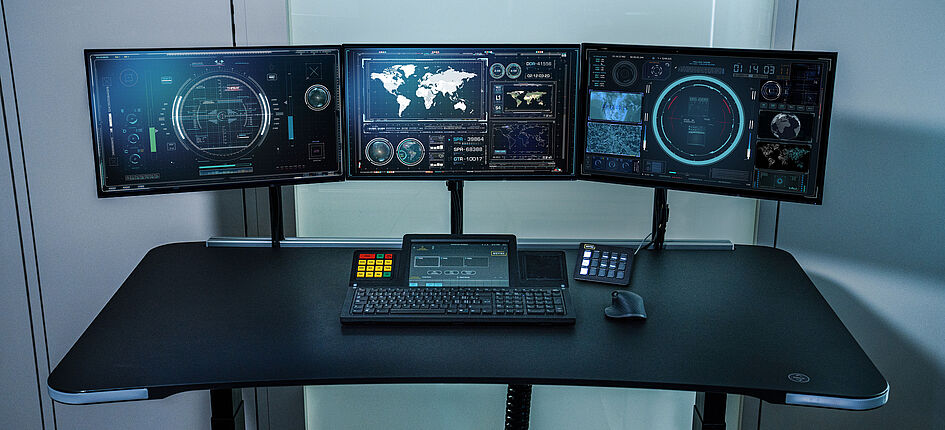
WEYTEC’s new smartKEYS keypad can be used, for example, in air traffic control rooms. Image: courtesy of Wey Group AG
News
Zurich/Ostermundingen, Canton of Bern — Kablan AG has installed trackers from the Zurich-based company truvami on its cable drums. This enables the cable and LAN distributor based in Ostermundingen to keep track of the location of its spools digitally and to ensure they are fully reused.
(CONNECT) Kablan has digitised the logistics of its cable reels with the help of truvami GmbH. According to a press release, they were equipped with the truvami Tag XL Tracker for this purpose. This device continuously tracks the location of the cable reels. This optimises returns, reduces losses, and promotes their reuse.
Thanks to constantly updated location data, the provider of cable and connection solutions for energy, industrial, and infrastructure projects always has an overview of where its reels are located, how long they have been in use, and when they will be returned. This way, they can be reused to deliver new cables after they have been used. The sooner they return to this cycle, the fewer additional coils will be needed.
“Our customers expect reliable delivery processes and high product availability,” said Tom Frey, Head of Marketing and Sales at Kablan. "At the same time, we believe it is important to use resources responsibly. "That is why we are making targeted investments in digital solutions that make our processes more transparent and efficient."
Together with Kablan, truvami demonstrates “how existing processes can be pragmatically enhanced with connected technology,” according to Chiara Koopmans, Managing Director of Swisscom Broadcast’s division specialising in tracking solutions. “Transparent location data makes everyday planning easier and helps ensure that resources are allocated more effectively.” ce/mm

Kablan can track the location of its cable reels at all times using the truvami Tag XL Tracker. Image: courtesy of truvami GmbH
News
Zurich/Tel Aviv-Jaffa — Wonderful raised $550 million in a Series C funding round. This means the company, founded in 2025, is now valued at $5 billion. Now it wants to further scale its artificial intelligence-based operating system for businesses.
(CONNECT) Wonderful has announced the completion of a Series C funding round totaling $550 million. The funding round was led by Insight Partners of New York. Other participants included Salesforce and existing investors Index Ventures and IVP (all based in San Francisco), as well as Vine Ventures (New York), 9Yards Capital (Los Angeles), and Bessemer Venture Partners (Menlo Park).
This brings the total funding raised by the Israeli-Dutch company, which has a branch in Zurich, to approximately $834 million in the 14 months since its founding in 2025. Following its $150 million Series B funding round in March 2026, Wonderful has expanded its operations to more than 35 markets, grown its global workforce to 650 employees, and further developed its platform into a full-fledged artificial intelligence (AI) operating system called Wonderful AI OS.
At that time, the company's valuation was still $2 billion. Six months later, Wonderful is already valued at $5 billion. With the new capital, Wonderful plans to expand into additional markets.
CEO and co-founder Bar Winkler believes that “AI operating systems will become the foundation of every company.” "Companies need a shared AI foundation whose value grows as it is used more and more throughout the organisation, and that is exactly what we are building."
As the press release goes on to explain, the modular and open-architecture Wonderful AI OS serves as the common operating layer that coordinates and scales agents, workflows, AI-native applications, the enterprise context, integrations, and controlled execution across the entire enterprise. Jeff Horing, co-founder and managing director at lead investor Insight Partners, is convinced that Wonderful is thereby pursuing “one of the biggest opportunities in the field of enterprise AI.” ce/mm

News
Zurich – CSEM Zurich and Miromico have developed a compact wireless node that analyses industrial sensor data directly at the source. The extremely energy-efficient platform activates its Internet of Things (IoT) connection only when relevant information needs to be transmitted.
(CONNECT) The Swiss Center for Electronics and Microtechnology (CSEM) in Zurich and Zurich-based IoT specialist Miromico have developed a compact, battery-powered node for the industrial IoT. It combines CSEM's extremely energy-efficient Fibonacci artificial intelligence (AI) chip with Miromico's wireless communication module.
With what is known as on-device AI, industrial sensor data is analysed directly at the source—for example, from microphones, accelerometers, and small cameras. According to a statement from CSEM, the platform activates its LoRa or Mioty wireless connection only when relevant audio, motion, or image data on the chip is detected as an anomaly. Only these are transmitted, which reduces data traffic and saves both energy and bandwidth.
“Fibonacci brings useful AI directly to industrial sensors, where every milliwatt and every transmitted byte counts,” says Stéphane Emery, group leader for integrated and wireless systems at CSEM. "Local data processing allows the node to detect relevant events without continuously sending raw data. This paves the way for more autonomous monitoring systems."
Miromico's modular wireless module handles communication between the device and the gateway. The same hardware platform can be configured for LoRa or Mioty. This allows the connectivity to be customised without having to redesign the node.
“Industrial customers need sensor solutions that are efficient, adaptable, and easy to implement,” said Miromico CEO Schekeb Fateh. "The combination of local AI and a selection of long-range wireless technologies offers manufacturers a practical way to monitor equipment in locations with limited power and bandwidth." ce/mm
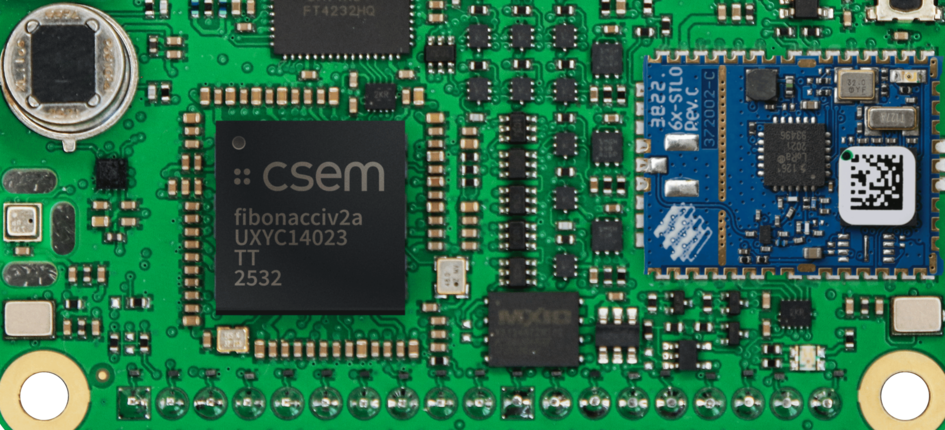
The battery-powered node combines CSEM’s extremely energy-efficient Fibonacci AI chip with Miromico’s wireless communication module. Image: CSEM
News
Schlieren, ZH/Freienbach, SZ — Neurimmune AG, together with Pureos Bioventures, is leading a $30 million financing round for NovaGo Therapeutics AG. The company plans to conduct a clinical trial with its antibody NG004 involving 120 patients with acute spinal cord injury.
(CONNECT) Neurimmune, together with Pureos Bioventures (Pureos Partners AG), based in Freienbach, Canton Schwyz, led the Series B financing round for NovaGo Therapeutics, which was completed in August. NovaGo Therapeutics is part of the Neurimmune Group and raised a total of $30 million in this funding round. According to a press release, other existing and new investors also contributed capital. In addition, there are non-dilutive grants from the Swiss Paraplegic Foundation and the Wings for Life – Spinal Cord Research Private Foundation.
The funds are intended to advance the clinical development of NG004 for the treatment of acute spinal cord injuries. The fully human antibody targets the Nogo-A protein, which inhibits nerve fiber regeneration and neuroplasticity in the central nervous system. The goal is to promote functional recovery following a spinal cord injury.
As part of this effort, SPROUT II—a randomized, double-blind clinical trial involving 120 participants at sites in Germany, Spain, and Switzerland—was launched. According to a statement from NovaGo Therapeutics, the transaction is expected to be completed in early 2029. An open-label Phase 1 trial has already been completed. “The promising results of the Phase 1 study with NG004 give us reason to be confident,” said Roger M. Nitsch, President and Chief Executive Officer of Neurimmune and a member of the Board of Directors of NovaGo Therapeutics.
NovaGo Therapeutics was spun off in 2015 from the research group led by Martin Schwab at the University of Zurich; Schwab currently serves as the company's Chief Scientific Officer. The startup is a member of the Schlieren-Zurich Bio-Technopark, where Neurimmune is also headquartered. NG004 was developed using Neurimmune's Reverse Translational Medicine (RTM) technology platform. ce/as
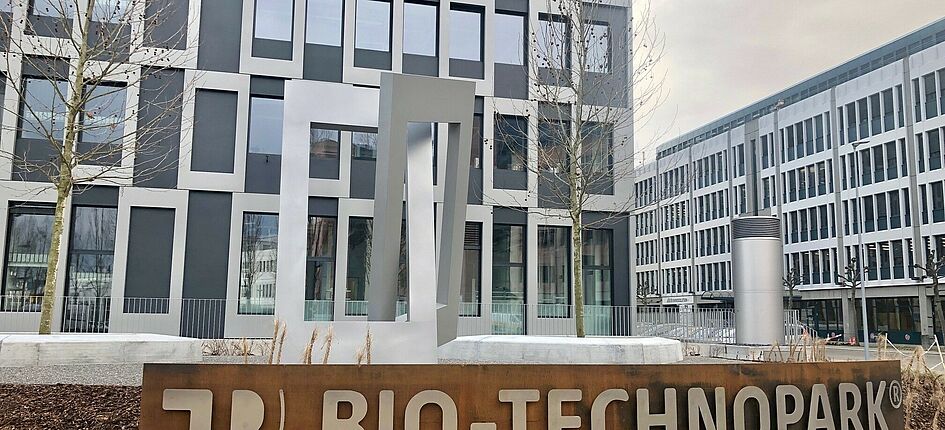
NovaGo Therapeutics is a member of the Schlieren Bio-Technopark. Stock image: courtesy of Limmatstadt AG
News
Zurich/Mountain View — The Swiss Federal Institute of Technology Zurich (ETH) and the SETI Institute in California will collaborate on research into how life originates and whether it exists beyond Earth. The SETI Institute is providing a total of 8.5 million dollars for a corresponding ETH professorship.
(CONNECT) ETH and the Search for Extraterrestrial Intelligence (SETI) Institute, based in Mountain View, California, have entered into a partnership. According to a press release from ETH, the program centers on a new assistant professorship titled "Earth and Planetary Evolution." It will be based in the ETH Department of Earth and Planetary Sciences. The professorship will play a central role at ETH Zurich’s Center for the Origin and Prevalence of Life.
The SETI Institute will cover the associated costs totaling $8.5 million over the first ten years. This includes the associated research activities, which also encompass the filling of a research position and postdoctoral fellowships.
“Many of today’s major scientific questions can only be answered through collaboration,” ETH President Joël Mesot is quoted as saying. “With the SETI Institute, we are gaining a renowned partner that complements our areas of expertise and enables new connections across disciplines and continents.” ETH is actively seeking out outstanding partners, “and the SETI Institute is one of them.”
For SETI, this is the first international research partnership of its kind. “For us, the collaboration with ETH Zurich marks the beginning of a new chapter—one in which the search for life beyond Earth is recognized as a global endeavor,” said SETI Executive Director Bill Diamond. “By supporting research capabilities at one of Europe’s leading technical universities, we are not only expanding our research on an international level, but also helping to create a new model for international scientific collaboration.” ce/mm

ETH and the SETI Institute in California plan to collaborate on research into how life originates and whether it exists beyond Earth; a view of the Large Magellanic Cloud taken by the Hubble Telescope. Stock image: ESA/Hubble & NASA, D. Gouliermis, CC BY 4.0 INT
News
Thalwil, ZH — U-blox is integrating Switzerland’s time infrastructure, which is traceable to Coordinated Universal Time (UTC), into its GNSS test lab at its headquarters in Thalwil. The specialist in short-range positioning and communication technologies is thus strengthening the development of Zeit products.
(CONNECT) U-blox has announced the integration of Switzerland's time infrastructure—which is traceable to Coordinated Universal Time (UTC)—into its GNSS laboratory in Thalwil. Global Navigation Satellite Systems (GNSS) enable positioning and navigation on the ground and in the air by receiving signals from navigation satellites and pseudolites.
To this end, the company—which specialises in positioning and short-range communication for the automotive, industrial, and consumer goods sectors—is collaborating with the Swiss Federal Institute of Metrology ( METAS ) in Köniz, Bern Canton, which is responsible for disseminating the Swiss official time, and with the Swiss foundation Switch, which aims to harness the potential of digital transformation for education and research and provides the fiber-optic network.
Through this collaboration, u-blox gains continuous access to a UTC-referenced reference via a documented calibration chain. In this way, the company ensures full traceability of measurements for its time-measuring products.
“High-performance GNSS timing products rely on rigorous and traceable timing validation throughout the entire development cycle,” said Samuli Pietilä, Director of Product Management, Timing and Infrastructure at u-blox. “This infrastructure enables us to validate the performance of GNSS timing receivers directly in our own lab using a UTC-traceable reference and to continuously improve it.”
Jacques Morel, head of the METAS Photonics, Time, and Frequency Laboratory in Wabern, Bern, emphasises that “this collaboration demonstrates how the national metrology infrastructure can support advanced industrial applications that require high-precision synchronisation, time accuracy, and traceable validation based on UTC references.” ce/mm

U-blox is bringing Switzerland’s time infrastructure, which is traceable to Coordinated Universal Time (UTC), to its GNSS test laboratory in Thalwil. Stock image: ancapictures/Pixabay
News
Wädenswil, ZH — The Department of Life Sciences and Facility Management at the Zurich University of Applied Sciences (ZHAW) celebrated its move to the historic Shedhallen in Wädenswil. The historic buildings house modern laboratories, workrooms, and a library.
(CONNECT) The ZHAW’s Department of Life Sciences and Facility Management is now located in the Shedhallen in Wädenswil. Following the completion of the renovation of the historic halls, representatives from the Canton of Zurich, ZHAW, Tuwas Immobilien AG, and Hotz Partner AG inaugurated the new location on September 4, according to a press release from the Canton of Zurich’s Department of Construction. The facades and the distinctive shed-roof structure of the historic halls were preserved during the renovation.
Inside, however, the former Wädenwil AG cloth factory—which once housed looms—now houses modern biotechnology laboratories and workspaces for the ZHAW Institute of Chemistry and Biotechnology. An open-concept library, as well as classrooms and study spaces for students, were set up on the upper floor. In addition, there are so-called "room-in-room" cubes that can be used flexibly for learning and meetings.
“Through this comprehensive renovation, we have succeeded in preserving an important piece of industrial history and adapting it to the needs of a modern teaching and research institution,” writes the Department of Public Works. "This made it possible to avoid demolishing the buildings, which conserves resources and significantly reduces the amount of gray energy used." The canton has entered into a long-term lease with Tuwag Immobilien AG for the facilities in order to provide the ZHAW with additional space for teaching and research. The renovation was carried out in consultation with the local historic preservation office. ce/hs

The Cantonal Building Authority has restored the listed shed halls in Wädenswil and adapted them for use by the ZHAW. Photo: Alexander Gempeler, Bern/Canton of Zurich
News
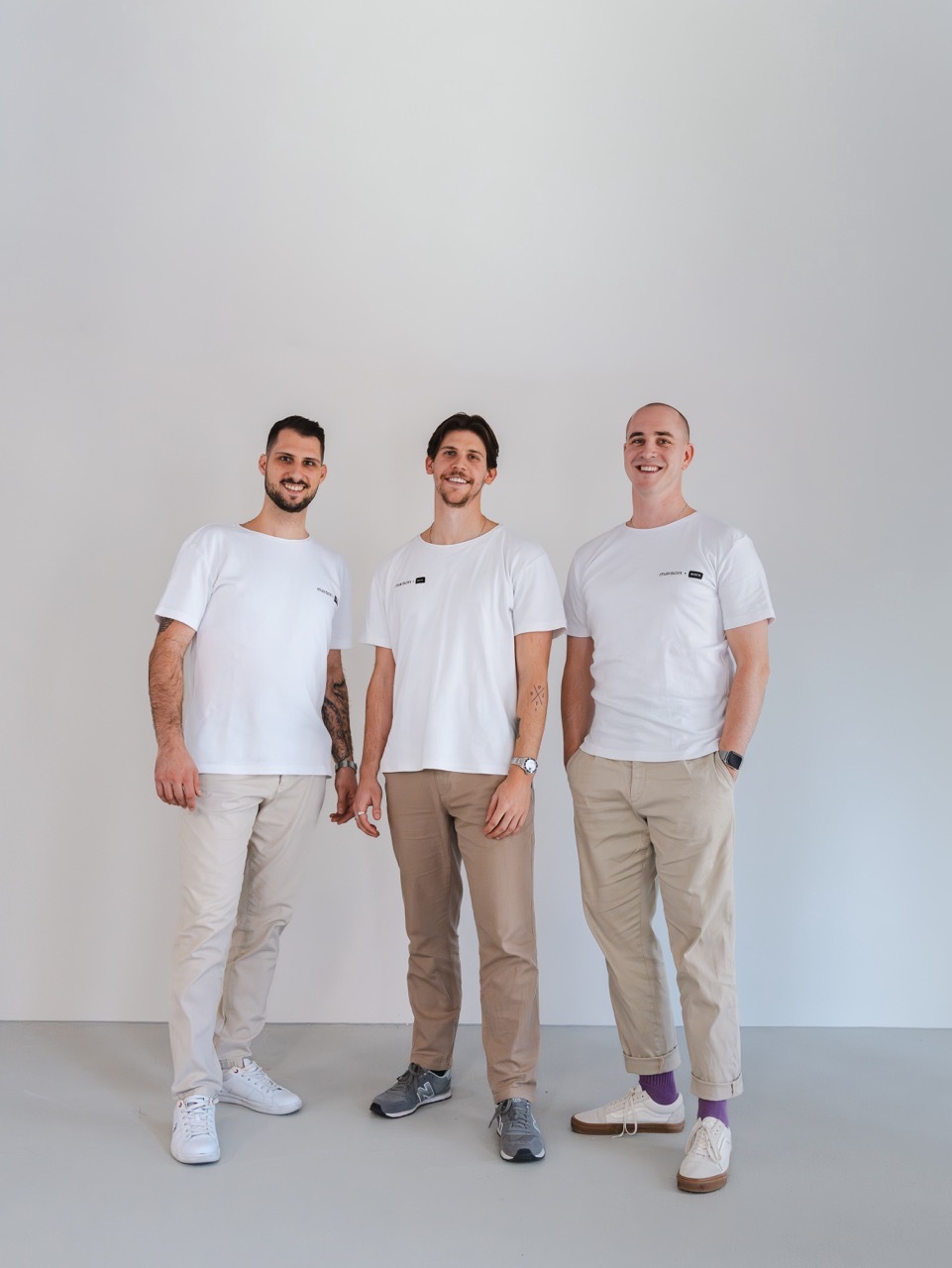
The Zurich-based proptech company maison.work was able to reduce vacant space by over CHF 37 million through its commercial real estate marketplace. This milestone was achieved without venture capital funding and without AI. The company has now launched an AI-powered map search designed to show just how much more is possible.
Since the beginning of 2024, over CHF 37 million in vacant commercial space has been reduced through the maison.work marketplace. This result was achieved—even before the company had an AI search tool—solely through a consistent focus on commercial properties and the automation of digital marketing processes.
"This is no longer a vision of the future, but a real milestone," says Dominic Frei, co-founder of maison.work. The success of the first phase has shown that a specialised marketplace for commercial real estate can have advantages over a generic portal if the search is precisely tailored to the needs of companies.
From Filter-Based Search to Needs-Based Search with AI
According to D. Frei, the traditional way of searching for commercial space has hardly changed in over 15 years: filter, click, and hope that a suitable property is among the results. This is exactly where maison.work comes in. In July 2026, the company officially launched its AI-powered map search at map.maison.work, which allows users to describe their needs in natural language—for example, “I run a beauty salon and am looking for a suitable space in the Zurich area.”
The AI analyses such requests, asks follow-up questions as needed, and suggests specific properties that are suitable for the intended use. This shifts the logic of the search from rigid filter criteria to actual needs. According to maison.work, the figures since the launch show a clear trend: increasing reach, more specific inquiries, and noticeably better matching between companies looking for space and available properties.
Outlook
For maison.work, the milestone of CHF 37 million in reduced vacancy is just the beginning. The goal is much bigger: With its AI-powered search engine, the company aims to become the leading marketplace for commercial real estate in Switzerland and reduce the vacancy rate for Swiss commercial properties by CHF 100 million by 2027. In the long term, the Zurich-based proptech company aims to redefine how supply and demand intersect in the commercial real estate market.
News
Bülach/Embrach, Zurich Canton — The Wisli Foundation took first place in the 2026 ZüriUnterland Innovation Award with its project “The Invisible Burden.” Two walk-in experience booths are designed to help outsiders understand depression and schizophrenic perception. The prize is worth 5,000 francs.
(CONNECT) The ZüriUnterland economic development agency has awarded the Wisli Foundation in Bülach first place in the 2026 ZüriUnterland Innovation Award. According to a press release, the foundation will receive prize money of 5,000 francs for its victory. The awards ceremony took place on August 31 as part of the innovation event at Kyburz Switzerland AG in Embrach.
The project “The Invisible Burden”uses two walk-in experience booths to convey depression and schizophrenic perception through spatial and acoustic elements. The exhibition was created in collaboration with people who have personally experienced crisis and experts from the Wisli Foundation. It is intended to raise awareness of mental health issues and foster understanding, including within companies.
Second place, with a prize of 2,500 francs, went to Amberg Infra 7D AG of Regensdorf. The sensor she developed measures how much the tracks move or sink under the weight of passing trains. The goal is to monitor rail lines across the entire country and detect issues such as scouring or deformation at an early stage.
Lehrshare GmbH from Glattfelden, which took third place, also received 2,500 francs. Its digital platform streamlines the apprenticeship search and application process for young people, schools, and training companies.
About 80 people attended the innovation event. In addition to providing insights into the Kyburz facility, projects from Bülach Hospital and the startup GoNiña AG were presented. The Innovation Award was established in 2021 by the Economic Council for Regional Development to highlight innovations from the Zurich Unterland region. He is supported by Zürcher Kantonalbank and Vetropack Holding AG. ce/as
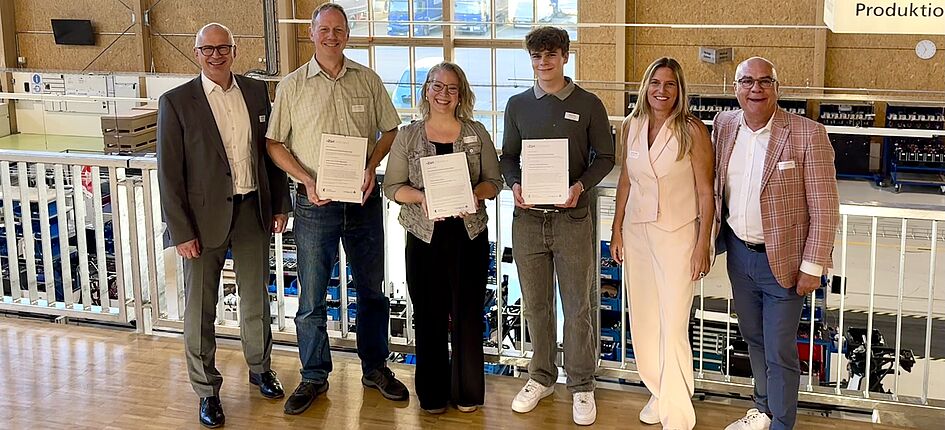
The winners of the ZüriUnterland Innovation Award 2026. Photo: Courtesy of ZüriUnterland Economic Development Agency
News
Zurich/Portage — ZuriMED is joining Stryker. With this move, the globally active medtech company, headquartered in the U.S., is adding ZuriMED’s FiberLocker system to its portfolio. The technology, which is already approved there, improves postoperative healing for shoulder tendon tears.
(CONNECT) Stryker has signed a definitive agreement to acquire ZuriMED Technologies AG. With ZuriMED's FiberLocker system, the Portage, Michigan-based medtech company is expanding its product portfolio in one of the fastest-growing segments of sports medicine. "ZuriMED has developed an innovative technology that addresses an important clinical need in shoulder treatment," Andy Pierce, Group President of MedSurg and Neurotechnology at Stryker, is quoted as saying in a press release. "We are pleased to add the FiberLocker system to Stryker's product portfolio."
FiberLocker was developed by ZuriMED to improve postoperative healing following rotator cuff reconstruction or augmentation surgery. Founded in 2015 as a spin-off of the University of Zurich and the Swiss Federal Institute of Technology Zurich, and based on the Balgrist Campus, the company has adapted this technology to the felting of textiles. In this process, the fibers of an implant are interwoven directly with the native tissue. Rotator cuff tears are among the most common shoulder injuries. However, traditional repair techniques often fail at the interface between the suture material and the tendon tissue.
FiberLocker received approval in the United States in December 2024. According to the 2025 annual report from Balgrist University Hospital, with which ZuriMED works closely, the clinical market launch was “extremely successful and significantly exceeded expectations.” As early as the year it was launched, the FiberLocker system had been used in nearly 1,000 surgical procedures in the United States and had generated a wealth of clinical data.
Stryker employs approximately 56,000 people worldwide and generated revenue of $25.1 billion in 2025. According to the statement, ZuriMED and Stryker will continue to conduct business as usual until the transaction is finalised. ce/mm

You need to load content from reCAPTCHA to submit the form. Please note that doing so will share data with third-party providers.
More InformationYou are currently viewing a placeholder content from Turnstile. To access the actual content, click the button below. Please note that doing so will share data with third-party providers.
More InformationYou are currently viewing a placeholder content from Vimeo. To access the actual content, click the button below. Please note that doing so will share data with third-party providers.
More InformationYou are currently viewing a placeholder content from YouTube. To access the actual content, click the button below. Please note that doing so will share data with third-party providers.
More InformationYou need to load content from reCAPTCHA to submit the form. Please note that doing so will share data with third-party providers.
More Information