News
Thalwil/Schlieren, ZH — The medical technology company Hemetron is moving into more than 200 square meters of space at the Healthtechpark Zurich-Schlieren. The company is developing a blood test for monitoring inflammation at home and is preparing for another round of funding.
(CONNECT) Hemetron AG is a new tenant at the Healthtechpark Zurich-Schlieren . The spin-off from the Swiss Federal Institute of Technology Zurich (ETH) has taken over space there measuring more than 200 square meters, according to a post by Healthtechpark. The new facilities are intended to provide space for the company's continued growth.
Hemetron is developing a biosensor platform for the remote monitoring of chronic diseases and is launching with applications in rheumatology. The focus is on a quantitative self-test for C-reactive protein (CRP), a marker of inflammation in the blood. With just 2 microliters of blood from a finger prick, it should be possible to measure CRP levels at home in a matter of minutes.
The technology is based on ten years of research at ETH. According to the company, it has raised 3 million Swiss francs to date; Healthtechpark reports that another round of financing is planned.
The Zurich-Schlieren Healthtech Park was established through an initiative by the City of Schlieren and the Canton of Zurich. It promotes networking and collaboration among companies and other stakeholders in the health care and technology sectors and, among other things, provides office and laboratory space. Hemetron's neighbors include GratXray, VirtaMed, and Dr. Risch. ce/as
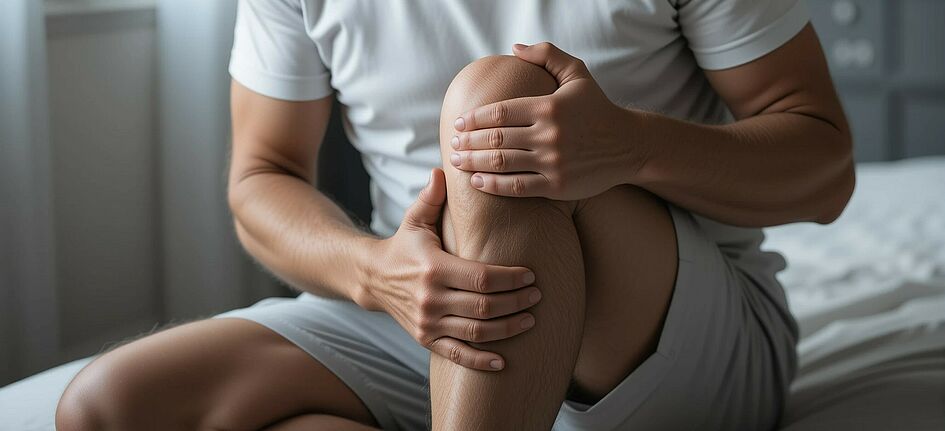
Hemetron is developing a biosensor platform for the remote monitoring of chronic conditions and is launching with applications in rheumatology. Stock image: North_Studio/Pixabay
News
Wädenswil, Canton of Zurich — Photovoltaic systems on agricultural land could supply nearly twice Switzerland’s electricity needs. A study by the Zurich University of Applied Sciences highlights why there is still significant untapped potential in Switzerland.
(CONNECT) Photovoltaics on agricultural land—known as agri-photovoltaics—can contribute both to the generation of renewable energy and to the protection of agricultural crops. However, according to a press release from the Zurich University of Applied Sciences (ZHAW), a recent study by the ZHAW Department of Life Sciences and Facility Management in Wädenswil shows that there is still a great deal of untapped potential in this area.
According to the study, Switzerland has a theoretical potential of 113 terawatt-hours per year, provided a minimum distance of 300 meters from a potential grid connection point is maintained. That is nearly double Switzerland's electricity consumption in recent years. In reality, however, agri-PV systems account for only 0.1 percent of electricity production. The ZHAW report highlights the obstacles contributing to this situation. “The technology isn’t the problem. The key factors are whether a project can be approved despite the high requirements, whether connection to the power grid is possible at a reasonable cost, and whether the plant can be operated profitably under current conditions,” says Jürg Rohrer, professor of renewable energy at ZHAW and co-author of the report, as quoted in the press release.
The obstacles listed include uncertain profitability, limited investment capital, planning uncertainties—including those associated with stringent regulatory requirements—restrictions on land use, and a lack of local acceptance. On the other hand, there are the so-called drivers. Agri-PV systems could provide protection against future energy price fluctuations. They could be used as a climate protection measure against wind, heavy rain, and hail, thereby promoting the cultivation of crops at risk. Land that is not used for agricultural purposes due to prior damage could generate additional income with a solar power system. By contributing to the energy transition and low-greenhouse-gas food production, these facilities could gain a positive image and, as a result, broader social acceptance. Finally, according to the study, a return of 5 percent could be achieved with the right marketing model.
The research results presented were developed with financial support from the Swiss Federal Office of Energy (SFOE) as part of the SWEET consortium EDGE. ce/ww
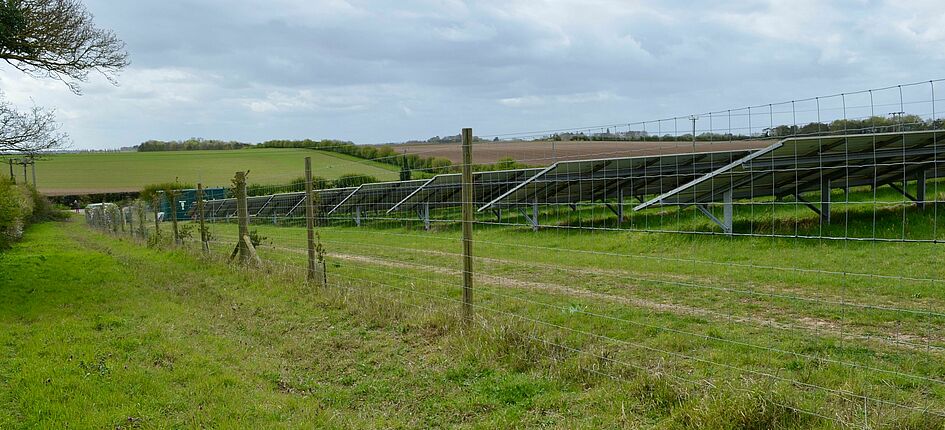
Photovoltaic systems in fields could supply almost twice the amount of electricity required in Switzerland. Stock image: Neville Hawkins/Pexels
News
Zurich — With more than 5 million euros raised in a Series A funding round, Xorlab AG can continue to expand its Europe-wide email security platform and accelerate its growth in Europe. The company is seeing rapidly growing demand for a robust European solution.
(CONNECT) Zurich-based xorlab AG has received over 5 million euros from investors. The Series A funding round was led by existing investor Spicehaus Partners, which has backed xorlab since 2015. In addition, the investment firm Grapha-Holding from Hergiswil, Canton of Nidwalden; the venture capital firm EquityPitcher Ventures from Zurich; and Start-up Finance, a division of Zürcher Kantonalbank, have joined this funding round as partners.
According to a statement, the new capital is intended to accelerate xorlab's expansion in Europe. The company is establishing a Europe-wide email security platform, initially in the DACH region, the Benelux countries, and Scandinavia.
According to xorlab, the funding comes “against the backdrop of rapidly growing demand” from European organisations seeking to reduce their dependence on U.S.-based IT security providers. In addition, new regulations are increasing pressure on financial institutions and operators of critical infrastructure by holding them directly responsible for the stability of their digital supply chains.
“Europe needs its own cybersecurity champions—not European copies of established U.S. companies, but firms that can define the next generation of enterprise security,” CEO and co-founder Antonio Barresi is quoted as saying. "There's no better place to build the European market leader in email security than in the heart of Central Europe."
Daniel Andres, founding partner of Spicehaus Partners, says he is “firmly convinced that the combination of AI-driven threats, increasing regulatory pressure, and Europe’s pursuit of digital sovereignty presents a unique opportunity in cybersecurity. “Xorlab has the technology, customer trust, and market position to become a leading company in its category in Europe,” he said. ce/mm

Xorlab AG intends to use the fresh capital to accelerate the growth of its Europe-wide email security platform. Stock image: MasterTux/Pixabay
News
Dietikon, Canton of Zurich/Dubai — Oxara plans to bring its Oulesse products to the growing construction market in the United Arab Emirates. The mineral binders for low-carbon concrete products are to be produced and used through a network of local partners.
(CONNECT) Oxara AG plans to establish its cement-free mineral binders for circular and low-carbon concrete products in the United Arab Emirates (UAE). The project is set to begin in the rapidly developing urban center of Dubai, according to a press release from the Dietikon-based building materials manufacturer. The construction market in Dubai is characterised by high demand for building materials, coupled with increasing volumes of mineral demolition waste.
However, Oxara doesn't just want to export its Oulesse products to the UAE. Oxara writes that it is also not absolutely necessary to “set up a completely new production system” on site. "Rather, the goal is to create a locally adapted production ecosystem that combines Oxara's technology with regional raw materials, industrial infrastructure, and local market expertise."
The company is currently working to establish the partnerships necessary for the production and deployment of Oulesse products in the UAE. Among other things, the announcement mentions ongoing discussions with the Dubai municipal government. In addition, Oxara is participating in a request for proposals for access to current and future construction and demolition material streams.
According to the statement, sustainable construction is part of the UAE's strategic direction. Oxara is supported by Prototypes for Humanity in its work in the Emirates. The Art Dubai Group company operates under the patronage of Sheikha Latifa bint Mohammed bin Rashid Al Maktoum, Chairwoman of the Dubai Culture & Arts Authority and a member of the Dubai Council. ce/hs
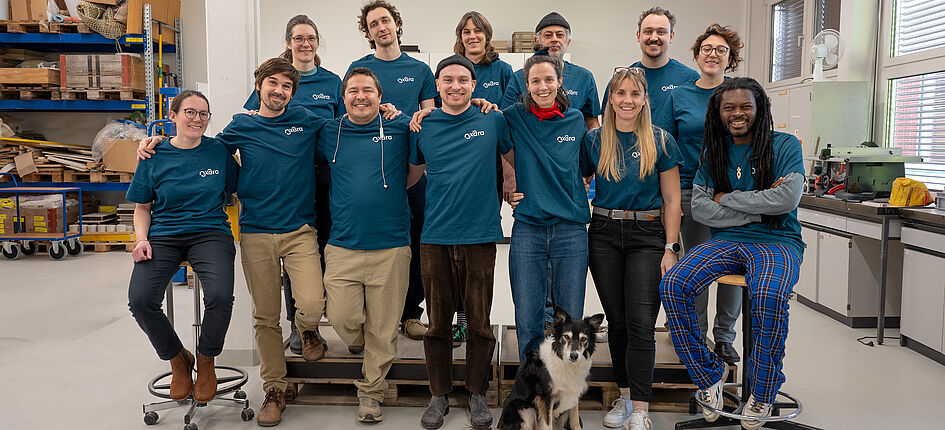
The Oxara team now plans to use its building materials in the Gulf as well. Photo: courtesy of Oxara
News
Zurich — KOVE medical has raised 1.6 million Swiss francs in a seed funding round. This will enable the University of Zurich spin-off to prepare for its first clinical trial in humans. The startup is developing a solution that reduces the risk of premature birth following fetal surgery.
(CONNECT) KOVE medical has raised 1.6 million Swiss francs in seed funding. "This is a crucial step forward for our company, and we are incredibly grateful for the strong support and trust of our syndicate of visionary business angel investors," the startup said in a statement. "Your belief in our mission is what drives us forward." "The seed funding round 'paves the way for our next major clinical milestone: first-in-human studies,'" according to KOVE medical. The first clinical trials in humans are now being prepared.
KOVE is developing an implantable medical device designed to minimise risks associated with surgical procedures on unborn babies. In minimally invasive procedures known as fetoscopy, the uterine wall and the amniotic sac are perforated. This can impair the function of the protective membrane surrounding the foetus and cause amniotic fluid to leak. In many cases, this results in the water breaking, which leads to a premature birth.
At the end of a foetal surgery, KOVE medical uses its medical device to close the opening created by the insertion of surgical instruments. This stabilizes the amniotic sac and prevents complications.
KOVE is a spin-off of the University of Zurich founded in 2020. To help move this project forward, co-founder and CEO Yannick Devaud received an UZH Entrepreneur Fellowship from 2019 to 2020. In addition, KOVE received funding from Venture Kick. The startup has been headquartered at Technopark Zurich since 2024. ce/mm
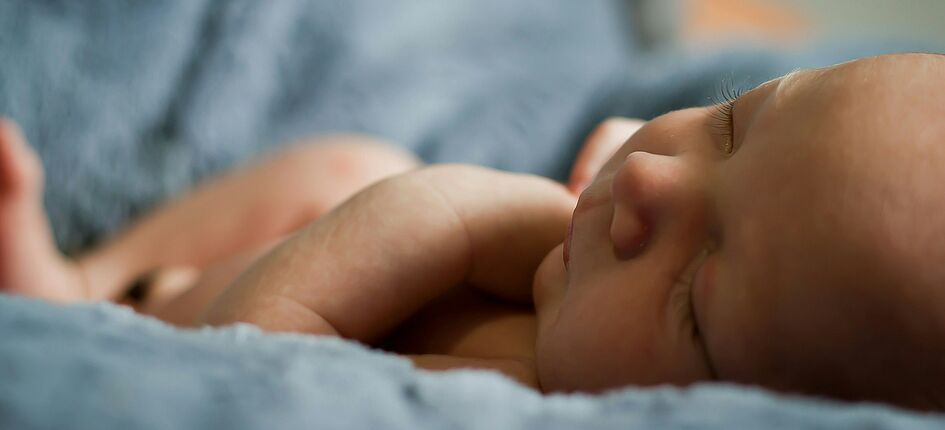
With 1.6 million Swiss francs in start-up capital, KOVE medical will prepare for its first clinical trial in humans. Stock image: Carlo Navarro/Unsplash
News
Winterthur — Kistler’s digital structural health monitoring system has been put into actual operation for the first time on a prestressed reinforced concrete frame bridge in Winterthur. Effective immediately, industry professionals can tour this facility for continuous condition monitoring.
(CONNECT) The Kistler Group's new digital structural health monitoring system has been installed on a prestressed reinforced concrete frame bridge in Winterthur. Following its debut at Intertraffic 2026 in Amsterdam in March 2026, the system will demonstrate for the first time under real-world operating conditions how fully digital, continuous bridge monitoring works. According to a company statement, it is now open to infrastructure management and bridge construction professionals, as well as facility owners, for individual tours.
The bridge in Winterthur is a heavily trafficked route for heavy-duty transport. It must withstand extreme loads, such as vehicle weights of up to 480 metric tons and axle loads of up to 30 metric tons. According to the Winterthur-based global specialist in measurement technology and sensors, this makes it an ideal application for the continuous collection of data on bending and torsional responses, cracks, rotational behavior, strain, and weather conditions.
At the heart of the system is a digital sensor chain that captures and digitizes signals directly from each individual sensor. This eliminates the need for conventional centralized data collection units. Data and power are transmitted together over a single cable. All sensors in the network are synchronized to within microseconds. Unlike analog systems, the fully digital architecture prevents electromagnetic interference.
The installation was carried out in close collaboration with the City of Winterthur’s Civil Engineering Department and its director, Martin Joos. Kistler provides additional technical information online and the option to schedule an appointment. ce/mm
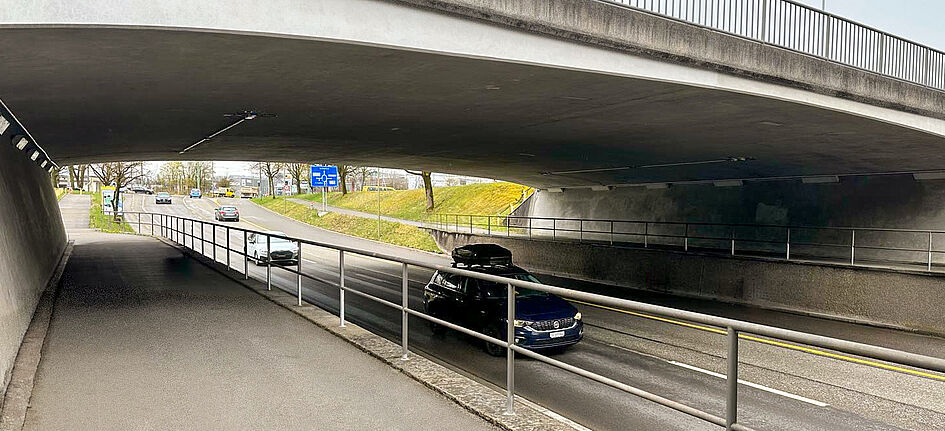
The condition of this bridge in Winterthur is continuously monitored under real operating conditions using the Structural Health Monitoring System. Image: courtesy of the Kistler Group
News
Dübendorf, ZH – Corrosion on buildings or infrastructure can result in significant repairs and costs. A European research project involving the Swiss Federal Laboratories for Materials Testing and Research (Empa) is working on the development of new materials that can reduce corrosion in construction.
(CONNECT) Corrosion and rust not only destroy buildings and infrastructure worldwide, but repairing the damage also incurs high costs and consumes significant resources. To address these issues, researchers at the Joining Technology and Corrosion Laboratory of the Swiss Federal Laboratories for Materials Testing and Research (Empa) in Dübendorf are working intensively to identify the causes and develop new materials. According to a press release, they are participating in the international project ICP Materials (International Co-operative Program on Effects on Materials, including Historic and Cultural Monuments).
The participating institutions provide data on corrosion rates to the network. Ulrik Hans from the Empa laboratory, in collaboration with the Federal Office for the Environment (FOEN), is responsible for Switzerland. To this end, so-called "released" standardized metal samples are installed at designated points. In Switzerland, they were installed on Mount Chaumont in the canton of Neuchâtel. The samples corrode there without any harmful environmental influences, due to the purely natural redox reaction between metal, water, and oxygen. Samples made of weather-resistant steel and titanium-zinc are tested here. “Titanium zinc is popular in the construction industry because it is fully recyclable. When it comes to building maintenance, it makes a significant difference whether the metal roof and gutters need to be replaced after 40 years or only after 80,” Ulrik Hans is quoted as saying in the press release.
Comparisons of data over the past 40 years show that the situation has improved. In the early 1980s, a peak level of 460 micrograms of sulfur dioxide was recorded in industrial areas (Ruhr region); currently, levels are below 10 micrograms per cubic meter. Under ideal conditions at Chaumont, the value fluctuates between 0 and 1 microgram. The figures for corrosion show a similar pattern. In 1987, 500 grams of iron oxide per square meter of steel were measured at the Kopisty site in the Czech Republic; today, the figure is between 100 and 150 grams. For zinc, the value decreased from 15 grams per square meter to 7 grams.
Researchers use the collected data to develop suitable alloys, coatings, or nanometer-thick passive layers that curb corrosion. State-of-the-art surface analysis techniques, such as Kelvin probe force microscopy and X-ray photoelectron spectroscopy (HAXPES), are used here.
In addition to materials science, the ICP Materials network monitors 26 UNESCO World Heritage sites.
Participants in the project include researchers from the RISE Research Institute in Gothenburg, Sweden; the German Federal Institute for Materials Research and Testing in Berlin; the University of Žilina (Silein) in Slovakia; the Warsaw University of Technology; and the Italian agency ENEA. A recent study has been published in the journal “Corrosion and Materials Degradation.” ce/ww
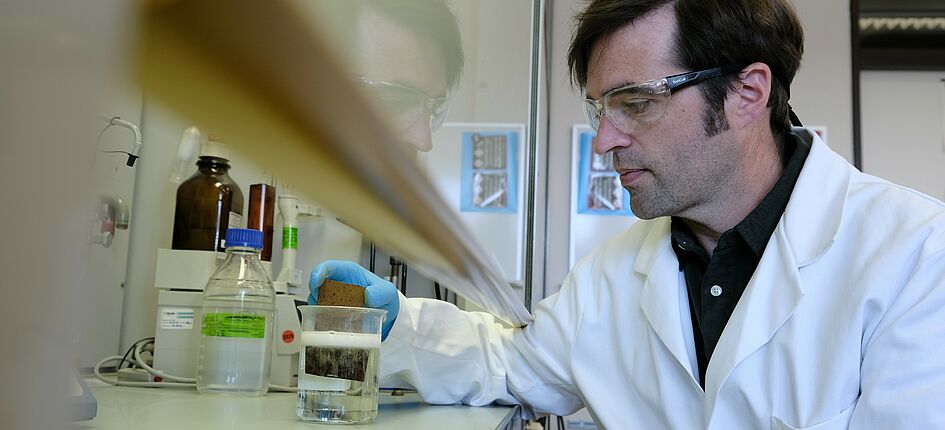
Corrosion researcher Ulrik Hans subjects rusty metal samples to an acid bath. Photo: Empa
News
Zurich/Milan/Essen — Synhelion has commissioned the Italian oil and gas company Saipem to prepare initial plans for a facility to produce synthetic fuel. The site will be the grounds of the Essen-based energy company RWE in Hürth, near Cologne.
(CONNECT) According to its press release, Synhelion has begun planning a large-scale facility for the production of renewable synthetic fuels. It is expected to produce 30,000 metric tons of fuel annually, primarily sustainable kerosene for aviation, but also synthetic diesel and gasoline fuels for shipping and road transport. The facility is planned for the RWE site in Hürth-Knapsack in the German state of North Rhine-Westphalia.
This project complements Synhelion’s portfolio of commercial fuel plants, which also includes the planned expansion of the DAWN demonstration plant at the Jülich Research Center in Germany. In contrast, construction of the planned first commercial facility in Spain was halted in the summer of 2025 due to planning uncertainties.
As the spin-off of the Swiss Federal Institute of Technology Zurich, founded in 2016, further explains, it has commissioned the Milan-based oil and gas company Saipem to carry out the so-called Pre-FEED (Front-End Engineering Design) work for this commercial facility. According to Synhelion, the project combines the company’s own fuel technology with Saipem’s technical expertise and RWE’s industrial infrastructure and site expertise. To that end, Synhelion has reserved a plot of land from RWE on Knapsacker Hill in Hürth.
The chemical complex located there is being increasingly expanded to support the circular economy and climate protection. According to Synhelion, this established industrial site offers favorable conditions for rapid and cost-effective project development, as existing pipelines and utility systems could be utilized. In addition, RWE provides support with site development and permitting processes.
“To make renewable fuels economically competitive, we need to continue scaling up our technology,” Synhelion Co-CEO Philipp Furler is quoted as saying. “The joint pre-FEED work is an important step in this direction and lays the technical foundation for one of our commercial plants. With Saipem and RWE, we have strong partners by our side for this scaling phase.” ce/mm
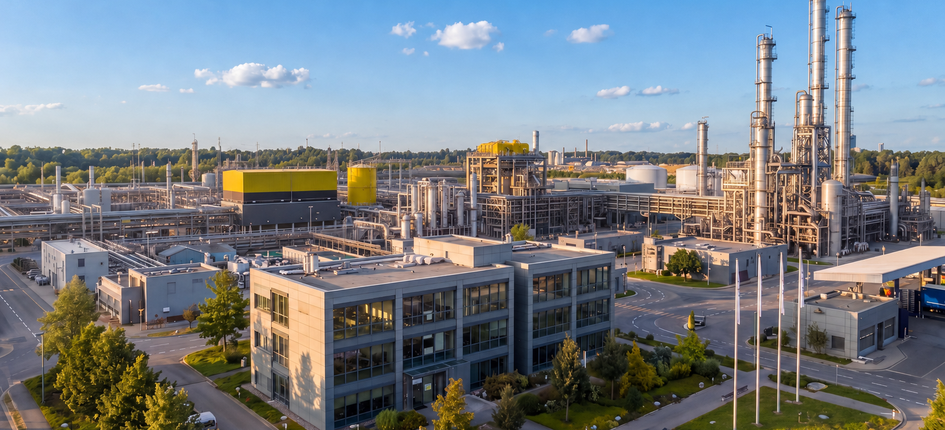
Visualisation of Synhelion’s commercial synthetic fuel plant in Hürth, in the federal state of North Rhine-Westphalia. Visualisation: Synhelion
News
Villigen AG/Zurich/Amsterdam — Researchers from the Paul Scherrer Institute, ETH Zurich, and Amsterdam have demonstrated in an experiment an optical phenomenon that appears to result from the Magnus effect in classical mechanics. These findings could influence the development of quantum computers.
(CONNECT) An international research team from the Paul Scherrer Institute (PSI) in Villigen, the Swiss Federal Institute of Technology Zurich (ETH), and the The University of Amsterdam has succeeded for the first time in experimentally demonstrating an optical Magnus effect. Researchers in Amsterdam had calculated this theoretically years ago. According to a press release, the researchers directed a highly focused laser beam at a single calcium ion. Observations of the optical interactions revealed that the strongest effects did not occur at the center—where the laser beam is most intensely focused—but slightly to the side of it. They found that this was caused by a significant change in the spatial structure of the electromagnetic field surrounding the laser beam.
This observed effect is called the optical Magnus effect, just like its counterpart in classical mechanics. There, a rotating cylinder is deflected at right angles to its direction of motion in a vortex-free flow. In sports, this phenomenon is familiar from topspin on table tennis balls or spin on soccer balls.
In this experiment, the researchers demonstrated that the central effect of the laser beam was strongest to the side of the calcium ion. In quantum computers, such a shift could lead to a loss of control over qubits that are intended to be selectively manipulated using laser light. However, taking this effect into account can also present an opportunity. “The forces generated in this process could be used to couple qubits with one another, thereby enabling more complex calculations,” Philip Leindecker of PSI’s Center for Photon Research is quoted as saying in the press release.
In the experiment, they used a calcium ion that was held in place by electromagnetic fields. When the focused laser beam was directed at the sample, displacements of several hundred nanometers were measured. When the wavelength of the beam changed, the effect was further amplified or attenuated.
The study was published in the journal*Physical Review Letters*. ce/ww
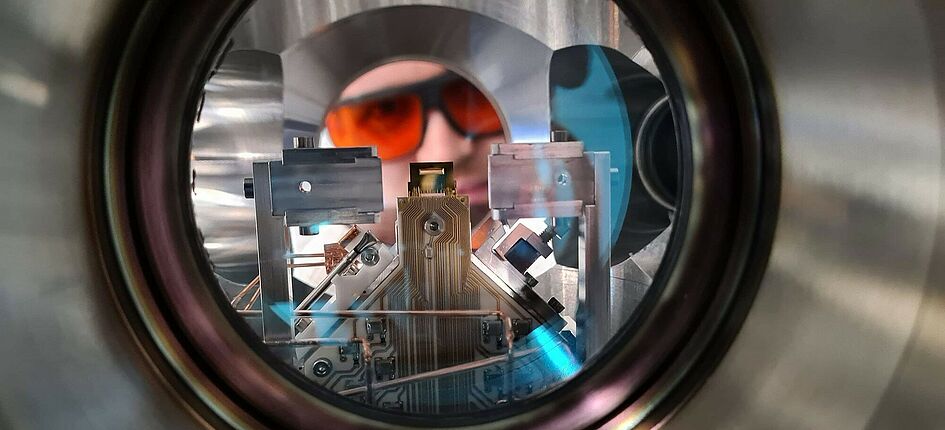
Lead author Philip Leindecker looks into the ultra-high-vacuum chamber of a quantum computer at PSI that operates using trapped ions. The experimental demonstration of the optical Magnus effect could help to control such quantum computers with even greater precision in future. Image: Edgar Brucke/Paul Scherrer Institute PSI
News
Winterthur/Zurich — A team from the Zurich University of Applied Sciences (ZHAW) and the University of Zurich (UZH) wants to find out whether a synthetic voice can sound specific to certain locations. The goal would be to create voices with specific dialects for research and businesses.
(CONNECT) According to a press release, the ZHAW School of Engineering and the Linguistics Center Zurich at UZH are investigating whether artificial intelligence (AI) can create voices that sound not just like a general region—such as Bern or Zurich—but like very specific towns. The focus is on dialect research, as CO-project leader Jan Milan Deriu from ZHAW explains: “Our vision is synthetic dialectology. We want to use knowledge from dialectology to improve language models—and, conversely, use synthetic data to answer questions in dialectology.”
The three-year project “Synthetic Dialectology of Swiss German” combines AI research and dialectology and has received funding from the Swiss National Science Foundation. Possible applications range from regionally tailored commercials and call centre voices to voice assistants and robotics. "We're already receiving inquiries from companies that want to use synthetic Swiss voices," said Deriu.
At the start of the project, the team is collecting voice recordings from three people in each of 85 towns in German-speaking Switzerland. Those in charge estimate that the process of recruiting participants and collecting data in the University of Zurich’s phonetics lab alone will take a year and a half.
At the same time, a proprietary voice-cloning model is being developed. It should not only reproduce well-known local dialects, but also be able to generate variants that do not appear directly in the data. As part of the evaluation, listening studies will examine how laypeople and experts perceive and geographically locate natural and artificial recordings. ce/mm

Swiss dialects differ in many small details; a research project is now investigating whether artificial intelligence can mimic them. Stock image: ILOVESwitzerland/Pexels
News
Zurich/Krakow — Nearly 80 students from the Swiss Federal Institute of Technology Zurich (ETH) have qualified for the European Rover Challenge with their CRATER initiative. From September 4 to 6, they will compete against international teams in Poland with a rover and a drone designed for Mars missions.
(CONNECT) CRATER, the student-run space robotics association at ETH, will participate in the European Rover Challenge 2026 for the first time with a rover and a drone designed for Mars missions. Their goal: to become the best newcomer team.
The international competition will take place in Kraków, Poland, from 4 to 6 September 2026. According to the organisers, 124 teams from 29 countries, with a total of 3,756 participants, have registered for the event. Turkey has the most teams, with 22.
More than 70 ETH students from over ten departments at their university are testing the limits of autonomous robotics in eight subgroups. Their rover and drone must successfully complete three major challenges in Krakow, which, according to a press release, are also relevant to Mars missions. Topic 1 is maintenance, which relies on precision manipulation and autonomous decision-making. The robotic arm, autonomous interaction, and switching operations play a crucial role in this process.
Topic 2 is Exploration and Drilling. During field surveys, samples will be collected not only from the surface but also from deeper layers, as well as for astrobiology. Topic 3 covers GPS-free navigation and drones. This involves autonomous navigation, landmark detection, and flying through an obstacle course.
CRATER is already looking for new members for the coming year. The desired skills include project management, systems engineering, coaching, astrobiology, and business matters. In addition, the team also needs specialists in robotic arms, navigation and control, propulsion systems, and autonomous drones. ce/mm

ETH students are building a Mars rover; the Kaiser Crater on Mars. Illustrative image: ESA/DLR/FU Berlin/CC BY-SA 3.0 IGO
News
Dübendorf, ZH — Oliver Graf has been named the new CEO of viboo. The serial entrepreneur is tasked with further developing the startup strategically and organisationally and establishing it, with its self-learning software designed to save heating energy, as a key player in smart building automation and decarbonisation.
(CONNECT) Viboo is repositioning itself for its next phase of growth. According to its press release, the Dübendorf-based climate and proptech startup has made a change in its executive leadership: Oliver Graf is taking over the position of CEO from Felix Bünning. Bünning, who co-founded viboo in 2022 with Benjamin Huber and Matthias Sulzer as a spin-off of the Swiss Federal Institute of Technology Zurich (ETH) and the Swiss Federal Laboratories for Materials Science and Technology (Empa), will become chairman of the board of directors.
The current management team expects Graf, an experienced German serial entrepreneur, to provide impetus for the company’s strategic and organisational development and to accelerate market expansion in the DACH real estate sector, where Oliver Graf has a strong network. Among other things, he spent several years as a proptech founder and board member at the now-bankrupt Berlin-based Ziegert Group, as well as serving as a business angel and consultant on numerous other real estate projects.
"I look forward to leading viboo into its next phase of growth," Graf is quoted as saying in the press release. He said he wanted to “scale up in a targeted manner” based on the foundation that has been laid so far. His goal: “Together with the team, I want to help support real estate investors, companies, and cities on their path to decarbonisation and thereby reduce CO2 emissions from buildings.”
Viboo has developed a multi-award-winning, artificial intelligence-based, self-learning software that predicts and optimises heating operations in existing buildings on a room-by-room basis. Through real-time analysis of thermal behavior, weather forecasts, and occupancy patterns, viboo achieves an average of 25 percent energy savings without the need for renovations, while maintaining the same level of comfort. At the end of 2025, viboo completed a €3.3 million funding round to support its continued growth. ce/mm
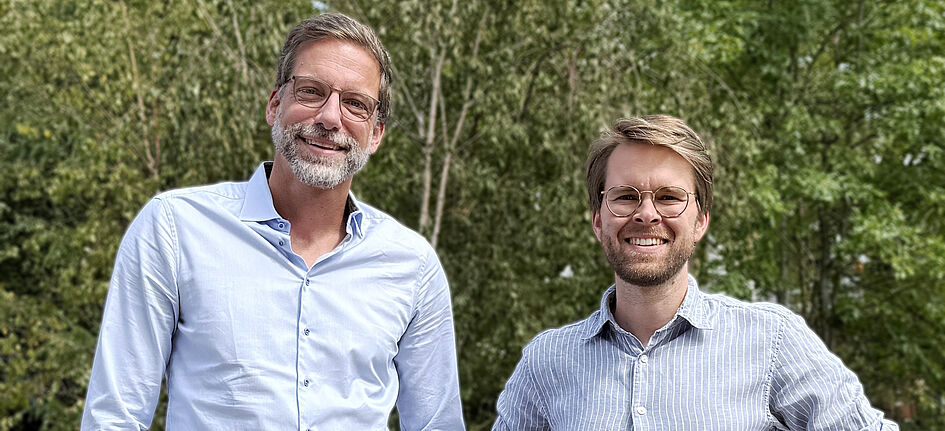
Oliver Graf (left) takes over the role of CEO from Felix Bünning (right). Bünning will now become Chairman of the Board of Directors. Photo: viboo AG
You need to load content from reCAPTCHA to submit the form. Please note that doing so will share data with third-party providers.
More InformationYou are currently viewing a placeholder content from Turnstile. To access the actual content, click the button below. Please note that doing so will share data with third-party providers.
More InformationYou are currently viewing a placeholder content from Vimeo. To access the actual content, click the button below. Please note that doing so will share data with third-party providers.
More InformationYou are currently viewing a placeholder content from YouTube. To access the actual content, click the button below. Please note that doing so will share data with third-party providers.
More InformationYou need to load content from reCAPTCHA to submit the form. Please note that doing so will share data with third-party providers.
More Information