News
Otelfingen, Canton of Zurich/Wettingen, Canton of Aargau/Zurich – Hitachi Energy will build its new Swiss headquarters in Otelfingen. There, the technology group’s energy division is taking over Jelmoli’s former distribution center and adjacent properties. Wettingen had also applied for the contract.
(CONNECT) Hitachi Energy will establish its Swiss headquarters in Otelfingen. The Zurich-based Swiss subsidiary of the internationally active Japanese industrial group made that decision on June 11, 2026. According to an official statement, the town council said it was “delighted with this decision.” Hitachi is a company “that fits perfectly with our industrial strategy and the ‘Energy and Materials Hub’ narrative.” Its establishment will strengthen Otelfingen as a business hub, as well as the entire region. “It creates new opportunities and underscores the positive development of our community.” Hitachi had announced plans to preserve 1,000 existing jobs and create 2,000 new ones.
In their analysis report on the municipality’s location strategy, published in 2025, the authors noted that the “highly prominent Jelmoli building” and the industrial development of the site could present opportunities if it were offered together with the adjacent municipality-owned Weberwis property. "Together with the Otelfingen Golfpark S-Bahn hub and the targeted redevelopment of the Jelmoli building, this will enable a reorientation of the Otelfingen site." So the plan worked out.
It is now clear that the company will take over the site of the former Jelmoli distribution center and adjacent parcels, totaling 11 hectares. The building is partially listed as a historic landmark. However, neither this nor the higher corporate tax rates compared to its competitor Wettingen in Aargau deterred Hitachi from choosing Otelfingen.
At their meeting on May 26, 2026, the members of the Aargau Cantonal Parliament’s Committee on the Environment, Construction, Transportation, Energy, and Spatial Planning voted 13 to 1, with one abstention, in favor of amending the master plan for the Tägerhardächer area. This laid the groundwork for Hitachi Energy to establish a presence in Wettingen. ce/mm
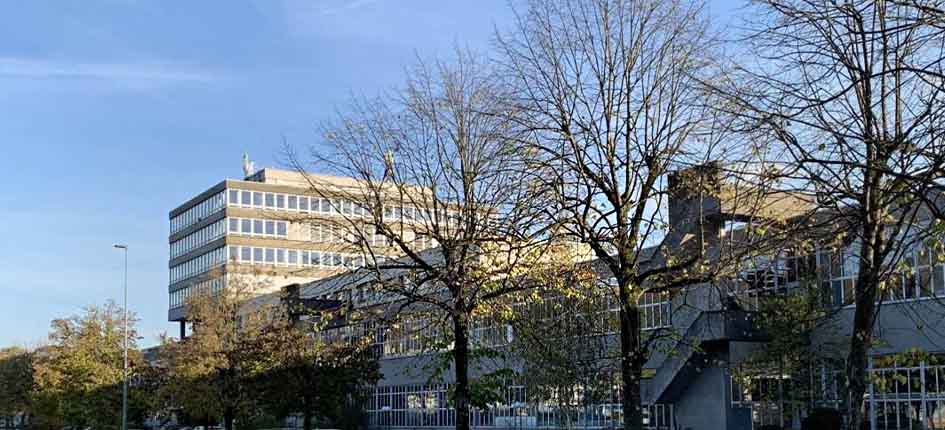
Hitachi has chosen the site of the former Jelmoli distribution centre, part of which is a listed building. Photo: Otelfingen Local Council
News
Schlieren/Dübendorf, Canton of Zurich – Venture Kick is supporting calmea, a startup founded in May 2026, in commercializing its sleep technology. Manufacturers of premium beds can install a sensor module on the bed to help adults improve the quality of their sleep.
(CONNECT) According to a press release, the Dübendorf-based startup calmea is receiving 150,000 Swiss francs from Venture Kick in Schlieren. The initiative has been supporting the startup, which was founded in May 2026, for some time now as it works toward commercializing its product, a sensor module. Manufacturers of premium beds can install this between the bedposts and the bed frame. With this, calmea aims to transform ordinary beds into smart sleep systems and help buyers achieve deeper, more restful sleep.
This system, developed by the Swiss Federal Institute of Technology Zurich, is designed to help people understand their own sleep and identify habits and patterns that interfere with it. No trackers, cables, or devices that need to be worn on the body or placed next to the bed are required. Instead, the measurements are based on proprietary electronics and machine learning algorithms.
The resulting data is fed into a companion app. It identifies and explains the causal relationships between environmental factors and the physiological processes that influence sleep. Integration with smart homes enables automations such as opening curtains or turning on the lights when sleepers enter a light sleep phase.
Calmea plans to use the 150,000 Swiss francs from Venture Kick to commercialize its product, specifically to install prototypes in preparation for pilot production runs with manufacturing partners already on board. “Venture Kick has encouraged us to think even bigger and more focused at every stage,” CEO Alexander Breuss is quoted as saying. “Beyond the funding, access to a network of experienced investors and founders, as well as the honest feedback we received during the Kickers Camps, was invaluable.” ce/mm

The calmea team has received 150,000 Swiss francs from Venture Kick. Photo: Courtesy of Venturelab Ltd.
News
Zurich/Bern – The AUKZIA research project at the Zurich University of Applied Sciences (HWZ), aimed at optimizing real estate brokerage, has received funding from Innosuisse. The Swiss Agency for Innovation Promotion is thereby recognizing the HWZ, a private institution, as a research institution with a strong practical focus.
(CONNECT) The student project AUKZIA at the Zurich University of Applied Sciences (HWZ) has been awarded a grant from Innosuisse. According to a press release, the Swiss Agency for Innovation Promotion, based in Bern, has thereby recognized the HWZ’s status as a practice-oriented research institution. The press release goes on to say that this funding commitment also sends an important signal to research initiatives at private universities of applied sciences.
The current AUKZIA research project is being developed further as a startup. The goal of the project is to streamline real estate brokerage. With the help of artificial intelligence, buyers and sellers will be able to connect more quickly on a single platform. Information should be presented in a transparent manner that is understandable to everyone. The funding from Innosuisse is intended to support the development of a market-ready prototype. The project will begin in late summer 2026 and is scheduled to run for 18 months.
“I am absolutely delighted that we are able to support a former HWZ student and his startup with our expertise,” Claude Meier, director of the Center for Research & Methods at HWZ, is quoted as saying in the press release. “It shows that the path to effectively and efficiently bridging the gap between practice and science can be very short. I am extremely pleased that our project is being supported by Innosuisse.” ce/ww

The student project AUKZIA at the Zurich University of Applied Sciences (HWZ) has been awarded funding from Innosuisse. Stock image: Campaign Creators/Unsplash
News
Zurich/Davos GR – More than 1100 participants from over 70 countries are meeting at the World Biodiversity Forum in Davos from June 14 to 19. The focus is on the question of how the global loss of biodiversity can be halted and reversed by 2030. The University of Zurich (UZH) is organizing the forum.
(CONNECT) The fourth World Biodiversity Forum will bring together experts from science, politics, business, society and culture at the Davos Congress Center from 14 to 19 June. The event is organized by the University of Zurich (UZH).
Under the motto "Leading Transformation Together", participants will discuss ways to protect biodiversity and implement the Kunming-Montreal Global Biodiversity Framework, according to a press release. This aims to halt and reverse the loss of biodiversity by 2030.
The forum covers ten subject areas. These include the functionality of ecosystems, the links between biodiversity and climate, water, food and health, the economic risks of biodiversity loss, the legal framework and the role of science, society and culture. "We cover every conceivable topic relating to biodiversity," says UZH earth system scientist and organizer Gabriela Schaepman-Strub.
In order to achieve the global goals, greater cooperation is needed across specialist and sector boundaries. The scientist attributes an important role to the economy and the financial sector. Companies are increasingly confronted with their dependence on natural resources - biodiversity forms the basis for numerous economic services, from fertile soils to clean water and climate regulation.
The forum will therefore focus on the question of how biodiversity can be measured and how the impact of investments on the conservation of biodiversity can be assessed in a comparable way. ce/as

At the World Biodiversity Forum, experts are discussing the protection of biodiversity and the importance of nature for the climate, water, food and the economy. Stock image: Nina Elise Reiter/Unsplash
News
Dübendorf ZH – With the help of its new New Zurich strategy, the FRZ Flughafenregion wants to present itself more strongly as a unified economic region and become even more attractive. The publication of a reader, which sets out the framework for further development alongside the city of Zurich, marks the starting signal for this.
(CONNECT) The FRZ Flughafenregion has launched the New Zurich development strategy. It is intended to further develop the area bordering the city of Zurich to the north and east into a magnet for the economy.
In this context, a new reader bundles the results of a four-year strategy process. It is intended to turn the discussion into action - as food for thought and with concrete ideas in five focus areas. Managing Director Rahel Kindermann Leuthard already presented an anchor partner for one of these at the launch in Dübendorf: Zürich Tourism supports the congresses and events sector; the organization was represented at the presentation by Director Thomas Wüthrich.
As an economic network, FRZ is responsible for the location development of 14 cities and municipalities around Zurich Airport. According to Rahel Kindermann Leuthard, the region has developed into one of the most economically dynamic regions in Switzerland in recent years. Now the time has come for it to finally shed its role as a transit-oriented periphery and become a high-performance, urban ecosystem, said the FRZ Managing Director, referring to the reader and emphasizing: "We don't want to let this process happen, we want to shape it."
Urban and regional strategist Thomas Sevcik considers this functional area to be characterized by the fact that, although it is developing in conjunction with the airport and the city center, it has its very own dynamic as an urban landscape in the countryside. Sevcik has developed the New Zurich concept as an approach. In addition, the structure and the location strategy basis were developed by entrepreneur and Netzwerk-Standort-Schweiz president Remo Daguati together with the cities and municipalities of the FRZ.
The strategy relates to a region with 300,000 inhabitants and over 200,000 jobs, which also includes municipalities that do not belong to the FRZ - such as Uster, the third largest city in the canton of Zurich. "Functionally, the region has long since grown together in many aspects and offers enormous potential for coordinated location development," said FRZ President and Dübendorf Mayor André Ingold. No new political structures are needed. This was also confirmed by the outgoing mayor of Wallisellen, Peter Spörri. "But a municipality alone has hardly any opportunities to attract an international company or provide extensive space for further expansion," says Spörri.
According to the strategy, New Zurich benefits from its location. This is reflected in excellent connectivity and becomes a compelling argument with available land and existing economic areas. In addition, large-scale infrastructures such as hotels, the presence of companies such as Microsoft and ABB and facilities such as the Innovation Park Zurich with the Dübendorf airfield and the Swiss Federal Laboratoriesfor Materials Science andTechnology (Empa) will score points. The five focus areas also build on this. In addition to congresses and events, these include digitalization and ICT, aviation and space economy, headquarters and international corporate functions as well as healthcare and life sciences. ce/yvh
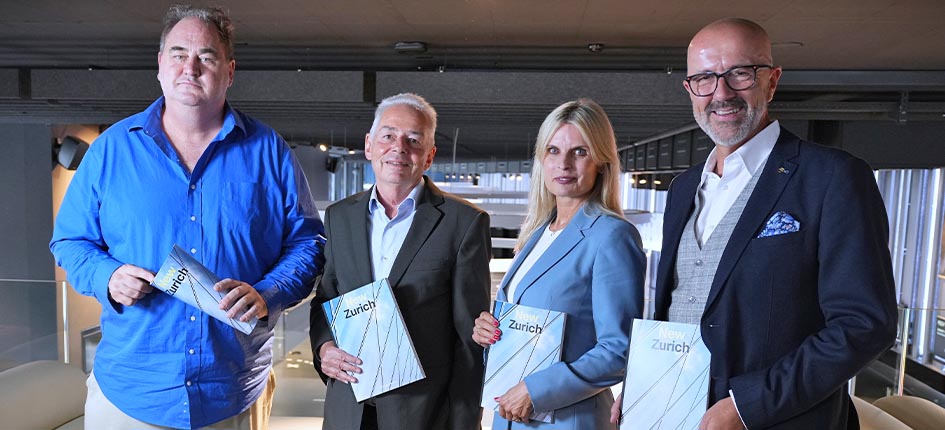
At the presentation of New Zurich (from left to right): urban and regional strategist Thomas Sevcik, former mayor of Wallisellen Peter Spörri, FRZ managing director Rahel Kindermann Leuthard, and FRZ president and mayor of Dübendorf André Ingold. Photo: courtesy of FRZ
News
Volketswil ZH – nnexd GmbH, founded by Irene D’Aurelio, has been online with its artificial intelligence platform mmesh.ai since the beginning of June 2026. This records the requirements of a marketing project in dialog and suggests the most suitable agencies or freelancers based on weighted criteria.
(CONNECT) nnexd has launched its mmesh.ai platform. It brings marketing service providers together with marketing experts who have a contract to award based on data. According to a press release, mmesh.ai does not see itself as a search portal, but as a "matching infrastructure for a market in transition". At the heart of this is the artificial intelligence assistant Rea, which records each project in dialog and suggests the most suitable service providers in real time on the basis of weighted criteria.
According to nnexd, the logic of search engines places providers with the largest budget for search engine optimization (SEO) or search engine advertising (SEA) at the top of their search results. "AI search shifts this power further away from service providers and towards AI systems that nobody controls," Irene D'Aurelio, founder of nnexd GmbH, is quoted as saying. "We are building the counter-architecture, a platform where expertise counts, not advertising budgets, star ratings or paid visibility. And where the customer decides for themselves what fit means to them."
This includes full-service agencies as well as a freelancer specializing in SEO, a photographer for the next shoot, a copywriter for the website or a lawyer for the general terms and conditions. "Today, marketing is a network of many disciplines," says the press release. "mmesh.ai fully maps this network."
mmesh.ai is free of charge for clients. Providers can choose between a free profile and an unlimited subscription for CHF 199 per month. According to the information provided, the algorithm treats all models equally. ce/mm
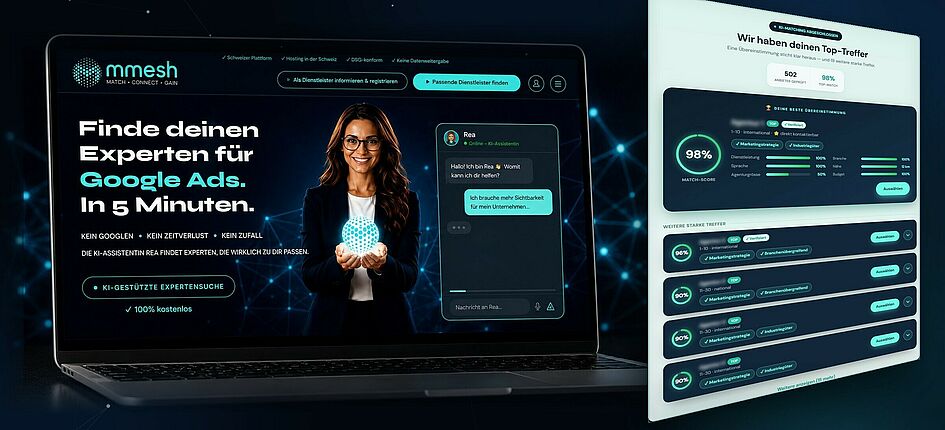
nnexd has launched its mmesh.ai platform. Image: Courtesy of nnexd GmbH
News
Zurich – Researchers at the Swiss Federal Institute of Technology in Zurich are working on a new substance that could slow down the progression of Alzheimer’s disease. Experiments on mice with substance 10 also showed anti-ageing potential.
(CONNECT) Researchers at the Swiss Federal Institute of Technology in Zurich (ETH) have developed a new active substance that could slow down the progression of Alzheimer's dementia. According to a press release, the active ingredient known as substance 10 is also said to have anti-ageing potential.
Ursula Quitterer and her team focused their investigations on the effect of the GRK2 enzyme. This protein regulates reactions to signals and stress in cells. GRK2 is particularly active in the heart and brain. Studies on brain tissue samples from patients with and without dementia showed that an inactive form of the enzyme was found more frequently in patients with dementia. This tended to clump together and prevented mitochondria from supplying the energy required by cells. Experiments on mice also showed that the inactive enzyme promotes the formation of beta-amyloid. This is the protein fragment that is considered to be the main trigger of Alzheimer's disease.
The use of substance 10 in mouse experiments again showed that the active substance can dissolve the protein clumps. The team observed both improved mitochondrial activity and reduced beta-amyloid deposits. Cardiac function and ageing processes were positively influenced by the use of the active ingredient.
"Alzheimer's is a very complicated disease," Ursula Quitterer is quoted as saying in the press release. As current drugs do not cure the disease, "it is so important that we have now identified a new target protein in GRK2 and a drug that acts via GRK2 and thus via a different mechanism than previous Alzheimer's drugs," Quitterer continues. The current study was recently published in the journal "Cell Reports Medicine". ce/ww

Researchers at ETH Zurich have developed a new drug that could slow the progression of Alzheimer’s disease. Stock image: Anna Shvets /Pexels
News
Schlieren ZH/Glasgow – Memo Therapeutics presented the positive results of its Phase II trial of Potravitug at the 63rd Congress of the European Renal Association in Glasgow. The principal investigator also spoke about new comparisons with an external control group of kidney transplant patients.
(CONNECT) Memo Therapeutics presented further analysis of results from the Phase II study of its compound Potravitug at the 63rd Annual Meeting of the European Renal Association in Glasgow. The novel therapeutic antibody is directed against BK polyomavirus (BKPyV) infections, known as BK nephropathy, in recipients of transplanted kidneys.
The presentation was given by Dr. Abdolreza Haririan, according to a statement from the spin-off of the Swiss Federal Institute of Technology Zurich, which is based at the Bio-Technopark Schlieren-Zurich. He is Professor of Medicine at the University of Maryland and Director of Studies. It comprised the data from the randomized, double-blind and placebo-controlled phase II study "SAFE KIDNEY II". A comparison with an external control group was also presented. According to the study, 44.9 percent of people in the potravitug group were able to completely eradicate the virus by week 20, compared with only 27.3 percent in the comparison group.
"BKPyV infection continues to be one of the most significant infectious complications following kidney transplantation, yet there are currently no approved therapies available for these patients," Haririan is quoted as saying. "These additional analyses support the results of the SAFE KIDNEY II study and demonstrate a consistently positive antiviral effect of potravitug compared to corresponding control groups."
Memo Therapeutics CEO Erik van den Berg emphasizes the potential of Potravitug "to become the first targeted therapy for kidney transplant recipients with BK polyomavirus infection".
Memo Therapeutics was granted fast-track status by the US Food and Drug Administration (FDA) in May 2023 and orphan drug status in the European Union in December 2025. According to van den Berg, the pivotal phase III trial is scheduled to begin this year. ce/mm

Memo Therapeutics has presented further analysis of the results from the Phase II trial of its drug candidate Potravitug. Stock image: Trust ‘Tru’ Katsande/Unsplash
News
Wädenswil, Zurich – The Zurich University of Applied Sciences (ZHAW) has conducted a feasibility study on agri-photovoltaics in the canton of Zurich. The study provides important insights into agronomic and economic aspects for policymakers and practitioners.
(CONNECT) Researchers from the Department of Life Science and Facility Management at the Zurich University of Applied Sciences (ZHAW) in Wädenswil have conducted a feasibility study on the use of photovoltaics (PV) on agricultural land in the canton of Zurich. According to a press release, the analysis shows that so-called agri-photovoltaics has economic potential, although this is subject to location-specific uncertainties and involves significant planning and permitting requirements.
Eight sites in the canton were evaluated as part of the agri-photovoltaic pilot projects in the Canton of Zurich. The aim was to examine agronomic and economic aspects in order to provide insights for policymakers and practitioners. It turned out that photovoltaic systems can generally be installed. Cost-effectiveness depends on the type of system, its location, and its size. Vertical systems provide reliable data, while tracking systems are subject to uncertainty. Peak electricity yields range from 1,100 to 1,470 kilowatt-hours per year, which is higher than the yields of traditional rooftop PV systems. In particular, the following was observed: Tracking systems generate the highest electricity yields and a particularly high yield in winter; vertical systems produce a high proportion of winter electricity despite lower overall yields; fixed systems yield higher average results but generate a lower proportion of winter electricity.
From an agronomic perspective, the structures provide protection against extreme weather. However, soil contamination and agricultural productivity must be taken into account. According to the study, yield estimates could generate a cash profit of between 200,000 and 400,000 Swiss francs for farms over a 25-year period. The policy recommendations include expanding support and advisory services, establishing legal clarity, and taking market and price risks into account. It is said that additional pilot plants could provide clarity on this matter. ce/ww

Researchers at the ZHAW have carried out a feasibility study into the use of photovoltaics on agricultural land in the canton of Zurich. Stock image: Andreas Gücklhorn/Unsplash
News
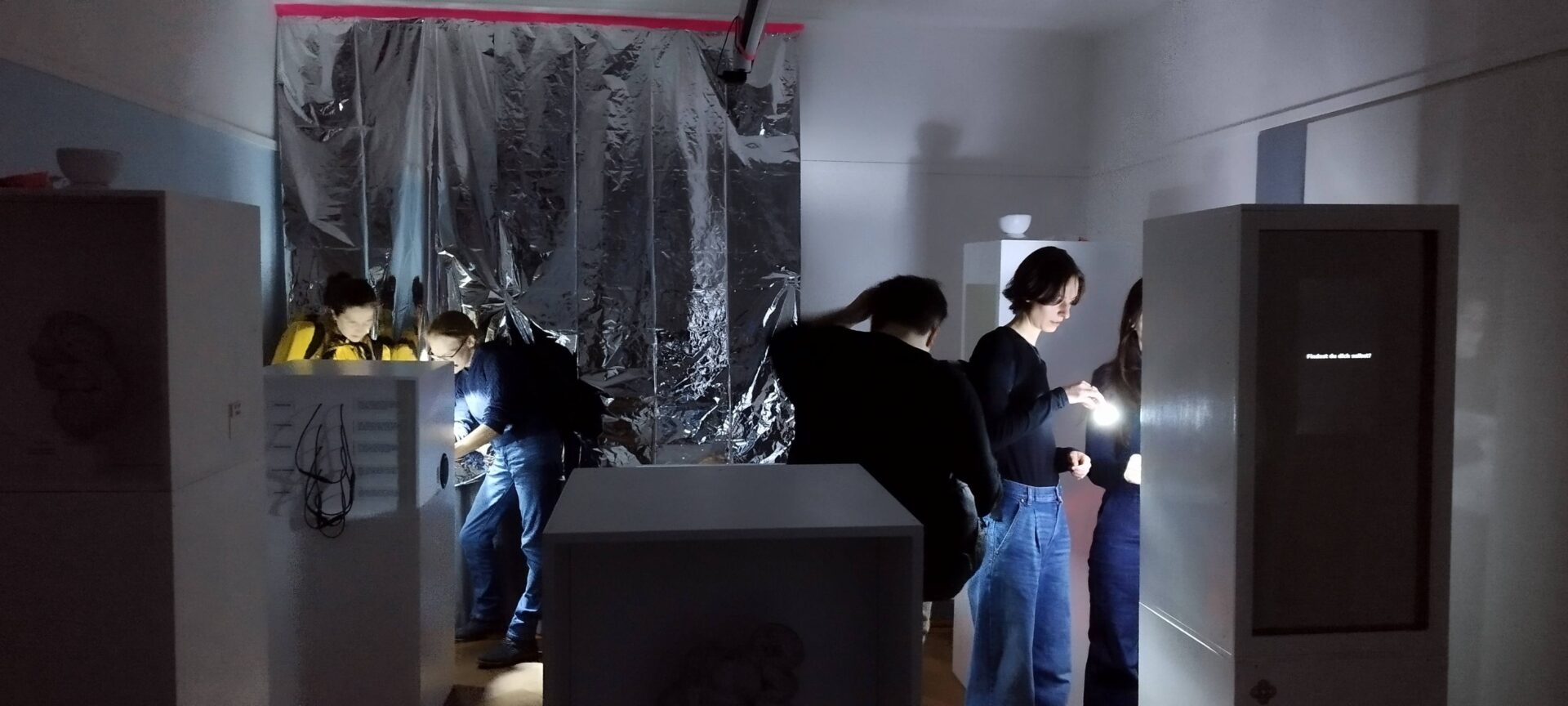
The first AI Escape Room has opened at Verena-Conzett-Strasse 7 in Zurich. The AI Escape Room brings the abstract topic of “artificial intelligence” to life: teams with different levels of prior knowledge work together to solve puzzles about AI basics in a playful, immersive and memorable way
Artificial intelligence is also changing the world of work in the public sector. A competent and critical approach to AI should not be left to chance. This is why the AI Escape Room was developed.
It can now be found at Verena-Conzett-Strasse 7 in Zurich. The AI Escape Room brings the abstract topic of "artificial intelligence" to life: teams with different levels of prior knowledge work together to solve puzzles about AI basics in a playful, immersive and memorable way. It is not about jumping on the AI hype. Real skills are taught and ethical issues are deliberately placed at the center. Participants then consolidate what they have learned in a moderated training session.
The offer is particularly suitable for teams who want to build up a sound basic understanding together, regardless of the technical background of the individual persons.
News
Zurich/Spreitenbach AG – Students from several universities are taking part in a young talent competition for marketing communication. The client for this year’s competition is Zweifel Chips & Snacks AG. The final will take place on June 16.
(CONNECT) Students at the Zurich University of Applied Sciences in Business Administration (HWZ) are taking part in a competition for young talent in marketing communications for the first time this year. According to a press release, Zweifel Chips & Snacks AG, based in Spreitenbach, is the client of this year's competition. A total of 35 teams are competing for the Junior Agency Award organized by the Zurich-based association Leading Swiss Agency (LSA). In addition to the HWZ, the Zurich University of Applied Sciences (ZHAW) from Winterthur, the Lucerne University of Applied Sciences and Arts (HSLU), the University of Applied Sciences Northwestern Switzerland (FHNW) and the Bern University of Applied Sciences (BFH) are also represented. On the HWZ side, three teams from the Bachelor Business Communications HWZ will be competing.
Teams of five to six students develop communication campaigns according to Zweifel's specifications. They are supported by coaches from the LSA and the respective university. Preliminary decisions were made in May and early June, with the winning teams working on their presentations until the award ceremony on June 16, 2026.
"The Junior Agency Award offers the opportunity to step out of your own bubble and compete with other universities," said Bernhard Schweizer, Head of the Bachelor Business Communications program at the HWZ, in the press release. "It is interesting for us to see what our students take away from this: professionally, personally and also in dealing with a real competitive situation. This experience will certainly also be valuable for the further development of our degree course." ce/ww

As part of the Junior Agency Awards, students at the HWZ are developing marketing campaigns for Zweifel Chips. Photo: Zweifel Chips & Snacks AG
News
Interlaken/Spiez BE/Schlieren ZH/Baar ZG – The three young companies Lightium from Schlieren, enshift from Baar and Swiss Cluster from Spiez have been honored with the Swiss Economic Award 2026. They are innovators in photonics, green energy and industrial coating.
(CONNECT) Lightium, enshift and Swiss Cluster are the winners of this year's Swiss Economic Award. With this competition, the Swiss Economic Forum(SEF) and the award partners Helbling, Swisscom and UBS promote young business talent in Switzerland. As part of the SEF, which took place on June 4th and June 5th in Interlaken, nine finalists presented their business models to the main jury and the audience. The winners of the three categories are now presented by the organizers in a press release.
The Deeptech/Life Science category was won by Lightium, based in the Bio-Technopark Schlieren-Zurich. The company develops photonic chips based on thin-film lithium niobate and operates one of the few chip factories with open access to date. The technology enables particularly fast and energy-efficient optical data transmission, for example for data centers, telecommunications, quantum computing and other high-performance technologies. The jury praised Lightium "for its technological depth and the potential to build a central infrastructure for future optical systems".
The winner in the services category is enshift. The Baar-based Energytech company develops solutions for the decentralized energy supply of properties and sites. Founded in 2022, the company plans, finances, implements and operates on-site systems for photovoltaics, charging infrastructure, battery storage and energy management and sells the energy directly to the owners or tenants of the buildings. The jury praised "in particular the holistic approach with which enshift is making the energy transition in the building sector economically viable".
Swiss Cluster won the Production/Commercial category. The spin-off of the Bern University of Applied Sciences and the Swiss Federal Laboratories for Materials Science and Technology (Empa) in Thun, founded in 2020, brings highly specialized thin-film coating into a flexible, industry-compatible format. The modular systems from the Spiez-based company combine various coating technologies and can be configured according to the application. This gives research institutes, laboratories and industrial development departments access to sophisticated coating processes without having to use large, rigid systems. The jury was impressed by "the technical precision, the modular approach and the concrete benefits for materials research, nanotechnology and industrial development". ce/mm

Lightium (pictured), enshift and Swiss Cluster are the winners of this year’s Swiss Economic Award. Photo: courtesy of NZZ Connect
You need to load content from reCAPTCHA to submit the form. Please note that doing so will share data with third-party providers.
More InformationYou are currently viewing a placeholder content from Turnstile. To access the actual content, click the button below. Please note that doing so will share data with third-party providers.
More InformationYou are currently viewing a placeholder content from Vimeo. To access the actual content, click the button below. Please note that doing so will share data with third-party providers.
More InformationYou are currently viewing a placeholder content from YouTube. To access the actual content, click the button below. Please note that doing so will share data with third-party providers.
More InformationYou need to load content from reCAPTCHA to submit the form. Please note that doing so will share data with third-party providers.
More Information