News
Zurich — Tenity, a Zurich-based fintech startup accelerator, has participated in funding rounds for several startups. The German company reltix GmbH is receiving support, as are the Italian company Soource and Pints AI from Singapore.
(CONNECT) Zurich-based Tenity Group AG has participated in an early-stage financing round for Düsseldorf-based reltix GmbH. According to a press release, reltix raised a total of 3 million euros in this funding round. The German company operates in the real estate sector and offers solutions to improve property management. To this end, reltix relies on artificial intelligence and involves stakeholders from the energy, finance, and construction sectors.
“Instead of optimizing the existing model, reltix is creating an open ecosystem in which service quality improves structurally—and becomes more scalable the more workflows are handled by the technology,” says Guillermo Forteza, Investment Lead Europe at Tenity.
Soource, based in Milan, has also completed a funding round of 3 million euros, in which Tenity participated. The startup is developing an AI-powered analytics platform for the corporate procurement market. “We are very pleased to support Soource in modernizing one of the least digitized areas of corporate procurement,” Forteza stated in a separate press release.
According to an article by Tech in Asia, Tenity also participated in a $5.6 million Series A funding round for the Singapore-based startup Pints AI. Pints AI develops auditable AI-based tools for regulated financial institutions.
Tenity was founded by the Swiss stock exchange SIX in 2015 under the name F10. The start-up promoter has been independent since a so-called management buy-out in 2022. ce/jh

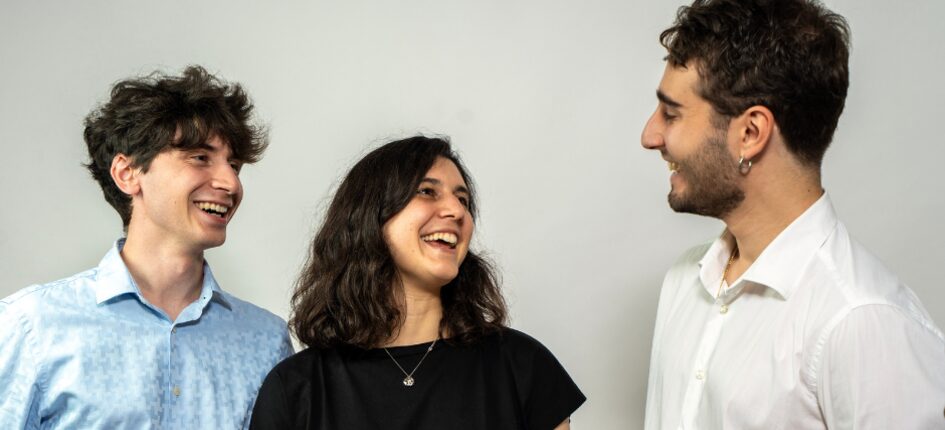
Tenity Group AG has taken part in an early-stage funding round for Düsseldorf-based reltix GmbH; pictured is Tenity’s CEO and co-founder, Andreas Iten. Photo: Ergon
News
Windisch AG/Lausanne – The winners of this year’s startup competition >>venture>> were honored in Lausanne. EDWATEC won the Grand Prize. Noemon, Trulux, Baxiva, CINDER, Actival, Regcheck, and Botana AI are the other winners.
(CONNECT) This year's >>venture>> competition came to an end with the finals in Lausanne. According to a press release, EDWATEC of Lausanne won the Grand Prize. As the overall winner of the startup competition, the company will receive 150,000 Swiss francs. EDWATEC develops optical amplifiers that enable photonic systems for communications and artificial intelligence (AI) applications. In addition to the Grand Prize, EDWATEC was also named the winner in the Industrials & Engineering category.
TruLux from Wettswil and Baxiva from Schlieren are two more category winners from the canton of Zurich. TruLux won in the Consumer Solutions category with its AI tool for identifying high-quality products via smartphone. Baxiva develops vaccines to prevent severe infections and was the winner in the Pharma & Biotech category. Noemon AG, based in Opfikon, Canton of Zurich, also won the Spotlight Award for its AI that learns on its own.
CINDER AG won the audience award, worth 10,000 Swiss francs, in the vote held on the final day. The Bern-based startup is developing therapeutic wearables for the treatment of pelvic pain. And Actival, based in Neuchâtel—a spin-off from CSEM—has patented active dental care products that enable the slow, controlled release of liquids to improve oral health. As a result, the startup won in the Medtech & Healthcare category.
Softreg GmbH, based in Wohlen, Aargau, was successful in the Business & Finance category with its RegCheck offering. It uses AI to simulate regulatory audits in order to prevent compliance gaps. In the Social & Environmental category, Botana AI GmbH from Oberägeri, ZG, came out on top. It helps farmers manage their land efficiently.
>>venture>> was launched in 1997 and is organized by the Venture Foundation, based in Windisch. To date, the award winners have founded more than 1,500 companies and created more than 15,000 jobs. ce/jh

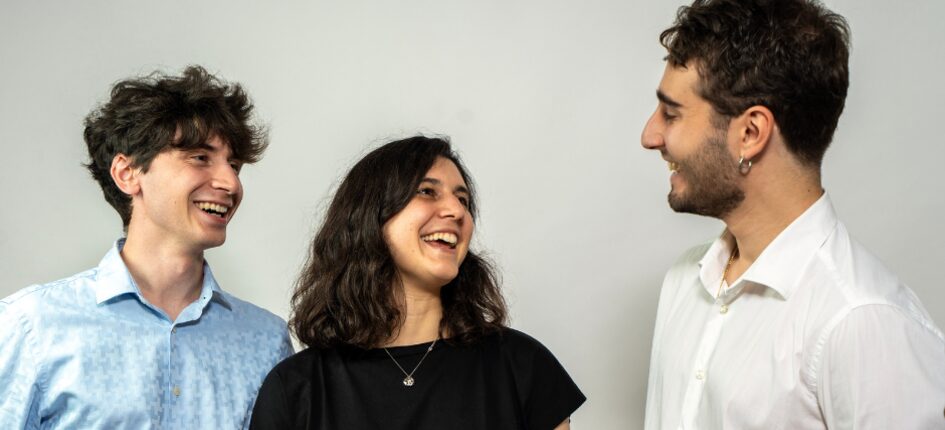
Baxiva is one of the winners of the >>venture>> competition; pictured: Baxiva CEO Giorgia Greter. Photo: courtesy of CARB-X
News
Zurich/Frankfurt am Main/Piscataway — Verity AG has been honored with the 2026 IERA Award. The company’s smart warehouse platform uses autonomous drones to monitor inventory in real time. The drones navigate without GPS and automatically detect deviations.
(CONNECT) The DeepTech company Verity has won the 2026 “Award for Innovation and Entrepreneurship in Robotics & Automation” (IERA). The Zurich-based company was recognized for the development and market launch of its smart warehouse platform.
According to a press release, the solution uses fully autonomous indoor drones that navigate through warehouses without GPS or human intervention, scan barcodes, and transmit inventory data directly to warehouse management systems. Deviations are automatically detected and reported.
The drones operate autonomously for several months and require no more than three battery changes per year. By continuously tracking physical goods movements, the solution improves inventory accuracy, reduces labor costs, and lowers overall costs. The drones capture about 500,000 images daily in the warehouses and use this data to improve the technology.
“The jury was impressed by Verity’s extensive patent portfolio, its solid business plan, and the company’s pioneering role in bringing innovative technologies to market,” said Jim Ostrowski, chairman of the IERA Award Committee.
Verity systems are currently in use at more than 200 warehouses in 15 countries, including at IKEA, Maersk, DSV, and UPS. “It is a great honor to be recognized by the leading organizations in the robotics industry,” said Markus Hehn, co-founder and Chief Technology Officer of Verity.
The IERA Award has been presented annually since 2005 by the IEEE Robotics and Automation Society (IEEE/RAS) in Piscataway, New Jersey, and the International Federation of Robotics (IFR) in Frankfurt. ce/as
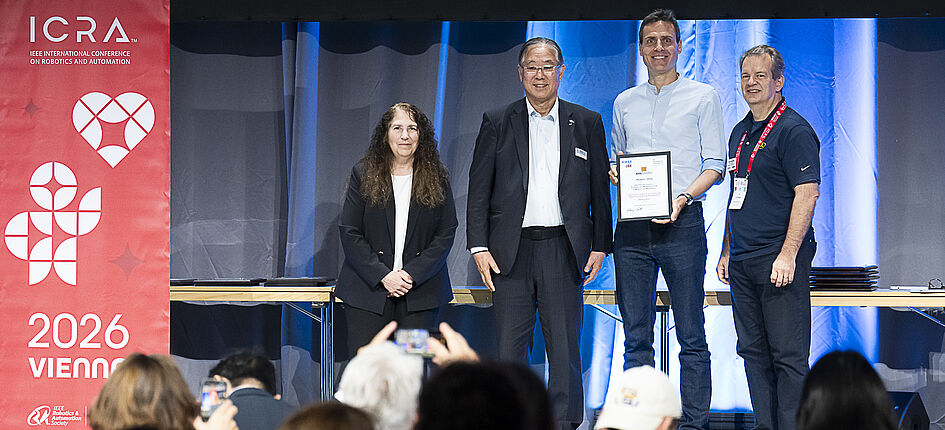
(from left to right) Nancy Amato (President of IEEE RAS), Takayuki Ito (President of the IFR), Markus Hehn (Verity AG) and Jim Ostrowski (Vice-President for Industrial Activities at IEEE RAS). Photo: Denes Erdos/International Federation of Robotics
News
Zurich – Cancer cells can evade the effects of treatment by entering a kind of dormant state. Researchers at the Swiss Federal Institute of Technology in Zurich (ETH) have developed a method to activate them without damaging the surrounding healthy tissue.
(CONNECT) Researchers at ETH have developed a light-controlled molecular switch that awakens lung cancer cells from a protective dormant state. Stress hormones can put tumor cells into a sort of dormant state via glucocorticoid receptors found in every cell of the body, explains ETH in a press release. However, for therapies to target cancer cells, those cells must be active.
For their approach, the researchers used light and a kind of the body's own recycling system. The latter marks defective proteins, which are then broken down by the cell. Here, the glucocorticoid receptors on the tumor cells were labeled. The light was used to prevent the receptors in the surrounding healthy tissue from being affected as well.
Specifically, the researchers have developed a three-part switch. It consists of two subunits that bind to the receptor and the labeling enzyme, respectively, with a flexible linker between them. If this link is straight, the enzyme can mark the receptor for degradation. If it is denatured by exposure to light of a specific wavelength, the enzyme cannot reach the receptor.
In laboratory cultures of lung cancer cells, the researchers were able to use their method to deactivate the tumor cells' receptors, thereby bringing the cells out of dormancy. Switches that migrate from tumor cells into healthy tissue were selectively deactivated using light. “This allows the activity to be strictly confined to the tumor core, thereby sparing the surrounding tissue and resulting in significantly fewer side effects,” research group member Robin Scheuplein is quoted as saying in the press release. “The effect is reversible and can be precisely controlled.” ce/hs
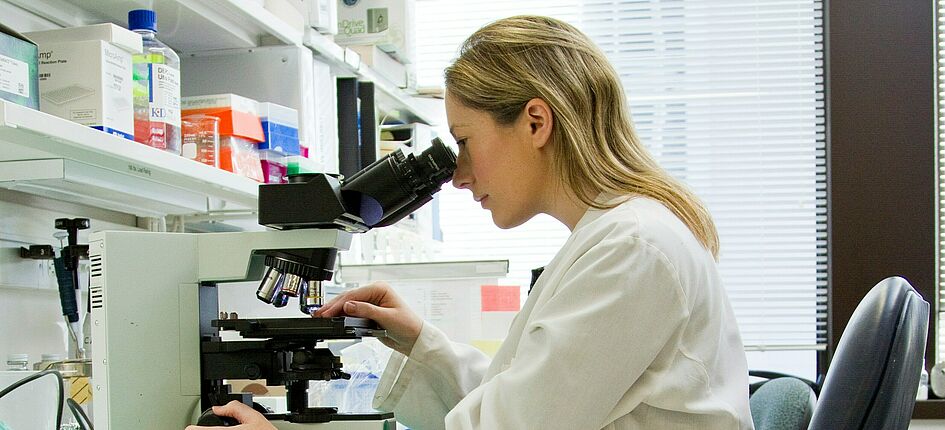
Researchers at ETH Zurich have developed a light-controlled molecular switch that awakens lung cancer cells from a protective dormant state. Stock image: National Cancer Institute/Unsplash
News
Zurich – Fatigue and exhaustion can be detected with a saliva test. This is the conclusion reached by researchers at the University of Zurich (UZH) following a study. This method could help improve road safety and safety in safety-critical professions in the future.
(CONNECT) Researchers at the Institute of Forensic Medicine at the University of Zurich (UZH) have demonstrated in a study that saliva tests can provide insights into fatigue and exhaustion. According to a press release, the team led by Thomas Krämer, professor of forensic pharmacology and toxicology, was able to identify ten biomarkers that provide information on this.
Fatigue has long since become a societal problem. According to studies, one-third of the Swiss population suffers from sleep deprivation. In their study, researchers at UZH sought to investigate the link between metabolism and sleep deprivation. To this end, they studied 20 healthy young men who typically slept seven to nine hours a night. The participants were subjected to various sleep-deprivation scenarios. At the same time, a standard night was examined in accordance with the rules. The team analyzed the saliva samples using high-resolution mass spectrometry. Machine learning was used to search for molecular patterns.
“We have found that severe fatigue affects about ten percent of all biomolecules in saliva,” Michael Scholz, the study’s lead author, is quoted as saying in the press release. “The challenge was to filter out, from tens of thousands of molecules, precisely those that reliably indicate fatigue. Using state-of-the-art technology, we were able to identify ten biomarkers that do exactly that.”
In a subsequent field study, the ten patented biomarkers will be tested under real-world conditions, and a rapid test will be developed. This could lead to greater safety on the roads and in relevant workplaces. The study was published in the latest issue of ACS Publications. ce/ww

A saliva test can reveal signs of fatigue, for example among hospital staff. Stock image: Magnific
News
With 770 registered guests, the 12th ImmoSummit organized by FRZ (Zurich Airport Region – Business Network & Location Development) drew an exceptionally high level of interest. The established industry gathering for the Swiss construction and real estate sector took place on June 10, 2026, under the theme “From Talent to Champion” at THE HALL in Dübendorf. The focus was on the Swiss real estate market, the development of high-performing teams and locations, and the launch of the “New Zurich” strategy guide.
Dübendorf, June 11, 2026 – The The 12th ImmoSummit built on the discussion from the previous year. In 2025, the event was held under the theme “From Silo to Team Sport.” The focus was on the realization that the major challenges facing the construction and real estate industries can no longer be solved in isolation. In 2026, the discussion took a decisive step forward: What does it take for collaboration to lead to true excellence? The theme “From Talent to Champion” was explored on three levels: the personal skills and attitudes of leaders; collaboration within companies and on projects; and the coordinated development of regions and locations.
The ImmoSummit was opened by André Ingold, President of the FRZ and Mayor of Dübendorf, and Rahel Kindermann Leuthard, Managing Director of the FRZ Zurich Airport Region.
Real Estate Market: Stability Despite Uncertainties
Michael Birrer, Head of Research & Advisory at Migros Bank, and Michelle Müller, Real Estate Research Analyst at Migros Bank, provided an up-to-date overview of the Swiss real estate sector. Under the title “Real Estate Market Assessment – Positive Outlook in Uncertain Times,” they analyzed the economic and political landscape. Conclusion: Inflation remains under control despite rising energy prices. Interest rates in Switzerland are expected to remain relatively low. The residential real estate market remains robust due to structural shortages. In the office market, however, quality is becoming an increasingly important factor. Well-connected, flexible, and modern spaces are successful, while older properties are facing increasing pressure to transform.
In the interview that followed, Béatrice Schaeppi, CEO and Chair of the Board of Directors of Schaeppi Grundstücke AG, shared insights into the management of a long-established family business. The focus was on responsibility, integrity, and innovative strength in a challenging market environment. The figures would be communicated on a regular basis. In 2025, Béatrice Schaeppi was named EY Entrepreneur of the Year in the Family Business category.
Spotlight on “New Zurich”
A highlight of the 12th ImmoSummit was the presentation of the “New Zurich” reader by Thomas Sevcik, founder of the strategy think tank arthesia, and Remo Daguati, owner and CEO of LOC AG. With “New Zurich,” the FRZ (Zurich Airport Region) is launching a discussion on how the dynamic region surrounding the airport should develop in the future. The wider region has a population of around 300,000 and more than 200,000 jobs. Over the past few decades, a functionally integrated economic and living environment has emerged that combines economic dynamism, international connectivity, and a high quality of life.
The reader compiles the results of a multi-year strategic process in which the 14 member cities and municipalities of the FRZ, as well as experts from the business, academic, and regional development sectors, participated. The focus is not on new political structures, but on more coordinated regional development with a long-term perspective. "New Zurich" is not a finished master plan, but rather food for thought and, hopefully, a call to action, said FRZ Managing Director Rahel Kindermann Leuthard in her opening remarks.
The focus is on five key areas: Digitalization and ICT (BYTE), Aviation and the Space Economy (AERO), Corporate Headquarters and International Business Functions (HUBS), Conventions and Events (MEET), and Health and Life Sciences (CARE). In the coming months, the areas of development will be defined in more detail and gradually translated into initial projects. According to Remo Daguati, the goal is to develop groundbreaking new technologies (deep tech) and leverage the outstanding infrastructure—data centers and nearby top universities—to create successful business models. The presentation’s closing message sums up the vision: “New Zurich is an idea and a place whose time has come.” Daguati and Sevcik see the Zurich airport region as a place for doers.
Identify, nurture, and attract talent
Damien Ulrich, a gold medalist in building services engineering (EFZ) at SwissSkills 2019; Jael Schlatter, a carpenter and participant in SwissSkills 2020; and Dario Meyer, a forward for EHC Kloten, discussed how talent can lead to top performance.
From their different perspectives, the three speakers made it clear that talent alone is not enough. What matters most are passion, precision, discipline, perseverance, and an environment that supports young people and entrusts them with responsibility. It's all about having a positive attitude and taking a chance. Or, as Dario Meyer put it: “A mistake is proof that you tried.”
Architecture creates identity
With Sören Grünert, a partner at BIG – Bjarke Ingels Group, the focus turned to a major international construction project: the new Dock A at Zurich Airport. Under the title “Social Infrastructure – From Idea to Identity,” he demonstrated how architecture can go beyond its immediate function to create identity, enhance the quality of life, and generate social value.
The new Dock A is set to set new standards for both the aviation and construction industries. The project combines international appeal with Swiss building traditions and serves as a prime example of the interplay between architecture, place branding, and place making. The wooden structures of Dock A, projected onto the massive LED wall, amazed the audience. For Grünert, it is a privilege to bring New Zurich’s modern gateway to the world to life.
Performance Culture, Leadership, and Values
Anders Indset provided the closing remarks. The Norwegian-born business philosopher, deep-tech investor, and former elite athlete shed light on the demands of leadership in the age of artificial intelligence, exponential change, and dwindling certainties in a presentation titled “The Viking Code—Toward a Performance Culture Rooted in Values.”
His key message: Excellence and sustainable success require not only a commitment to performance, but also clear values, a long-term perspective, and the ability to proactively anticipate future developments. Possibilism bases its goals on existing possibilities.
JODOK CELLO provided a special musical highlight. The Swiss cellist and content creator has captivated millions of people around the world with his blend of classical music and digital communication. The ImmoSummit was hosted by Monika Schärer.
Platform for exchange and collaboration
With 770 registered attendees, the 12th ImmoSummit underscored its importance as a key platform for Switzerland’s construction, real estate, and business location sectors. The event combined professional guidance with personal interaction and concrete ideas for the further development of companies, projects, and regions.
Group photo: (c) FRZ / André Maurer

News
Dübendorf, ZH — BTRY AG is receiving 2.2 million euros in funding from the European Union’s EIC Accelerator program. The company plans to use the funds, among other things, to lay the groundwork for Europe’s first factory for solid-state thin-film batteries.
(CONNECT) BTRY has been selected in the screening process for the EU's EIC Accelerator funding program. According to a press release, the spin-off from the Swiss Federal Laboratories for Materials Science and Technology (Empa) and the Swiss Federal Institute of Technology Zurich (ETH) is receiving 2.2 million euros to further develop its flexible and ultrathin solid-state batteries.
In the current funding round, 38 companies from across Europe were selected; the success rate was less than 5 percent.
BTRY plans to use the funds to accelerate the industrialization of its technology, prepare for market launch, and lay the groundwork for Europe's first industrial facility for thin-film solid-state batteries. It is expected to be capable of producing millions of batteries annually.
Founded in 2023 and headquartered in Dübendorf, the startup develops ultra-thin thin-film batteries that use solid-state materials instead of liquid electrolytes for applications in the industrial, Internet of Things (IoT), medical technology, and wearables sectors. The batteries are designed to combine energy storage and high power output in a single solution. A solvent-free vacuum coating process based on roll-to-roll systems from the semiconductor industry is also expected to enable scalable and cost-effective production.
The EIC Accelerator invests in startups and small and medium-sized enterprises (SMEs) that are developing an innovative technology, service, or business model with the potential to create new markets or bring about lasting change in existing markets. ce/as
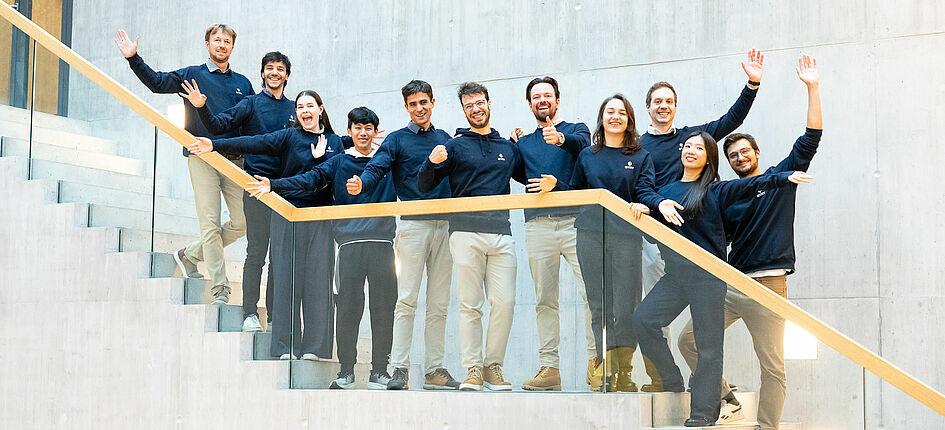
The BTRY team is receiving 2.2 million euros to further develop its solid-state batteries. Image: BTRY
News
Zurich/Pisa — Researchers at the Universities of Zurich (UZH) and Pisa have developed a method to manipulate the gene activity of the fatty tissue surrounding blood cells. In experiments involving mice and human tissue samples, impending tissue damage was prevented.
(CONNECT) Researchers at UZH and the University of Pisa are exploring a way to prevent vascular complications associated with obesity and type 2 diabetes. They target the fatty tissue surrounding the blood cells, according to a press release from UZH. In people with metabolic disorders, this perivascular fat often becomes pro-inflammatory, which over time leads to vascular disease.
The researchers have identified chemical markers that determine how the genome is read in each cell as the cause of this disorder. The researchers used specific epigenetic drugs—known as BET protein inhibitors—to correct the disorder: With their help, gene activity was reprogrammed. “Instead of targeting just one molecule at a time late in the course of the disease, we wanted to reprogram the entire gene activity profile of adipose tissue,” UZH cardiologist and study leader Francesco Paneni is quoted as saying in the press release.
In addition, the researchers were able to identify hexokinase 2—an enzyme involved in glucose metabolism—as a key factor in triggering vascular complications. “If enzyme activity is reduced—either indirectly through changes in epigenetic regulation or directly at the enzyme itself—the inflammatory response in adipose tissue decreases and vascular reactions return to normal,” explains Paneni. According to the researchers, epigenetic drugs could complement existing therapies by reducing the risk of vascular dysfunction, which can potentially lead to a heart attack or stroke. ce/hs

Researchers at UZH and the University of Pisa are developing a method to prevent vascular complications. Stock image: Edward Jenner/Pexels
News
Zurich — The Swiss Federal Institute of Technology Zurich (ETH) ranks 8th in the latest QS World University Rankings, down from 7th last year. EPFL ranks 22nd; a total of 11 Swiss universities made it into the top 1,400. The Massachusetts Institute of Technology tops the rankings.
(CONNECT) ETH remains the top university in continental Europe in the latest World University Rankings by Quacquarelli Symonds (QS). However, as the eighth-ranked university (tied with University College London), it has dropped one spot compared to the previous three years, according to a press release. It has thus retained its place in the top 10 for the twelfth consecutive year. At the top of the list is the Massachusetts Institute of Technology (MIT) in the United States, followed by Imperial College London and Stanford University in California, which share second place.
ETH's score (96.3 out of 100) has changed only slightly compared to last year (96.7). ETH also highlights its strengths and top ratings. Accordingly, it moved up 11 spots in the "International Research Network" category, 10 spots in "Employment Outcomes," and 9 spots in "Reputation Among Employers." In the "International Faculty Members" category, it achieved the maximum score of 100 points; in "Academic Reputation," it scored 99.8 points; and in "Per-Capita Citation Rate of Faculty Members," it scored 98.8 points.
Other Swiss universities in the top 1,400 include the Swiss Federal Institute of Technology in Lausanne (22nd), the University of Zurich (98th), the University of Basel (150th), the University of Geneva (168th), the University of Bern (191st), the University of Lausanne (233rd), the University of Italian Switzerland (456th), the University of Fribourg (670th), the Zurich University of Applied Sciences (ranked between 851 and 900), and the University of Neuchâtel (ranked between 1201 and 1400) ce/jh

ETH Zurich is ranked eighth in the QS World University Rankings. Photo: Alessandro Della Bella/ETH Zurich
News
Zurich – The Canton of Zurich aims to support businesses in their dealings with cantonal authorities. To this end, the canton has set up a new business portal. This section provides information and resources on starting, running, and closing a business.
(CONNECT) The Canton of Zurich has created a digital platform to provide businesses with information and guidance. On the new business portal, interested parties can find answers to specific questions about dealing with cantonal authorities in day-to-day business operations. “With the new business portal, the Canton of Zurich is helping to increase transparency, make information easier to find, and provide modern support for business-related matters,” said Carmen Walker Späh, Government Councillor and Head of the Department for Economic Affairs, in a related press release from the cantonal administration.
The new portal is divided into three sections: Starting a Business, Running a Business, and Closing a Business. For each area, numerous submenus are provided with information, a list of government services, the relevant contact points, and existing cantonal services. Relevant non-governmental organizations were also taken into account.
The "Starting a Business" section, for example, addresses questions about the appropriate legal structure, location, and financing. The "Running a Business" section provides information on topics such as hiring employees, tax and financial matters, and business expansion, among others. Anyone considering closing their own business will find guidance on succession planning or liquidation in the "Closing a Business" section. ce/hs

The Canton of Zurich has set up an information platform for businesses. Stock image: Henrique Ferreira/Unsplash
News
Cologny (GE)/Adliswil (ZH)/Epalinges (VD) – The World Economic Forum (WEF) has selected this year’s Technology Pioneers. Of the 100 international startups, two are based in Switzerland: Metafuels, based in Adliswil, develops sustainable fuel, while Atinary aims to advance research through AI.
(CONNECT) The World Economic Forum has once again selected 100 international startups as Technology Pioneers this year, according to a press release. The 100 startups come from a total of 23 countries, with India accounting for nine of the selected companies. Switzerland is represented by two startups: Metafuels from Adliswil and Attinary from Epalinges.
Metafuels has developed Aerobrew, a sustainable aviation fuel produced from methanol. The company has created a technology with which methanol can be converted into kerosene. Metafuels' fuels are fully compatible with existing aircraft, engines and airport infrastructure. Metafuels is currently striving to create a Europe-wide sales basis for this sustainable aviation fuel.
Atinary Technologies aims to advance research and development (R&D) through the use of artificial intelligence (AI) and robotics. The goal is to make R&D automated or autonomous. That is how self-driving labs would be created. Behind this lies a technology that enables Atinary to empower human researchers to use machine learning in conjunction with robots to autonomously learn, adapt, and optimize experiments. ce/jh
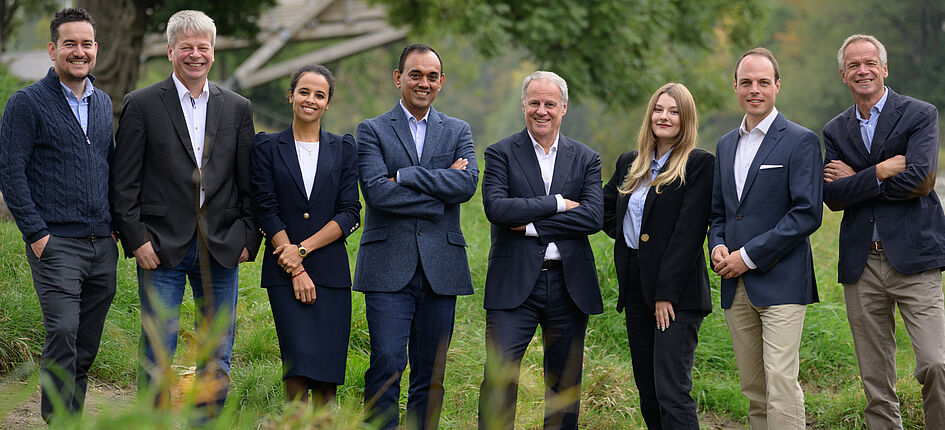
Among the pioneers is the Metafuels team; fourth and fifth from the left: founders Saurabh Kapoor and Leigh Hackett. Photo: Metafuels
News
Schlieren/Dübendorf, Canton of Zurich/St-Sulpice, Canton of Vaud – Forgis AG, Bubble Robotics GmbH, and Embodied AI have been selected for the Google DeepMind Accelerator. A total of 15 robotics startups are participating in the three-month programme to prepare for the launch of their products.
(CONNECT) Forgis from Schlieren, Bubble Robotics from Dübendorf, and Embodied AI from St-Sulpice have qualified for the Google DeepMind Accelerator along with twelve other European startups, according to a press release. The 15 startups will participate in a three-month mentoring programme and receive technical support to help them develop their robotics solutions to market readiness. Participating startups will have access to Google's artificial intelligence (AI) solutions.
"Forgis develops AI agents that 'understand machines the way experienced engineers do,'" according to Google. This would make it possible to predict errors and optimise performance. Bubble Robotics is developing robots that can be used both underwater and on the water's surface. And Embodied AI develops remote-controlled humanoid robots that use collected data—for example, in customer service—to improve and evolve on their own.
The programme will run from its launch in London through September and conclude with a three-day closing event in London. Participants will have the opportunity to present their solutions to mentors, Google partners, and Google teams. The other startups are based in the United Kingdom (4), Norway, Greece, Romania, Germany, Italy, Denmark, France, and Sweden. ce/jh
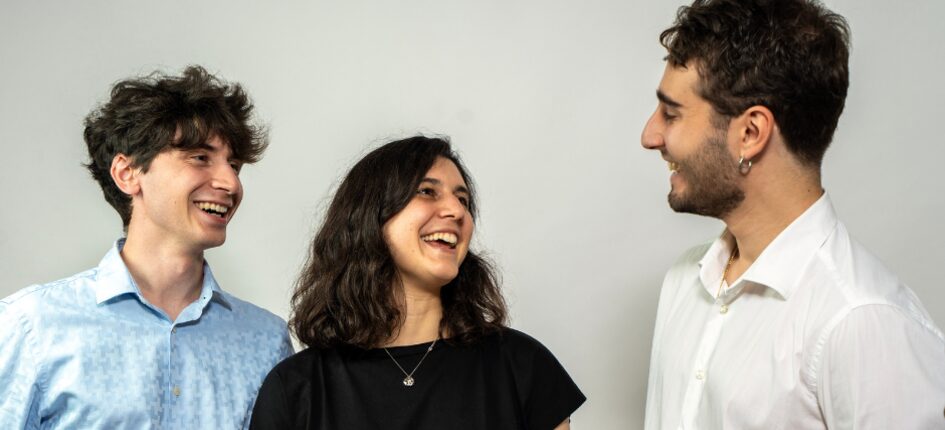
The Forgis team has qualified for the Google DeepMind Accelerator alongside other European start-ups. Image: Courtesy of Forgis AG
You need to load content from reCAPTCHA to submit the form. Please note that doing so will share data with third-party providers.
More InformationYou are currently viewing a placeholder content from Turnstile. To access the actual content, click the button below. Please note that doing so will share data with third-party providers.
More InformationYou are currently viewing a placeholder content from Vimeo. To access the actual content, click the button below. Please note that doing so will share data with third-party providers.
More InformationYou are currently viewing a placeholder content from YouTube. To access the actual content, click the button below. Please note that doing so will share data with third-party providers.
More InformationYou need to load content from reCAPTCHA to submit the form. Please note that doing so will share data with third-party providers.
More Information