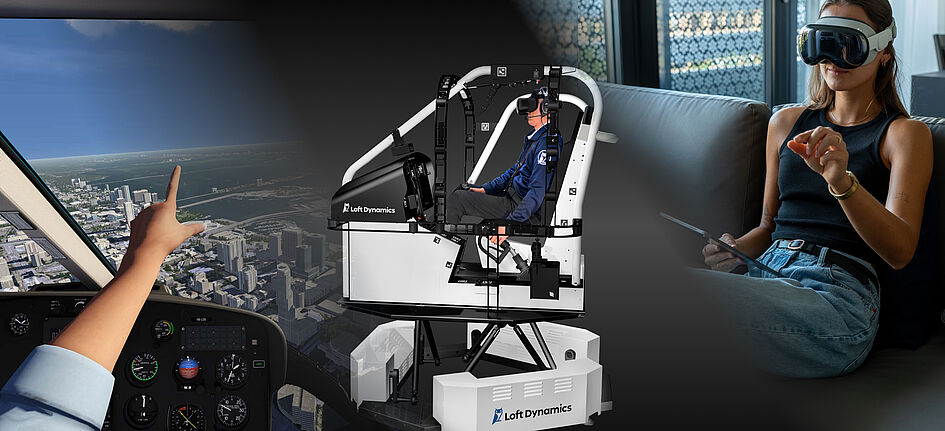
News
Winterthur – The 5th Digital Night 2026 organized by the Digital Winterthur Association and the ZHAW showed that there is a lot of interest and numerous questions on the topic of agentic and physical artificial intelligence (AI). Experts provided information on how far AI and robotics have actually come and where their limits lie.
(CONNECT) Digital Winterthur and the Zurich University of Applied Sciences (ZHAW) gave interested members of the public an overview of how far autonomous agentic models and robotics have actually come at their 5th Digital Night. According to a press release, the focus was not on the technical possibilities of robots, but on the question of when robotics can make a difference.
Robert MacKenzie, Partner at Ellipsis Ventures, therefore made it clear that 99 percent performance is not enough for robotic systems. Instead, these systems are only sufficiently reliable to enter and survive on the market from 99.999 percent. The two ZHAW professors Theresa Schmiedel, Professor of Information Systems, and Alexandre de Spindler, Professor of Information Systems, spoke about a major shortcoming of robots: their lack of social intelligence. You not only have to recognize people, but also understand their intentions.
The advertising and film industry is also evolving thanks to AI. Manuel Flurin Hendry, film director and researcher at the Swiss Federal Institute of Technology in Zurich and the Zurich University of the Arts, illustrated how this happens. René Raber, CTO at Microsoft Switzerland, showed how digital sovereignty is implemented in Switzerland. He then discussed with Manuela Hug, founder of KI Power Swiss, how employees can be trained in the use of AI.
"The record attendance of 130 participants at the Digital Night showed that there is a great deal of interest and many questions about AI in Winterthur," Andri Fabig, President of Digital Winterthur, is quoted as saying. He took the opportunity to refer to the first Digital Impact Day, which will take place on September 10 at the Technorama in Winterthur, with four practice-oriented workshops, a keynote speech and a panel discussion. Interested parties can already register on a waiting list. ce/mm
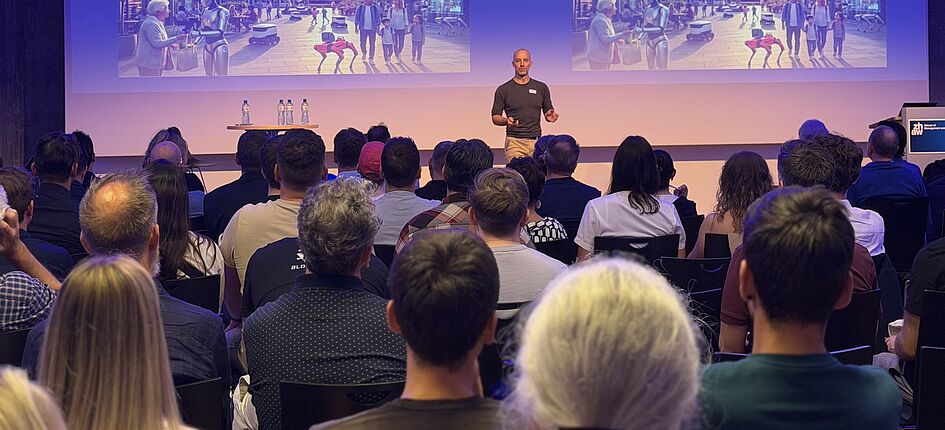
Digital Night 2026 in Winterthur attracted a record number of visitors, with 130 attendees. Photo: courtesy of Digital Winterthur
News
Dübendorf ZH – Three months after its foundation, Stellar Alpina has closed a financing round with 3.5 million Swiss francs. The deep-tech start-up is developing innovative rotating detonation engines for rockets that work with supersonic explosions.
(CONNECT) Stellar Alpina AG, which is based in the Innovation Park Zurich and was founded in February 2026, has received 3.5 million Swiss francs in a pre-seed financing round, according to its press release. The round was led by the Zurich-based venture fund Founderful, which specializes in such early-stage financing. In addition to strategic investors from the deep-tech ecosystem, the venture capital firm LP&E from Stans, whose portfolio includes investments in the aerospace companies Isar Aerospace, Quantum Systems and Impulse Space, also participated.
The spin-off of the Swiss Academic Space Initiative in Dübendorf develops compact rotating detonation rocket engines (RDRE) that operate at supersonic speeds. They are designed to make transportation between orbits faster and more efficient. "We believe that detonation-based propulsion can enable the necessary quantum leap by making rocket engines smaller, more efficient and more powerful," co-founder Victor Elliesen is quoted as saying. "Stellar Alpina lays the foundation for mobility in space between worlds."
This new class of space drives, which Stellar Alpina is building, is up to ten times quieter, delivers higher performance and requires fewer mechanical components, according to another report from the start-up. "82 days after launching at our park, they have completed Europe's first known commercial RDRE propulsion test - and now a $4.5 million pre-seed round," commented Switzerland Innovation Park Zurich. "A wonderful example of what can grow when student teams, research and entrepreneurial drive come together in the right environment."
Thomas Zurbuchen, Professor at the Department of Earth and Planetary Sciences at the Swiss Federal Institute of Technology in Zurich and Scientific Director at NASA between 2016 and 2022, describes it as his dream "to see how Swiss technology enables and expands space exploration. To do this, we need real entrepreneurial drive and energy. We need to support the doers who work hard and take personal risks to turn these ambitious goals into reality, and Stellar Alpina is just such a team!" ce/mm
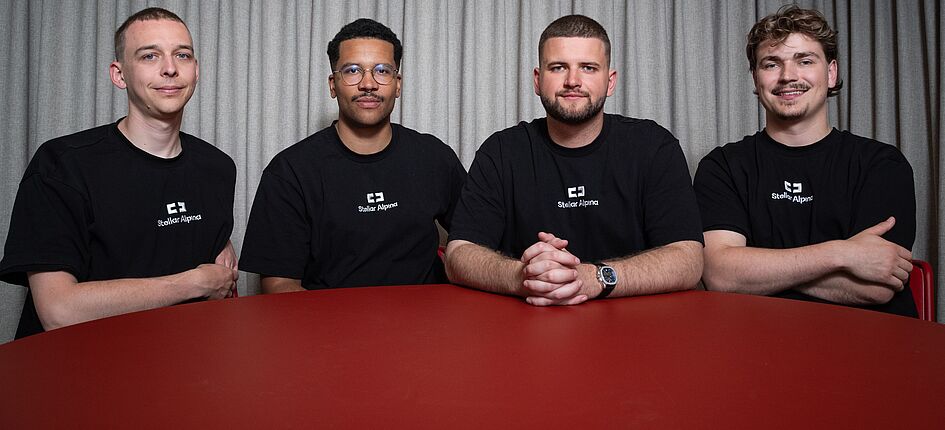
(from left to right) Rick Röthlisberger, Simi Y. Wespi, Victor Elliesen and Patrick Egli have secured CHF 3.5 million for Stellar Alpina in a pre-seed funding round. Photo: courtesy of Daniel Kunz/Stellar Alpina AG
News
Winterthur/Dietikon ZH – The payment provider Wallee from Winterthur and the data intelligence specialist avolut have developed a dashboard that translates anonymized credit and debit card data into information about customers. Retailers can thus better understand the purchasing behavior of their customers.
(CONNECT) Wallee and data intelligence specialist avolut AG from Dietikon have developed a dashboard that provides information about customers based on anonymized credit and debit card data, according to a press release. The aim is to offer retailers opportunities to better understand customer behavior and derive data-based decisions from this. The payment profiles created enable insights that were previously only accessible via loyalty programs.
The so-called Payment Account Reference, PAR for short, can be used to create payment profiles without allowing conclusions to be drawn about individual persons. The PAR remains the same across different payments and is transmitted regardless of whether customers pay with a physical card or via a digital wallet. With avolut, Wallee's diverse payment data can then be processed in a dashboard focused on customer loyalty.
The dashboard prepares Wallee's payment data in analyses of customer loyalty, purchasing behavior and omnichannel usage. Among other things, retailers gain insights into new customer development, repurchase rates and the connection between online and offline purchases. They can also analyze the impact of campaigns or loyalty programs. According to the companies, no additional software systems are required - the only prerequisite is the use of Wallee as a payment provider.
In view of the increasing share of card payments in Switzerland, these insights are particularly valuable for merchants. According to the Swiss Payment Monitor, credit or debit cards now account for a good 60 percent of all transactions, avolut reports.
Sascha Kruesi, Co-Founder CPO of the Wallee Group, explains: "We value avolut's expertise in analyzing customer data. The dashboard enables Wallee customers to gain a deeper insight into the behavior of their end customers". ce/ja

Avolut has teamed up with Wallee to develop a dashboard that uses anonymised credit and debit card data to analyse the customer base. Image: courtesy of avolut AG
News
Affoltern/Hedingen ZH – Samuel Schweizer, CEO of Ernst Schweizer AG in Hedingen, was unanimously elected to the board at the eleventh general meeting of the Knonauer Amt location promotion organization. He succeeds the entrepreneur Sabine Weisbrod.
(CONNECT) According to an article in the "Affolter Anzeiger", Samuel Schweizer has been elected to the board of the Knonauer Amt location promotion organization. The CEO of the metal construction company Ernst Schweizer AG replaces Sabine Weisbrod, Co-Managing Director of Weisbrod-Zürrer AG, who had been a member of the Board since 2018.
Eveline Fenner was also newly elected to the Board of Directors as the successor to Eliane Studer Kilchenmann, who is stepping down. Chairman Marcel Strebel, Chairman of the Board of Directors of Anta Swiss AG, Vice Chairman Ronald Adler and the other members of the ten-member Board of Directors were confirmed until 2028.
The Knonauer Amt location promotion organization is committed to the ecological, social and economic development of the region. Among other things, the aim is to strengthen energy efficiency and regional value creation and to attract companies from the health, high-tech and knowledge-based services sectors. Half of the Board of Directors consists of representatives from business and half from politics. ce/ja

Samuel Schweizer has been newly elected to the board of the Knonauer Amt Economic Development Agency. Photo: courtesy of the Knonauer Amt Economic Development Agency
News
Dübendorf ZH – Biomed AG has launched its new Biomed Evida product series. The new brand is intended as a supplement to a balanced diet for a healthy metabolism.
(CONNECT) Biomed AG has launched the new Biomed Evida product series. According to a press release, the Dübendorf-based pharmaceutical and life science company intends to use the new brand to offer supplementary solutions for a healthy metabolism in addition to a more balanced, healthy diet. The aim is to provide the metabolism with a stable supply of energy on a daily basis, with minimal fluctuations in blood sugar levels. Biomed Evida is therefore not a substitute for a healthy lifestyle, but a healthy supplement.
Specifically, the range includes InShape as a protein- and fiber-rich meal for weight control, AppControl to control the feeling of satiety, ReduForte as a diet companion, FibrePlus as a supplementary daily fiber intake and GlucoBalance for everyday blood sugar regulation.
The new products are designed to restore metabolic balance and promote a healthy lifestyle. The products are available from pharmacies and drugstores. ce/eb

Biomed AG has launched its new brand, Biomed Evida. Image: courtesy of Biomed AG
News
Zurich/Paris – The University of Zurich (UZH) is an academic partner for the HiBiDiS mission of the European Space Agency (ESA). For the first time, it will make it possible to look under the treetops and down to the ground from space, thereby helping to improve our understanding of ecosystems.
(CONNECT) At the end of May, ESA gave the green light for the Hyperspectral Biodiversity Scout (HiBiDiS) mission. The University of Zurich is the academic partner in an international consortium with three other partners from industry and research: the Italian space company Sitael as the main contractor, the Belgian company Amos and the Belgian research institute VITO.
"Thanks to the new Empyreum platform, HiBiDis will generate data that was previously unavailable, opening up new possibilities for monitoring terrestrial ecosystems," Sitael CEO Chiara Pertosa is quoted as saying in the ESA press release. "I would like to thank our partners Amos for the hyperspectral instrument and VITO and the University of Zurich for the data processing and scientific contribution to the mission."
The satellite sensor will record the Earth's surface from three different angles, explains UZH in its report on the mission. This makes it possible for the first time to distinguish between treetops and undergrowth. The aim is to gain a better understanding of biodiversity and the functioning of forest ecosystems. The UZH research team of the Earth System Science Group at the Department of Geography will work on scientific questions based on its many years of experience in remote sensing of biodiversity, simulate the data collected by HiBiDiS and validate it.
"HiBiDiS gives us the opportunity to observe and better understand biodiversity and ecosystem processes below the forest canopy globally and systematically," explains Maria J. Santos, UZH Professor of Earth System Sciences and head of the scientific contribution to the ESA mission. "This allows us to better understand how biodiversity in the undergrowth helps ecosystems to cope with climate change and human intervention." ce/mm

The Hibidis satellite is equipped with a hyperspectral camera system to improve our understanding of biodiversity in the undergrowth. Image: ESA
News
Dübendorf ZH/Nagoya – Loft Dynamics has received approval for its flight simulator from the Japanese aviation authority JCAB. The simulator for the Airbus H125 TXi helicopter type is used by Nakanihon Air, Japan’s largest provider of helicopter services.
(CONNECT) Loft Dynamics from Dübendorf has received approval from the Japan Civil Aviation Bureau (JCAB) for its virtual reality (VR) simulator for pilot education and training. According to a statement, the simulator for the Airbus H125 TXi helicopters will be operated at Nakanihon's headquarters in Nagoya, Japan. Nakanihon is the largest provider of helicopter services in Japan.
With the approval of the JCAB, Loft Dynamics has received its first operating license in the Asia-Pacific region. The Dübendorf-based company thus not only sees the option of promoting pilot training for helicopters in Japan, but also in the entire region. The JCAB approval is the third after the approvals of the American supervisory authority, the Federal Aviation Administration (FAA) and the European Aviation Safety Agency (EASA). The VR simulator is the first level 7 flight simulator (Flight Training Device, FTD) to be approved in Japan. The simulator allows pilots to train various scenarios and error situations, such as engine failures, tail rotor failures, hydraulic system failures or other damage. Furthermore, various terrain formations or weather situations can be simulated, as well as communication between the crew and a team of technicians.
"Maintaining the highest aviation safety standards and avoiding serious incidents are our core objectives, and Loft Dynamics is a reliable partner in helping us achieve them," said Shigeharu Matsuoka, President of Nakanihon Air, in the press release. "The launch of the first FTD Level 7 VR simulator in Japan is an important milestone. It enables our pilots to train complex, decision-intensive scenarios and rare equipment failures in a safe, controlled environment."
The flight simulator was introduced via the Inter-Craft Corporation, which also negotiated the certification with the JCAB. Sebastien Borel, CEO of Loft Dynamics, is convinced that "the close cooperation with Nakanihon Air, Inter-Craft and the JCAB" will advance pilot training and enable Loft Dynamics "to offer qualified VR helicopter training in Japan for the first time". ce/ww
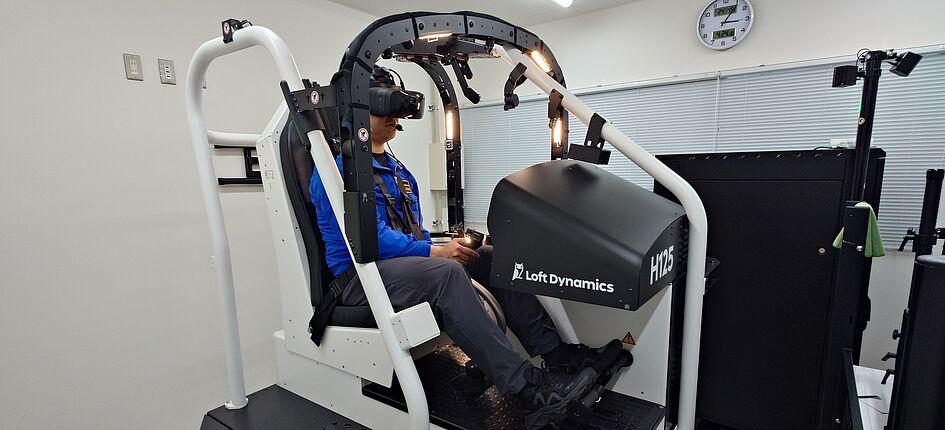
Loft Dynamics has received JCAB certification in Japan for its VR-H125 simulator. Image: courtesy of Loft Dynamics AG
News
Winterthur – The Swiss innovation agency Innosuisse classifies heyPatient AG as a start-up with particularly high growth potential. Accordingly, the Winterthur-based company receives the Innosuisse Scale-up Program Award and is accepted into the second phase of the Scale-up Program.
(CONNECT) According to a press release, heyPatient AG has successfully qualified for the second, i.e. scale-up phase of the Innosuisse coaching program and is therefore now an official Innosuisse scale-up. This gives the healthtech company, which was founded in 2019, access to intensive coaching on scaling, organization, international compliance, IPO strategy, legal and financing.
For heyPatient, inclusion in this program means confirmation of the business model and its technological basis, recognition of the market development to date and confidence in the growth potential: "This confirmation motivates us to consistently continue on our path, to sustainably improve the digital patient journey and to support healthcare organizations in making their processes more efficient and patient-centric," CEO Matthias Spühler is quoted as saying.
HeyPatient offers a digital platform for communication between medical facilities on the one hand and patients on the other. As the Winterthur-based company explains, its current focus is "clearly on further scaling". This includes the further expansion of efficient and scalable processes, the further development of the organizational structure, the further expansion of the partner network and preparations for international expansion. ce/mm

COO Regula Spühler-Hofman (left) and CEO Matthias Spühler are leading heyPatient, a new official Innosuisse scale-up. Photo: heyPatient AG
News
Winterthur – The Nuclear Medicine Department at Winterthur Cantonal Hospital has been recognized as a qualified Level 1 Theranostics Competence Centre. Theranostics can help to identify and treat the specific tumor cells of an affected person.
(CONNECT) The Kantonsspital Winterthur (KSW) has been certified as a Qualified Theranostics Center of Excellence Level 1 by the European Society of Nuclear Medicine. With its EARL accreditation program, the organization confirms that the hospital carries out targeted tumor treatments according to clearly structured and interdisciplinary processes. KSW is one of the first hospitals in Switzerland with the appropriate qualification. "Our success with the EARL qualification is the result of close collaboration between the medical team, MTR, administration, specialist nursing, medical physics, radiation protection and the clinical partner disciplines at KSW," Bernd Klaeser, Head of Nuclear Medicine at KSW, is quoted as saying in a statement from the hospital.
The term theranostics is made up of the words therapy and diagnostics. It describes personalized medicine and refers to tests or procedures that can be used both diagnostically and therapeutically. In the treatment of cancer, theranostics can help to specifically identify and treat the tumor cells.
Nuclear medicine procedures at the KSW include radioiodine therapy for thyroid diseases, radioligand therapy for prostate cancer and radiopeptide receptor therapy for neuroendocrine tumors. "All of these methods reach tumor cells in a very targeted manner," says Klaeser. Which of these is suitable in each individual case depends on the type and spread of the tumor as well as the individual circumstances. The EARL qualification now confirms that the necessary nuclear medical clarification, therapy planning and treatment are always carried out in accordance with quality assurance processes. ce/mm

The KSW has been certified as a Level 1 Qualified Theranostics Centre of Excellence by the European Society of Nuclear Medicine. Image: Winterthur Cantonal Hospital
News
Zurich/Bern – Researchers led by the Universities of Zurich and Bern have shown how important it is to recognize social dynamics in isolated teams at an early stage and provide them with targeted support. The study was carried out by a research team in Antarctica and is particularly relevant for long-term missions in space.
(CONNECT) An international study led by Jan Schmutz, professor at the Institute of Psychology at the University of Zurich(UZH), and Andrea Cantisani, psychiatrist and research associate at the University of Bern, has investigated how the coexistence of teams changes in isolation, confinement and under extreme stress. According to a UZH report, a crew of twelve was equipped with sensors during their ten-month mission at Concordia Station in the Antarctic interior. They recorded when and for how long team members were close to each other.
In addition, the crew members answered a psychological questionnaire at four different times during their stay in one of the most remote places in the world with temperatures as low as minus 80 degrees. This enabled the researchers to track how social relationships, loneliness, mistrust, conflicts, cohesion and self-perception of one's own performance developed over the course of the mission.
According to the study, it was particularly noticeable that more closeness did not automatically have a positive effect. This means that in highly restrictive living spaces, it is not only isolation that can be stressful, but also constant proximity. "In small teams under extreme conditions, more contact does not automatically mean more social support, but can even increase tensions," Jan Schmutz is quoted as saying.
In addition, subgroups of people of the same language or nationality increasingly formed. Although this can provide support and orientation, it also harbors the risk of social fragmentation and can weaken cohesion in multicultural teams.
The study is particularly relevant for future long-term missions in space, but also for other extreme working environments such as submarines or platforms on the high seas. "The results show," says Schmutz, "how important it is to recognize social dynamics early on and provide teams with targeted support." ce/mm
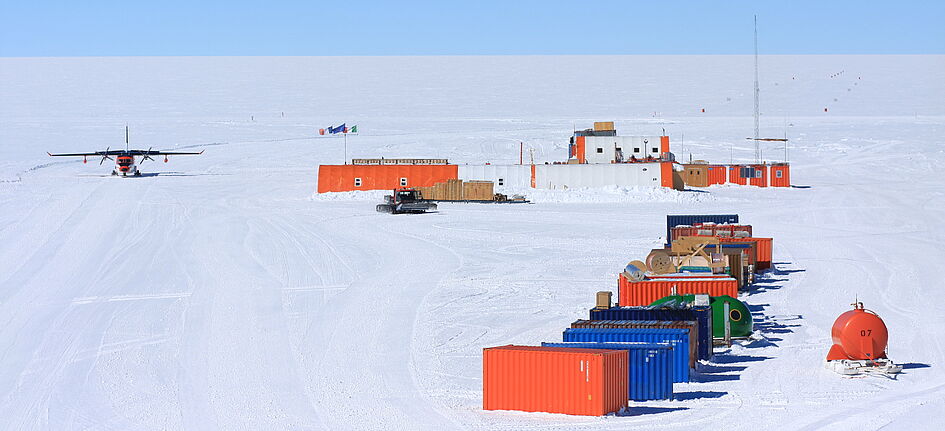
A twelve-member crew at the Concordia Station (pictured) was fitted with sensors during a ten-month mission to record their arrival times. Photo: A. Salam/ESA
News
Dübendorf ZH/Zurich/Küssnacht SZ – Innovire has raised 2.6 million dollars in its first financing round. The investors were convinced by the fact that Innovire’s AI fire protection system Avian was already in use at dozens of production plants in Europe and the USA just one year after the company was founded.
(CONNECT) Innovire AG has raised 2.6 million dollars in a pre-seed financing round. The round was led by the Zurich-based venture capital firm Founderful, which focuses on early-stage financing. According to a statement from the start-up, which was founded in 2023 and is based at the Switzerland Innovation Park Zurich in Dübendorf, the fresh capital will be used for the further market expansion of Avian, its artificial intelligence (AI)-based camera system for early fire detection.
Avian detects abnormal heat development in production facilities at risk of fire and thus helps to prevent fires. As Innovire emphasizes, Avian is "not just a camera feed with simple alarm rules. The system was developed by engineers with in-depth experience in computer vision, machine learning, robotics, thermal imaging and industrial systems."
The globally distributed business magazine "Forbes" from the USA presents Innovire and its innovative fire protection system to its readership in an article from May 20. In it, the author describes the decisive impulses of the company Schilliger Holz from Küssnacht SZ in the development of Avian. In 2017, a fire at their Haltikon sawmill caused devastating damage. Managing Director Ernest Schilliger was looking for a system that would warn him earlier and contacted the current Innovire CTO Drew Hanover, who was working on his doctorate on the role of thermal imaging technology in fire prevention at the time. According to Innovire's origin story, it was about a situation "that every sawmill operator knows: flammable material, hot machines, dust, blind spots and the knowledge that an overlooked hotspot can turn into a major fire". The first system was installed and further developed at Schilliger, which later became Avian's first customer.
"Within a year of its founding, the Avian team was already supporting dozens of production facilities in the US and Europe, preventing fires on a daily basis," Founderful partner Alex Stöckl is quoted in the article. "Thanks to their thermal imaging technology, they enable an immediate return on investment and create a new level of industrial intelligence that offers customers further use cases and added value over time." The system is now reportedly in use at 50 locations in nine countries. ce/mm
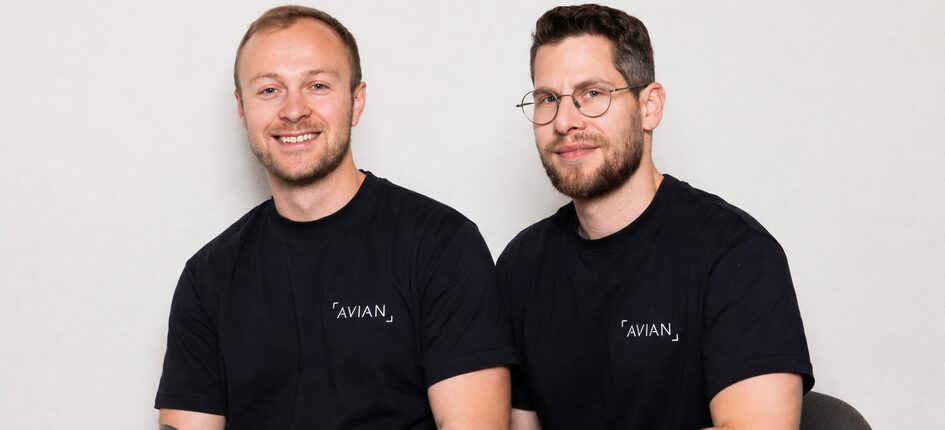
Founders Drew Hanover (left) and Thomas Laengle have secured $2.6 million for their AI-powered fire safety system, Avian. Photo: Courtesy of Avian/Innovire AG
News
Schlieren ZH/Indianapolis – Eli Lilly acquires LimmaTech Biologics. At the same time, the pharmaceutical company based in the US state of Indiana is acquiring two other vaccine developers, paying a total of almost 4 billion dollars. LimmaTech accounts for up to 780 million dollars of this.
(CONNECT) Eli Lilly will acquire LimmaTech Biologics. This is according to a press release from the biopharmaceutical company based in the Bio-Technopark Schlieren-Zurich. For this acquisition, the North American pharmaceutical giant, which has grown enormously primarily through weight loss drugs, will pay LimmaTech up to 780 million dollars. "This transaction recognizes the value created by the LimmaTech team, including its investors, and the potential of its technology and product pipeline," LimmaTech's Chairman of the Board Staph Leavenworth Bakali is quoted as saying.
LimmaTech was spun off from the former pharmaceutical company GlycoVaxyn in 2015 and develops vaccines against bacterial pathogens for which increasing antibiotic resistance is increasingly limiting treatment options. The active substance LTB-SA7 is currently in phase 1 of clinical development. This is a vaccine against Staphylococcus aureus, the most common pathogen causing wound infections after surgery. The preclinical pipeline also includes bacterial pathogens that cause infertility and other long-term consequences as a result of infections, which disproportionately affect women.
With its vaccine platform, LimmaTech is pursuing a unique scientific proposition, according to Daniel M. Skovronsky, Lilly's Science and Product Director and President of Lilly Research Laboratories: "The solution to this problem lies in targeting the toxins and superantigens that cause disease, rather than targeting bacterial surface antigens. As antibiotic resistance increasingly limits our ability to treat bacterial infections, this platform can help us prevent infections."
LimmaTech CEO Franz-Werner Haas is convinced that Lilly's global development and manufacturing capabilities will help "accelerate the development of our lead Staphylococcus aureus vaccine and advance our preclinical programs in gonorrhea and chlamydia. At the same time as the acquisition of LimmaTech, Eli Lilly also announced the acquisition of the two vaccine developers Curevo Vaccine from the US state of Washington and Vaccine Company from Saudi Arabia. The Group is investing a total of almost 4 billion dollars in the three acquisitions. ce/mm

Eli Lilly acquires LimmaTech Biologics. Stock image: Rock Staar/Unsplash
You need to load content from reCAPTCHA to submit the form. Please note that doing so will share data with third-party providers.
More InformationYou are currently viewing a placeholder content from Turnstile. To access the actual content, click the button below. Please note that doing so will share data with third-party providers.
More InformationYou are currently viewing a placeholder content from Vimeo. To access the actual content, click the button below. Please note that doing so will share data with third-party providers.
More InformationYou are currently viewing a placeholder content from YouTube. To access the actual content, click the button below. Please note that doing so will share data with third-party providers.
More InformationYou need to load content from reCAPTCHA to submit the form. Please note that doing so will share data with third-party providers.
More Information