News
Dübendorf ZH/Brest/Nancy – Researchers at the Swiss Federal Laboratories for Materials Science and Technology (Empa) are working with the French research institutes Institut de la Corrosion and LEMTA to develop alternative materials for the electrolysis of green hydrogen. As low-cost alternatives, these should be industrially scalable.
(CONNECT) Empa researchers from the Materials for Energy Conversion laboratory are developing alternative materials for water electrolysis together with partners from the French research institutes Institut de la Corrosion in Brest and LEMTA in Nancy.
Hydrogen is considered an important component of the energy transition, as it can replace fossil fuels. When water is split into hydrogen and oxygen using electricity from renewable sources, green hydrogen is produced. When it is used, it reacts with oxygen to form water without releasing greenhouse gases. However, according to a press release, the production of green hydrogen using electrolysis is currently around twice as expensive as the production of hydrogen from fossil materials such as natural gas and is not very widespread.
The cost drivers of electrolysis are the materials used in the production of the electrolysers, the report continues. This is where the researchers come in with their Polymer Electrolyte Membrane Water Electrolysis (PEMWE) technology, which is considered efficient and is particularly suitable for fluctuating electricity production from renewable energies.
Currently, components in PEMWE electrolyzers are manufactured from corrosion-resistant titanium and later coated with the precious metal platinum. Both titanium and platinum are expensive materials that are difficult to process. The researchers therefore rely on a special form of titanium oxide, known as highly crystalline low-oxygen rutile, to replace the platinum coating for their electrolysis components. Steel is used as the carrier metal for PEMWE electrolysis.
Initial results confirm the high corrosion resistance of the alternative coating. The researchers have already successfully coated the so-called bipolar plate of a PEMWE electrolyzer with titanium oxide using physical vapor deposition (PVD). PVD is widely used in the hydrogen industry. "It is important for us to develop something that industry can actually use," Empa materials scientist Konstantin Egorov is quoted as saying.
The project will run until 2026. Once the project is completed, the researchers want to bring industrial partners on board to commercialize their electrolysis technology. ce/ja
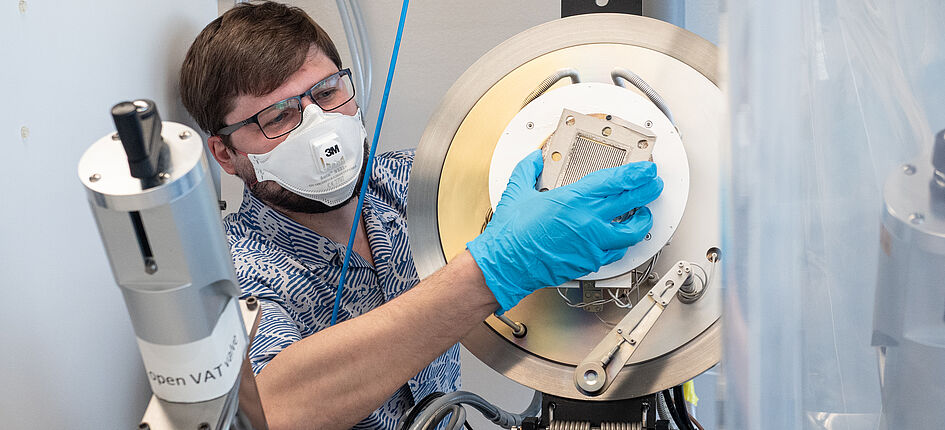
Empa researcher Konstantin Egorov coats stainless steel components with corrosion-resistant titanium oxide to make the production of green hydrogen more cost-effective. Image: Empa
News
Zurich – Six start-ups are part of the 20th cohort of ESA BIC Switzerland, the local incubator of the European Space Agency operated by ETH Zurich. The young companies benefit from up to 200,000 euros in funding for customized business support.
(CONNECT) A total of six start-ups are taking part in the 20th edition of ESA BIC Switzerland, according to a press release. The funding program of the European Space Agency (ESA) and the Swiss Federal Institute of Technology in Zurich (ETH) supports start-ups that use space technologies for applications on Earth or vice versa. In addition to up to 200,000 euros in funding, the companies receive support from experts from research and industry for two years, as well as access to the international network of ESA BIC Switzerland, as also mentioned in an article by startupticker.
Tethys Robotics from Zurich and Stellar Alpina from Dübendorf ZH are developing space-related vehicles. Tethys Robotics uses space-based navigation for underwater drones that can be used for inspections, mapping and search and rescue missions. Stellar Alpina develops lunar transportation systems and compact rocket engines for use in space.
Lepto GmbH from Dübendorf and nordfen from Zurich work with satellite-based data. Lepto, a spin-off from the Swiss Federal Laboratories for Materials Science and Technology (Empa), controls electromagnetic signals using ultra-thin optical terahertz components. This technology is intended to improve satellite connections and future 6G communication systems. Nordfen uses satellite images and geodata to create 3D simulation environments with scenario generation supported by artificial intelligence.
Emissium from Sion uses space-based data to analyze the electricity emissions of companies. Real-time data on energy consumption should help to reduce emissions and costs. Minysa from Neuchâtel develops space-qualified power electronics based on gallium nitride, including integrated circuits and power modules to improve the reliability of electronic systems in space.
Interested start-ups can still apply for the 21st edition of the Accelerator until October 31, 2026. Swiss start-ups that are less than five years old and develop space-related technologies can take part. ce/ja
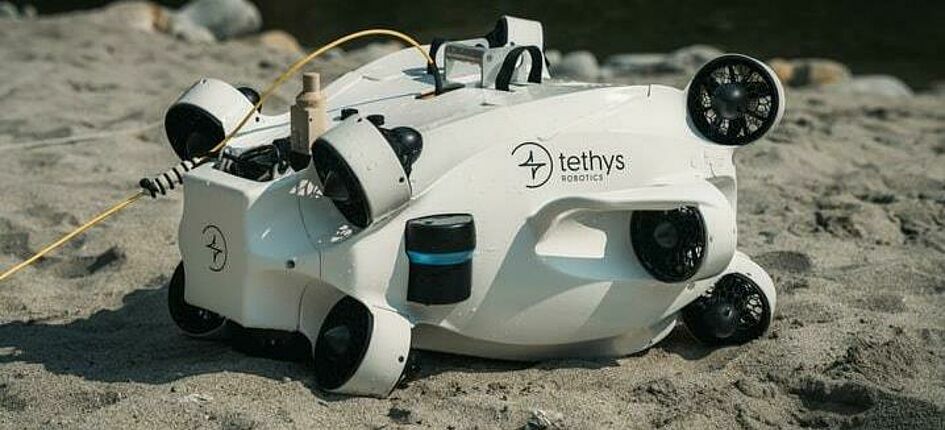
Tethys Robotics is part of the 20th cohort of ESA BIC Switzerland. Image: courtesy of Tethys Robotics AG
News
Brugg-Windisch AG/Dielsdorf/Rafz ZH – The ESA satellite Smile was launched into orbit on board the Vega-C rocket at 5:52 a.m. on May 19. The cooling system for the SXI X-ray telescope, one of the four most important SMILE systems, was developed by the FHNW in collaboration with KOEGL Space and Space Acoustics.
(CONNECT) The launch of the ESA satellite Smile (Solar Wind Magnetosphere Ionosphere Link Explorer) in the early morning of May 19 was also followed with excitement at the University of Applied Sciences and Arts Northwestern Switzerland(FHNW): Under the leadership of the FHNW, a Swiss consortium developed the cooling system for the SXI X-ray camera. The consortium includes KOEGL Space from Dielsdorf and Space Acoustics from Rafz.
The launch, which was broadcast live and commented on by the European Space Agency (ESA), took place at 5.52 a.m. Central European Time at the Kourou spaceport in French Guiana. According to an ESA statement, the spacecraft's solar panels deployed at 6.49 a.m., meaning that Smile can now supply its scientific instruments with electricity. Once this process has been completed, the start is considered successful.
Smile is a cooperative project between ESA and the Chinese Academy of Sciences. The aim of the mission is to gain a better understanding of space weather in order to make more precise forecasts. This is because solar winds and storms can dynamically change the Earth's magnetic field, i.e. the Earth's protective shell, and also influence GPS systems, explains the FHNW in an article.
"We are about to experience something unprecedented - the Earth's invisible protective shell in action," ESA Director General Josef Aschbacher is quoted as saying in the ESA press release. "With Smile, we are pushing the boundaries of science to answer big questions that have remained a mystery since our discovery over seventy years ago that the Earth lies safely within a giant magnetic bubble."
One of the four most important devices on board Smile, the SXI X-ray telescope, will contribute to this. "The particular technical challenges of this instrument include the exclusive use of European components for all systems and the cryogenic TCS (Thermal Control System)," explains the University of Leicester, which is the overall leader of the SXI project, in its project description.
To ensure reliable cooling of the system, the consortium of FHNW, KOEGL Space and Space Acoustics, led by FHNW Professor Hans-Peter Gröbelbauer, has developed a radiator that reliably cools the camera's two detectors to -110 degrees Celsius. The task of astrophysicist Prof. Dr. Säm Krucker and his FHNW team was to optimize the quality of the images.
According to the FHNW, the expertise of those involved is also in demand in two of the most important ESA projects of the near future: Envision for the exploration of Venus and ARRAKIHS, which is concerned with the exploration of dark matter and the formation of galaxies on a small scale. ce/mm

The ESA satellite Smile was launched into Earth orbit aboard a Vega-C rocket. Image: ESA
News
Madetswil ZH/Zurich – The chemicals specialist LAEMMLE Chemicals AG from Madetswil has joined the Swiss Power-to-X Collaborative Innovation Network (SPIN). By joining the company, SPIN is now tapping into the field of sustainable specialty chemicals in addition to hydrogen, e-fuels and synthetic gases.
(CONNECT) The Swiss Power-to-X Collaborative Innovation Network (SPIN) has announced that LAEMMLE Chemicals AG has joined. The chemical specialist from Madetswil develops, produces and distributes engine oils, hydraulic oils, industrial and specialty lubricants as well as cleaning and other chemical-technical products.
According to a press release, LAEMMLE relies on "chemistry with responsibility" in all production steps. By using sustainable geothermal energy for production and shipping, developing products based on circular raw materials and reusing drums, the chemicals specialist is reducing its CO2 emissions. All products are formulated and manufactured in Switzerland.
With this sustainable approach, LAEMMLE shares the vision of SPIN, which brings together players along the entire Power-to-X value chain and aims to strengthen Switzerland as a center of innovation for molecular energy storage. The network is currently dominated by players from sectors such as hydrogen, e-fuels and synthetic gases.
With the addition of LAEMMLE, SPIN is expanding its expertise with concrete experience in the Swiss production of chemical-technical products and the handling of recycled raw materials. LAEMMLE also offers access to mobility and industrial segments that will be relevant for the ramp-up of synthetic and bio-based raw materials. ce/ja
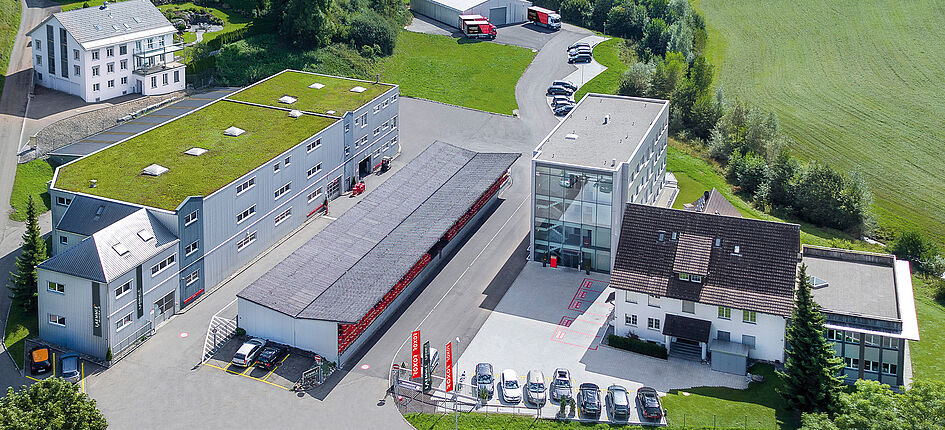
LAEMMLE Chemicals AG has joined the SPIN network; pictured is the LAEMMLE Chemicals AG building. Photo: courtesy of LAEMMLE Chemicals AG
News
Schlieren ZH/Cincinnati – Proteomedix has published two studies that positively assess the clinical benefit of its test for prostate cancer. Accordingly, Proclarix reliably identifies clinically non-significant forms of the tumor and the right time for the transition from surveillance to active therapy.
(CONNECT) Proteomedix, with its North American parent company Onconetix, has announced the publication of two peer-reviewed studies for its blood-based prostate cancer test Proclarix. The first publication is entitled Proclarix performance in excluding patients with no or indolent prostate cancer: evaluation in a Danish population. 373 existing serum samples from patients with suspected prostate cancer were re-examined with Proclarix. The percentage of men with clinically significant prostate cancer fell from 27 to 5 percent, with a sensitivity of 97 percent.
In an expanded population of 656 men, Proclarix was then used to analyze PSA density, i.e. the ratio of prostate-specific antigen (PSA) in serum to prostate volume. The Proclarix density also showed a significantly higher specificity than the PSA density with the same sensitivity. According to the press release, the study concluded for both populations studied that Proclarix reduces the number of prostate biopsies and the detection of clinically insignificant prostate cancer, while the risk of missing clinically significant disease remains low.
The second publication, entitled The prognostic value of Proclarix in prostate cancer patients on active surveillance: predicting transition to active therapy and disease progression in a Danish cohort, examined the prognostic value of the Proclarix risk score in men who had undergone active surveillance for low to intermediate risk prostate cancer. The study retrospectively analyzed serum samples taken from 132 men from the Danish PerPros prostate biobank.
The authors concluded that the Proclarix risk score can support clinical decision-making in the context of active surveillance by identifying patients at higher risk of progression and influencing the intensity of follow-up. "These results underline the potential of Proclarix for personalized prostate cancer treatment," concludes study leader Dr. AH Zedan.
For Proteomedix CEO Dr. Beat Rheiner, these two publications provide "important additional evidence of the broad clinical utility of Proclarix for the identification of healthy men who have been misclassified as positive and for the early detection of clinically significant prostate cancer." The Proclarix risk score had already previously shown a correlation with the aggressiveness of the tumor. It has now proven to be a "promising tool to support clinical decisions and personalized monitoring strategies for patients after diagnosis".
Proteomedix was founded in 2010 as a spin-off of the Swiss Federal Institute of Technology in Zurich and is located in the Bio-Technopark Schlieren-Zurich. ce/mm
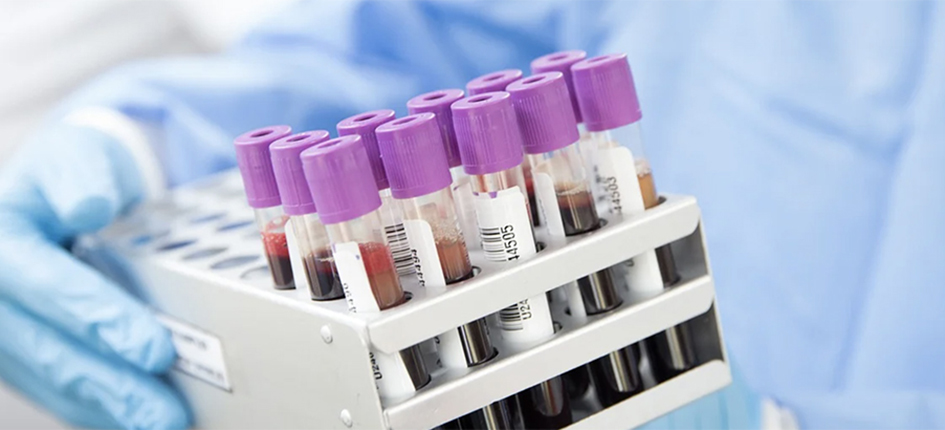
Proteomedix has published two studies in collaboration with its North American parent company, Onconetix. Stock image: AhmadArdity/Pixabay
News
Schlieren ZH/Rockville – The diagnostics company TrilliumBiO is launching Oncular in the US market. The move makes the uveal melanoma monitoring solution from Schlieren-based Oncobit available to physicians across the US and enables personalized cancer monitoring.
(CONNECT) Schlieren-based Oncobit AG has awarded the Rockville, Maryland-based diagnostics company TrilliumBiO the distribution of Oncular, a solution for monitoring uveal melanoma, in the US market. According to a press release, the new distribution channel will make personalized cancer monitoring available to physicians throughout the USA.
Oncular enables quantitative real-time analysis of circulating tumor DNA (ctDNA) using a simple blood sample. Choroidal melanoma is a rare malignant eye tumor that occurs most frequently in adults between the ages of 50 and 70. The testing solution developed by Oncobit, a spin-off of the University of Zurich (UZH), enables early diagnosis and subsequently timely treatment.
"The launch of Oncular in the US reflects our commitment to translating innovative science into high-quality diagnostic solutions for patients with rare diseases," Laura Vivian, CEO of TrilliumBiO, is quoted in the press release. "By making this test available through our laboratory, we are helping physicians gain reliable insights to better understand disease behavior and support patient care." ce/ww
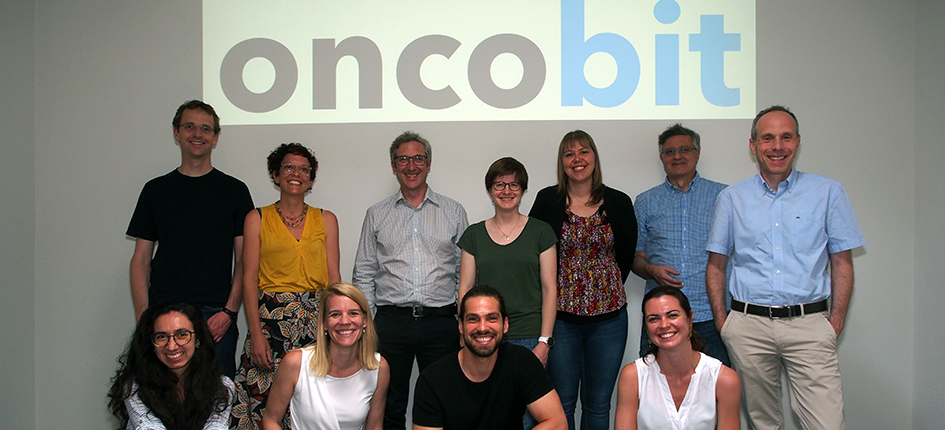
The Oncobit team is launching its cancer diagnostic product, Oncular, on the US market in collaboration with TrilliumBiO. Image: courtesy of Venturelab
News
Zurich/Missiauga – Swiss Learning Hub AG has been acquired by the Canadian Volaris Group. The provider of digital learning solutions will continue to operate as an independent company within the Group. Attila Varga will take over the management of the company.
(CONNECT) Zurich-based Swiss Learning Hub AG has been acquired by the Volaris Group, based in Missiauga in the Canadian province of Ontario. Swiss Learning Hub will continue to operate as an independent company and its day-to-day business will remain unchanged. According to the press release, the company plans to further expand its platforms and learning offerings as part of the takeover. Attila Varga now takes over the management of the company.
As part of Constellation Software Inc., Volaris unites around 1500 software companies. As the new owner of Swiss Learning Hub, Volaris will consciously act in the background, supporting the continuation of the company and at the same time providing access to its international network.
"With Volaris Group, we are gaining an owner with proven expertise in information technology and artificial intelligence as well as extensive experience in the further development of software companies," explains Attila Varga, CEO of Swiss Learning Hub AG, in the press release. "This gives us stability and at the same time the entrepreneurial freedom to expand our solutions in a targeted manner and offer our customers added value in the long term."
As an experienced and internally anchored manager, Attila Varga brings "a deep understanding of the business, strategic continuity and the necessary leadership skills" to lead the company in the next phase of its development, according to the press release. He succeeds Hanspeter Thür, who will oversee the handover until his departure in summer 2026. ce/nta
Swiss Learning Hub AG has been acquired by the Volaris Group. Image: Swiss Learning Hub AG
News
Schlieren ZH/San Diego – Schlieren-based InSphero AG has acquired California-based PhenoVista Biosciences. With the acquisition of the provider of medical services for analysis and research, InSphero aims to drive its international growth.
(CONNECT) InSphero has acquired PhenoVista Biosciences Inc. based in San Diego in the US state of California. According to a press release, the Schlieren-based company intends to drive forward its global growth and expansion in the USA with the acquisition of the provider of medical analysis and research services.
PhenoVista Biosciences is a contract research organization (CRO) for the pharmaceutical industry and provider of imaging analysis methods for cell cultures. With a combination of cell modeling and high-content imaging technology, the company offers researchers qualified data evaluation in all phases of substance development. In particular, the studies focus on primary cells, stem cell-derived neurons and glial cells as well as customized cell lines in various formats. By acquiring the scientific expertise of PhenoVista Biosciences, InSphero aims to strengthen its presence in the US at a time when the United States is becoming a fast-growing market for predictive biology, innovative methods and microphysiological systems, according to the announcement.
"Over the past 17 years, InSphero has built an outstanding reputation for scientific excellence, operational reliability and innovation in predictive in vitro biology," said Jan Lichtenberg, CEO and co-founder of InSphero, in the press release. "With the addition of PhenoVista, we gain highly complementary expertise, an exceptional team and a stronger operational presence in the US market. Most importantly, this acquisition enables us to serve our customers even better by combining cutting-edge biology with advanced imaging and phenotypic analysis in an increasingly integrated way and with short turnaround times."
InSphero is a spin-off of the University of Zurich and the Swiss Federal Institute of Technology Zurich, based in the Bio-Technopark Schlieren-Zurich. InSphero develops 3D microtissues that are used in drug development to investigate the influence of active ingredients on the human body. ce/ww
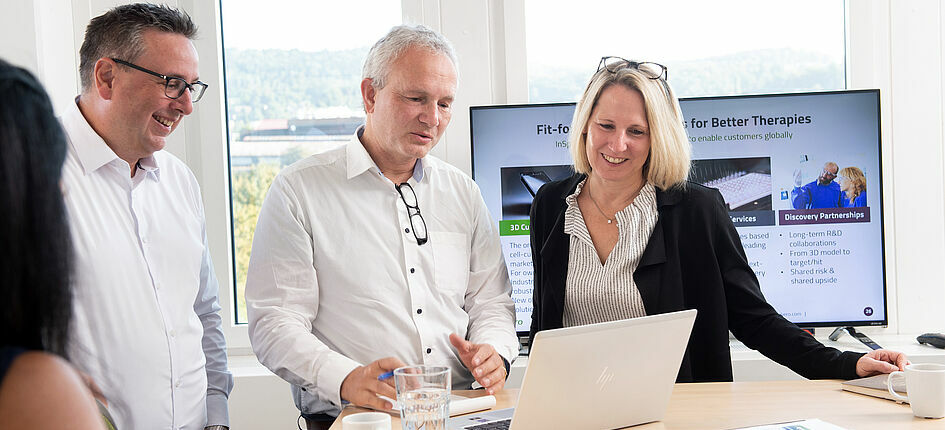
InSphero acquires PhenoVista Biosciences; pictured (from left to right) are Dr Jan Lichtenberg (CEO and co-founder), Dr Wolfgang Moritz (Head of External Collaborations, co-founder) and Dr Frauke Greve (Senior Product Manager). Photo: courtesy of InSphero AG
News
Schlieren ZH – The Schlieren-based start-up promoter Venturelab has been organizing stays abroad for Swiss start-ups for 20 years. Alumni of the Venture Leaders program have since created over 20,000 jobs. The anniversary is celebrated in June.
(CONNECT) Venturelab is celebrating the 20th anniversary of its Venture Leaders program on 24 June at the startup space in Schlieren. In this context, Venturelab organizes stays abroad for start-ups, which present their business ideas as the Swiss national start-up team and establish contacts with potential investors or partners. The individual delegations each cover their own sector, such as biotech, cleantech or fintech, which are presented in locations such as Boston, Munich or London.
According to a press release, graduates of the program have already created 20,550 jobs and raised 9.5 billion Swiss francs in growth capital. The so-called survival rate of Venture Leaders alumni is 78 percent, while 82 exits and five IPOs were realized by them, leading to three so-called unicorns.
"Swiss start-ups need to think globally at an early stage. Not in theory, but through direct access to the markets. Not as visitors, but as active participants. You don't learn global business from books, you experience it," Beat Schillig, founder and president of Venturelab, is quoted as saying.
"Alumni, investors, corporate partners and key players in the Swiss startup ecosystem" are expected to attend the anniversary celebration. The focus should also be on the future, on "the next generation of internationally growing Swiss start-ups". ce/jh

Venturelab is celebrating the 20th anniversary of its Venture Leaders programme. Image: Courtesy of Venturelab
News
Zurich/Singapore – The digital asset banking group Sygnum has become the first Swiss bank to test artificial intelligence (AI) agents for live on-chain transactions. The pilot is based on a principle in which AI supplements, but does not replace, human decision-making. Customers thus retain control at all times.
(CONNECT) Sygnum, a global digital asset banking group headquartered in Zurich and Singapore, has become the first regulated bank in Switzerland to test an AI agent for live on-chain transactions, according to a press release. The agent uses texts written by customers without formatting codes (plain text instructions) to execute multi-stage live transactions on a blockchain mainnet. To do this, the AI plans steps independently, checks relevant smart contracts and highlights potential transaction risks. Once planning is complete, each transaction is presented to the customer for approval.
The system is based on the so-called human-in-the-loop design, which is a core principle of the AI@Sygnum development team. The AI-supported transactions are therefore only signed via the customer's self-custody digital wallet on their own device. Private keys thus remain on the customer's own device and under their control at all times.
"The key challenge is to maintain - and even improve - bank-standard consent, custody and trust," Thomas Frei, Head of AI, Data Analytics and AI@Sygnum, is quoted as saying. "This is exactly what we want to solve, and this pilot shows that a regulated Swiss bank can offer its clients the speed, convenience and accessibility of agent-driven execution without ever giving up control of their assets."
The pilot was developed with the open standard Model Context Protocol (MCP) server and uses Anthropics Claude as the underlying AI model. The AI agent is not yet available to customers, as its use is still subject to full regulatory, compliance and security checks as well as corresponding approvals. ce/ja

Sygnum is the first regulated bank in Switzerland to have tested an AI agent for live on-chain transactions. Stock image: Tech Daily/Unsplash
News
Schlieren ZH – CUTISS strengthens its intellectual property portfolio with a further patent from the USA. It protects the methods and systems of the biotech company based in the Bio-Technopark Schlieren-Zurich for the production of skin grafts and the isolation of important cell types from a skin biopsy.
(CONNECT) CUTISS has been granted a new US patent. According to its title, it comprises automated "methods and systems for the production of skin grafts", including the separation of skin layers and the isolation of important cell types from a skin biopsy.
As the spin-off of the University of Zurich, founded in 2017 and based in the Bio-Technopark Schlieren-Zurich, further announces, this patent relates to an automated workflow in which a skin biopsy is separated into dermis and epidermis, fibroblasts and keratinocytes are isolated and expanded and a skin graft can also be formed automatically. According to the patent, this approach is intended to support a more controlled and efficient manufacturing process.
"This new patent further strengthens our intellectual property portfolio," said CUTISS in the press release. "It supports our broader strategy to promote standardized and scalable manufacturing of personalized skin tissue therapy."
At the beginning of March 2026, the biotech company with three women in its management team was granted a US patent for a disposable system and a process for the production of compressed hydrogels for applications in the cultivation of skin tissue. The patented invention relates to a core part of the tissue engineering process by enabling the production of compressed hydrogels in a fully disposable format. According to the patent, this approach is designed to reduce the risk of contamination, simplify the workflow, reduce production complexity and enable improved quality and scalability in the production of transplants. ce/mm
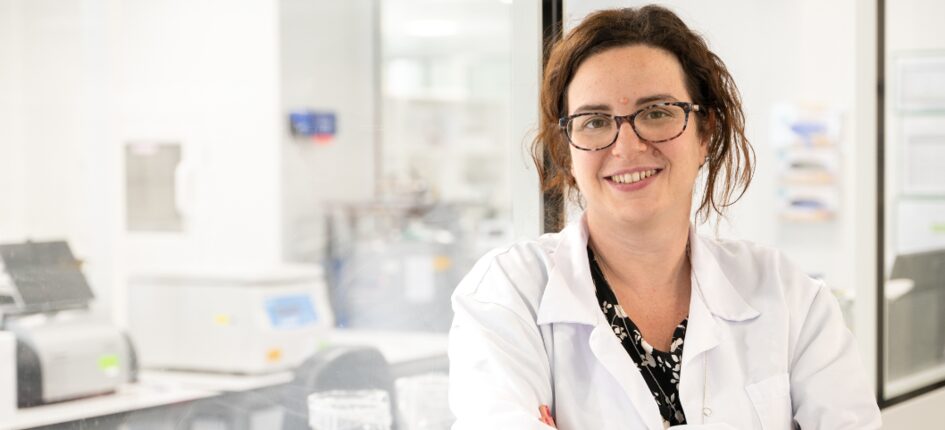
CUTISS CEO Dr Daniela Marino and her team are strengthening the company’s intellectual property portfolio with a further US patent. Photo: Courtesy of Peter Sturn/CUTISS AG
News
Kloten/Adliswil ZH – Swiss International Airlines is joining forces with Metafuels from Adliswil, a manufacturer of sustainable aviation fuels. With this cooperation, Swiss wants to secure access to synthetic fuels and strengthen lower-emission aviation.
(CONNECT) Swiss International Airlines (Swiss), based in Kloten, has signed a partnership agreement with Metafuels from Adliswil. According to a statement , the airline wants to secure access to sustainable synthetic fuels with this cooperation. At the same time, Swiss wants to strengthen low-emission aviation and specifically Switzerland as a location for innovation.
Metafuels has developed a process that efficiently converts green methanol into sustainable aviation fuel (SAF). Metafuels' fuels are fully compatible with existing aircraft, engines and airport infrastructure. In addition to a demonstration plant at the Paul Scherrer Institute (PSI) in Villigen AG, the company is pressing ahead with the construction of a commercial production plant in Rotterdam in the Netherlands.
With the cooperation with Metafuels, Swiss wants to actively support the development and market launch of sustainable aviation fuels in accordance with the Lufthansa Group. This is part of the company's comprehensive measures to reduce carbon dioxide emissions in flight operations. According to the company, Swiss is committed to the development and scaling of sustainable fuels. This is achieved through research partnerships, pilot projects, industry alliances and customer-oriented SAF offerings, among other things. ce/ww
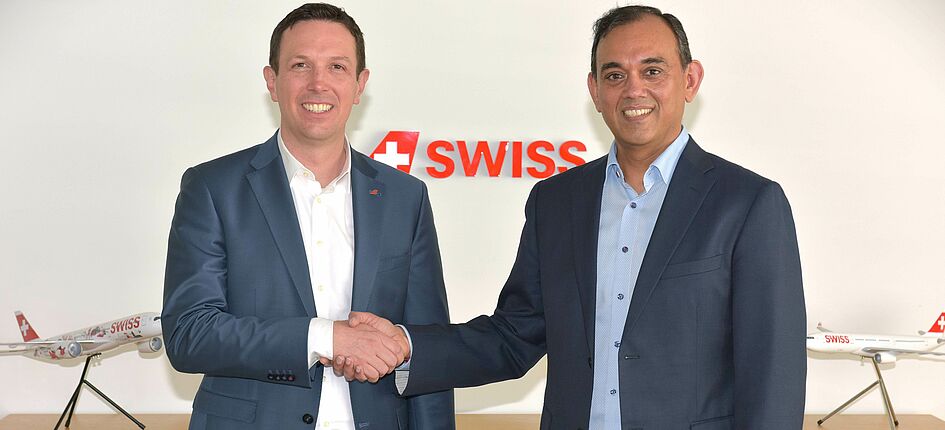
Jens Fehlinger, CEO of SWISS (left), and Saurabh Kapoor, CEO of Metafuels (right), are working together. Photo: Courtesy of Swiss International Air Lines Ltd.
You need to load content from reCAPTCHA to submit the form. Please note that doing so will share data with third-party providers.
More InformationYou are currently viewing a placeholder content from Turnstile. To access the actual content, click the button below. Please note that doing so will share data with third-party providers.
More InformationYou are currently viewing a placeholder content from Vimeo. To access the actual content, click the button below. Please note that doing so will share data with third-party providers.
More InformationYou are currently viewing a placeholder content from YouTube. To access the actual content, click the button below. Please note that doing so will share data with third-party providers.
More InformationYou need to load content from reCAPTCHA to submit the form. Please note that doing so will share data with third-party providers.
More Information