News
Schlieren ZH – InSphero is launching its new technology for assessing the gastrointestinal risks of active ingredients. The arm organoid platform of the recently acquired Lausanne-based company DOPPL was combined with InSphero’s standardized and automated safety checks.
(CONNECT) InSphero has announced the launch of a new standardized high-throughput screening solution for drug discovery. The 3D InSight Drug-Induced Gastrointestinal Toxicity (DIGIT) platform detects gastrointestinal risks early on in drug discovery. Because such an in-vitro tool was previously lacking, the toxic effect of drugs in the gastrointestinal tract is one of the most frequent causes of dose limitations and the discontinuation of clinical trials in late phases. The spin-off of the Swiss Federal Institute of Technology in Zurich, founded in 2009 and based in the Bio-Technopark Schlieren-Zurich, now aims to close this gap with its DIGIT platform.
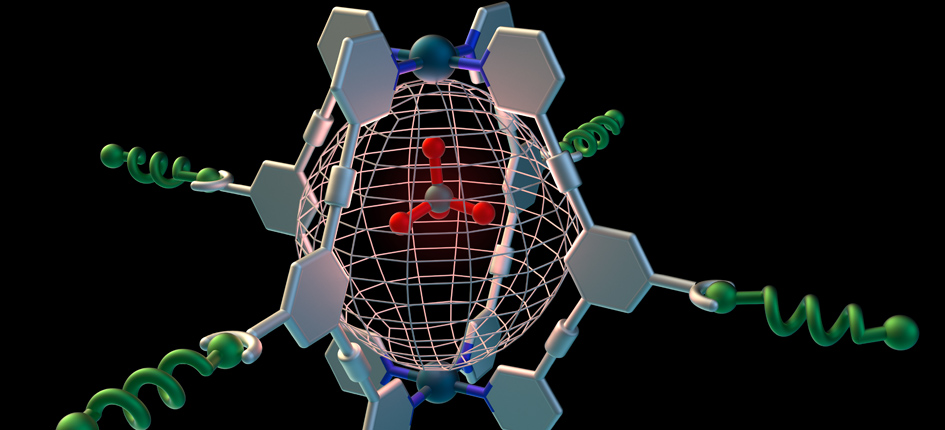
It combines patient-derived human intestinal organoids cultured on the scalable Gri3D technology with automated phenotypic imaging at single organoid resolution. For safety profiling that includes liver risks, the new gut platform can be used together with InSphero's established 3D InSight DILI testing, which is based on 3D liver microtissues.
The new DIGIT platform is the result of the recent acquisition of DOPPL. The Lausanne-based organoid specialist had built up extensive expertise in patient-based intestinal models using its proprietary Gri3D platform, which were primarily used in customer-specific research projects.
"With the acquisition of DOPPL, our vision was clear," David Fluri, Vice President Model Innovation and Commercialization at InSphero, is quoted as saying. "We wanted to combine their expertise in patient-derived intestinal organoids with our proven operating model for standardized safety testing." Today, this vision is a reality. This is not just a mere rebranding, says Fluri: "Our teams have developed a truly integrated solution that brings the same precision and ease of use that has made our DILI service the gold standard to an entirely new organ system." ce/mm
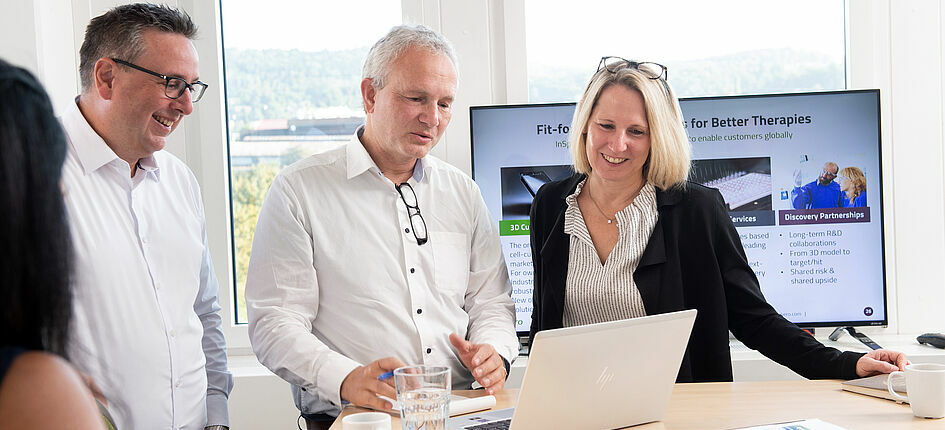
(from left to right) Dr Jan Lichtenberg (CEO and co-founder), Dr Wolfgang Moritz (Head of External Collaborations, co-founder) and Dr Frauke Greve (Senior Product Manager) are launching InSphero, a platform for gastrointestinal toxicity. Photo: courtesy of InSphero AG
News
Winterthur – The start-up Binabik has chosen Technopark Winterthur as its location. The spin-off from the ZHAW Center for Artificial Intelligence is using agentic artificial intelligence (AI) to develop a brain for humanoid robots that enables them to act autonomously and flexibly.
(CONNECT) The deep-tech start-up Binabik has chosen Winterthur as its founding location. Launched in January 2026, the company is a spin-off of the newly founded Center for Artificial Intelligence at the Zurich University of Applied Sciences (ZHAW). The move to Technopark Winterthur was supported by the two location promoters Greater Zurich Area and House of Winterthur.
According to a press release, the proximity to the ZHAW and access to the Zurich technology ecosystem were decisive factors in the choice of location. "Winterthur offers the ideal combination of industrial tradition and technological innovation," CEO Jorgen Peña Queralta is quoted as saying. For Jakob Bächtold, Managing Director and Head of Business at House of Winterthur, the establishment of Binabik "underlines Winterthur's growing importance in the field of AI and robotics. The combination of ZHAW, Technopark and an active startup ecosystem creates an environment in which deep tech companies can not only arrive, but also grow."
Binabik is developing an agentic brain with the help of physical AI. This orchestration platform enables mobile humanoid robots to act situationally, interact with humans and complete tasks without the need for retraining. Binabik robots perform repetitive tasks such as sorting and loading. The start-up aims to counter the shortage of skilled workers in logistics and production and take the pressure off existing teams. The five-member founding team plans to grow to 15 people in the coming year. ce/mm
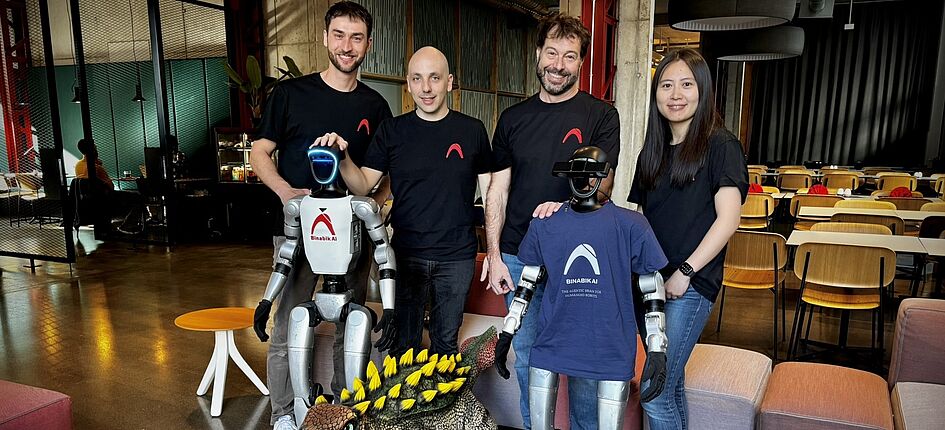
The Binabik team. Photo: courtesy of House of Winterthur
News
Winterthur – A survey conducted by the Zurich University of Applied Sciences (ZHAW) has found that a more seasonal food offering is viewed positively or neutrally by the majority of consumers. Older people are more likely to accept less diversity than younger people.
(CONNECT) The majority of the population supports a seasonal range on the vegetable shelves or is at least neutral towards it. The fact that seasonality is an important point of orientation for many people when shopping is shown by a survey conducted by the ZHAW, which was reported in a press release. A total of 3001 people from Germany, Austria and Switzerland took part in the survey in November 2025.
Many of those surveyed are confident that they can eat a varied diet even with a reduced selection. Acceptance of a reduced seasonal offer is significantly higher among the over-60s (87.6 percent) than among 18 to 39-year-olds (69.9 percent). "People who know how to cook and plan with seasonal foods are much more likely to accept a smaller selection," says Pia Furchheim, head of the study. She is Professor of Consumer Behavior at the ZHAW School of Management and Law.
However, according to the results, simply knowing that a seasonal shopping list makes ecological sense is not enough for a household to willingly limit itself to seasonally available food in the region. According to the results, a stronger anchoring of seasonal nutrition requires above all practical orientation in everyday life. According to the survey, respondents would like to see clear labeling of seasonal products, transparent communication in the event of unavailability and simple assistance for purchasing and planning.
So the willingness to change is there, according to the ZHAW. The decisive factor is how well seasonal nutrition can be implemented in everyday life. "This results in a clear mandate for retail and communication," concludes Furchheim.
The study results and further questions will be discussed at the Forum on the Future of the Agriculture and Food Industry on April 22, 2026 at the SQUARE of the University of St.Gallen, under the auspices of the OST - Eastern Switzerland University of Applied Sciences and the ZHAW. The conference is organized by Circular Lab, a hub of companies, research institutions and public organizations. Its aim is to promote the implementation of the circular economy in the local economy. ce/mm

A ZHAW survey shows that the majority view a seasonal vegetable display positively or neutrally, and that older people are more likely to accept a limited variety than younger people; pictured is the study leader and Professor of Consumer Behaviour, Pia Furchheim. Photo: ZHAW
News
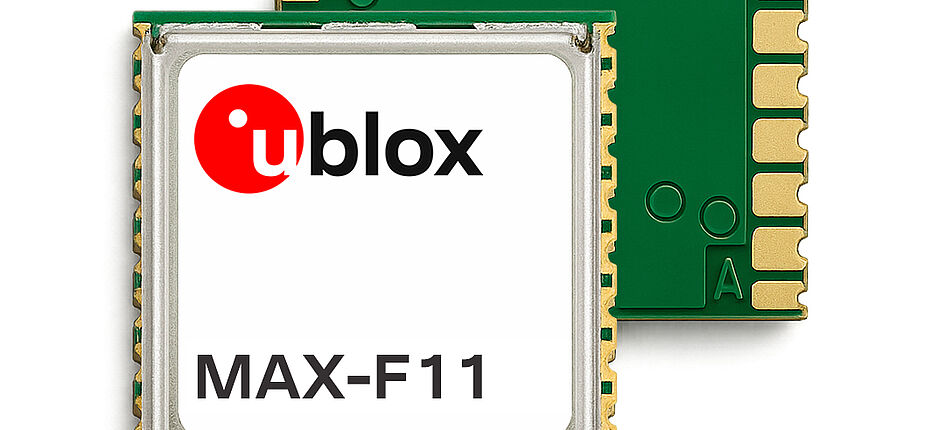
Thalwil ZH – U-blox is analyzing how signals from low earth orbits (LEO) can complement existing satellite-based navigation systems (GNSS). The aim is to further develop powerful and robust positioning solutions that are suitable for the mass market.
(CONNECT) U-blox is investigating the role of LEO signals in multi-layer positioning architectures as part of the Navigation Innovation and Support Program (NAVISP), Element 2 (EL2). According to a statement from the provider of positioning and short-range communication technologies for the automotive, industrial and consumer goods markets, the program is co-financed by the European SpaceAgency (ESA).
As part of the project, u-blox is investigating the observation and characterization of new LEO signals, the analysis of their interaction with GNSS measurement data and the effects of dynamic satellite geometry on positioning accuracy. In addition, various system approaches for integrating LEO signals into future platforms are being analyzed, including with regard to integration into the X20 GNSS platform.
The background to the project is the increasing importance of LEO-based signals as a supplement to established GNSS systems such as Galileo. Due to their lower orbital altitude, LEO satellites offer stronger signals and a rapidly changing satellite geometry. These properties can improve the performance of positioning systems, particularly in terms of convergence speed, robustness and accuracy under difficult reception conditions. GNSS remains the basis for global positioning.
The launch of the first two LEO satellites of the Celeste mission (IOD-1 and IOD-2) by ESA on March 28, 2026 represents an important step. This was the first step towards integrating navigation signals from low earth orbits into operational positioning systems.
"Our work within ESA NAVISP helps us to better understand how new signal sources can complement GNSS and contribute to more robust and reliable positioning," said Jani Käppi, Head of Positioning Technology at u-blox. ce/ja

As part of the ESA’s NAVISP programme and the Celeste mission, u-blox is investigating the interaction between LEO signals and GNSS; pictured here is the launch of the Celeste mission on a Rocket Lab Electron rocket. Image: Rocket Lab/ESA
News
Adliswil ZH/Amsterdam/Rotterdam – The Innovation Agency of the Netherlands is funding Metafuels’ e-SAF project with 1.92 million euros. From 2028, the Adliswil-based company will produce its synthetic aviation fuel Aerobrew from green methanol in the port of Rotterdam.
(CONNECT) Metafuels can continue the development of its Turbe project in the port of Rotterdam with a grant of 1.92 million euros. According to a statement from the Adliswil-based company, the Dutch state innovation agency Rijksdienst voor Ondernemend Nederland is making this available for the construction of a plant for Aerobrew, Metafuel's synthetic sustainable aviation fuel (e-SAF). The facility is being built in the port of Rotterdam on the site of the Amsterdam-based company Evos, which specializes in the storage of liquid energy sources and chemicals.
Turbe will be the first commercial deployment of Metafuels' proprietary methanol-to-jet technology and is designed as a blueprint for future large-scale plants. In phase 1, this plant will produce 10 tons of synthetic aviation fuel from green methanol every day from 2028. Phase 2 starts three years later. Production is then to be ramped up to at least 100 tons per day.
"The project benefits from Rotterdam's world-class infrastructure and is in line with Europe's goal of scaling up low-carbon fuels through initiatives such as ReFuelEU Aviation," Metafuels said in the statement. "This funding supports important development activities on our scalable, cost-effective path to decarbonizing aviation."
The innovative catalytic system is based on advances in nanotechnology and forms the heart of Aerobrew. The technology was validated by Metafuels together with the Paul Scherrer Institute in a pilot plant to be commissioned in 2025 on its premises in Villigen AG. The Federal Office of Energy is funding the project with CHF 4.4 million.
In February 2026, Metafuels received 24 million dollars in a financing round. At the time, CEO Saurabh Kapoor said: "With Aerobrew, we are creating a way for airlines to reduce their CO2 emissions without changing their operations. It has the potential to fundamentally change the future of air travel." ce/mm

Metafuels plans to produce its synthetic aviation fuel, Aerobrew, from green methanol at the Port of Rotterdam from 2028; pictured is the Euromax Terminal in Rotterdam. Photo: Eric Bakker/Port of Rotterdam
News
Zurich/Schlieren ZH – Researchers at the University of Zurich have shown that a transplantation of intestinal bacteria can trigger an immune response in cancer patients. It is not the composition of the transferred intestinal biome that is decisive, but the immune system it encounters.
(CONNECT) A team of gastroenterologists from the University of Zurich (UZH) has found a way to trigger an immune response in patients for whom cancer immunotherapy has so far been unsuccessful, according to a press release. The path was revealed as part of the Zurich Microbiome Project, which was funded by the Comprehensive Cancer Center Zurich with 1.65 million Swiss francs from 2022 to the end of 2025. An interdisciplinary team at University Hospital Zurich and UZH investigated whether the gut microbiome, i.e. the entirety of bacteria in the gut, plays a role in the immune response. In recent years, studies around the world have shown that intestinal bacteria have a far greater influence on the immune system than previously assumed.
The Zurich team also gave fecal microbiota transfer (FMT) to patients whose tumors had not responded under an ongoing immune checkpoint blockade. The microbiome of a person who had undergone successful immunotherapy was transferred to them via colonoscopy. The result: the cancer therapy suddenly showed an effect in every second person who had previously been resistant to treatment.
Initially, the researchers believed that the exact composition of the microbiome made the difference. Instead, according to the new data, the decisive factor is which immune system the transplant encounters. Cancer patients with a certain population of monocytes in the intestine and a high diversity of T-cell receptors benefited significantly more often.
"The transfer changed the immunological and metabolic conditions in such a way that the existing therapy could become effective," Michael Scharl is quoted as saying. He is UZH Professor of Translational Microbiome Research and a gastroenterologist at the University Hospital Zurich. An FMT therefore does not create new immunological capabilities - it mobilizes existing ones.
According to UZH, the next clinical trial has already been initiated in order to give previously treatment-resistant patients a second chance: Together with the Schlieren-based ZüriPharm AG, a member of the Bio-Technopark Schlieren-Zurich, the conditions are to be created to transfer FMT into clinical routine in the future. ce/mm

A gut bacteria transplant can trigger an immune response in cancer patients. Stock image: silviarita/Pixabay
News
Zurich/London – Connectome GmbH has secured fresh capital of 2 million dollars in a pre-seed financing round. The company intends to further expand its platform for measuring cognitive performance. The expanded knowledge is intended to protect cognitive health.
(CONNECT) Connectome GmbH, based in Zurich and London, has secured fresh capital of 2 million dollars in a pre-seed financing round, according to a press release. The NeuroTech start-up intends to use the money to further expand its platform for measuring cognitive performance. The financing was led by Redstone. Concept Ventures, Octopus, Node Ventures, The Players Fund and other investors and experienced business angels from various countries also participated.
Connectome was founded in 2024 by neuroscientists Lucas Scherdel and Rufus Mitchell-Heggs. The aim of the company is to investigate cognitive performance. The aim is to gain insights into the differences in brain activity within individuals and their changes depending on lifestyle, environment and health. As a result, those involved want to understand, monitor and improve cognitive functions in order to prevent disease and thus protect cognitive health.
"Our environment and technologies today place unprecedented demands on the brain, yet we lack everyday ways to detect changes early or protect cognitive health in the long term," Lucas Scherdel, CEO of Connectome, is quoted as saying in an article by EU Startups. "Connectome was developed to close this gap. By measuring brain function over the long term, we are moving beyond isolated snapshots to create personalized models of brain function that have the potential to improve future clinical care and disease progression. Understanding the brain is no longer a niche topic - it is essential for human well-being and societal resilience." ce/ww

Connectome GmbH plans to use the fresh capital to further expand its platform for measuring cognitive performance. Stock image: jarmoluk/Pixabay
News
Bubikon ZH/Omaha/New York – Acutronic Holding AG has received a total investment of 25 million dollars from InterAlpen Partners and Hale Capital Partners from the USA. The established Swiss supplier to the global defense industry wants to boost production and growth in this way.
(CONNECT) The venture capital firm InterAlpen Partners from Omaha in the US state of Nebraska has invested in the Acutronic Group. The New York-based Hale Capital Partners participated in this investment. The two raised a total of 25 million dollars to support the Bubikon-based company, which supplies drive, simulation and motion control systems, primarily for drones, to the world's largest defense companies. The Acutronic Group was founded in 1983. It employs around 350 people at its headquarters in Bubikon and Austin as well as at its other locations in Pittsburgh, Pennsylvania, Germany, France and India.
As CEO Florian Aigrain explains in a press release, this investment provides his company "with the necessary capital and strategic support to meet the current requirements: building the world's best microturbines, expanding our European market presence and investing in pioneering technologies to meet the needs of our customers."
Acutronic is entering this partnership from a position of strength. In 2025, the company recorded record sales, incoming orders and profits for the fourth year in a row and was also able to increase its EBITDA margin year on year during this period. The investment comes at a crucial time for global defense, as "expendable" systems and disposable attack drones are now being deployed in large numbers. The company's plant in Austin, Texas, is one of the few in the USA that is capable of mass-producing small jet engines on the scale required for "cost-effective mass strategies".
"The structural change in the way nations wage war and deter adversaries is not a passing trend - it is a generational change," investor Stephen George of InterAlpen Partners is quoted as saying. "Acutronic is at the very heart of this: the company supplies drive technology, simulation infrastructure and hardware for autonomous systems that turn defense policy into operational reality." ce/mm

US investors have invested $25 million in Acutronic. Stock image: Rock Staar/Unsplash
News
Schlieren ZH/New York – The Biognosys Group from Schlieren is now part of the global cooperation LITE of the Michael J. Fox Foundation. The approximately 50 partners are working in an open exchange on biomarkers for the target gene LRRK2, which is considered a promising therapeutic approach against Parkinson’s disease.
(CONNECT) Biognosys has announced its collaboration with the Michael J. Fox Foundation (MJFF) to advance Parkinson's research. As part of the Foundation's global cooperation project LITE (LRRK2 Investigative Therapeutics Exchange), the spin-off from the Swiss Federal Institute of Technology in Zurich (ETH), based at the Bio-Technopark Schlieren-Zurich, aims to use its proteomics platforms SISCAPA and TrueSignature to help develop better biomarkers for Parkinson's disease. The aim is to accelerate the development of therapies targeting LRRK2 and to identify and optimize reliable biomarkers.
If changes or mutations occur in the LRRK2 gene, the protein can become overactive and disrupt normal cell processes. These mutations are among the best-known causes of hereditary Parkinson's disease. However, many more people could benefit from LRRK2-inhibiting therapy. This is because increasing evidence suggests that an overactive LRRK2 signaling pathway can also contribute to Parkinson's in people without hereditary mutations.
However, the development of biomarkers to measure the activity of LRRK2 has proven to be extremely difficult. This is where Biognosys wants to make a decisive contribution: the company believes that its highly sensitive, targeted proteomics platforms SISCAPA and TrueSignature are suitable for accelerating collaborative research. To this end, more than 50 partners from science, industry and the clinic have committed to sharing their resources, biosamples, tools and results in near real time from the outset of the LITE project.
"Successful clinical development requires not only promising therapeutic approaches, but also reliable tools to measure whether these therapies achieve the intended biological effect," Dr. Oliver Rinner, Senior Vice President of Biognosys, is quoted as saying. "By combining Biognosys' expertise in highly sensitive, quantitative proteomics with MJFF's collaborative LITE framework, we aim to accelerate the development of biomarkers that can meaningfully guide Parkinson's drug development and minimize the risk of clinical trials." ce/mm

Biognosys is conducting research into biomarkers for Parkinson’s disease in collaboration with the Michael J. Fox Foundation. Stock image: National Institute of Allergy and Infectious Diseases/Unsplash
News
Zurich/Schlieren ZH – The Schlieren-based start-up promoter Venture Kick is supporting the Zurich-based proptech Bewy with 150,000 Swiss francs. The funds will be used to further develop a real estate management service based on artificial intelligence and to scale the start-up throughout Switzerland.
(CONNECT) Bewy receives 150,000 Swiss francs in funding from Venture Kick, according to a press release. The proptech start-up from Zurich is developing an artificial intelligence (AI)-based software solution for property management that makes processes more efficient and offers both owners and tenants a better service.
The background to this is a widespread inefficiency in real estate management in the DACH region, according to the press release. Poor communication, neglected maintenance, unexpected costs and inadequate tenant service often lead to dissatisfaction among owners and tenants. Bewy helps with automated internal processes, improved communication and real-time transparency. This should reduce administrative costs by up to 30 percent and significantly improve the user experience. The fresh funds are intended to drive forward the further development of the platform and its scaling within Switzerland. In its expansion, Bewy is pursuing an M&A (merger & acquisition) strategy aimed at taking over small and medium-sized real estate management companies without a succession solution.
"As the leading start-up program in Switzerland, Venture Kick is an important accelerator for Bewy. The funding process is lean and efficient, but at the same time opens up access to a valuable network and increases credibility," co-founder Luca Serratore is quoted as saying in the press release.
Bewy currently operates in Zug, Zurich, Aargau and Lucerne and serves a double-digit number of clients, including private individuals, single family offices and real estate companies such as Swiss Prime Site. The founding team of Luca Serratore, Marcandrea Hunkeler, Gilles Baumann and Katrin Leuppi combines experience from the fields of start-ups, consulting and the real estate industry. The start-up promoter Venture Kick is an initiative of the Kick Foundation for Innovation & Entrepreneurship and is supported by a private-sector consortium. ce/ja

The Zurich-based proptech start-up Bewy is developing an artificial intelligence (AI)-powered software solution for property management that streamlines processes and offers a better service to both landlords and tenants. Stock image: Pixabay
News
Zurich/Volketswil ZH – Celeroton TurboCell from Volketswil is the latest company to receive a loan guarantee from the Federal Office for the Environment’s Technology Fund. The company’s oil-free compressor and drive systems are used in fuel cells.
(CONNECT) The Technology Fund of the Federal Office for the Environment has added Celeroton TurboCell AG to its portfolio, according to a press release. The Technology Fund grants loan guarantees to innovative Swiss companies whose new products help to reduce greenhouse gas emissions, increase energy efficiency, promote renewable energies or conserve natural resources.
The Volketswil-based spin-off of Celeroton AG describes itself as the technology leader for high-speed, oil-free turbocompressors and drive systems for fuel cell applications. "Our patented compressor systems are unique in terms of size, efficiency and reliability and are all designed and manufactured by us," says the company. "We are convinced that we have a highly innovative technology that supports hydrogen drives and thus contributes to combating climate change."
The Technology Fund is a federal climate policy instrument. Strategic responsibility lies with the Federal Office for the Environment, Climate Division. The Zurich office is managed by Emerald Technology Ventures. "Energy policy independence is also increasingly coming into focus in Switzerland," says Simone Riedel Riley, head of the office, in the technology fund's latest newsletter. "Funding instruments such as the Technology Fund make an important contribution here by specifically strengthening the innovative strength of Swiss SMEs and start-ups."
According to the newsletter, the technology fund's portfolio currently comprises 132 innovative Swiss companies. These have guarantees totaling CHF 268 million. 56 portfolio companies were able to raise additional equity totaling CHF 268 million in 2025 to drive their growth. This corresponds to 5.3 times the amount of the guarantee. The reported environmental benefit of the portfolio companies amounts to 10.8 million tons of CO2 equivalents as at the end of 2024. ce/mm

Fuel cells play a key role in decarbonisation, for example in the transport sector; pictured are the Alstom Coradia iLint 554 009 hydrogen train (right) and the Alstom Coradia 648 171 (Lint 41) operated by EVB in Bremerhaven on route RB33. Stock image: Olga Ernst/Wikimedia/Creative Commons Attribution-Share Alike 4.0 International licence
News
Zurich – The Canton of Zurich’s location promotion agency has opened the application phase for the third Innovation Sandbox for Artificial Intelligence (AI). The secure test environment is open to projects that can benefit from the clarification of regulatory issues and data from the administration’s ecosystem for their implementation.
(CONNECT) The Canton of Zurich's Division of Business and Economic Development agency is looking for the most promising AI projects for Phase III of its Innovation Sandbox. Start-ups, SMEs, large companies and research institutes based in Switzerland can submit their applications from now until May 24th. If they are selected in a multi-stage selection process, they gain access to regulatory expertise and innovative data sources.
The aim is to enable data-based developments, use such innovations to promote the Zurich metropolitan area in a targeted manner and strengthen it as a leading AI location. In contrast to many foreign approaches, the Innovation Sandbox for AI goes one step further, according to the project description: the selected projects are not only reviewed, but also implemented in practice.
The joint work in the sandbox also ensures the transfer of knowledge between the participating organizations. All findings and results will be shared publicly and should provide valuable impetus for the design of a future legal framework. The project managers will carry out an evaluation process by June 26th, 2026. The third phase of the Innovation Sandbox begins on September 1st.
The canton's location promotion agency ran the first Innovation Sandbox for AI from 2022 to 2024. In Phase II, which began in the same year, 24 organizations submitted their AI projects. The project team successfully implemented five of these by the beginning of 2026. A final report will be published in the coming months. ce/mm

The third Innovation Sandbox for AI organised by the Division of Business and Economic Development of the Canton of Zurich is open to projects that wish to benefit from clarification of regulatory issues and access to data from the public sector ecosystem in order to implement their initiatives. Stock image: tookapic/Pixabay
You need to load content from reCAPTCHA to submit the form. Please note that doing so will share data with third-party providers.
More InformationYou are currently viewing a placeholder content from Turnstile. To access the actual content, click the button below. Please note that doing so will share data with third-party providers.
More InformationYou are currently viewing a placeholder content from Vimeo. To access the actual content, click the button below. Please note that doing so will share data with third-party providers.
More InformationYou are currently viewing a placeholder content from YouTube. To access the actual content, click the button below. Please note that doing so will share data with third-party providers.
More InformationYou need to load content from reCAPTCHA to submit the form. Please note that doing so will share data with third-party providers.
More Information