News
Schlieren ZH – Venturelab can look back on a record year. In 2025, the equivalent of 544 days of training, workshops and international programs were held. They counted 6700 participants. 130 new projects were supported and CHF 8.32 million was awarded as start-up funding.
(CONNECT) 2025 was a record year for Venturelab. Together with successful founders, experienced academic partners and industry partners, the private company supported a total of 6,700 young entrepreneurs with the equivalent of 544 days of training, workshops and international programs, according to its press release.
130 new projects were supported and 247 start-up financing projects were awarded. Venture Kick, a philanthropic three-stage financing model belonging to Venturelab, provided a total of 8.32 million Swiss francs for this purpose.
The Innosuisse Entrepreneurship Training, which is run by Venturelab's entrepreneurship team, has reportedly enabled thousands of entrepreneurs across Switzerland to grow their start-ups. Meetings with investors were organized during the Venture Leaders Roadshows in Silicon Valley, Boston, Barcelona, London and Munich for the Swiss National Startup Team, which, according to Venturelab, is one of the most promising innovators in the Swiss start-up ecosystem.
Venturelab describes the 15th anniversary of the Top100 Swiss Startup Award as one of the highlights of the year. Selected investors with venture capital of more than CHF 20 billion took part in the Top100 Swiss Investor Summit. In addition, according to Venturelab, start-ups were networked with companies in the acceleration programs. ce/mm

Venturelab supported around 6,700 young entrepreneurs in 2025. Symbolic image: fauxels/Pexels
News
Zurich – An international group of researchers led by the Swiss Federal Institute of Technology in Zurich (ETH) has been able to observe a solar storm continuously for 94 days for the first time. This should help to predict space weather and thus also disturbances on Earth.
(CONNECT) Researchers led by ETH Zurich have been able to track a particularly active region on the sun during three solar revolutions for the first time, according to a statement from their university. Because the sun revolves around itself once in about 28 days, such a region rotates out of the Earth's field of vision after two weeks and remains hidden for two weeks.
But the international team led by Ioannis Kontogiannis, solar physicist at ETH Zurich and the Istituto ricerche solari Aldo e Cele Daccò in Locarno, and Louise Harra, ETH professor and director of the Physico-Meteorological Observatory Davos, combined the data from two space probes, the European Space Agency's Solar Orbiter and NASA's Solar Dynamics Observatory. This enabled it to extend the observation period from two weeks to 94 days. The ESA probe will fly once around the sun in around six months and will also observe its rear side, while the NASA probe will record activities on the front side.
This allowed the group to see how the strongest solar storm of the past 20 years in the solar region NOAA 13664 formed on April 16, 2024 on the back side of the sun, changed and disintegrated on July 18, 2024. "This is the longest continuous series of images ever created for a single active region - a milestone in solar physics," says Kontogiannis.
When NOAA 13664 was on the Earth-facing side in May 2024, it not only caused auroras that could even be seen in Switzerland, but also massive disruptions on Earth, for example in digital agriculture. The increased radiation is also dangerous for satellites. In February 2022, the American aerospace company SpaceX lost 38 of its 49 Starlink satellites.
According to the ETH, the observations that have now been made should contribute to a better understanding of solar storms and their possible effects on the Earth. The aim is to forecast space weather more accurately so that modern technology can be better protected. ce/mm

An image of the Sun taken by the Solar Orbiter spacecraft. Image: ESA & NASA/Solar Orbiter/EUI Team, E. Kraaikamp (ROB)
News
Kemptthal ZH – The Cultured Hub has expanded its range of services to include plant cell cultures. To this end, the Innovation Center invited industry representatives, researchers and start-ups to a specialist meeting in Kemptthal. The aim is to combine newly created plant cell cultures with traditional supply chains.
(CONNECT) The Culture Hub, a joint project of Migros, Givaudan and the Bühler Group, hosted its first Cultured Plant Cell event. At the meeting, industry representatives, researchers and start-ups discussed how alternative ingredients in plant production can complement traditional supply chains, according to a press release.
In the past, The Culture Hub has focused on the production of cultured meat. With the expansion of the portfolio, plant cell cultures are now also to be developed for high-quality ingredients such as cocoa, coffee and citrus fruits. "The demand for alternative, climate-resilient ingredients is growing rapidly and plant cell culture is emerging as a credible sourcing platform," Yannick Jones, CEO of The Cultured Hub, is quoted as saying in the press release. "However, this area is still associated with high costs and complex technical challenges. By providing a shared bioprocess infrastructure and collaborative environment, The Cultured Hub enables both start-ups and corporates to scale more efficiently."
Several companies presented their innovations in the field of plant cell cultures at the meeting. These included Ergo Bioscience, Coffeesai, Phyton Biotech, Spicy Cells, Kokomodo, Food Brewer, Celleste Bio and GALY.
Plant cell cultivation is a cost-intensive process influenced by various factors. The Cultured Hub's expanded offering directly addresses these challenges by providing access to advanced bioprocessing equipment, expert process development support and a neutral platform for collaboration, according to the release ce/ww
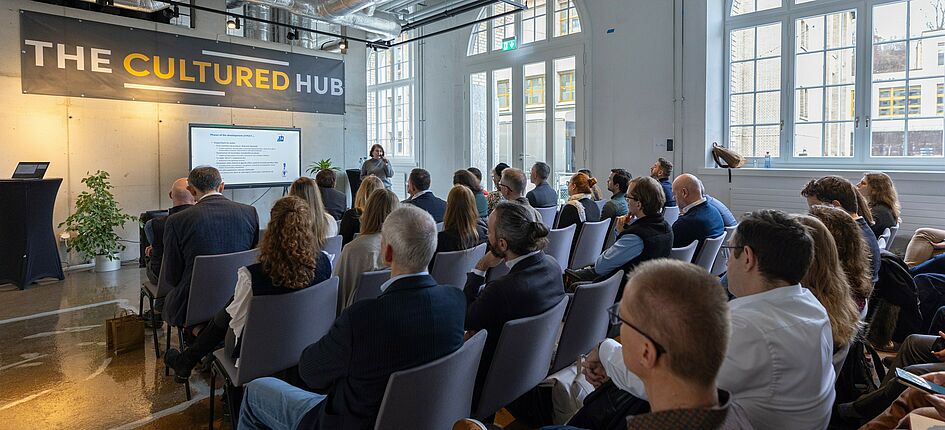
The Culture Hub hosted its first Cultured Plant Cell Event. Image: zVg/The Cultured Hub
News
Zurich/Bern – Thales Alenia Space Switzerland has completed the telescope for the European Space Agency’s Comet Interceptor mission. It was delivered to the Department of Space Research and Planetology at the University of Bern. She heads the consortium for the imaging system.
(CONNECT) Thales Alenia Space Switzerland has completed the telescope for the Comet Interceptor mission of the European SpaceAgency (ESA ). Elisabetta Rugi Grond, CEO of Thales Alenia Space Switzerland, writes this in a post on LinkedIn. "We are proud to contribute our expertise and technology to this exciting and ambitious project and to drive forward space exploration and scientific discovery," says the head of Thales Alenia Space's Swiss site in Zurich. The aerospace technology group has its headquarters in Cannes, France. As Rugi Grond explains, the completed telescope has now been sent to the University of Bern.
Thales Alenia Space Schweiz AG specializes in high-performance optoelectronic space instruments for earth and planetary observation and laser communication. The company is part of the consortium that is manufacturing this telescope on behalf of ESA.
This consortium for the imaging system of the Comet Interceptor mission is led by the University of Bern. Its Department of Space Research and Planetology at the Institute of Physics has extensive experience in the development of instruments for space missions and is an important partner for organizations such as NASA and ESA. According to the university, Thales Alenia Space Switzerland was entrusted with protecting the optics of this comet camera from dust particles flying through the atmosphere at high speed by means of a rotating mirror assembly (RMA).
Comet Interceptor is an ESA mission planned for 2028. The aim is to study a comet as it passes by and enters the inner reaches of the solar system for the first time. The aim of the mission is to carry out multi-point observations to analyze the morphology, composition and plasma environment of such a relic from the early solar system untouched by solar radiation. According to Rugi Grond, this should provide "invaluable scientific data that could give us a new understanding of these mysterious objects". ce/mm

The Thales Alenia Space Switzerland team has completed the telescope for ESA's Comet Interceptor mission. Image: zVg/Thales Alenia Space
News
Dübendorf ZH/Bern – Researchers at the Swiss Federal Laboratories for Materials Science and Technology (Empa) are working on models to represent the water pollution caused by the substance trifluoroacetic acid, which belongs to the PFAS group. In collaboration with the Federal Office for the Environment and the University of Bern, the aim is to determine the formation and environmental impact of TFA.
(CONNECT) Researchers from the Swiss Federal Laboratories for Materials Science and Technology (Empa), the Federal Office for the Environment (FOEN) and the University of Bern have carried out a study to demonstrate the formation of trifluoroacetic acid (TFA) in the atmosphere and the contamination of water bodies with this substance via precipitation. According to a press release, the FOEN tested samples of precipitation and surface waters for the presence of TFA over a period of three years. In parallel, Empa developed a model for the atmospheric input of TFA. Trifluoroacetic acid is one of the per- and polyfluorinated alkyl substances (PFAS) that are considered hazardous to health.
The FOEN analyses and Empa models were compared with data on water samples and pollution collected since 1984. "We are modelling the known precursors of TFA, their degradation pathways and intermediates as well as the deposition of the TFA formed in this way, both via precipitation and directly on surfaces," Empa researcher Stephan Henne is quoted as saying in the press release. "We can calculate for each location in Europe how much TFA is released into the environment there in a given month."
The study shows that the concentrations of TFA have multiplied over the past decades. TFA are produced from the decomposition of hydrofluorocarbons, which are used as coolants and propellants. Another source is the degradation products of pesticides. It is not yet known what harmful effects the occurrence of TFA may have on the human body. Further research is required for this, according to the press release. The current study has been published in the journal "Atmospheric Chemistry and Physics". ce/ww
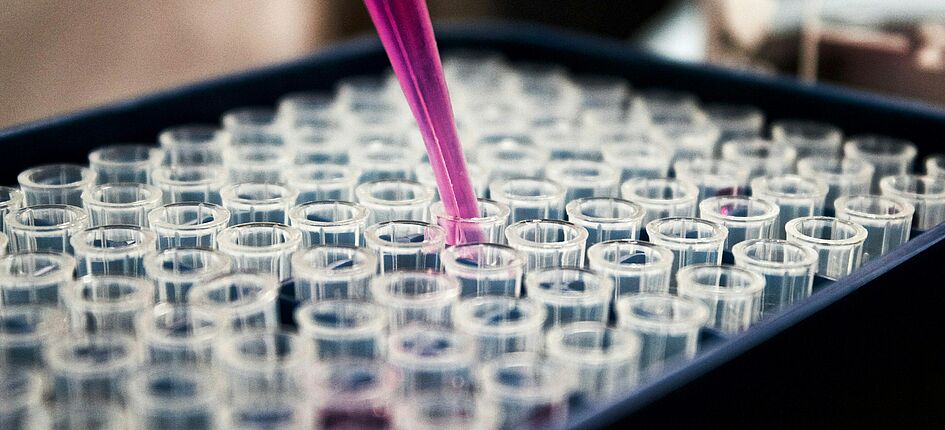
Researchers at Empa have conducted a study to demonstrate the formation of trifluoroacetic acid (TFA) in the atmosphere and the contamination of water bodies with this substance via precipitation. Symbolic image: Louis Reed/Unsplash
News
Rapperswil-Jona SG/Zurich/Dornbirn – In close collaboration with the University of Zurich (UZH) and Prospective Instruments, Eastern Switzerland University of Applied Sciences (OST) has developed a new type of cell measurement laser. This allows biological activities in living cells to be revealed at a previously unattainable speed.
(CONNECT) The OST has succeeded in building an instrument that comes closer than ever before to imaging cell activity in living organisms. Together with the Bruno Weber Lab at the University of Zurich and the company Prospective Instruments from Dornbirn in Vorarlberg, the IMES Institute for Microelectronics, Embedded Systems and Sensor Technology at OST has developed a photon-counting system that sets new standards in biomedical imaging and represents a quantum leap, according to a statement from OST.
The new system makes it possible to analyze cell activities in high resolution directly on the screen. To this end, the team has further developed FLIM, Fluorescence Lifetime Imaging Microscopy, an established measurement method. The rapid processes in the brain can now be measured better than ever before. "The instrument that OST has built us is basically a very fast stopwatch that can measure light in periods of time in which it only travels a few centimetres," Dr. Luca Ravotto from UZH is quoted as saying. This new technology is not only more accurate, but also more robust against high light intensity and significantly more cost-effective than existing systems.
"There are metabolic processes or other processes by which you can tell whether a cell is healthy or whether it is so-called pathological," says Prof. Dr. Bruno Weber from UZH. "And this differentiation is of course important for the surgeon during the operation and not just an hour later."
With the new instrument, it takes between 10 seconds and one minute for the FLIM image to be completed, according to an OST explanatory video. This is not enough for the researchers: "Our goal is definitely to become much faster," explains IMES Director Prof. Dr. Paul Zbinden. "Real time would be the idea that you can actually go into the operating room and see if all the tumor cells have been caught."
This would make something previously unthinkable a reality: FLIM videos. They would form the basis for numerous additional application options with smaller devices, for example in intraoperative applications and for diagnostic purposes. A follow-up project for real-time diagnostics is reportedly already being planned. ce/mm
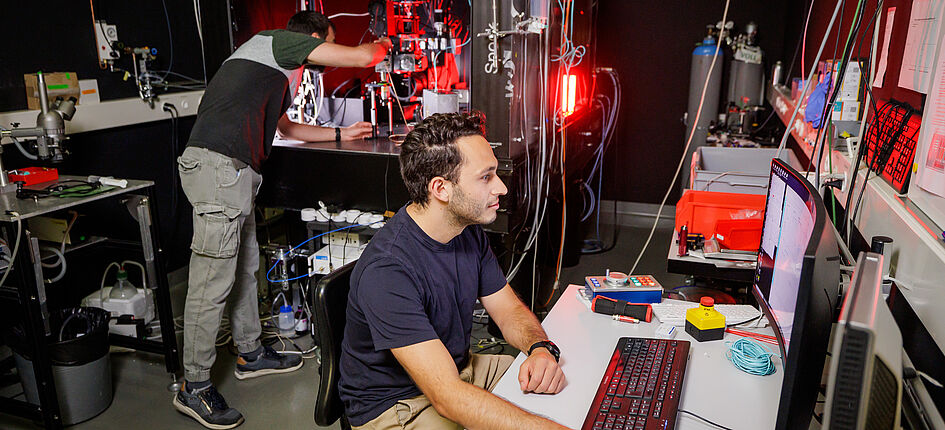
Two researchers from OST working with the cell measurement laser. Image: zVg/OST – University of Applied Sciences of Eastern Switzerland
News
Zurich – Taskbase has acquired Paixon GmbH and its Micromate product. Both are dedicated to learning in the workplace, each with a different technological focus. Now they are combining the deeply personalized learning intelligence of one with the distribution via Microsoft Teams of the other.
(CONNECT) Taskbase has acquired Paixon GmbH and its Micromate platform. Both companies were founded in Zurich in 2015. According to a press release, they want to reshape the way employees learn at work in the future and bring learning from static platforms into the flow of daily work.
In 2021, Taskbase published the Lernnavi platform, which improves the math and German skills of high school students before they enter university. The system analyzes a learner's individual skills profile, identifies strengths and gaps and continuously aligns the learning path to the right content. This expertise in contextualized, personalized learning paths has been refined over the years by the spin-off from the Swiss Federal Institute of Technology in collaboration with educational publishers and institutions.
Micromate initially focused on the development of customized voice and chatbots and provided solutions for SBB, Swiss Post, SMEs and start-ups. Micromate embedded its micro-learning platform in Microsoft Teams to increase the acceptance of learning opportunities in companies. This means that employees no longer need an external application for short daily learning interventions of around ten minutes. When this led to higher completion rates, Micromate began cooperating with Helvetia, Sanitas and Lufthansa, among others.
Now the acquisition will combine Taskbase's deeply personalized learning intelligence with Micromate's distribution via Microsoft Teams. The integration of the two companies is already underway, with the first customer implementations planned for early 2026. Initially, the focus is on sales teams in technology companies. The platform will later be expanded to include management development and other areas of corporate learning. ce/mm
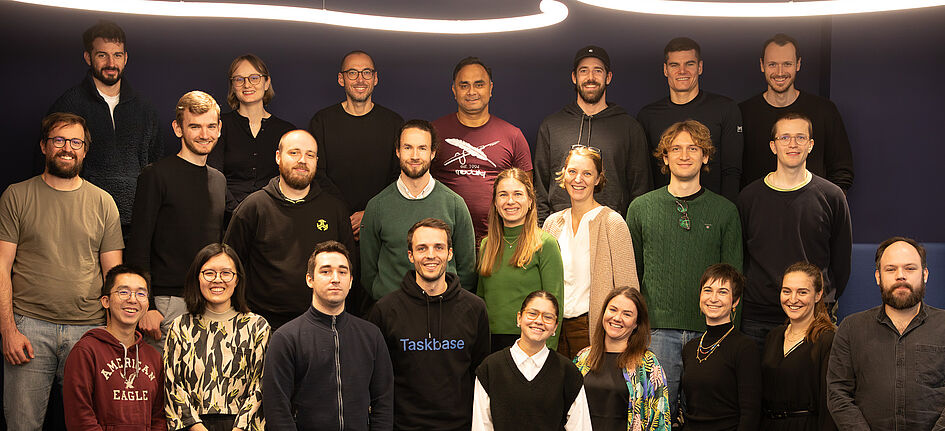
The Taskbase team has acquired Paixon GmbH and its Micromate platform. Image: zVg/Taskbase AG
News
Winterthur/Maur ZH/Abu Dhabi – The start-up platform Startup Campus and the funding initiative Founders Hive are presenting five Swiss start-ups at Abu Dhabi Sustainability Week (ADSW) in mid-January 2026. They will present their solutions for mastering climate and energy challenges.
(CONNECT) A Swiss start-up delegation is showcasing its solutions that address key sustainability challenges at the Abu Dhabi Sustainability Week (ADSW) in mid-January. This is made possible by the start-up platform Startup Campus based in Winterthur and the funding initiative Founders Hive based in Maur. According to a press release, the five start-ups will be part of the SWISS Pavilion in Abu Dhabi from 11 to 17 January, which is being organized by logistics service provider T-LINK, based in Freienbach SZ. The ADSW is an international meeting place for sustainable development, climate protection and the energy transition.
"At ADSW 2026, we will be showcasing investment-ready Swiss solutions that measurably reduce emissions and costs - from methane detection and smart heat grids to scalable charging infrastructure and the decarbonization of gas turbines," says Startup Campus Director Matthias Filser. The industry meeting will be used to sound out partnerships and attract customers for pilot projects or investors.
The start-up SensorX Solutions from Sarnen OW is showcasing a system for monitoring greenhouse gases such as methane. It has proven its functionality when integrated into cars and drones, for example. Also on display is the intelligent concept for disposing of cigarettes developed by the Nosmo'key project in Geneva. The team from Yuon Control in Burgdorf BE uses predictive control software to optimize heating networks and promises a reduction in operating costs of over 20 percent.
The start-up AMP IT from Satigny GE is aimed at electric mobility specialists. With the help of artificial intelligence, their solution orchestrates charging infrastructures for private individuals and companies. Ultimately, Crosstown H2R is a technology for reducing or eliminating emissions such as CO2. The team from Baden AG combines many years of industrial experience and develops know-how from the so-called Gas Turbine Valley.
The delegation is backed by key players in the Swiss innovation ecosystem. Startup Campus offers training and programs for founders. Founders Hive focuses on connecting start-ups with investors. ce/yvh
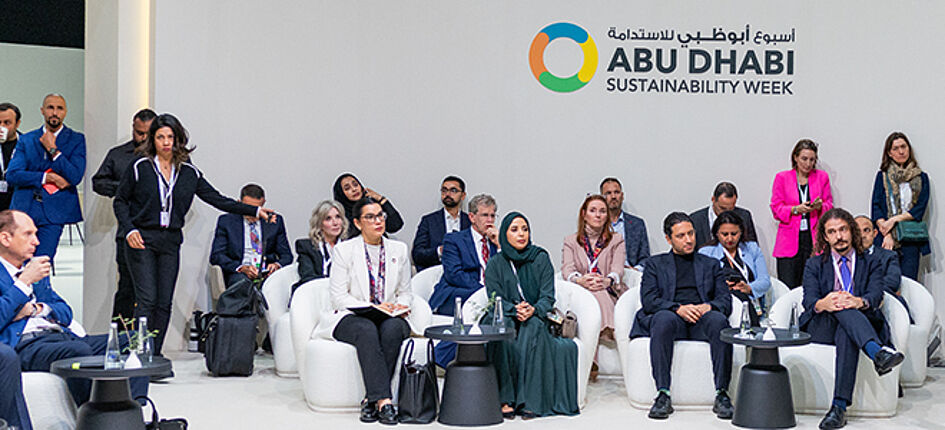
Abu Dhabi Sustainability Week brings together experts from around the world. Image: ADSW
News
Flawil SG/Zurich/Schlieren ZH – The start-up SCALE Lasers can work on scaling a new class of semiconductor lasers with the help of start-up financing from Venture Kick. This should take gas analysis and ultimately the widespread use of laser-based sensor technology a decisive step further.
(CONNECT) The start-up promoter Venture Kick is driving forward the market entry of the micro and nanotechnology start-up SCALE Lasers, based in Flawil SG, with start-up funding of 150,000 Swiss francs. This means that ongoing pilot projects can be transferred to paying customers, according to a press release. Firstly, the SCALE Lasers solution enables the scalable implementation of portable multi-gas analyzers. The market potential in the field of industrial and environmental gas monitoring is estimated at around 100 million dollars. Secondly, it could pave the way for an entire class of lasers to enter mass markets in the long term. Consumer electronics and non-invasive medical diagnostics are cited as examples.
SCALE Lasers' developments are closely linked to research at the Swiss Federal Institute of Technology in Zurich (ETH): CEO David Stark and CTO Killian Keller completed their studies and doctorates there. The founders are tackling a problem with current laser-based sensor technology in the mid-infrared range. It is considered the gold standard of gas analysis, but its portable use is hampered by the size, cost and energy requirements of the laser sources. The laser components from SCALE Lasers are smaller, more cost-effective and can be manufactured in a standardized semiconductor production process. Ultimately, they enable manufacturers to seamlessly integrate mid-infrared lasers into sensors.
"From the very beginning, Venture Kick has pushed us to think beyond pure physics and consistently validate the commercial potential of our technology," CEO David Stark is quoted as saying. ce/yvh
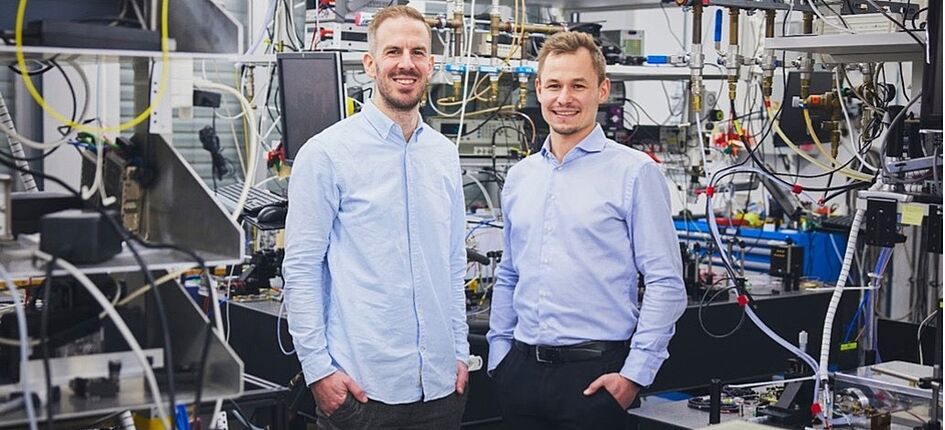
CEO David Stark and CTO Killian Keller from SCALE Lasers. Image: zVg/Venture Kick
News
Zurich/Ittigen BE – Spitch and Adnovum have launched a voicebot supported by artificial intelligence. With Berna, damage reports can be quickly recorded and processed by Gebäudeversicherung Bern (GVB).
(CONNECT) Spitch and Adnovum - both based in Zurich - have launched a voicebot supported by artificial intelligence (AI). According to a press release, the Berna program is intended to simplify the claims recording process at Gebäudeversicherung Bern (GVB).
The AI-Voicebot is designed to enable fast customer service for call triage and claims recording. The program is able to distinguish and recognize different Swiss dialects and convert the spoken text into written German. Berna is also able to accept several hundred calls at the same time, according to the press release. If desired, the program can also connect callers with a human specialist.
The new solution can be particularly helpful in the event of major incidents. During the storm in the Bernese Oberland in August 2024, for example, more than 3,000 calls were received in a very short space of time. In addition to the damage that had already occurred, there were sometimes very long waiting times. "For us, it was crucial that in the event of a major loss event, the injured parties are not additionally burdened when filing their claim," Corinne Fleury, Innovation Manager at GVB, is quoted as saying in the press release. "The aim was to use an automated, flexibly scalable solution to take the pressure off our customer center and the specialist departments and avoid waiting times, even in the event of such major incidents. The solution created by Spitch and Adnovum also makes it possible to use guided dialogs and the structured recording of customer details to automatically create precise claims dossiers as a basis for further processing by specialists." ce/ww

Spitch and Adnovum have launched an artificial intelligence-powered voicebot. Symbolic image: Tara Winstead/Pexels
News
Winterthur – Findea has received over 3.2 million Swiss francs from 146 investors in its first financing round. The company, which was founded in 2003, aims to scale its fiduciary, tax and accounting business. The aim is to double turnover in five years.
(CONNECT) Findea closed its first financing round at the end of November with more than 3.2 million Swiss francs. As the company, which was founded in Winterthur in 2003, has now announced, 146 investors have participated. This reduces the shareholding of the previous sole shareholder Nexus AG, also based in Winterthur, to 89 percent. According to Findea, this financing marks "a significant step on the way to market leadership in the digital trust business".
The fresh capital is to be invested in efficiency-enhancing artificial intelligence (AI). The company wants to use AI to scale its services in the fiduciary, tax, auditing and payroll accounting markets. "The foundation is stable," Findea's CEO Michele Blasucci is quoted as saying. "AI is not a trend topic for us, but we are making targeted investments in the technology so that our business model will not only survive in the digital and AI era, but will dominate it."
Findea is focusing on three areas: firstly, AI-supported processing of documents and data, so that a large proportion of standard cases will be fully automated in future; secondly, an AI co-pilot that supports specialists with suggestions, analyses and automated drafts; and thirdly, AI is to be used in customer service and digital customer access.
Findea plans to integrate all AI modules into its existing processes over the next twelve months. In the second phase, the focus is on the significant expansion of mandates without a corresponding increase in personnel. In five years, the current turnover is expected to double to a double-digit million figure. ce/mm
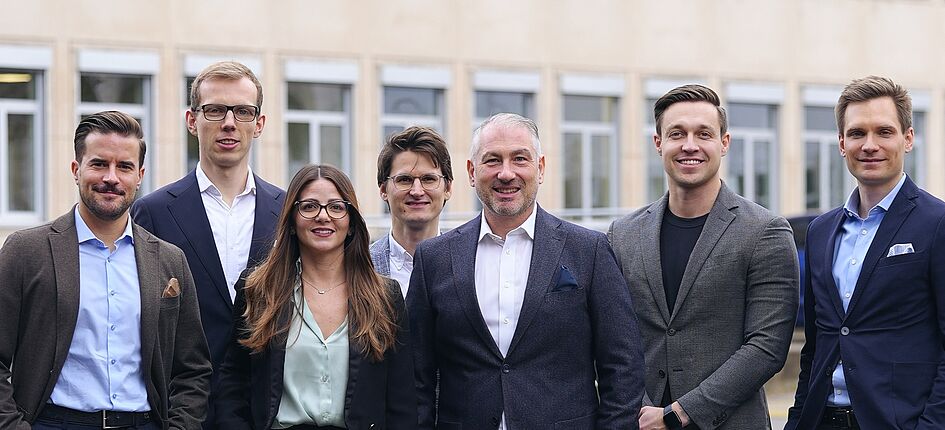
(from left to right) Mattia Piccoli (CMO), Daniel Wijngaard (Business Developer), Marcella Cirillo (Consultant); Martin Helmer (CTO), Michele Blasucci (CEO), Eduard Schlothauer (Head of Business Development), Balint Farks (CFO) have received over 3.2 million Swiss francs in a first round of financing with Findea. Image: zVg/Findea AG
News
Zurich/Schlieren ZH – PeelPack receives start-up funding of 150,000 Swiss francs from Venture Kick. The Zurich-based foodtech start-up produces biodegradable peelings from potato peelings. They are suitable as packaging for fresh produce. More than 20 pilot projects are already underway in five countries.
(CONNECT) With the support of Venture Kick, PeelPack can advance the transition from pilot projects to industrial series production. According to a press release, the young food tech company from Zurich is receiving seed funding of 150,000 Swiss francs from start-up promoter Venture Kick in Schlieren.
PeelPack develops biodegradable packaging for fresh produce made from biopolymers. These biopolymers are obtained from potato peelings. Unlike many existing environmentally friendly materials, PeelPack's development also meets the requirements for durability and compostability. It therefore offers "a powerful alternative without compromising on functionality".
Venture Kick puts the volume of the global market for fresh produce packaging at around 6 billion dollars. Within just a few months, PeelPack was able to win over producers, packers and retailers for over 20 pilot projects in Switzerland, Italy, Spain, France and the Netherlands. This early market momentum has reportedly aroused the interest of industrial partners who are currently evaluating extrusion and thermoforming processes. According to Venture Kick, further applications are already in development.
The fresh capital will enable the start-up to produce initial larger quantities, establish further production partnerships and validate additional processing technologies. "The collaboration with Venture Kick was a real advantage for us," PeelPack CEO Slava Drigloff is quoted as saying. "The community not only provides funding, but also challenges and supports founders who implement at high speed. Being part of Venture Kick opens doors and connects us with people who are committed to our success." ce/mm
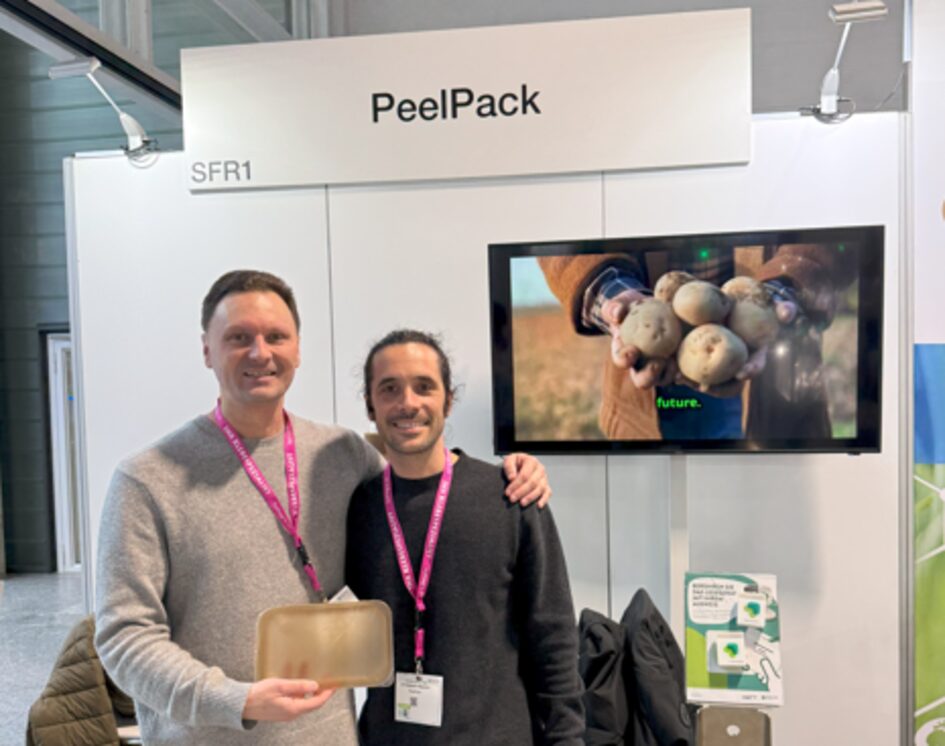
(from left to right) CEO Slava Drigloff and CTO Massimo Bagnani receive 150,000 Swiss francs from Venture Kick for PeelPack. Image: zVg/Venturelab Ltd.
You need to load content from reCAPTCHA to submit the form. Please note that doing so will share data with third-party providers.
More InformationYou are currently viewing a placeholder content from Turnstile. To access the actual content, click the button below. Please note that doing so will share data with third-party providers.
More InformationYou are currently viewing a placeholder content from Vimeo. To access the actual content, click the button below. Please note that doing so will share data with third-party providers.
More InformationYou are currently viewing a placeholder content from YouTube. To access the actual content, click the button below. Please note that doing so will share data with third-party providers.
More InformationYou need to load content from reCAPTCHA to submit the form. Please note that doing so will share data with third-party providers.
More Information