News
The Rieter Group is constantly expanding its technology leadership. The company is therefore supporting a new endowed professorship for Industrial Artificial Intelligence (AI) at the ZHAW School of Engineering together with the Johann Jacob Rieter Foundation. The professorship deals with teaching and research in the field of industrial applications of artificial intelligence and will be advertised later this year.
The new endowed professorship will be established at the Center for Artificial Intelligence (CAI) of the ZHAW in Winterthur. In particular, it will be dedicated to the application of machine learning methods and knowledge-based systems in the context of processes in production and service. "The use of artificial intelligence in industry is becoming increasingly important, especially when it comes to the potential of data for evaluating and controlling complex processes. With the support of the Johann Jacob Rieter Foundation and the Rieter Group, we can further expand AI research in the field of industrial applications," explains Prof. Dr. Dirk Wilhelm, Director of the ZHAW School of Engineering.
For Rieter, the commitment is related to the implementation of its technology leadership strategy. "The use of artificial intelligence will make a significant contribution to automation, process optimization and thus to improving sustainability in the textile industry. It is thus an important element of the leading technology that Rieter offers," emphasizes Dr. Norbert Klapper, CEO Rieter.
The contribution of the Johann Jacob Rieter Foundation to the financing of the professorship is in line with the Winterthur Cluster Initiative. The increasing digitalization of production processes opens up new perspectives for Winterthur as a business location. "The Smart Machines cluster is gaining in importance," says Thomas Anwander, member of the Foundation Board, and adds: "The Endowed Chair for Industrial AI at the ZHAW aims to promote Winterthur as a technology location by pooling locally available strengths in mechanical engineering and Industry 4.0."
The endowed professorship will serve to build expertise in the field of Industrial AI and will preside over a group dedicated to teaching and research around trust-based machine learning. This involves, for example, the use of artificial intelligence with the aim of optimizing production processes in terms of the use of raw materials and energy and making expert knowledge more readily available. In addition to research, the new professorship will also be active in teaching, in the Bachelor of Science in Computer Science and Data Science, in the Master of Science in Engineering, and in continuing education, in the spirit of knowledge transfer.
The annual contribution of 300 000 CHF over a period of six years is financed in equal parts by the Rieter Group and the Johann Jacob Rieter Foundation.

News
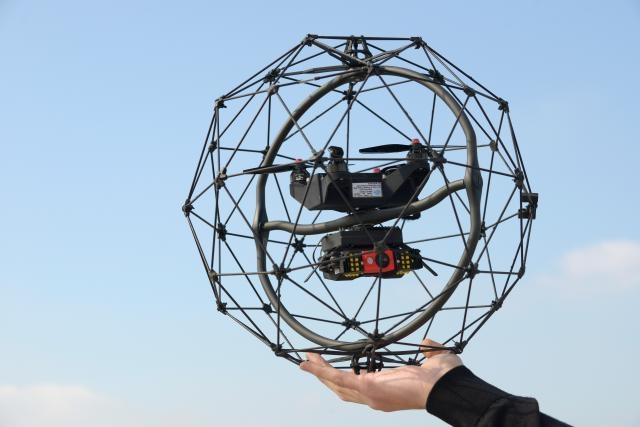
In its European Drone Strategy, the Commission sets out its vision for the further development of the European drone market. The basis for the strategy is the world’s most advanced safety framework established by the EU for the operation of drones and the technical requirements that apply to them.
The new drone strategy 2.0, shows how Europe can pursue large-scale commercial drone operations while opening up new opportunities for the sector.
From workplaces to new mobility solutions
Thanks to the comprehensive EU regulatory framework, hundreds of thousands of flight hours have already been safely performed with drones in the airspace over Europe, e.g. for infrastructure surveying, oil spill monitoring or ground sampling. Projects using drones for medical deliveries, i.e., transporting medical specimens between healthcare providers, are also progressing well. The realization of "U-Space" in January 2023, a European system unique in the world for the safe management of drone traffic, will lay the foundation for increased flight operations.
Before moving forward with these innovative technologies, the commission wants to ensure that society supports drones. Therefore, the strategy calls on national, regional, and local communities to ensure that drone services are responsive to the needs of citizens and address noise, safety, and privacy concerns. Further information is available in the media release.
News
Alfred and Stefan join Sven Fassbinder to address the extremely relevant topic of “IT and Security”, which is keeping the Swiss healthcare sector on its toes.
Alfred and Stefan dedicate themselves to the extremely relevant topic of "IT and security", which keeps the Swiss healthcare system on its toes. And who would be better suited as a guest than Sven Fassbender, who has become famous in the IT scene for exposing the security vulnerabilities of the platform "meineimpfungen.ch".
Sven is managing director and co-founder of ZFT.COMPANY and has worked in numerous German and Swiss companies in the field of IT and security. In the press, moreover, he would be described as an ethical hacker ("white-hat hacker") who always acts in the spirit of his overriding goal - the protection of the data of the Swiss population!
The information security consultant reports on his daily work with hospitals and start-ups, among others, as well as on his successes with "meineimpfungen.ch" and "Swisstransplant".
Listen into this podcast episode to learn more about Sven Fassbender's exciting tips and recommendations and why backups, two-factor authentication and password managers should be daily tools for all of us.
You are currently viewing a placeholder content from Default. To access the actual content, click the button below. Please note that doing so will share data with third-party providers.
More InformationThe podcast "Marketplace Healthcare" is the podcast on healthcare management and leadership. Alfred Angerer is a professor at the ZHAW for Management in Healthcare and the founder of Marktplatz Gesundheitswesen. In the podcast he interviews exciting people with whom he discusses the current trends. In doing so, he is looking in a forward-thinking direction that does not neglect topics such as digitalization and process optimization.
News
The Internet of Things (IoT) is the topic of this episode with Alfred and Sina Berger. The Internet of Things (IoT) has become an integral part of many industrial sectors, but does it also have the potential to revolutionize the healthcare industry?
The Internet of Things (IoT) has already become indispensable in many areas of industry, but does it also have the potential to revolutionize the healthcare industry? To get a little closer to the answer to this question, Sina Berger is a guest on the current edition of "Marktplatz Gesundheitswesen". Sina is a research associate at the Winterthur Institute of Health Economics in the Healthcare Management team and works on topics such as digital health, process optimization and patient satisfaction. As part of her master's thesis, she explored the question of the extent to which patients' treatment pathways can be optimized through the targeted use of IoT. But what is actually behind the much-vaunted "buzzword" and to what extent is IoT already being used in healthcare today? This much can already be revealed: Just because a device has a sensor doesn't mean it's IoT. Listen in to this podcast episode to learn more about what IoT applications should be used in the future to optimize the patient pathway and create value for patients and staff.
You are currently viewing a placeholder content from Default. To access the actual content, click the button below. Please note that doing so will share data with third-party providers.
More InformationThe podcast "Marketplace Healthcare" is the podcast on healthcare management and leadership. Alfred Angerer is a professor at the ZHAW for Management in Healthcare and the founder of Marktplatz Gesundheitswesen. In the podcast he interviews exciting people with whom he discusses the current trends. In doing so, he is looking in a forward-thinking direction that does not neglect topics such as digitalization and process optimization.
News
Three healthcare innovation experts answer the question of how new, innovative and actionable Digital Health ideas could be systematically provoked in organizations.
This episode was recorded directly and live during a panel discussion at the ZHAW Digital Health Lab Day. In this, three innovation experts from the healthcare sector answered the question of how new, innovative and implementable digital health ideas could be systematically provoked in organizations.
After all, every good healthcare organization wants innovative employees who can drive the business forward with new Digital Health ideas. But this development cannot be left to chance. Accordingly, the introduction of systematic and strategic innovation management sounds promising. Accordingly, this round's guests are the three experts in the field, Niowi Näf (Chief Strategy Officer at Hirslanden), Matthias Hermann (Head of Innovation Management at the University Hospital Zurich) and Tobias Gantner (Founder and Head of Healthcare Futurists), who will provide insights into their daily innovation work.
Listen into this podcast episode to learn more about what smart innovation management entails, how it works, and what it brings in very real terms.
You are currently viewing a placeholder content from Default. To access the actual content, click the button below. Please note that doing so will share data with third-party providers.
More InformationThe podcast "Marketplace Healthcare" is the podcast on healthcare management and leadership. Alfred Angerer is a professor at the ZHAW for Management in Healthcare and the founder of Marktplatz Gesundheitswesen. In the podcast he interviews exciting people with whom he discusses the current trends. In doing so, he is looking in a forward-thinking direction that does not neglect topics such as digitalization and process optimization.
News
Alfred and his guest Prof. Dr. Sven Hirsch talk about the ZHAW Digital Health Lab.
The ZHAW Digital Health Lab brings together experts from the fields of biomedicine, health, technology and business, who together create innovations for digitization in healthcare. Alfred and his guest Prof. Dr. Sven Hirsch sit on the board here and launched this ZHAW (Zurich University of Applied Sciences) led platform in 2018. And so it is fitting that Alfred and Sven, heads of the "Center for Computational Health" in Wädenswil, take an inward look in this episode and highlight the added value of such a virtual, interdepartmental organization at the ZHAW.
Both ZHAW colleagues have very different backgrounds. Sven's background is in laser physics, as well as media art, and he is currently primarily involved in biomedical simulations and modeling. Alfred, on the other hand, comes from the field of health economics and, in his daily work, looks at the influence of new technologies on the players in the healthcare system.
In addition to the specialties the two represent, the Digital Health Lab brings together many other competencies to focus digital health activities and create innovation.
Listen into this podcast episode to learn more about Sven Hirsch's research focus on biomedical simulation and how the Digital Health Lab works. In addition, Sven and Alfred provide insights into the two large multi-million projects (funded by the Innosuisse Flagship and the Zurich Universities Digitization Initiative) that the Lab has won as well as about the ZHAW Digital Health Lab Day.
You are currently viewing a placeholder content from Default. To access the actual content, click the button below. Please note that doing so will share data with third-party providers.
More InformationThe podcast "Marketplace Healthcare" is the podcast on healthcare management and leadership. Alfred Angerer is a professor at the ZHAW for Management in Healthcare and the founder of Marktplatz Gesundheitswesen. In the podcast he interviews exciting people with whom he discusses the current trends. In doing so, he is looking in a forward-thinking direction that does not neglect topics such as digitalization and process optimization.
News
During recent years, TX Ventures has transformed into a leading FinTech investor in Switzerland and is launching today its first dedicated CHF 100 Million fund. The fund is structured as a single Limited Partnership, and its sole investor is TX Group
As the independent and financial return driven venture arm of TX Group, TX Ventures has built a strong investment track record with investments such as the challenger bank neon, the alternative investment platform Stableton, the real estate price intelligence software Pricehubble, and exits such as the mortgage platform Moneypark.
During recent years, TX Ventures has transformed into a leading FinTech investor in Switzerland and is launching today its first dedicated CHF 100 Million fund. The fund is structured as a single Limited Partnership, and its sole investor is TX Group.
TX Ventures has set the base to launch its new FinTech fund by disposing of non-core assets (such as the sale of Olmero to Sterling Square / TA Associates), implementing a professional investment committee, and clearly defining its financial return oriented investment mandate.
TX Ventures’ mandate, to invest in financial technology start-ups (FinTech, InsurTech, Crypto) in Europe with preference for the DACH region, has its focus on early stage investments (Seed to Series A) with initial tickets ranging from CHF0.5m to CHF5m.
The team, consisting of Krzysztof Bialkowski, Jens Schleuniger, David Schnider and Markus Rommel, has already built a strong portfolio of Swiss based FinTechs, while being supported by experts in the areas of marketing, cyber security, tech, communication, legal and finance. TX Ventures believes that - despite the current economic headwinds - the current market environment offers great investment opportunities. The team has a clear long term ambition to become one of the leading early stage FinTech investors in Europe, a growing and sizable market for FinTech.
The TX Ventures investment committee is chaired by Romy Schnelle, Partner at Hightech Gründerfonds (HTGF) and complemented by well known Fintech Founder Miriam Wohlfarth, Sandro Macchiacchini (COO of TX Group), Daniel Mönch (CSO of TX Group) and Olivier Rihs (Board Member SMG and JobCloud).
Are you a FinTech looking for an experienced FinTech investor? Get in touch!

News
The World Food System Center of ETH Zurich and Bayer launch a partnership focused on sustainable agricultural systems and production practices. Bayer is supporting several interdisciplinary research projects of the World Food System Center with a total donation of 1.1 million Swiss francs over the next four years.
In order to develop solutions to major food challenges the world is facing, the World Food System Center of ETH Zurich launches a new research program, supported by Bayer, focusing on improving sustainability of agricultural and food systems across key environmental metrics. The goal is to understand the benefits and tradeoffs of various measures in agricultural systems and production practices while maintaining the production potential and strengthening overall resilience of the agricultural system towards climate impacts and biodiversity.
Around the globe, agricultural and food systems are facing major challenges. Future agri-food systems must provide enough healthy and affordable food for a growing world population as well as deliver a sufficient economic benefit for farmers. At the same time, climate change, increasing scarcity of natural resources, and deteriorating soil health and biodiversity all pose major stress on the entire food system.
Food production, therefore, needs sufficient yields of good quality while substantially reducing the environmental risks and footprints. Such production requires promotion of solutions that are tailored to the local conditions, cropping systems, and farmers’ needs. Balancing these trade-offs is necessary to secure the production potential of agriculture and farming systems in the long term.
Natasha Santos, Head of Global Stakeholder Affairs & Strategic Partnerships at Bayer Crop Science comments: “According to the UN, the world population will grow to around 10 billion people in the next 30 years. Supplying these 2 billion more people than today’s population with food represents a huge global challenge. At the same time, climate change is reducing agricultural production. If farmers are to "produce more with less" now and in the future, innovative technologies that deliver greater resource efficiency are essential. We as Bayer are happy that we can support the World Food System Center providing scientific guidance on solutions to transform agriculture toward a more resilient, sustainable and food secure future”.
Detlef Günther, Vice President Research at ETH Zurich, comments: "In contrast to progressing towards eradicating hunger, the number of undernourished people in the world is on the rise. New solutions are needed to produce sufficient food of good quality, making it accessible for all while greatly reducing environmental risks. This new partnership supports interdisciplinary research to identify solutions that consider relevant tradeoffs for farmers, industry, and consumers.”
The partnership enables new interdisciplinary research projects that will specifically aim to identify sustainable production practices and agricultural systems covering all sustainability dimensions, explore them along key metrics, and further improve their sustainability by minimizing tradeoffs with special focus on the environmental footprint and risks of production. A key component of the partnership is on collaboration and knowledge-sharing between research and practice as well as interdisciplinary, solution-oriented research approaches for major crops grown in Europe.
Starting in 2023, the World Food System Center will identify the first research projects through a call for proposals. The funded interdisciplinary projects are expected to yield insights on pathways to reduce the environmental impact of food systems using a holistic perspective. The World Food System Center and Bayer look forward to sharing the results with the agriculture sector, other research institutions, companies, and the public. In the future, other industry partners may also participate in the research activities.
Author: Jeanne Tomaszewski/WFSC, ETH Zurich
Image source: ETH Zurich
News
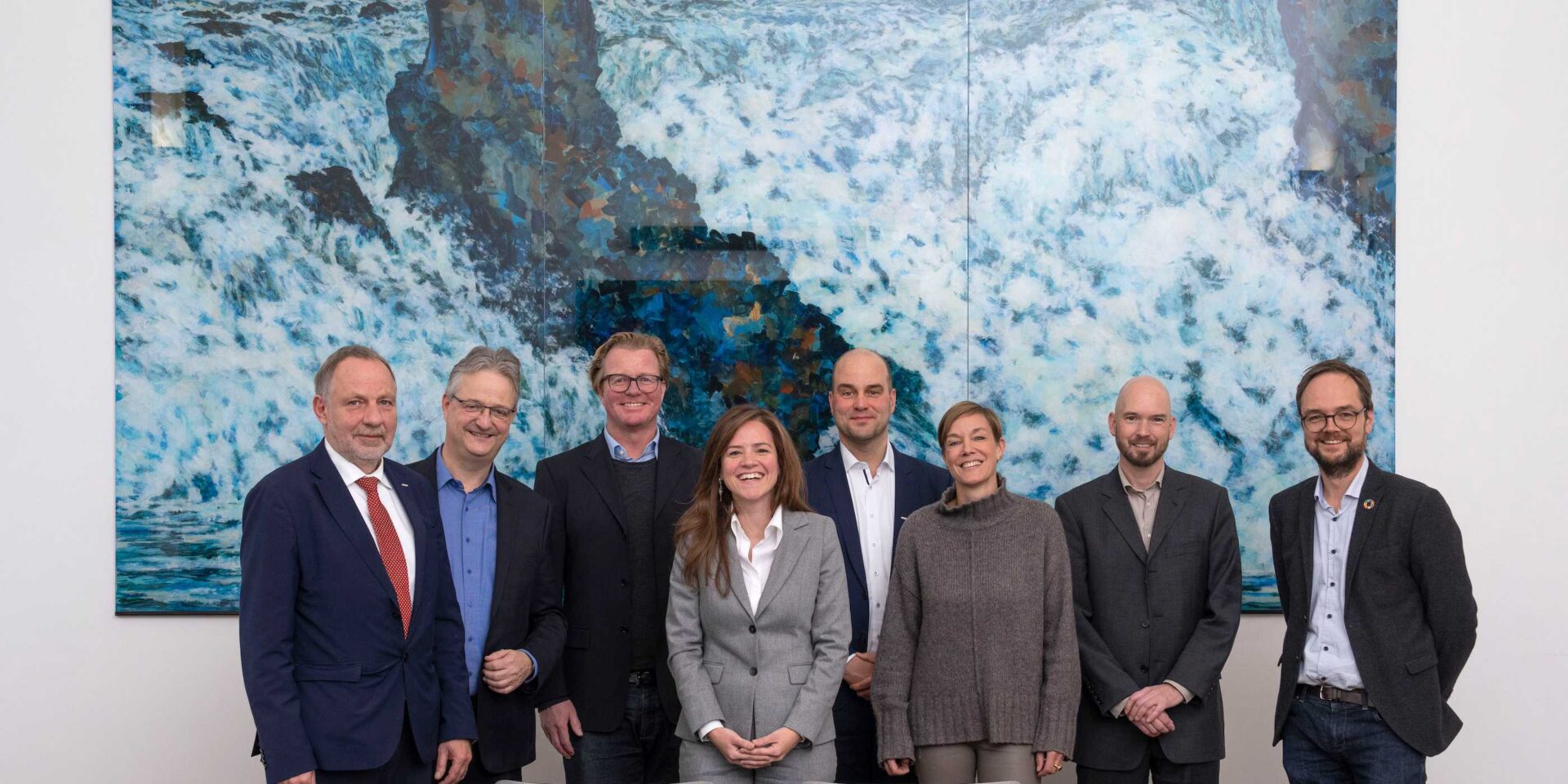
Discover startups, spin-offs and non-profit organisations from the ZHdK ecosystem
The ZHdK-Startup-Finder is a new online database launched under the label of the Zurich Centre for Creative Economies (ZCCE) at Zurich University of the Arts (ZHdK). It offers an overview of the various startups, spin-offs and non-profit organisations that have emerged in the ZHdK ecosystem in recent years. The Startup Finder also showcases the innovative potential and diversity of founders from the ZHdK who generate cultural, social, ecological, and economic impact.
Everyone who is interested in certain aspects such as disciplines, legal form or field can set and filter corresponding criteria in the database or enter certain keywords. An overview of the content:
When assessing the quantitative output one has to take into account the university's size - while ZHdK is one of the largest arts universities in Europe with around 2,100 Bachelor and Master students, it is one of the smaller players in Zurich's university landscape.
News
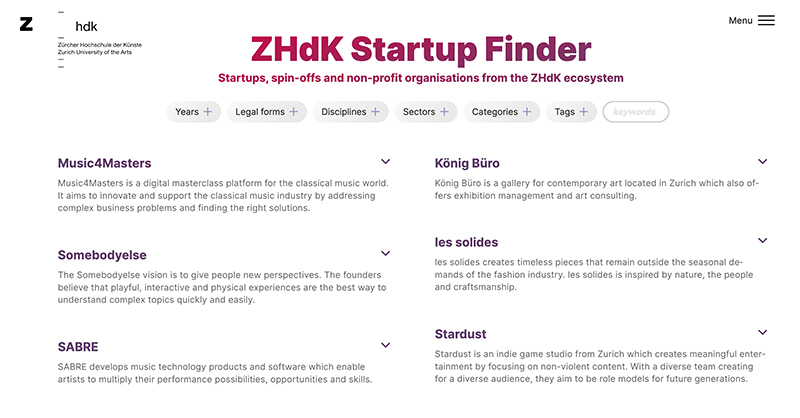
The winning teams are Ascento Robotics, Aseptuva AG, AITHON, Seismohealth and Groam Tech AG.
They convinced the jury with their pitches and will be allowed to move into the Züri Innovationspark office next year.
You are currently viewing a placeholder content from YouTube. To access the actual content, click the button below. Please note that doing so will share data with third-party providers.
More InformationNews
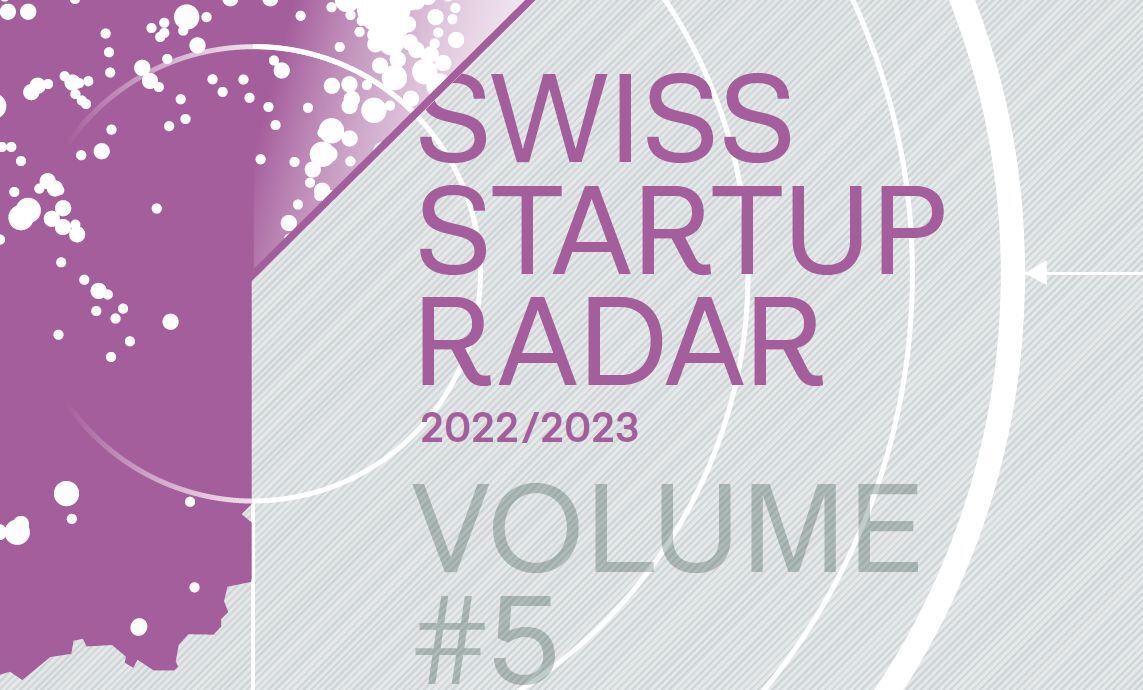
The fifth edition of the Startup Radar focuses on sustainable start-ups. Which country has the highest density of sustainable start-ups? Which ecosystem attracts the highest investment? In which sectors do entrepreneurs see the greatest opportunities? The new Startup Radar provides answers.
In Switzerland, the proportion of sustainability start-ups in all technology and science-based start-ups increased from 4% to almost 10% in just two years (2019 - 2021). In parallel, the total volume of venture capital investment in this sector grew from CHF 200 million to CHF 600 million. As of 2022, Switzerland has the highest density per capita of sustainability start-ups.
Two sectors deserve special mention: mechanical engineering and the food industry. Switzerland has mature innovation ecosystems in both sectors: founders have the opportunity to collaborate with leading international universities and market-leading companies at all stages of the value chain.
Meat substitute products and AI-based platforms for resource-saving agriculture represent these strengths, as do natural fibre-based composite materials that reduce the ecological footprint of mobility.
You can download the Swiss Startup Radar in German, French and English here: Swiss Startup Radar 2022 / 2023
News
In The BRIDGE Lab, DSI researchers aim to create a collaborative platform as a structural vessel to promote research and innovation, by connecting science with industries, incubators, public authorities, and civil society around conditions of successful implementation of digital innovations in Switzerland.
On 1 November 2022 , a new structural vessel «The BRIDGE Lab» was launched at the Digital Society Initiative (DSI), University of Zurich (UZH). As the key drivers of the initiative, Dr. Ning Wang, Prof. Davide Scaramuzza and Prof. Francis Cheneval aim to, through this collaborative platform, connect science with industry, government, regulatory authority, and civil society around conditions of successful implementation of digital innovations in Switzerland.
The ethos of the lab is to «Bridge The Wisdom Gap» – the gap between the increasingly interconnected complexity of global challenges, which interlocks existing problems and supercharges power dynamics, and our inability of making sense of as well as coping with them. «The BRIDGE Lab» seeks to offer an exploratory space for addressing one such challenges – the introduction and integration of high-impact technology in society, such as drones used as urban air mobility solutions in Switzerland.
The lab is funded by the Digitalization Initiative of the Zurich Higher Education Institutions (DIZH) for two years. Project partners include leading industry members and key societal actors, such as Canton of Zurich, Federal Office of Civil Aviation, IEEE Switzerland, and University of Geneva, among others. More info about the project can be found here. Stay tuned on the upcoming activities!

You need to load content from reCAPTCHA to submit the form. Please note that doing so will share data with third-party providers.
More InformationYou are currently viewing a placeholder content from Turnstile. To access the actual content, click the button below. Please note that doing so will share data with third-party providers.
More InformationYou are currently viewing a placeholder content from Vimeo. To access the actual content, click the button below. Please note that doing so will share data with third-party providers.
More InformationYou are currently viewing a placeholder content from YouTube. To access the actual content, click the button below. Please note that doing so will share data with third-party providers.
More InformationYou need to load content from reCAPTCHA to submit the form. Please note that doing so will share data with third-party providers.
More Information


