News
Zurich – Beyond Gravity is providing key components for the European Service Module on NASA’s Artemis II mission. Artemis II will fly four astronauts around the moon in April 2026. Beyond Gravity manufactures key elements for the Space Launch System of future Artemis missions in the USA.
(CONNECT) Beyond Gravity is involved in NASA 's next mission to the moon. As part of the Artemis II space program, it is to send four astronauts on a journey around the moon at the beginning of April, according to a statement from the Zurich-based space company. A central element of this and the subsequent Artemis missions already planned is the European Service Module of the European Space Agency. This module supplies NASA's Orion spacecraft with energy and provides the astronauts on board with electricity, propulsion and drinking water. It also creates a breathable atmosphere and a pleasant temperature.
Beyond Gravity supplies the drive mechanisms for the solar system for this service module. They were developed in Zurich. The mechanisms include slip rings and rotary capsules produced by the subsidiary Beyond Gravity Slip Rings in Nyon VD. The mechanisms are designed for extremely precise movements and allow the solar wings to tilt and rotate to follow the sun and position cameras to inspect the spacecraft.
"These drive mechanisms for solar arrays are among the most complex mechanisms in space," Alexandra Isele, Beyond Gravity's Vice President Mechanical Satellites Solutions, is quoted as saying. "Beyond Gravity was selected to develop and manufacture these components due to its unique expertise and capabilities in this technology field."
For future Artemis missions, Beyond Gravity is supplying key components for the Space Launch System, i.e. the launch vehicle. With its expertise in the production of carbon fiber composites, the company will manufacture the Universal Stage Adapter, which connects the launcher to the service module. Work on this began back in 2017 at the plant in Decatur, Alabama, the headquarters of Beyond Gravity USA. The adapter is 9.9 meters high and measures 8.4 meters at its widest point. He will be used for the first time in Artemis IV. Then, in 2028, humans will set foot on the moon again. ce/mm
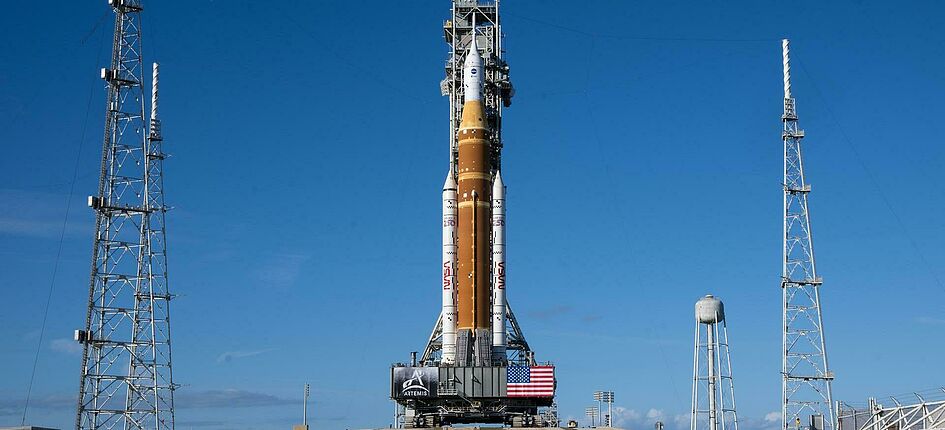
Beyond Gravity is involved in NASA’s Artemis II missions. Image: Aubrey Gemignani/NASA
News
Dietikon ZH/Sint-Stevens-Woluwe – Duagon is supplying the Belgian company Space Applications Services with hardware intended for the Columbus module of the International Space Station (ISS). The device technology has internal data storage and is designed to transmit scientific data to ground-based data centers.
(CONNECT) duagon AG, based in Dietikon and specializing in railroad and medical technology, has developed special computing hardware for the Belgian aerospace company Space Applications Services nv/sa from Sint-Stevens-Woluwe. According to a press release, a Conduction Cooled Assembly (CCA) with internal data storage capacities is to be transported to the International Space Station on a transport spaceship in April. The CCA will collect scientific data within the ISS Columbus module and transmit it to ground-based data centers on Earth.
The CCAs are based on compact PCI series systems and consist of various cards for CPU, memory or Ethernet switches. Each individual card is surrounded by a metal sheath. The individual modules are mounted separately and can be replaced quickly on site in the event of a failure. They are mounted in a metal housing so that they transfer their heat to the jacket. This means that no fans are required and the cabin air is not heated. Vent holes prevent overpressure in the CCAs, which means they can be used both in space and under extreme conditions underground.
Duagon will deliver a single-digit number of CCAs to Belgium, one of which will take up duty on the ISS, while the others will remain in reserve or perform tests on the ground. ce/ww

Duagon has developed specialised computing hardware for the Belgian aerospace company Space Applications Services nv/sa, based in Sint-Stevens-Woluwe. Image: Duagon AG
News
Lausanne – Zurich leads the IMD Smart City Index for the seventh time in a row. Geneva was ranked third out of 148 cities surveyed, while Lausanne – in 10th place last year – climbed back up to 7th place. The index measures how intelligent citizens think their city is.
(CONNECT) Zurich is also in the top spot in the seventh edition of the IMD Smart City Index. Oslo is listed in second place ahead of Geneva, which, according to a press release, is in third place again this year. Lausanne improved by three places compared to 2025, reaching 7th place. The World Competitiveness Center(WCC) of the IMD Business School surveyed citizens in a total of 148 cities for the index.
As the index showed, citizens also rate the quality of their city according to its political transparency and opportunities for participation. "Smartness" therefore not only concerns the introduction of the latest technologies, but also a stronger perception of good urban management and the realization of digital services. According to the press release, cities in which people feel that they are listened to perform significantly better.
"The most advanced urban centers where citizens feel happiest are not necessarily those characterized by utopian skylines, visible sensor networks or pure technological sophistication," Arturo Bris, Director of the WCC, is quoted as saying in the press release. "They are characterized by how effectively they align governance structures, sustainability priorities, public investment decisions and, perhaps most importantly, citizen trust."
London, Copenhagen and Dubai ranked fourth to sixth behind Zurich, Oslo and Geneva. Canberra, Singapore and Abu Dhabi complete the top 10 behind Lausanne. ce/ww

Zurich also tops the rankings in the seventh edition of the IMD Smart City Index. Stock image: Henrique Ferreira/Unsplash
News
Zurich – The material from which the Earth is made comes exclusively from the inner solar system. With this proof, two researchers from the Swiss Federal Institute of Technology refute the assumption that parts of the Earth, such as water, must originate from the outer solar system.
(CONNECT) Planetary researchers Paolo Sossi, Professor of Experimental Planetology, and Dan Bower from the Swiss Federal Institute of Technology in Zurich (ETH) have come to a surprising conclusion: the material from which the Earth is formed originates entirely from the inner solar system. The corresponding study has now been published in the journal "Nature Astronomy".
"Our calculations make it clear: the Earth's building material comes from a uniform material reservoir," Sossi is quoted as saying in an ETH report. And Bower adds: "We were really surprised that the Earth is composed entirely of material from the inner solar system and is clearly different from all combinations of known meteorites."
Until now, planetary researchers had considered it likely that 6 to 40 percent of this material came from the outer solar system, i.e. from beyond Jupiter. For a long time, material from the outer solar system was considered necessary to bring volatile components such as water to Earth, the report continues. According to this, there must have been an exchange of material between the outer and inner solar system during the formation of the Earth.
This has now been refuted. For their study, the two ETH researchers used existing data on ten different isotope systems from meteorites and analyzed them in combination using a special statistical method. In previous studies, only two isotope systems were usually considered.
"Our study is actually a data science experiment," explains Sossi. "We have carried out statistical calculations that are hardly ever used in geochemistry, although they are a powerful tool." ce/mm

Researchers at ETH Zurich have shown that the Earth’s material originates entirely from the inner solar system. Image: ESO/R. F. van Capelleveen et al./Wikimedia Commons
News
Schlieren ZH – Venture Kick counts its 1,000th customer. start-up in the portfolio that emerged from its funding programme. Since its foundation in 2007, 103 million Swiss francs have benefited a total of 1286 projects. They have given rise to over 1000 start-ups with 16,100 jobs today.
(CONNECT) Venture Kick draws on the foundation of its 1000th company. portfolio company a successful balance sheet. Since the launch of the philanthropic initiative in 2007, the early-stage start-up promoter has invested a total of CHF 103 million from private funds in start-up ideas and teams, according to its press release. Thanks to funding of between 150,000 and a maximum of just over 1 million Swiss francs per start-up, as well as coaching and networking with investors, over 1000 successful deep-tech companies have emerged. Today, they provide over 16,100 jobs.
According to Venture Kick's observations, diversity is increasing: 42 percent of the funded projects have at least one woman in the founding team. "This underlines the growing role of women in science-based entrepreneurship in Switzerland," the press release states.
The survival rate of companies founded with the help of Venture Kick is 84 percent. So far, they have reportedly attracted 10.2 billion in investments and represent 66 companies in the Top 100 Swiss Startups 2025. According to Venture Kick, these figures illustrate the strong leverage effect of early-stage financing.
"Who would have thought that a vision from 2007 to promote start-ups would lead to 1,000 companies," co-managing director Beat Schillig is quoted as saying. "Each of these companies shows how research can be translated into economic added value - by creating jobs, attracting international investment and making concrete contributions to the Swiss economy and society."
The number of start-ups supported by Venture Kick is expected to rise to 3,000 by 2035, which could enable up to 50 billion Swiss francs in follow-up investments. As early as 2026, 15 percent more start-ups are to be funded. ce/mm
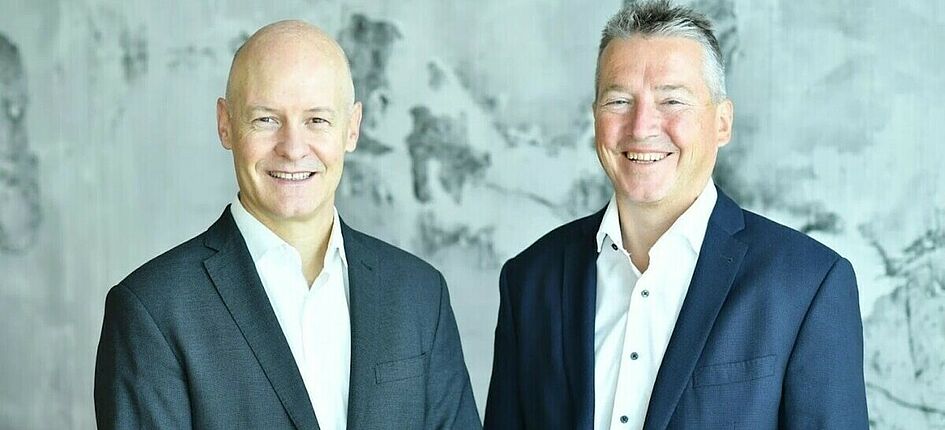
Venture Kick has supported over 1,000 start-ups; pictured are co-founders Jordi Montserrat (left) and Beat Schillig (right). Photo: courtesy of Venturelab Ltd.
News
Zurich/Winterthur – The Female Founders Initiative is launching its Spring 2026 funding program with eight female founders and their teams. For ten weeks, they undergo workshops and are offered knowledge, necessary tools and networking opportunities to help them set up investment-ready companies.
(CONNECT) Eight start-ups founded by women make up the new cohort of the FF+ acceleration program, which started its acceleration program at Westhive Zurich in mid-March. Behind this is the Female Founders Initiative of the start-up platform Startup Campus, which is supported by the Zurich University of Applied Sciences (ZHAW) and the Impact Hub Zurich. The entrepreneurship training course lasts ten weeks. The female founders selected by a jury are provided with the necessary tools, knowledge and network to help them realize their full entrepreneurial potential. For example, the program prepares you to sharpen your company presentation and attract investors. It also provides information on financial, legal and strategic aspects. Finally, the participants present themselves to potential investors, partners and stakeholders.
The cohort that has now been launched includes Amarestesia. The start-up from Courroux JU is dedicated to women's health. With CerAMvix, it has developed a disposable instrument for cervical dilation that enables the pain-free passage of surgical instruments.
Zurich-based Genorare offers a data protection-oriented software-as-a-service solution for clinical trials based on artificial intelligence (AI). It is intended to accelerate drug research by recruiting patients in accordance with the regulations.
Go Healthy & Co from Lugano is a digital platform for mental health that analyzes passive smartphone data relating to app usage, sleep, activity and social behavior patterns. Proprietary AI models are then used to assess stress, mood and psychological risks. In this way, the company aims to provide users with personalized support.
HappyPot.ch is a Zurich-based fintech. It provides a digital pot for the financing of group gifts and personal swarm financing. This also includes fundraising campaigns, for example.
Implaz from Bern offers a technology for the digital planning of dental implants. It was developed at the University of Bern and its ARTORG Center for Biomedical Engineering Research.
Montigo Labs from Lucerne provides AI-based automation solutions for asset managers and private equity funds. This enables them to modernize their processes across different strategies, investment instruments and workflows.
Myne from Zurich makes made-to-measure bras. The models are designed in our own design lab, manufactured by a production partner in the EU on the basis of an AI-supported measurement process and delivered directly to the customer.
Basler PIN Sport Application GmbH connects athletes, clubs, teams, coaches and talent scouts. The intelligent and data-based network aims to tackle the lack of visibility for talents, the time-consuming search for clubs and inefficient networking processes. ce/mm
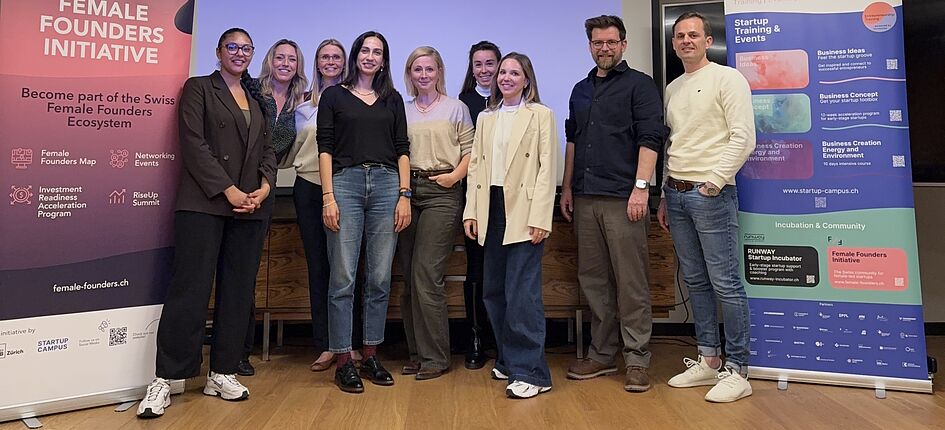
The Female Founders Initiative is supporting eight female start-up founders in its Spring 2026 programme. Image: Courtesy of STARTUP CAMPUS
News
Zurich – Climeworks Solutions is expanding its offering with the Technology Focus portfolio. This subscription is designed to enable companies to remove CO2 even more effectively. In addition, Climeworks 2025 has achieved 100% adherence to deadlines for all partner projects, such as reforestation and biochar.
(CONNECT) Climeworks has delivered over 15,000 tons of sequestered CO2 to 44 corporate customers in 2025, according to its announcement. These were spread across six high-quality carbon capture and removal pathways, including the company's own direct air capture (DAC) activities such as Mammoth and Orca in Iceland, as well as solutions from Climeworks' partners.
The company, which was founded in 2009 as a spin-off of the Swiss Federal Institute of Technology, has reportedly achieved "100 percent adherence to deadlines" for all projects in its portfolio. Climeworks describes this as an important milestone and a decisive benchmark for credibility. The Zurich-based company is the first in the world to implement DAC on a large scale.
As recently as December, Climeworks Solutions expanded its global portfolio of DAC projects and now operates as a full-range provider. The various portfolio projects include accelerated rock weathering, biochar, mineralization, afforestation and reforestation, the protection and restoration of mangrove forests and bioenergy with carbon capture and storage, in addition to the company's own plants for the removal of CO2 from the atmosphere and its permanent storage. All are part of the DAC portfolios that can be booked by companies.
As Climeworks emphasizes, its portfolios "are already making an impact today while supporting the development of promising technical solutions for the coming decades". For just under a month, Climeworks is offering its customers the opportunity to switch their monthly subscription to its Technology Focus portfolio at a discounted price, promising that it will make a major contribution to climate protection more quickly "without compromising scientific accuracy, durability or traceability". ce/mm
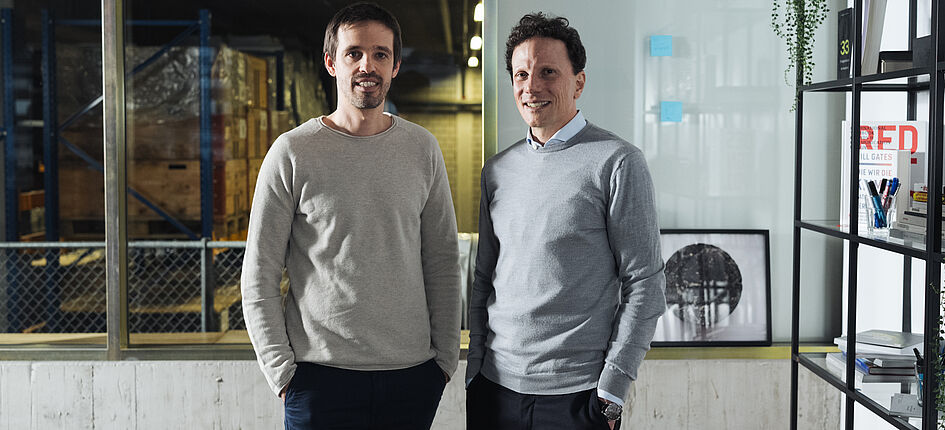
With its new Technology Focus portfolio, Climeworks offers companies a more effective way of removing CO2 from the air; pictured are Jan Wurzbacher (left) and Christoph Gebald (right), Co-CEOs and co-founders of Climeworks. Photo: courtesy of Climeworks AG
News
Zurich/London – According to the QS ranking of the world’s best universities in 2026, three disciplines at the Swiss Federal Institute of Technology in Zurich (ETH) are at the top for certain subjects for the seventh time: Earth and Ocean Sciences, Geology and Geophysics. A total of 16 subjects are among the top 10.
(CONNECT) ETH Zurich is the best university in the world for earth and marine sciences, geology and geophysics. This is the result of the QS World University Rankings by Subjects published for the seventh time in a row by the British analysis company Quacquarelli Symonds (QS).
As can also be seen from an ETH press release, the university came fourth in three other disciplines: architecture, civil engineering and environmental sciences. The latter had held 7th and 8th place in previous years. Mechanical engineering is in 6th place, chemical engineering in 7th place, and two eighth places go to electrical engineering and agriculture and forestry. This is followed by three ninth places for chemistry, physics and astronomy as well as statistics. And finally, QS ranks computer science, materials science and mathematics at ETH as the tenth best training programs in the world.
The subject of data science and artificial intelligence was still in 8th place last year, but is now in 11th place. Law has improved significantly from a place between 101 and 150 to 89th place. The discipline of anatomy and physiology also rose significantly in the rankings, from a place between 51 and 100 to 39th place.
For this edition, more than 1900 institutions were evaluated, more than ever before, 300 of them for the first time. South Asia has the highest percentage of universities that have improved since last year. East Asia is home to most of the new additions. In each of the five subject groups Arts & Humanities, Engineering & Technology, Life Sciences & Medicine, Social Sciences & Management and Natural Sciences, around 550 of the world's best courses are listed. ce/mm
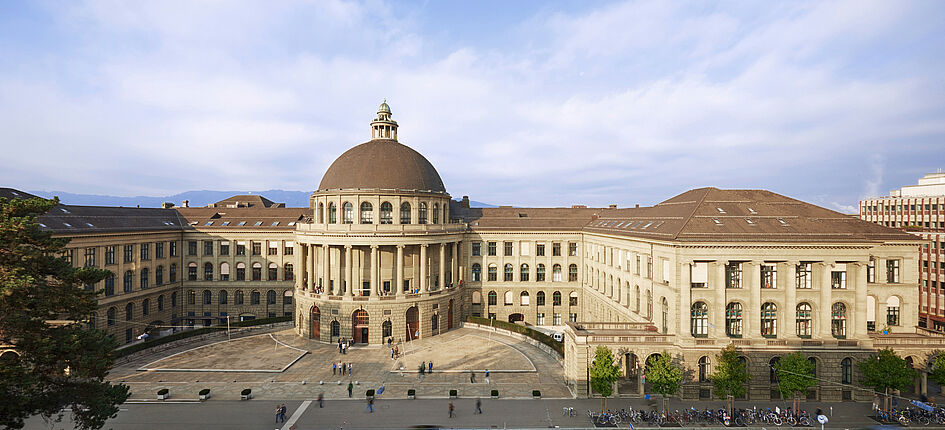
ETH is the world’s leading university for earth and marine sciences, geology and geophysics. Photo: Alessandro Della Bella/ETH Zurich
News
Artificial intelligence can write, analyze and program – not always better, but faster than humans. How AI is changing work and the consequences for the economy and society were discussed at the event “The future of work in the age of AI”.
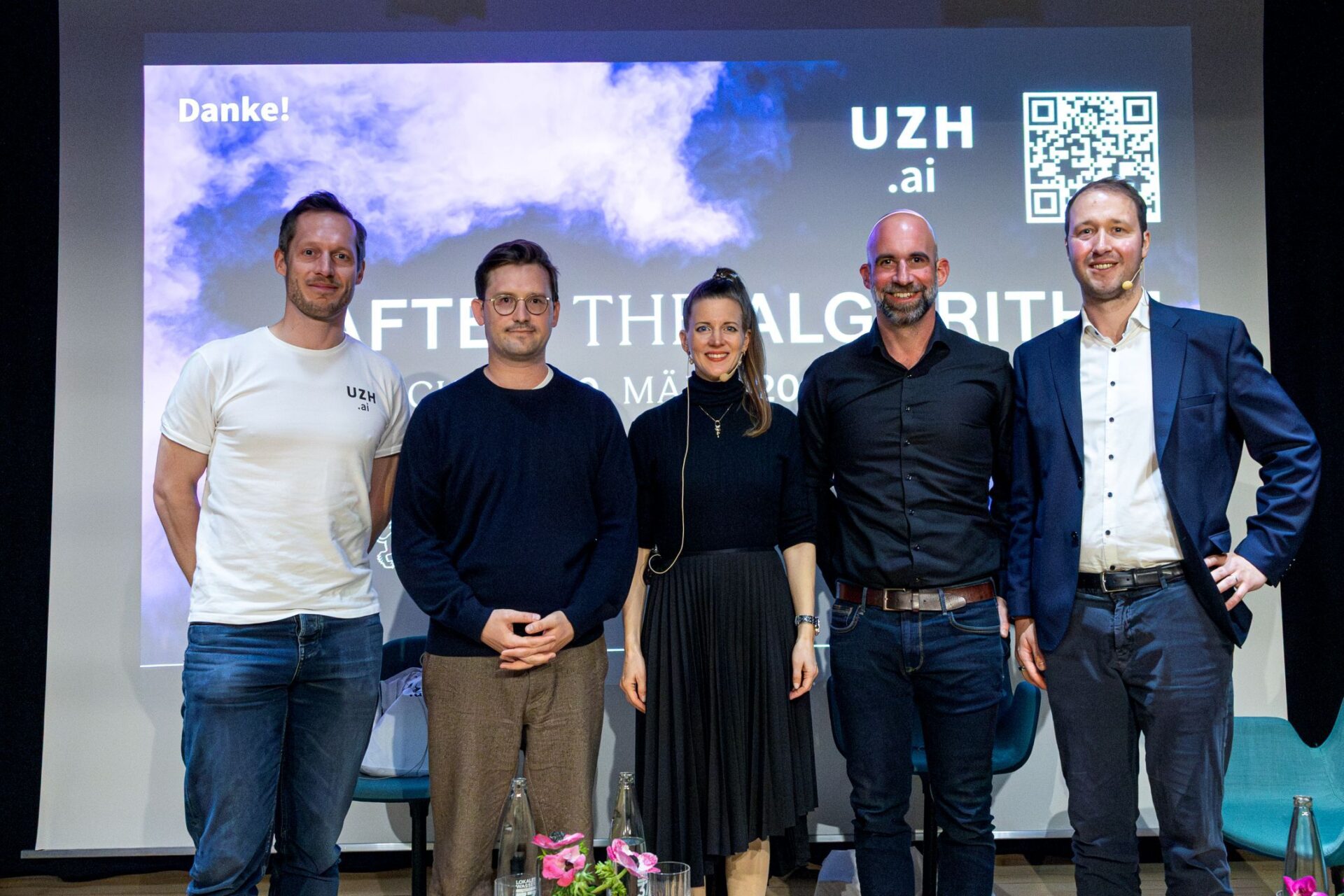
The welcome address was thought-provoking: "Have you ever cried because technology let you down?" Visitors to the "The future of work in the age of AI" event as part of the "After the Algorithm" festival were greeted with this question. It makes it clear that artificial intelligence is taking on a new role in our society and we have to decide how to deal with it.
The discussion is necessary, says Danny Buerkli from the Windfall Trust think tank. Because: "There are only a handful of macroeconomic models that deal with the consequences of AI. That's not enough."
In view of the rapid dynamics of AI, it is difficult to predict what the world will look like in a few years' time. However, one thing is clear: "AI will have a profound impact - even if the technology remains at its current level."
Strengthening Zurich as an AI location
The Zurich cantonal government wants to make better use of the economic potential of AI. It is providing CHF 2.9 million for this purpose until the end of 2029 and is thus pursuing four objectives:
1) AI sandbox as a test environment for AI applications
2) Promote local start-ups with innovative AI solutions
3) Integration of AI in SMEs
4) Active social dialog
The event "The future of work in the age of AI" was organized by the Office of Economic Affairs and UZH.ai, the AI Hub of the University of Zurich.
When AI replaces workers
AI is already taking work off our hands. The latest model from Claude Opus, for example, can solve programming tasks that would take a human 12 hours in a matter of seconds.
However, Buerkli points out: "We must not forget that these tasks are often simpler than our everyday tasks." For example, an automation index shows that, at best, AI models can only perform around 4 percent of computer-based work independently today.
At the same time, studies have come to the conclusion that the number of jobs for young people in the IT sector is currently declining. If this phenomenon manifests itself and spreads to other sectors, it would have macroeconomic consequences, Danny Buerkli points out. Because less human labor also means lower tax revenues.
When AI supports the workforce
Artificial intelligence can not only replace work, but also supplement it. Sarah Levy is driving this development at Swisscom. Her vision: "AI will become a colleague who works day and night and never needs a coffee".
Levy's idea of AI as a tireless work colleague prompted the audience to ask: Should the productivity gain flow into more free time or more work?
Danny Buerkli believes that this question is central, especially in the discussion about a shorter working week. "The trade unions could take a more active approach to the issue." Sarah Levy, on the other hand, points out that the increase in productivity must be utilized: "AI is an important tool for remaining competitive."
AI offers opportunities and risks in everyday working life
In addition to working hours, AI is also changing the way we work. And this can have an impact on mental health, said psychology professor Laurenz Meier: "If we fulfill our basic psychological needs for competence, autonomy and connectedness at work, we feel effective and satisfied". The new working conditions in an everyday life with AI could worsen - or improve - employee satisfaction.
Negative effects could be, for example: Employees ask the chatbot for help instead of people - so that colleagues feel less helpful. At the same time, the "manual" tasks are becoming more complex and the working day is becoming denser, which can lead to an overload.
But Laurenz Meier also sees opportunities. His studies show: AI is already a relief as an advisor for interpersonal situations. And the "sparring partner" can relieve employees so that they can devote themselves to new tasks and further develop their own skills. "That can be very fulfilling."
Sarah Levy confirms that AI does indeed have great potential for positive changes in everyday working life. Together with Swiss cantonal police forces, Swisscom has automated the transcription of interrogations - and thus reduced administrative work enormously. For her, it is clear that the AI transformation must focus on people: "You can't invest enough in people - because the technology is already there."
News
Zurich – Five DeepTech start-ups are in the final for the ZKB Pionierpreis Technopark 2026, which comes with prize money of 100,000. Ccraft, Glycoera, Roboa, RTDT Laboratories and Unbound Potential are competing for the prize, which will be awarded on May 12.
(CONNECT) The jury for the ZKB Pionierpreis Technopark has selected five DeepTech companies for the final of the 2026 prize, which is endowed with 100,000 Swiss francs, according to a press release. The award has been presented since 2001. This year's award ceremony will take place on May 12 at Technopark Zurich, which is awarding the prize together with Zürcher Kantonalbank (ZKB).
A total of 76 young companies applied, more than ever before, 13 of them were nominated and five of them are in the final. The majority (60 percent) of the finalists focus their technology on artificial intelligence (AI) or machine learning. They cover a broad field: innovations in the energy sector, robotics, photonics and pharmaceuticals. According to the press release, 40 percent of the teams at founder or C-level are female.
Jury chairman Lothar Thiele emphasized the exceptionally high quality of the finalists. "We see scientifically sound technologies with a clear market perspective and an impressive thematic diversity. This diversity is a strong sign of a mature and broad-based deep tech ecosystem in Switzerland," he is quoted as saying.
Glycoera from Wädenswil ZH, which is also based at the Bio-Technopark Schlieren-Zurich, is designed to meet a key challenge in the treatment of autoimmune diseases. The start-up is developing an in vivo glycoengineering platform that enables novel biologics. They target circulating proteins (autoantibodies) that are considered to cause the disease. Roboa AG from Zurich has developed a flexible, autonomous robot that can reach areas that are inaccessible to humans and conventional robots, such as narrow pipes, closed tanks or rubble areas. Highly flexible, modular snake robots enable inspection, maintenance and first aid for trapped persons.
RTDT Laboratories AG, based in Technopark Zurich, is working on increasing the efficiency of wind turbines. With Aerosense, the start-up provides an innovative patch system that analyses the rotor aerodynamics directly during operation and enables precise optimization of the turbine controllers for maximum, site-specific energy yields. Unbound Potential from Thalwil ZH uses the opportunities offered by innovative, large-scale energy storage systems to improve storage technology. A membraneless flow battery enables cost-effective and rapidly scalable energy storage for a resilient, sustainable energy infrastructure.
Ccraft SA from Neuchâtel is a Swiss chip factory for scalable TFLN photonic chips. The focus is on the further development of high-performance thin-film lithium niobate (TFLN) technology for scalable mass production. ce/heg
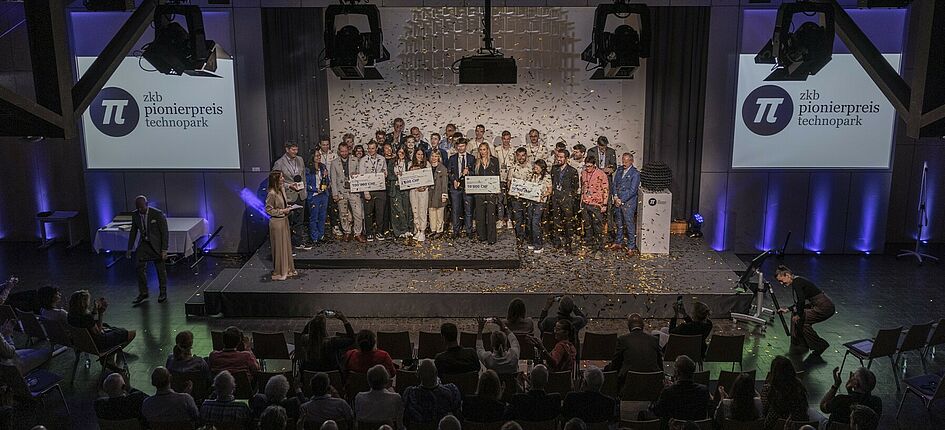
The finalists for the ZKB Pioneer Prize Technopark 2025. Image: courtesy of Technopark Zurich
News
Schlieren ZH/Pratteln BL/Guangzhou – HeiQ and Archroma are strengthening their partnership in North Asia as part of their co-marketing agreement. The partners have developed a joint action plan at the Archroma site in Panyu to support partners throughout the region.
(CONNECT) The team from Schlieren-based materials innovator HeiQ recently traveled to Archroma's site in Panyu, Guangzhou, China, to implement their recently agreed co-marketing cooperation, according to a press release. Under the agreement, the partners plan to make HeiQ's innovative functional and environmentally friendly anti-odor and antimicrobial technologies available worldwide.
According to a statement issued in January, the collaboration will enable HeiQ's technologies to be offered through the well-established global customer network of Archroma, a specialty chemicals supplier based in Pratteln. This should make it easier for textile manufacturers to integrate functional, compliant and sustainable performance effects into their products.
HeiQ has been working intensively with Archroma's local sales and technical teams in Panyu on the HeiQ odor control technologies. A joint action plan has been developed to support partners across the region, according to the press release. According to HeiQ, the meetings were crucial in aligning common goals and ensuring that partners are fully equipped with the technologies.
"We value our partnership with Archroma and look forward to expanding opportunities together," HeiQ said in the statement.
HeiQ is a spin-off of the Swiss Federal Institute of Technology in Zurich (ETH), is based in the IJZ Innovation and Young Entrepreneur Center and is a member of Start Smart Schlieren. ce/nta
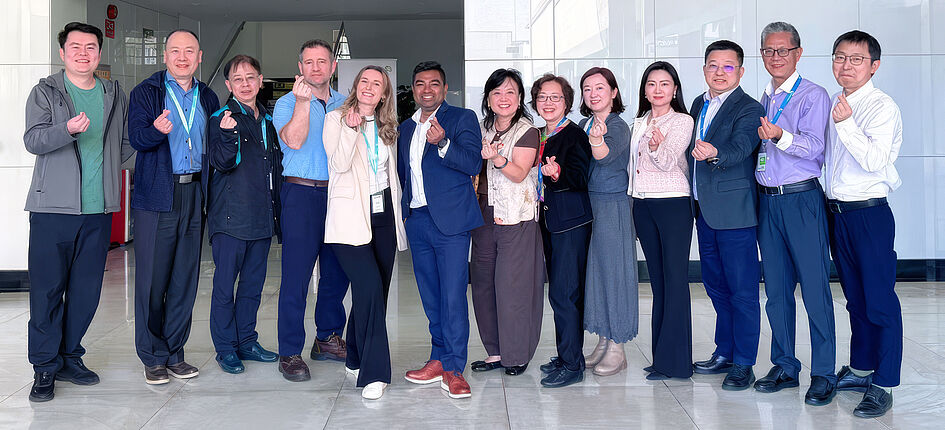
HeiQ and Archroma are strengthening their partnership in North Asia. Image: Courtesy of HeiQ Material AG
News
Zurich – The Zurich financial centre provides over 100,000 jobs and generates around 16 percent of value added in the region. Its banks cover around 30 percent of the private sector’s financing requirements throughout Switzerland, according to a study conducted by management consultants Oliver Wyman on behalf of the Zurich Banking Association.
(CONNECT) According to a According to the Zurich Banking Association, the Zurich financial centre is a "supporting pillar for the economy, society and the state". The Bankers Association bases this statement on a study conducted by management consultants Oliver Wyman on behalf of the Bankers Association.
According to the study, the Zurich financial centre provides over 100,000 jobs and contributes around 16 percent to value creation in the Zurich region. The banks in Zurich's financial centre cover around 30 percent of the financing needs of companies and households throughout Switzerland. Around half of the City of Zurich's corporate tax revenue is generated by banks and insurance companies.
The experts at the management consultancy believe that the Zurich financial centre is facing growing international pressure from a strong starting position. Internally, the consolidation in the banking sector, and in particular the integration of Credit Suisse into UBS, has "permanently shifted the market structure". Globally, other international financial centres such as London, Singapore and Hong Kong are working to improve their competitiveness.
In order for the Zurich financial centre to maintain and improve its position in international competition, the financial sector, the real economy and politics must work together in three areas, according to the study. The first area is the design and further development of the range of financial services for the economy and the population, the second is securing and improving the attractiveness of the location and the third is mastering technological change and the search for talent.
The Zurich financial centre is "a key service provider for the economy and the state - and therefore also a strategic location factor for Switzerland," Christian Bretscher, CEO of the Zurich Banking Association, is quoted as saying in the press release. "It is therefore crucial to maintain good framework conditions, especially when taking further regulatory steps, otherwise we will weaken the entire economy." ce/hs
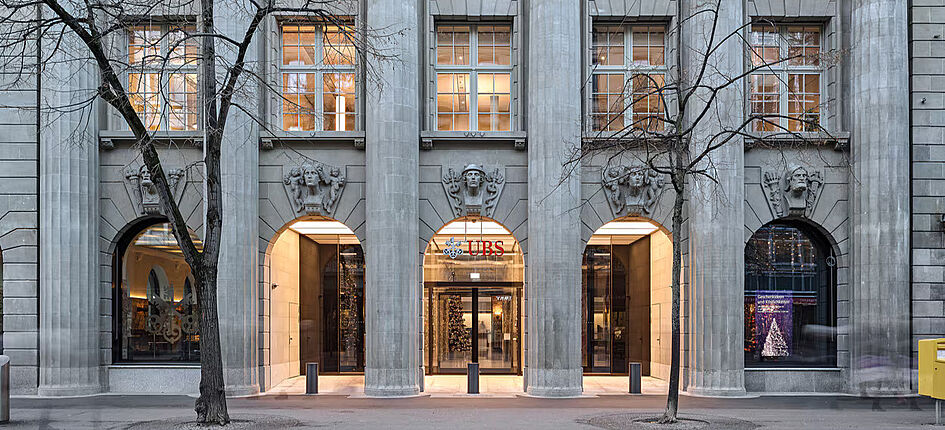
The Zurich financial centre makes a significant contribution to value creation and bolsters the region’s economy. Stock image: UBS
You need to load content from reCAPTCHA to submit the form. Please note that doing so will share data with third-party providers.
More InformationYou are currently viewing a placeholder content from Turnstile. To access the actual content, click the button below. Please note that doing so will share data with third-party providers.
More InformationYou are currently viewing a placeholder content from Vimeo. To access the actual content, click the button below. Please note that doing so will share data with third-party providers.
More InformationYou are currently viewing a placeholder content from YouTube. To access the actual content, click the button below. Please note that doing so will share data with third-party providers.
More InformationYou need to load content from reCAPTCHA to submit the form. Please note that doing so will share data with third-party providers.
More Information