News
Zurich – Rayne Care has launched the first menstrual disk manufactured entirely in Switzerland. Founder Ramona Schwarz’s design with integrated finger tab is patented. The disc is intended to help reduce the amount of waste generated annually in Switzerland by period products.
(CONNECT) Founded in 2022, the Zurich-based company Rayne Care has launched a menstrual cup called rayne disc after a two-year development phase. According to a press release, this is an alternative to tampons and cups. It is the first product of its kind to be developed entirely in Switzerland and is also manufactured in the country. After intensive testing and numerous prototypes, a shape has been created that eliminates the functional weaknesses of conventional discs and combines menstrual hygiene with high-quality design.
Rayne describes the design with integrated finger tab, which was created by founder Ramona Schwarz, as the heart of the patented innovation made of soft silicone. This should make the product particularly easy to remove. There is no negative pressure when using it, which also makes it safe for women wearing an IUD.
"At Rayne, design, aesthetics and sustainability are firmly anchored in our DNA," Schwarz is quoted as saying. "We develop products that make life easier, offer maximum comfort and protect the environment at the same time." As Rayne calculates in the press release, a woman uses an average of 16,800 period products in her lifetime. In Switzerland alone, these disposable items result in a total annual waste volume of up to 125,000 tons.
The rayne disc promises up to twelve hours of protection without having to be changed in between. It replaces five to seven conventional tampons and can be used for years. ce/mm
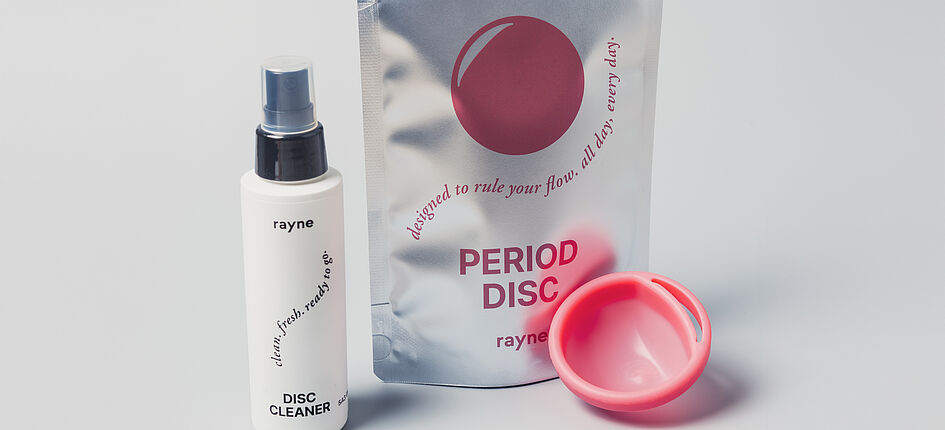
Rayne Care, based in Zurich, has launched a menstrual cup called the rayne disc. Image: Courtesy of Rayne Care AG
News
Zurich/San Francisco – VitaminºC has launched its first climate-focused fund with 18 million euros. The women-led venture capital firm sees itself as a bridge between Europe and Silicon Valley. It invests in early-stage start-ups that want to grow globally with solutions to combat climate change.
(CONNECT) VitaminºC has announced the first closing of its climate fund with 18 million euros. The debut fund of the new women-led venture capital firm invests in pre-seed and seed-stage start-ups that focus on solutions to mitigate climate change and help people adapt to the already inevitable consequences. "Think of it like a car," co-founder Nathalie Moral is quoted as saying in a report referred to by VitaminºC in its announcement. "We need to reduce the speed of emissions to contain them, while ensuring that the airbag is ready for the already unavoidable impacts. We are investing in both."
Nathalie Moral works in Zurich, where VitaminºC has its headquarters. Her co-founder Sophie Lamparter runs the business from San Francisco. Accordingly, the two founders are positioning their venture capital company as a strategic bridge between Europe and Silicon Valley. Their aim is to combine European expertise in impact investing with North American scaling expertise to build global businesses from Day 1.
"Europe's deep tech sector is world-class, but many start-ups are reaching their scaling limits and are struggling to expand globally," Sophie Lamparter explains in the report. "We bring founders together with their first US customers, employees and investors. And with US climate policy facing uncertainty, founders from the US are increasingly looking to the stable regulatory environment in Europe. The bridge works in both directions, and we have a local presence in both ecosystems."
The fund invests EUR 0.5 to 1.5 million in the pre-seed and seed phase. Each investment must have the potential to save or remove at least 100,000 tons of CO2 or improve the resilience of 100,000 people within five years. ce/mm

VitaminºC has announced the first closing of its climate fund, raising €18 million; pictured: Sophie Lamparter, co-founder and managing director of VitaminºC. Photo: courtesy of Sophie Lamparter
News
Zurich/Los Alamos – A team from the Swiss Federal Institute of Technology in Zurich (ETH), together with partners such as the Los Alamos National Laboratory, is investigating whether glass fibers laid out on the moon can be used as sensors. Such a network could provide information about the inner structure of the Earth’s satellite.
(CONNECT) Researchers at ETH are investigating whether optical fibers could be used to monitor the moon over a wide area. These thin and very light fibers could be laid out on the lunar surface by a lunar vehicle. According to a press release, these cables function like thousands of tiny sensors that register every vibration caused by moonquakes, meteorite impacts or moon landings. The team for this study, led by ETH Professor Johan Robertsson, also includes international partners such as the Los Alamos National Laboratory in the US state of New Mexico.
The scientists are using Distributed Acoustic Sensing(DAS) technology for their study. A laser sends light pulses through a fiber optic cable. Tiny irregularities in the fiber scatter the light, which is recorded with a measuring device. Seismic waves change the scattering of light. The time delay of the signals shows where in the cable network the movement has occurred. On Earth, DAS technology is already being used to monitor earthquakes and landslides or to track the migration of whales in the oceans.
"Fiber optic sensor technology could greatly expand our understanding of the moon, its interior, its lava tubes, its landing sites and its water resources," Prof. Robertsson is quoted as saying. "We even think it is possible that we can use glass fibers on the moon to detect gravitational waves that excite the moon's intrinsic modes." Eigenmodes or vibration patterns are excited by seismic events such as earthquakes and provide information about the interior of the planet. According to the ETH Zurich team, the current research is part of a broader project to develop new sensor technologies. ce/mm

Researchers at ETH Zurich are investigating whether fibre-optic cables laid on the Moon could serve as sensors for lunar research. Stock image: Mike Petrucci/Unsplash
News
Herisau AR/Pfäffikon ZH/Richardson/Düsseldorf – HUBER+SUHNER and Aurora Networks are modernizing Vodafone’s cable network. The Swiss specialist for connection technology and the business unit of the Texas-based company Vistance Networks are contributing their respective expertise.
(CONNECT) HUBER+SUHNER, based in Herisau and Pfäffikon, and Aurora Networks from Richardson, Texas, will support the German telecommunications provider Vodafone in the development of a next-generation cable network. According to a statement from the Swiss specialist for electrical and optical connection technology, the services of the two technology companies will support Vodafone in the introduction of innovative technologies for Distributed Access Architecture (DAA) and virtual Cable Model Termination System (vCMTS) and optimize the existing hybrid fiber coax (HFC) infrastructure.
"We are delighted to be working with Aurora Networks and HUBER+SUHNER," said Michael Rabes, Director of Fixed Access Engineering at Vodafone Germany. "The collaboration with Aurora Networks and HUBER+SUHNER is designed for the long term and promotes future cooperation."
Guy Sucharczuk, SVP & President Access Network Solutions at Aurora Networks, welcomes Vodafone to the growing group of global operators that have adopted vCCAP Evo. "VCCAP Evo will enable Vodafone to significantly optimize network performance."
HUBER+SUHNER, a global provider of innovative and high-quality connectivity solutions, will equip Vodafone with next-generation remote PHY solutions. The systems support full software-side interoperability and thus contribute to the further development and scaling of Vodafone's modern HFC network architecture.
"Over the past decades, numerous analog optical and radio frequency technology solutions from HUBER+SUHNER have supported the further development of Vodafone's cable network," says Jürgen Walter, COO Communications Segment at HUBER+SUHNER. "We are happy to contribute our in-depth and established expertise here." ce/mm
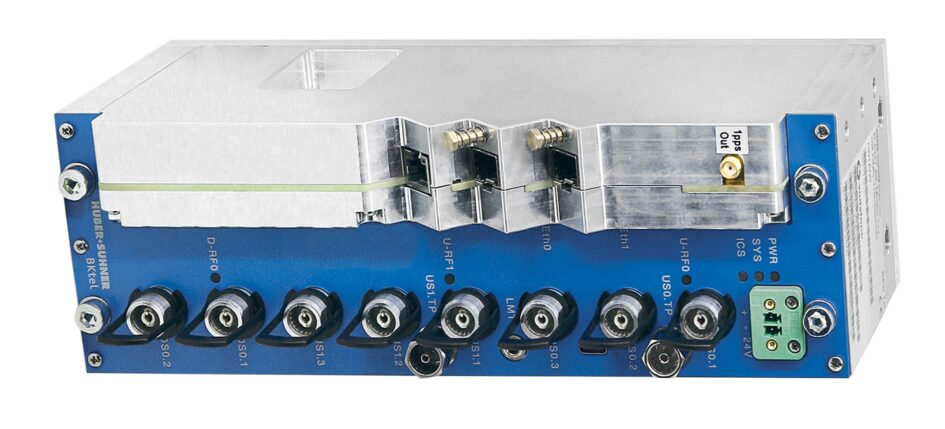
HUBER+SUHNER will supply Vodafone with next-generation Remote PHY solutions. Image: Courtesy of HUBER+SUHNER AG
News
Zurich – According to a survey, the automotive industry is pushing automation and robotics solutions to make supply chains more resilient. The latest edition of ABB Robotics’ Automotive Manufacturing Outlook Survey places these results in the context of cost pressure, increased competition and labor shortages.
(CONNECT) Companies in the automotive sector are increasingly investing in automation and robotics. This is shown by the latest Automotive Manufacturing Outlook Survey by ABB Robotics from Zurich and the British industry portal Automotive Manufacturing Solutions (AMS).
According to a press release, this is a key strategy for the coming year for almost a third of those surveyed. There is interest in robots that collaborate with humans, as well as autonomous mobile robots (AMRs) and automated guided vehicles (AGVs) to reduce manual labor. This is shown by the survey of 473 managers from vehicle manufacturers and suppliers along the value chain worldwide.
"The AMS/ABB survey makes it clear that car manufacturers have learned the lessons of supply chain disruption and are now investing - albeit not without pain - in structures that can better absorb future shocks, rather than waiting for a return to a stability that may never come again," says the London-based platform AMS, which is part of Süddeutscher Verlag.
According to the analysis, this strategy is based on the desire to minimize risks in terms of planning, personnel and other resources. 33 percent of managers are focusing on cost control and tighter budget management. The labor shortage and rising wage costs are among the biggest challenges for 30 percent. Energy and material costs are a key problem for 34 percent.
"The smart factory is no longer a vision of the future - it has become indispensable for manufacturers who want to remain competitive in a demanding and dynamic environment," Joerg Reger, Managing Director of the Automotive Business Line at ABB Robotics, is quoted as saying. More autonomous and versatile robotics are increasingly seen as a practical, short-term solution to cost pressure, labor availability and energy efficiency challenges.
ABB Robotics, based in Zurich, employs 7000 people worldwide. It offers industrial robots, robots with the ability to work together with humans - so-called cobots - and autonomous mobile robots for applications in all sectors. ce/yvh
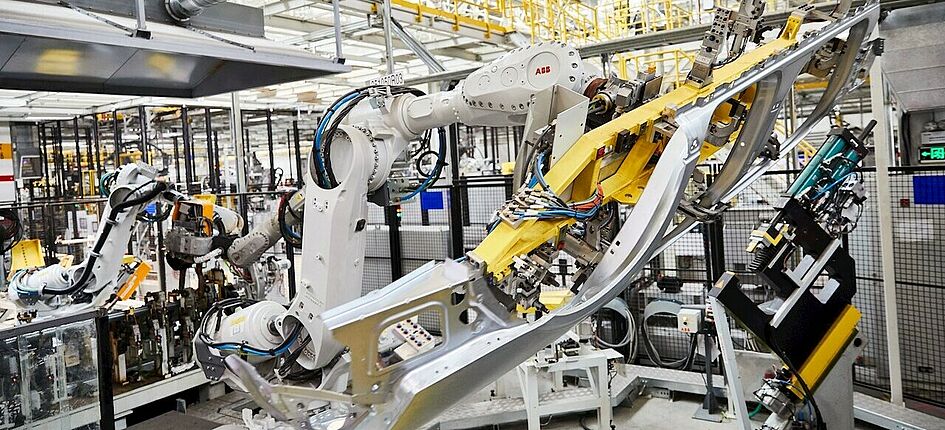
Car manufacturers hope that automation and robotics will enable them to respond more effectively to sudden shocks. Image: courtesy of ABB
News
Winterthur – The two Winterthur-based companies Kistler and Cyltronic have developed a compact servo press with servo amplifier, motor and sensors. The electromechanical joining modules in the new series combine all the components required for a reliable joining process in one housing.
(CONNECT) Kistler makes electromechanical joining much more convenient, according to a press release. In the new Integrated Joining System with force-displacement measurement, the global specialist for measurement technology and sensors based in Winterthur combines all the components of a servo press in a single housing for the first time. Only the maXYmos NC process monitoring and control system from Kistler needs to be connected additionally. This creates a continuous measuring chain - from process control to monitoring and evaluation
Kistler realized this compact joining system in a single housing in collaboration with Cyltronic, a company founded in 2020 and based at Technopark Winterthur. "Our colleagues at Cyltronic have a lot of valuable experience in the integration of components for electric cylinders," says Bastian Telgen, who was responsible for the development of the Integrated Joining System at Kistler. "This knowledge was essential in order to implement our new system so quickly and successfully.
The compact joining system is intended for machine and system manufacturers who are planning a process-safe (partially) automated assembly station for joining components with a servo press. It is suitable as an energy-saving alternative to pneumatic systems. The Integrated Joining System has a joining force of up to 2.5 kilonewtons, a stroke of 200 millimetres and a travel speed of 250 millimetres. The mechanical interface is designed in accordance with ISO standard 15552.
This makes the servo press particularly suitable for applications in electronics and automotive production, for example, where pneumatic systems were previously used primarily due to a lack of space or for cost reasons. "We look forward to implementing many projects with our customers," says Telgen, "and to developing further solutions and functions in line with market requirements with corresponding user feedback." ce/mm
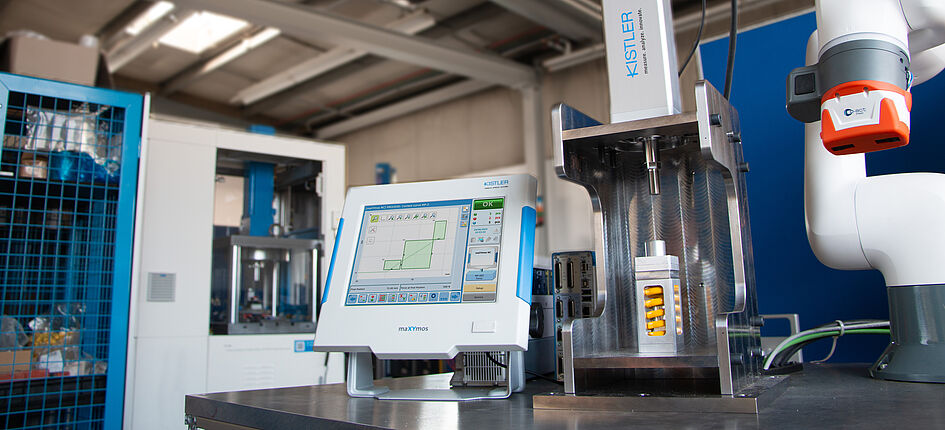
Kistler and Cyltronic have developed a compact servo press featuring a servo amplifier, motor and sensors. Image: Kistler Holding AG
News
Zurich – Investor Amazon has now fully acquired RIVR Technologies. The Zurich-based company develops physical artificial intelligence (AI) that carries out doorstep deliveries in the form of delivery robots. Most recently, Swiss Post tested the delivery of heavy parcels and boxes with Migros Online.
(CONNECT) RIVR Technologies is now part of Amazon. This has now been announced by Marko Bjelonic, CEO and co-founder of the Zurich-based company. "This step will accelerate our vision to develop General Physical AI through doorstep delivery and bring robotics and AI closer to real-world use on a large scale," says Bjelonic. "I am incredibly proud of what RIVR has built and even more excited about what we will achieve next at Amazon."
The delivery robot from RIVR, a spin-off of the Swiss Federal Institute of Technology in Zurich founded in 2023, is designed for doorstep delivery. It travels on four hoofed legs and resembles a dog in stature. It can drive autonomously to its destination, climb stairs and carry loads of up to 60 kilograms. Its Physical AI combines AI algorithms with sensors, cameras and actuators to enable machines to perceive and interpret their environment and act autonomously.
The young company changed its name from Swiss-Mile to RIVR Technologies in January 2025. RIVR had reported that RIVR, in collaboration with Just Eat Takeaway.com, had started delivering meals in Zurich in August 2025. Until September last year, Swiss Post and Migros Online subjected the delivery robots from RIVR in Regensdorf ZH to a practical test lasting several months.
Amazon CEO Jeff Bezos and the Amazon Industrial Innovation Fund had already invested in RIVR Technologies as part of a financing round in 2024. The final takeover should further increase interest in Switzerland as a hub for robotics, speculates startupticker.ch. The Amazon Industrial Innovation Fund has already identified another promising start-up in Switzerland and invested in Algorized. The Lausanne-based start-up's technology enables robots to "see" through visual obstructions, dust and darkness. ce/mm
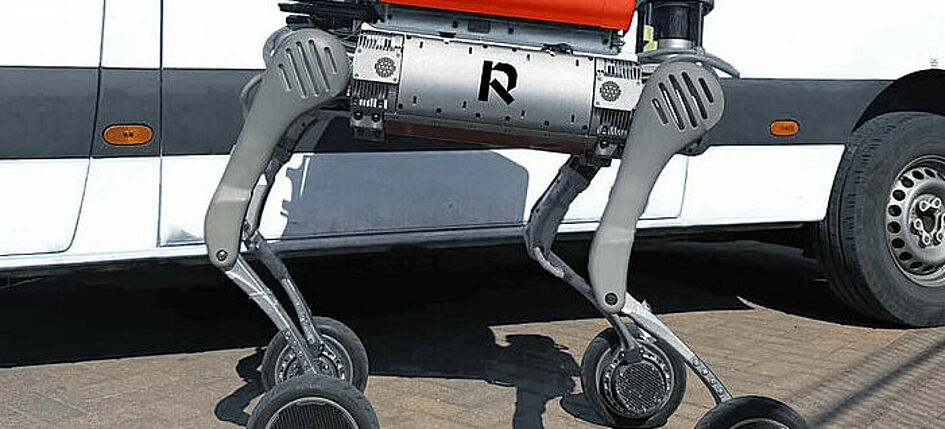
RIVR Technologies is now part of Amazon. Image: RIVR AG
News
Schlieren ZH – The competent authority in the USA has granted CUTISS a new patent for a core area of its process for the production of human living skin for personalized applications. It supports the industrialization of CUTISS’ main product, denovoSkin.
(CONNECT) CUTISS has a new patent in its hands: The spin-off from the University of Zurich, which is based in the Bio-Technopark Schlieren-Zurich and was founded in 2017, has been granted protection from the US Patent Office for its disposable system and process for producing a compressed hydrogel.
According to a statement from the biotech company, the patented invention relates to a core area of the tissue engineering process by enabling the production of compressed hydrogels in a completely disposable format. According to the patent, this approach is designed to reduce the risk of contamination, simplify the workflow, reduce production complexity and enable improved quality and scalability in the production of transplants.
According to the information provided, the new patent from the USA strengthens the intellectual property portfolio of the company led by CEO and co-founder Dr. Daniela Marino, COO Kathi Mujynya Ludunge and CIO Dr. Vincent Ronfard. Above all, it supports its overarching strategy to industrialize personalized skin tissue therapies through robust, standardized and scalable manufacturing approaches for its lead product denovoSkin.
Under this name, CUTISS has developed a process for the production of human living skin for personalized application. CUTISS' lead product is currently in a phase 3 clinical trial in Switzerland and the European Union and has orphan drug designation for the treatment of burns, granted by Swissmedic, the European Medicines Agency and the US Foodand Drug Association. ce/mm
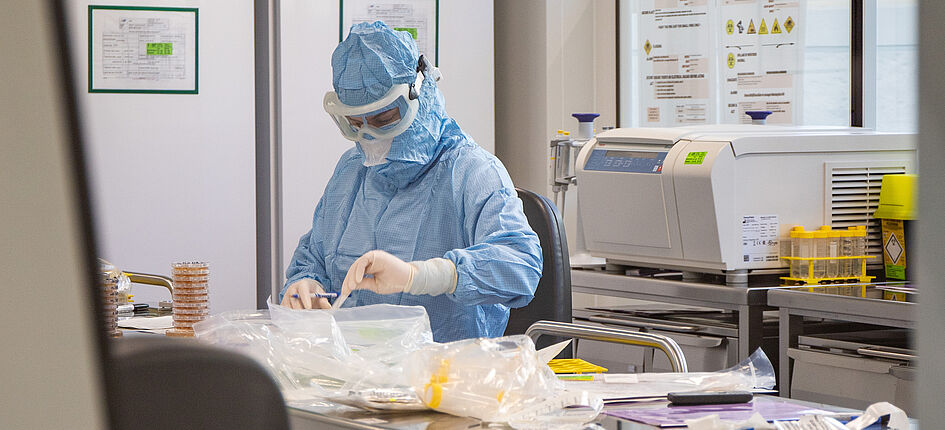
CUTISS has been granted a patent by the US Patent and Trademark Office for its single-use system and method for producing a compressed hydrogel. Image: Courtesy of CUTISS AG
News
Zurich/Dübendorf ZH – Researchers at the Swiss Federal Institute of Technology in Zurich and the Swiss Federal Laboratories for Materials Science and Technology are developing an insulating material made from sawdust that can be used as fire protection. The material mixed with minerals is to be used for fireproof interior finishing.
(CONNECT) Researchers at the Swiss Federal Institute of Technology in Zurich (ETH) and the Swiss Federal Laboratories for Materials Science and Technology (Empa) have developed an insulating material made from sawdust that can be used for fireproof interior construction, according to a press release.
The composite consists of sawdust and the mineral struvite, a crystalline, colorless ammonium magnesium phosphate. In their work, the researchers had to overcome the difficulty of combining the materials with the sawdust particles in the crystallization process of the struvite. This was achieved using an enzyme obtained from watermelon seeds. The crystallized mineral fills the cavities in the sawdust. The resulting material is pressed into sheets and dried at room temperature.
Initial tests have shown that the composition has similar fire protection properties to conventional cement-bonded particleboard. The tests, which were carried out together with the Polytechnic of Turin, showed that the struvite sawdust boards catch fire three times slower than spruce wood. However, inorganic material is formed in the process, which prevents the flames from spreading.
In order to scale up the process and use the new material, it is important to reduce manufacturing costs. Currently, the production of the binder from the mineral is more expensive than polymer binders or cement. This could change with the development of another cycle: struvite is produced in large quantities in sewage treatment plants. "We could use these deposits as a base material for our building material," said Ronny Kürsteiner, a researcher in the wood-based materials department at ETH, in the press release.
The study has been published in the journal Chem Circularity. ce/ww
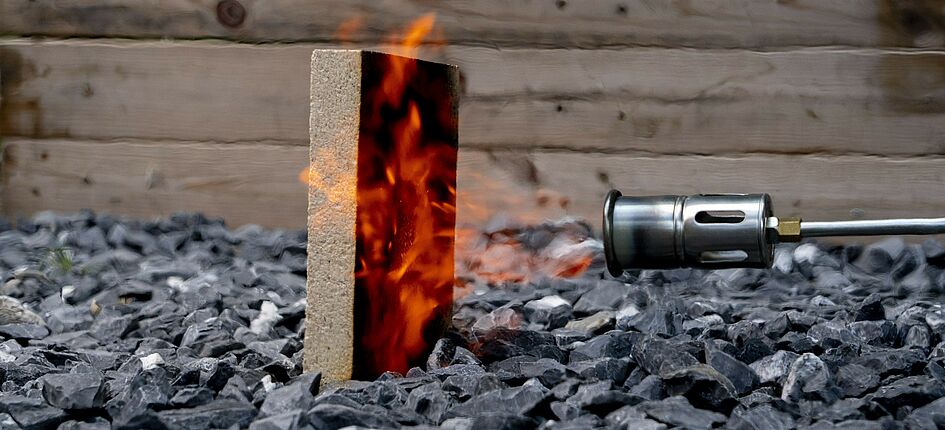
Researchers at ETH Zurich and Empa have developed an insulation material made from sawdust that can be used for fire-resistant interior fittings. Image: Maximilian Ritter / from R Kürsteiner et al. Chem Circularity 2026, CC BY 4.0
News
Zurich – Researchers at the Swiss Federal Institute of Technology in Zurich (ETH) have developed a technology that can be used to verify the authenticity of images, videos and audio files. A sensor chip signs recordings as soon as they are made, making it possible to recognize manipulated content.
(CONNECT) Researchers at ETH have developed a sensor technology that provides image, video or audio data with a kind of digital fingerprint as soon as it is recorded. This cryptographic signature can be stored in a public register, such as a blockchain. According to a press release, this makes it possible to check at any time whether data is genuine or has been subsequently changed. The aim is to make it easier to recognize manipulated content such as deepfakes.
Any subsequent changes to the files leave traces, as they no longer match the original signature. "Trust in digital content is dwindling. We wanted to develop a technology that allows people to check whether something is genuine," says Felix Franke, who co-developed the chip at ETH.
In order to manipulate data, the chip would have to be physically attacked. "A technical effort that would be so high that the mass production of manipulated content for social media platforms would be practically impossible," says co-developer Fernando Cardes.
The technology can be integrated into cameras and other sensors. The developed chip is currently still a prototype. Further development steps are necessary for widespread use. However, the researchers see potential for commercial use and have already submitted a patent application. ce/as
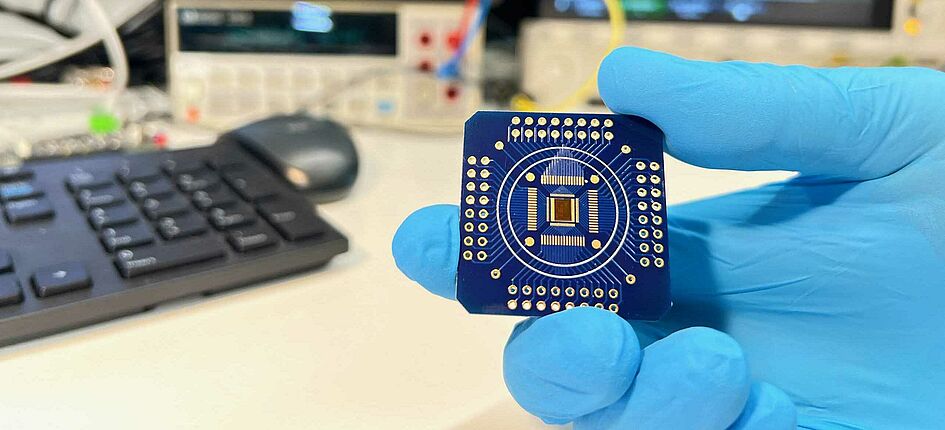
The sensor chip is a prototype that demonstrates technical feasibility. Photo: Caroline Arndt Foppa/ETH Zurich
News
Zurich – The University Hospital Zurich, the University of Zurich, the Swiss Federal Institute of Technology Zurich and Stadelhofen railroad station are to be heated and cooled using energy from Lake Zurich from 2037. Energie 360° is investing around CHF 40 million in the project.
(CONNECT) Energie 360° will realize the energy network for the university area. From 2037, the University Hospital Zurich, the University of Zurich, the Swiss Federal Institute of Technology Zurich and Zurich Stadelhofen railroad station are to be heated and air-conditioned using energy from Lake Zurich, the Zurich-based energy provider announced in a press release. According to that, Energie 360° is investing around CHF 40 million in the energy network.
The project provides for the construction of a lake water center in the Tiefenbrunnen area. Construction of the center is scheduled to start in summer 2034. From there, the lake water is to be routed to Zurich Stadelhofen station and the university area via the planned second SBB Riesbach tunnel. The water then flows into the Limmat.
"The lake is used as an energy source for climate-friendly air conditioning and heating in the university area," Energie 360° CEO Romeo Deplazes is quoted as saying in the press release. "In this way, we are making an important contribution to the transformation of the city of Zurich from fossil to renewable." ce/hs

From 2037, Lake Zurich is set to provide climate-friendly heating and cooling for the university district, including the University of Zurich, ETH Zurich, the University Hospital and Stadelhofen station. Stock image: Henrique Ferreira/Unsplash
News
The FRZ Zurich Airport Region, Business Network & Location Development, can look back on a very successful year 2025. Under the motto “High Performance”, the focus was on innovation, networking and top performance. Numerous projects, strong events and new initiatives underline the dynamic development of the airport region.
The FRZ Zurich Airport Region organized around 50 events with a total of 5,639 participants in the reporting year. Highlights included the 11th ImmoSummit and the 25th anniversary of the Economic Forum, both of which attracted record numbers of visitors and top-class speakers. The program was supplemented by exclusive formats such as CEO events and topic-specific platforms such as ICT Roundtables, ImmoLunches and Sustainability Circles, which deepened the professional exchange in a targeted manner.
Membership development remained at a stable high level with further growth. At the end of 2025, the FRZ had 901 members, which corresponds to an increase of around 5 percent. The exceptionally high level of satisfaction within the community is particularly noteworthy: 95% of members are satisfied to very satisfied, and 98% actively recommend FRZ to others. Around 80 percent regard it as their preferred business network.
The organization also developed positively in economic terms. Turnover rose to CHF 2,846,860, confirming the sustainable development of the FRZ as a strong platform for networking, location promotion and partnerships.
A particular focus in 2025 was on innovation and sustainability. The establishment of the Sustainability Advisory Board and the launch of the digital Sustainability Navigator provided new impetus. This tool makes best practices from the areas of ecology, social affairs, business and corporate management visible and provides members with concrete support in the implementation of sustainable projects.
Important progress was also made in terms of site development. The location concept was further developed together with the cities and municipalities of the Zurich airport region. The aim is to make the airport region even more visible internationally as a leading hub for ICT, mobility, MICE and headquarters and to increase its appeal in the long term.
The FRZ continues to see itself as a central platform for networking, innovation and collaboration. It connects companies, science, cities and municipalities and thus creates the basis for sustainable growth and economic strength in the entire region.

You need to load content from reCAPTCHA to submit the form. Please note that doing so will share data with third-party providers.
More InformationYou are currently viewing a placeholder content from Turnstile. To access the actual content, click the button below. Please note that doing so will share data with third-party providers.
More InformationYou are currently viewing a placeholder content from Vimeo. To access the actual content, click the button below. Please note that doing so will share data with third-party providers.
More InformationYou are currently viewing a placeholder content from YouTube. To access the actual content, click the button below. Please note that doing so will share data with third-party providers.
More InformationYou need to load content from reCAPTCHA to submit the form. Please note that doing so will share data with third-party providers.
More Information


