News
Zurich – Researchers at the Swiss Federal Institute of Technology in Zurich (ETH) have developed a new type of hydrogel. The hydrogel can be solidified with laser light to form a material with microscopically fine structures and could be used as a bone implant in the future.
(CONNECT) ETH researchers have developed a new type of hydrogel that consists largely of water and a polymer network. The hydrogel can be quickly solidified with laser light to form a material with microscopically fine structures, which can then be colonized by bone-forming cells. According to a press release, the material could be used as a bone implant in the future and thus improve the healing of bone fractures.
Bone implants are required for healing in the event of major bone damage. While most implants are either too rigid or, in the case of an autograft, have to be removed from the patient at a second surgical site, the new hydrogel is as soft as pudding and dissolves in the body over time.
The material was developed by Xiao-Hua Qin, Professor of Biomaterials Engineering at ETH Zurich, together with his team and ETH Professor Ralph Müller. It is modeled on natural bone healing and consists of 97 percent water and 3 percent biocompatible polymer. A compound molecule and a molecule that reacts to light allow the material to solidify as desired. With the help of laser beams, any shape and structure can be printed into the hydrogel in fine resolution, which means that the material could be used for customized bone implants.
In their study, the researchers produced, among other things, complex structured hydrogels that "look like real bone and have a fine network of bone beads", according to the press release. Tests in test tubes have already shown that bone-forming cells quickly colonize the structured hydrogel and begin to form collagen. It has also been shown that the material is biocompatible and does not damage bone-forming cells.
The material will next be tested in animals in collaboration with the AO Research Institute Davos. The aim is for the hydrogel to be used in the repair of broken bones in hospitals in the future. ce/nta
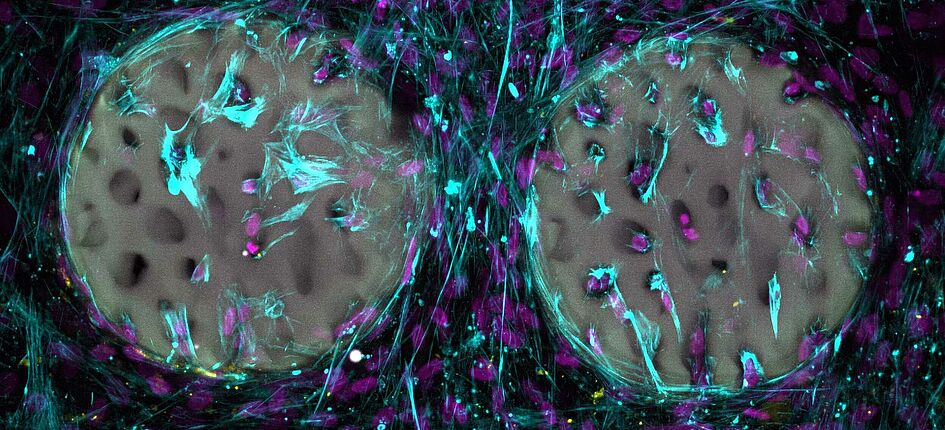
ETH researchers have developed a novel hydrogel that could be used as a bone implant in the future. Image: Margherita Bernero/ETH Zurich
News
Zurich/Lucerne/Basel – Researchers are working on the development of an artificial auricle. An ear cartilage previously produced from human cells remained dimensionally stable in the animal model. The Swiss Federal Institute of Technology in Zurich, the Lucerne Cantonal Hospital and the Friedrich Miescher Institute in Basel are involved in the research.
(CONNECT) Researchers at the Swiss Federal Institute of Technology in Zurich (ETH), the Lucerne Cantonal Hospital and the Friedrich Miescher Institute in Basel have taken a further step towards developing an artificial pinna. Using human ear cartilage cells, they were able to produce cartilage in the laboratory with mechanical properties similar to those of natural tissue, according to a press release.
Philipp Fisch's team used cells from small cartilage remnants left over after operations to correct ear shapes as the starting material. These were grown in cell cultures in such a way that sufficient quantities were available for a basic substance. The major challenge here is to generate collagen type II cells, which are typical of ear cartilage. In addition to the special collagen, the protein elastin must also be produced. This is a protein that gives the ear its flexibility. A mixture of elastin, collagen II and sugar-like glycosaminoglycans was embedded in so-called bio-ink. A piece of gelatine created from this using a 3D printer in the shape of an ear was then matured in an incubator for several weeks. "We have optimized cell proliferation, adapted the material properties, increased cell density and better controlled the maturation environment," Philipp Fisch is quoted as saying in the press release. The ear constructs were implanted subcutaneously in rats and the material remained stable for a period of six weeks.
"Despite the great success, the fact that elastin has not yet fully matured remains a challenge for us," says Fisch. The researchers are hoping for stable results within the next five years and subsequent successful clinical trials. There is great interest in artificial auricles to help people who have lost their auricles after fires or accidents. Or children who suffer from the rare disease microtia, an ear malformation. The current study has been published in the journal Advanced Functional Materials. ce/ww
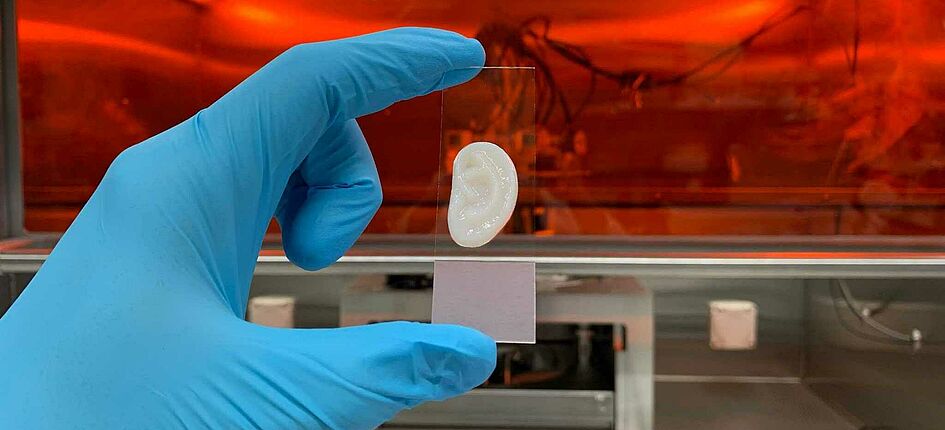
Researchers at the Swiss Federal Institute of Technology Zurich (ETH), the Friedrich Miescher Institute in Basel and Lucerne Cantonal Hospital have taken another step towards developing an artificial ear. Image: Philipp Fisch/ETH Zurich
News
Digitalization is progressing rapidly – but many people over the age of 60 do not feel sufficiently involved. At the same time, municipalities are under pressure to provide guidance, but often do not have the time, expertise or resources for their own formats. Our “SmartAge” offer closes precisely this gap: As a tried-and-tested, modular event package that brings digital health and everyday technologies to life for the 60+ generation.
"SmartAge" is a physical, interactive event format that supports municipalities and cantons in introducing their population aged 60 and over to digital solutions for ageing in an understandable and practical way. Visitors can test technologies on site, ask questions and receive concrete guidance instead of abstract theory.
The format is tried and tested, scalable and can be carried out under the name of the municipality, city or region.

News
Adliswil ZH – Metafuels secures 24 million dollars in a financing round. The company intends to use the fresh capital to scale up its production of sustainable aviation fuels and their distribution throughout Europe.
(CONNECT) Metafuels AG, based in Adliswil, has secured 24 million dollars in a financing round. The company intends to use the fresh capital to scale up its production and distribution of sustainable aviation fuel (SAF), according to a press release. The financing round was led by the investment company UVC Partners, based in Munich and Berlin. Energy Impact Partners (EIP), Contrarian Ventures, RockCreek, Verve Ventures and Fortescue are also involved.
According to the statement from UVC Partners, the production of sustainable fuels must be increased 150-fold by 2050. Metafuels intends to use the fresh capital to expand the production and distribution of its methanol-based aviation fuel Aerobrew. The company has created a technology with which methanol can be converted into kerosene. Metafuels' fuels are fully compatible with existing aircraft, engines and airport infrastructure. Metafuels is currently striving to create a Europe-wide sales basis for this sustainable aviation fuel. Metafuels is also preparing a "methanol-to-jet" demonstration plant at the Paul Scherrer Institute (PSI) in Villigen.
"This investment will support the implementation of this unique project and enable the use of aerobrew. Once sustainable fuel is widely available, it will no longer be a constraint but part of the infrastructure," Johannes von Borries, Managing Partner at UVC Partners, is quoted as saying in the press release. "Metafuels has the potential to drive this change - and thus fundamentally change the development of aviation and people's attitude towards flying." Saurabh Kapoor, CEO of Metafuels, sees methanol-to-jet as a way to scale more sustainable aviation fuels and offer them at competitive prices. "With Aerobrew, we are creating a pathway that enables airlines to reduce their CO2 emissions without changing their operations - and has the potential to fundamentally change the future of air travel. "ce/ww

Metafuels, a manufacturer of sustainable aviation fuels, has received $24 million in a financing round. Symbolic image: emanuviews/Unsplash
News
Zurich/Frauenfeld – Maerz Ofenbau AG from Zurich is supplying a gas-fired S2 single-shaft furnace from the HPS series for Schweizer Zucker AG. The kiln for lime production relies on modern firing technology, energy efficiency and optimized gas consumption.
(CONNECT) Maerz Ofenbau AG is replacing Schweizer Zucker AG 's mixed furnace in Frauenfeld with a gas-fired S2 single-shaft furnace from the HPS series. The old oven had previously broken down unplanned in the middle of the ongoing sugar beet campaign. According to a press release, the Maerz model replaces the old mixed firing technology with modern firing technology and makes a significant contribution to more environmentally friendly lime production. The new stove impresses with maximum energy efficiency and optimized gas consumption.
By choosing the optimized Maerz furnace, Schweizer Zucker AG is demonstrating that innovation, sustainability and industry excellence go hand in hand, according to the press release. Maerz plans to manufacture the turnkey oven in nine months so that it is ready for production in time for the 2026 campaign. At 100, 150 and 200 tons per day, the ovens in the HPS series are compact single-shaft ovens that work on the counterflow principle. Radially adjustable burner lances ensure that the heat is optimally distributed over the entire shaft cross-section.
Schweizer Zucker AG operates two sugar factories in Aarberg BE and Frauenfeld, where the company processes 10,000 tons of sugar beet into sugar every day at peak times. Two wood-fired power plants ensure a sustainable energy supply for sugar production. ce/ja

Maerz Ofenbau AG is replacing Schweizer Zucker AG's mixed-fire furnace with a gas-fired S2 single-chamber furnace from the HPS series. Symbolic image: Marcus Reubenstein/Unsplash
News
Zürich-based firm is the only Swiss company among 18 participants in the central bank’s programme to test synchronised settlement of tokenised assets and digital money
ZÜRICH – UAC Labs AG, a Zürich-based financial technology company, has been selected by the Bank of England as one of 18 firms to participate in its RT2 Synchronisation Lab, a programme designed to test how the settlement of tokenised assets and digital money can be synchronised with payments in central bank money. UAC Labs is the only Swiss-domiciled participant in the programme and one of only five firms based outside the United Kingdom.
In the Synchronisation Lab, UAC Labs will test its patent-pending Coordination State Machine (CSM) protocol, which enables atomic multi-party settlement across different ledgers and payment systems without requiring smart contracts, blockchain bridges, or changes to existing custody arrangements. UAC Labs is one of two participants whose primary area of focus is as a “decentralised solution provider.” “We are honoured to have been selected for the Synchronisation Lab. Our core belief is that financial institutions need coordination across heterogeneous systems, not migration to a single blockchain,” said George Heyward II, CEO and Co-Founder of UAC Labs AG. “Our protocol enables assets to remain in existing custody arrangements while settlement becomes atomic and simultaneous across any combination of traditional and digital rails. We look forward to demonstrating this in the Lab environment.”
The RT2 Synchronisation Lab is part of the Bank of England’s RTGS Future Roadmap, which sets out the next phase of development for the United Kingdom’s core payments infrastructure. The Lab will run from spring to autumn 2026 in a non-live environment, testing how synchronised settlement can reduce settlement risk, improve efficiency, and support innovation in tokenised asset markets. Participants will demonstrate their solutions across use cases including payment-versus-payment for foreign exchange, delivery-versus-payment for tokenised securities, collateral optimisation, and digital money issuance.
UAC Labs AG was founded in Zürich in 2025 by George Heyward II, who brings 30 years of institutional finance experience building fixed income businesses for major financial institutions, and Dr. Alexander Hobbs, whose background spans theoretical astrophysics and blockchain architecture. The company has filed a provisional patent (USPTO 63/915,624) for its Coordination State Machine technology and has achieved live testnet deployments coordinating settlement across multiple blockchain networks.
“Being selected alongside major global financial market infrastructure providers demonstrates that the coordination approach to settlement is gaining recognition at the highest level,” added Heyward. “For a newly formed Zürich company to be part of this programme is a milestone for both UAC Labs and the Swiss financial technology ecosystem.”

News
Schlieren ZH – Schlieren-based Polaroid Therapeutics AG has received the CE mark for its antimicrobial gel dressing POLTX_Fiber. This confirms that the company’s first product complies with EU requirements.
(CONNECT) POLTX_Fiber has received the CE mark as a Class IIb medical device with APT (Antimicrobial Polymer Technology), according to a press release from the manufacturer Polaroid Therapeutics. POLTX_Fiber is an antimicrobial gel dressing in which the APT developed by Polaroid prevents bacterial colonization of the dressing and forms a gel that supports a moist wound environment and protects the wound edge and the surrounding skin.
POLTX_Fiber can be used for the treatment of various types of wounds, including chronic wounds, diabetic ulcers and surgical wounds. "POLTX_Fiber is the first medical device to introduce our APT platform. It incorporates a new antimicrobial polymer technology that meets the highest standards while addressing the real-world challenges of modern wound care. The certification now offers new options in wound care, and we believe we are setting a new standard for care and protection," Ran Frenkel, co-founder and CEO of Polaroid Therapeutics, is quoted in the press release.
After receiving the CE mark, the Schlieren-based company, which was founded in 2022, began preparing for the market launch of POLTX_Fiber in selected European markets. ce/jh
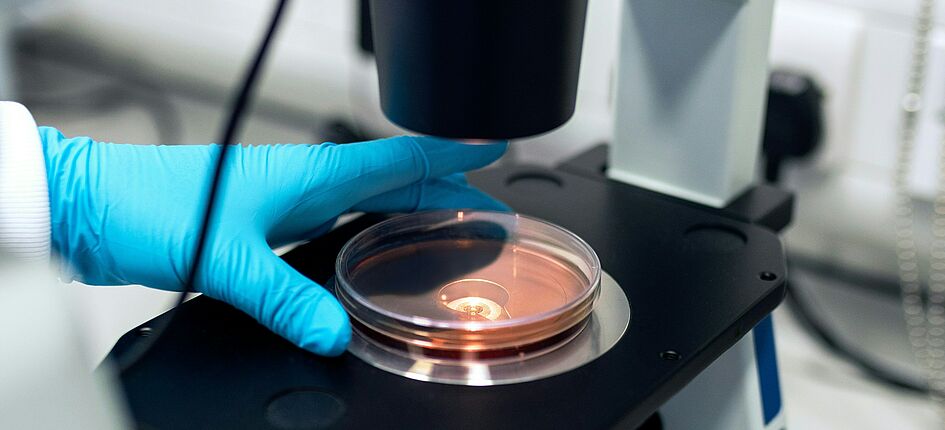
POLTX_Fibre has received the CE mark as a Class IIb medical device with APT (Antimicrobial Polymer Technology). Symbolic image: ThisisEngineering/Unsplash
News
Wallisellen ZH – The start-up Arcarius is launching its platform, an artificial intelligence (AI) agent for accounting. The new platform starts with a direct connection to bexio’s business software. The connection to other Swiss accounting systems is already being examined.
(CONNECT) The new AI agent platform from Arcarius GmbH supports fiduciaries, SMEs, start-ups and the self-employed with their accounting. It creates complex analyses and automatically prepares complete annual financial statements. The platform is directly connected to bexio's business software and is available immediately. According to a press release, the connection to other Swiss accounting systems is already being examined.
The start-up was founded in December 2024 by AI specialist Isis Kratz, who previously worked at Zürcher Kantonalbank and now heads Arcarius as CEO, together with experienced trustee Robin Striebel. "Routine tools usually only map individual steps," Kratz is quoted as saying. "An agent like Arcarius takes over entire processes - from preparation and structuring to plausibility checks."
Users can ask any questions about their accounting, such as balance sheet analyses or the interpretation of complex key figures. Arcarius prepares these graphically on request and proactively indicates any need for action, for example with regard to liquidity. The AI agent also has in-depth knowledge of the relevant laws.
The heart of the platform is reportedly the closing module. Arcarius analyzes accounting records and vouchers, compares bank balances, calculates depreciation and accruals. A draft for monthly, quarterly or annual financial statements is ready within a few minutes. Among other things, Arcarius creates the complete income statement and balance sheet and prepares the notes for processing. The annual financial statements can be exported directly to the company's corporate design. ce/mm

Arcarius' new AI agent platform supports trustees, SMEs, start-ups and the self-employed with their accounting. Image: zVg/Arcarius GmbH
News
Schlieren ZH/Cambridge/Bagsværd – The biotech company Vivtex, based in Schlieren and Cambridge in the US state of Massachusetts, is licensing technologies for oral drugs to the Danish pharmaceutical group Novo Nordisk. In return, Vivtex will receive up to 2.1 billion dollars plus shares in future product sales.
(CONNECT) Vivtex and Novo Nordisk will jointly develop next-generation oral biologics for the treatment of obesity, diabetes and related comorbidities, according to a statement from the Danish pharmaceutical company. To this end, the biotech company Vivtex, based in the Bio-Technopark Schlieren-Zurich and Cambridge, will license selected technologies for the development of oral drugs to Novo Nordisk. In return, Vivtex is entitled to an upfront payment, research funding and milestone payments totaling up to 2.1 billion dollars as well as tiered royalties on future product sales.
The aim of the collaboration is the oral administration of biologics, which have so far only been injectable due to their poor absorption in the gastrointestinal tract. To this end, Novo Nordisk will leverage its proven expertise in peptide and protein therapeutics with Vivtex's proprietary platform for gastrointestinal screening and formulation.
"The oral administration of biologics is one of the biggest challenges in drug development," Vivtex co-founder and CEO Dr. Thomas von Erlach is quoted as saying. "Vivtex was founded to systematically solve this problem by combining high-throughput experimentation with computational and AI-driven analytics. The partnership with Novo Nordisk allows us to apply our platform in key areas of metabolic disease with the goal of enabling oral therapies that would otherwise need to be injected."
Once the research has been completed and the formulation selected, Novo Nordisk assumes responsibility for global development. The Danish company is also responsible for the regulatory activities, production and marketing of all resulting products. ce/mm
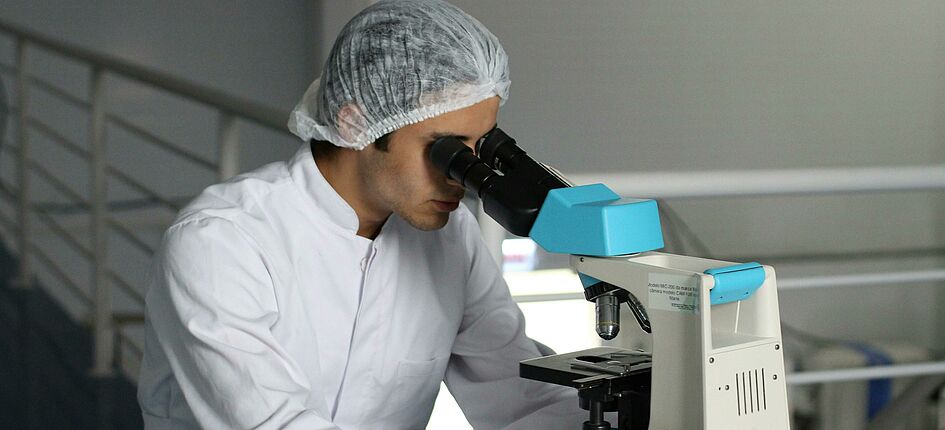
Vivtex and Novo Nordisk will jointly develop next-generation oral biologics for the treatment of obesity and diabetes and related comorbidities. Symbolic image: Pixabay/Pexels
News
Schlieren ZH/Berlin – Molecular Partners has agreed a development cooperation with the German company Eckert & Ziegler. Both companies intend to develop radiolabeled therapeutics based on Molecular Partners’ DARPin technology.
(CONNECT) Molecular Partners AG from Schlieren is working together with Eckert & Ziegler from Berlin on the development and production of radio-DARPin therapeutics, as detailed in a press release. These are radiolabeled therapeutics that are to be developed on the basis of Molecular Partners' DARPin technology. DARPins (Designed Ankyrin Repeat Proteins) are artificial proteins that can recognize and bind antigens. Eckert & Ziegler specializes in isotope technology components for nuclear medicine and radiotherapy.
As part of the collaboration, Eckert & Ziegler will support the development of radio DARPins based on actinium-225 and lutetium-177 in its laboratories. These are to be used in cancer therapy. "We are delighted to be working with Eckert & Ziegler, a global leader in the manufacture of radiopharmaceuticals," said Alexander Zürcher, COO of Molecular Partners, in the press release. "This agreement will expand the potential of radio-DARPins as vectors for the precise delivery of therapeutic alpha-emitting isotopes to tumors."
In a press release from Eckert & Ziegler, its CEO Harald Hasselmann describes "supporting highly innovative companies such as Molecular Partners in the development of their promising technology platforms" as an "important goal" of his company.
Molecular Partners, based in the Bio-Technopark Schlieren-Zurich, was founded in 2004 by researchers from the University of Zurich (UZH). ce/jh
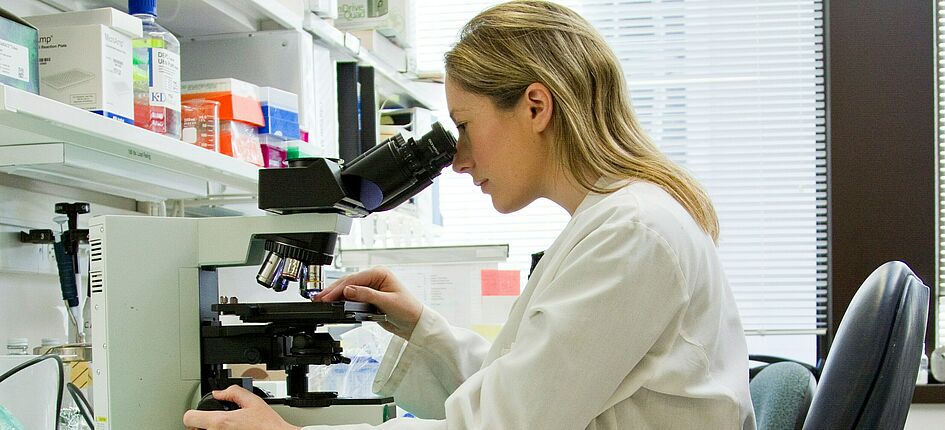
Molecular Partners AG, based in Schlieren, is collaborating with Eckert & Ziegler, based in Berlin, on the development and manufacture of Radio-DARPin therapeutics. Symbolic image: National Cancer Institute/Unsplash
News
Zurich – A total of 46 new companies were created at the Swiss Federal Institute of Technology in Zurich (ETH) in 2025, 24 of which were spin-offs. The companies received a total of CHF 540 million in capital. The university is also launching new rules for spin-offs and starting its own support program for start-ups.
(CONNECT) The Swiss Federal Institute of Technology in Zurich (ETH) recognized 46 new start-ups last year. This exceeded the previous high of 43 new start-ups, which was reached in 2023, according to the university.
A new distinction is now made between spin-offs and start-ups. Spin-offs are companies whose business ideas are based on ETH research results. A start-up label, on the other hand, is awarded to those who do not use these results but still have a connection to the university. "ETH start-ups are particularly often founded by students and graduates," says Effy Vayena, Vice President Knowledge Transfer and Corporate Relations.
Of the 24 spin-offs and 22 start-ups recognized last year, 12 are active in the field of technology and software, primarily in the area of artificial intelligence and machine learning. Seven companies belong to the biotechnology and pharmaceutical sector, five to medical technology and diagnostics. In 41 disclosed financing rounds, the companies secured a total of CHF 540 million in 2025. This corresponds to an increase of 27% compared to the previous year.
In the area of start-ups, ETH is now offering the "UPortunity" funding program in collaboration with UBS. Young entrepreneurs who benefit from this receive financial support as well as access to office and laboratory infrastructure.
Across all spin-offs, the proportion of female founders has almost doubled over the past ten years and now stands at 17%. All-female and mixed teams account for around a third of start-ups. ce/as

The number of new companies founded with links to ETH reached a new record high in 2025; pictured is the Campus Centre on Gloriastrasse in Zurich. Image: Alessandro Della Bella/ETH Zurich
News
Zurich/London – Mediaforgrowth supports KA-EX with a further 3.5 million dollars. The London-based venture capital firm has already supported the expansion plans of the Zurich-based company ph. AG for its cortisol-lowering regeneration drink in the USA with 3 million dollars last year.
(CONNECT) ph. AG is now receiving a further 3.5 million dollars from London-based venture capitalist Mediaforgrowth for its nutritional supplement KA-EX, following 3 million dollars last year. According to its announcement, the funds will be used to accelerate the market expansion in the USA, which began in 2024.
With the pledged capital, Mediaforgrowth (MFG) plans to launch a multi-media campaign in the coming months, initially from New York and then nationwide. With MFG, "we are using a strategic omnichannel system to build our brand," KA-EX co-founder and CEO Pedro Schmidt is quoted as saying. "MFG's diverse media offerings and integrated approach are designed to turn audience reach into real commercial momentum. And that's exactly the kind of partner we need at this stage of growth."
KA-EX was launched on the Swiss market in 2017 and is now available throughout Europe and the USA. The drink has been clinically confirmed to lower cortisol levels within 48 hours, improve REM sleep, relieve inflammation and promote balance. According to MFG, users include the Paris Saint-Germain football club and "Bundesliga teams" as well as the Tudor Pro Cycling team. KA-EX was able to recruit professional cyclist and Olympic champion Fabian Cancellara, cross-country skier and four-time Olympic champion Dario Cologna and ski racer Lara Gut-Behrami as brand ambassadors and investors.
"KA-EX is redefining what recreation can look like for modern consumers," says Diana Florescu, CEO and founding partner of Mediaforgrowth. "In the world of supplements, it is rare to see this level of scientific rigor, with three clinical studies, including one independently conducted, proving the efficacy of the product. We are delighted to support a brand that combines bold innovation with real science." ce/mm

After receiving $3 million last year, ph. AG is now getting another $3.5 million from London-based venture capital firm Mediaforgrowth for its dietary supplement KA-EX. Image: zVg/ph. AG
You need to load content from reCAPTCHA to submit the form. Please note that doing so will share data with third-party providers.
More InformationYou are currently viewing a placeholder content from Turnstile. To access the actual content, click the button below. Please note that doing so will share data with third-party providers.
More InformationYou are currently viewing a placeholder content from Vimeo. To access the actual content, click the button below. Please note that doing so will share data with third-party providers.
More InformationYou are currently viewing a placeholder content from YouTube. To access the actual content, click the button below. Please note that doing so will share data with third-party providers.
More InformationYou need to load content from reCAPTCHA to submit the form. Please note that doing so will share data with third-party providers.
More Information