News
Küsnacht ZH – The new Standortförderung Goldküste agency founded in November 2025 for the district of Meilen has published its annual program for 2026/27. The first general meeting takes place in Stäfa on April 15th.
(CONNECT) The Gold Coast location promotion agency has published its first annual program. The association was founded in September 2025 by the eleven municipalities of the Meilen district and the Office for Economic Affairs of the Canton of Zurich.
According to a press release, members benefit from free participation in events, excursions and background discussions, direct access to decision-makers and increased visibility. The first general meeting will take place on April 15th at Sensirion AG in Stäfa ZH. Its co-founder and Co-Chairman of the Board of Directors, Dr. Moritz Lechner, will be speaking as a guest speaker.
The press release also mentions a members' lunch with a workshop visit to Micro Mobility Systems AG in Küsnacht and a members' snack at the Zumikon municipal administration. An after-work excursion to Seepark Uetikon, where apartments for a good 600 people are being built on the former chemical factory site, will follow in August. An excursion to the Zurich Cantonal Parliament is also on the agenda. ce/mm

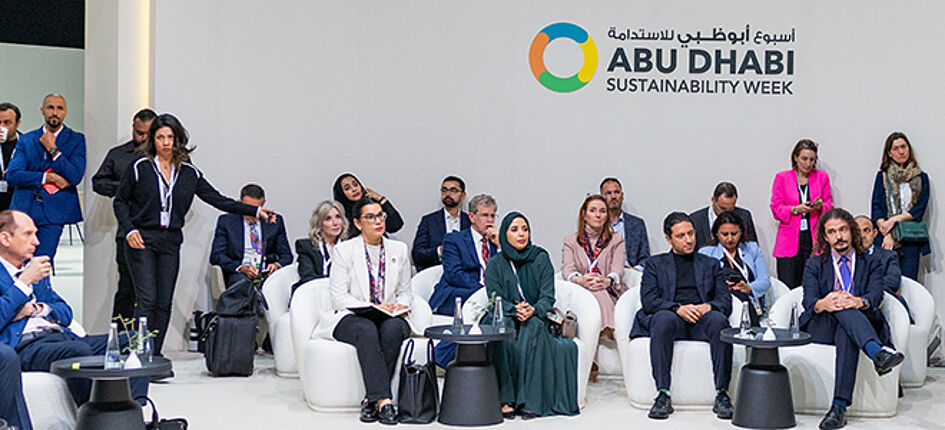
The Gold Coast Location Promotion Agency was founded in September 2025 by the eleven municipalities of the Meilen district and the Office for Economic Affairs of the Canton of Zurich. Image: zVg/Gold Coast Location Promotion Agency
News
Winterthur – Flux Mobility AG is launching a new business and consulting model with Flux Technology. The manufacturer of light electric commercial vehicles wants to provide users with service, advice and information.
(CONNECT) Flux Mobility AG, based in Winterthur, has launched a new business and consulting model. With Flux Technology, the company intends to offer its customers a wide range of consulting services in the areas of maintenance, service and operation, according to a press release.
The manufacturer of all-electric commercial vehicles has developed a platform based on special solutions for their operation. This includes system architecture, high-voltage and energy distribution, electrical/electronic integration, driving dynamics, safety and diagnostic strategies as well as safeguarding during operation. A key point is the operating software developed by Flux Mobility, which regulates the interaction of the control units as well as the energy and thermal management, controls charging and protection functions and enables reliable diagnostics. All these elements can be found in the new Flux Technology module.
"We have always seen Flux as an engineering company with its own products that are among the best - Flux Technology is the logical next step," said Duga Hoti, founder and CEO of Flux Mobility AG, in the press release. "Our teams know the entire cycle of a vehicle, from the architecture decision to safeguarding and optimizing existing platforms. We are now making this 360-degree knowledge available to other companies."
Flux Technology is an offer for original equipment manufacturers, system suppliers, body manufacturers and fleet operators. The comprehensive range of services helps to extend the range, availability, ease of maintenance and ultimately the cost-effectiveness of fleet operations. ce/ww.
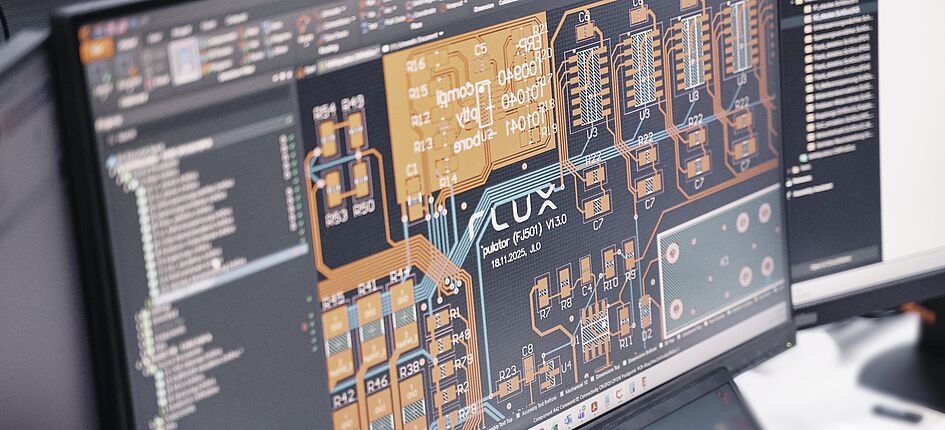
Flux Mobility AG, based in Winterthur, has launched a new business and consulting model. Image: zVg/Flux Mobility AG
News
Zurich – An escape room has been set up at the University of Zurich (UZH). This enables a playful journey through the history of modern physics. The aim is to bring interested people closer to physics.
(CONNECT) Researchers and staff at the University of Zurich(UZH) have come up with a playful answer to the question of how to bring interested people closer to sciences such as physics. According to a press release, they set up an escape room in the UZH Science Pavilion. In Quantum Century Escape, players have to solve a puzzle that revolves around discoveries and personalities from 20th century physics. The starting point is the formulation and publication of Erwin Schrödinger's quantum equation 100 years ago.
The idea for this game came from Lídia del Rio and Titus Neupert from the Physics Institute. Together with their colleague Nuriya Nurgalieva, they developed the room and the puzzles to be solved in it. The room is designed in the style of the 1920s and the portraits on the walls show physicists from this period.
The Escape Room in the UZH Science Pavilion is located on the Ircher campus. The games for two to five people take place every day except Wednesdays at 6 pm. On Saturdays and Sundays there are additional games at 9.30 am. ce/ww
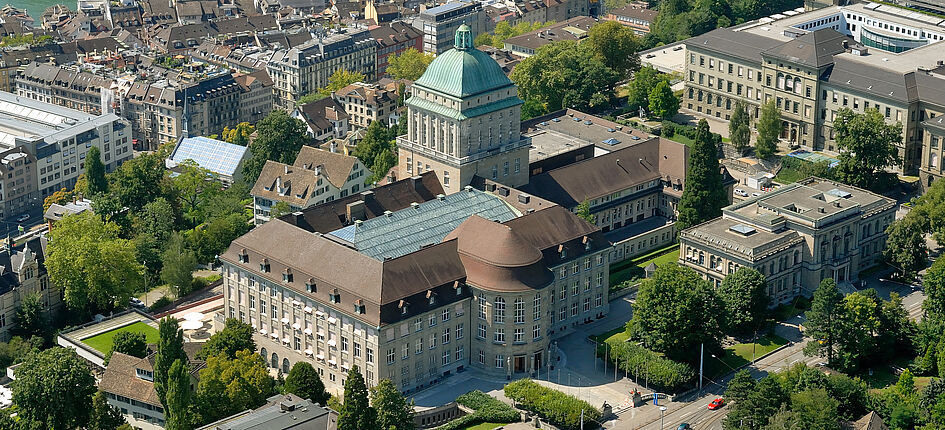
Researchers and staff at the University of Zurich (UZH) have set up an escape room in the UZH Science Pavilion. Image: Manfred Richter/University of Zurich
News
London – Switzerland accounts for 14 of the 180 best European start-up hubs in the latest “Financial Times” ranking. Venture Kick in Schlieren even made it to fifth place. MassChallenge Switzerland, Fongit, the USI Startup Center and the Startup Campus Winterthur are also among the 100 best.
(CONNECT) Switzerland is one of the top start-up hotbeds in Europe. Among the 180 leading start-up hubs in the current Financial Times ranking are 14 institutions from Switzerland. They exhibit a comparatively high degree of regional and thematic diversity.
Venture Kick, which was founded in 2007 and is based in Schlieren, came fifth with 86.83 out of 100 points. This puts it ahead of important start-up hubs such as HEC Paris or the hub of the Royal Academy of Engineering Enterprise in London. Venture Leaders, managed by Venturelab like Venture Kick, comes in 25th place with 81.05 points.
MassChallenge Switzerland in Renens VD, founded in 2016, specialises in sustainability and comes in 22nd place with 81.65 points. The Fondation Genevoise pour l'Innovation Technologique(Fongit), founded in 1991 and specialising in technology topics, comes in 28th place with 80.85 points. The Startup Centre of the University of Italian-speaking Switzerland in Lugano, founded in 2004 and also specialising in technology topics, comes in 69th place with 78.56 points. The Startup Campus in Winterthur is close behind in 75th place with 78.10 points.
Talent Kick in Zurich comes in at number 102, the Runway Incubator in Winterthur at number 118. DayOne in Basel, which specialises in health issues, achieved 125th place, Female Founders Switzerland in Zurich 128th place and Kickstart Innovation, also in Zurich, 133rd place. The Boldbrain Startup Challenge in Manno TI is ranked 152nd, Tenity in Zurich, which specialises in fintech and financial topics, is ranked 159th and finally the Innovation Office of the University of Basel is ranked 164th.
MassChallenge Switzerland is also the fourth best networked start-up hub in Europe with locations in London, Boston, Dallas and Jerusalem. DayOne is ranked tenth in Europe when it comes to the best office and laboratory space. Fongit comes in twelfth place.
Venture Kick has the tenth best track record of all start-up hubs in Europe with start-ups such as Climeworks, Scandit, Kandou AI, Distalmotion and Mindmaze, MassChallenge Switzerland follows in 13th place with graduates such as HAYA Therapeutics, Planted, Again, Umiami and Infinite Roots.The "Financial Times" based its evaluation on the survey of graduates who took part in the respective programmes between 2019 and 2024. The first four places went to UnternehmerTUM and Start2 Group in Munich, BayStartUP in Nuremberg and Station F in Paris. ce/ug
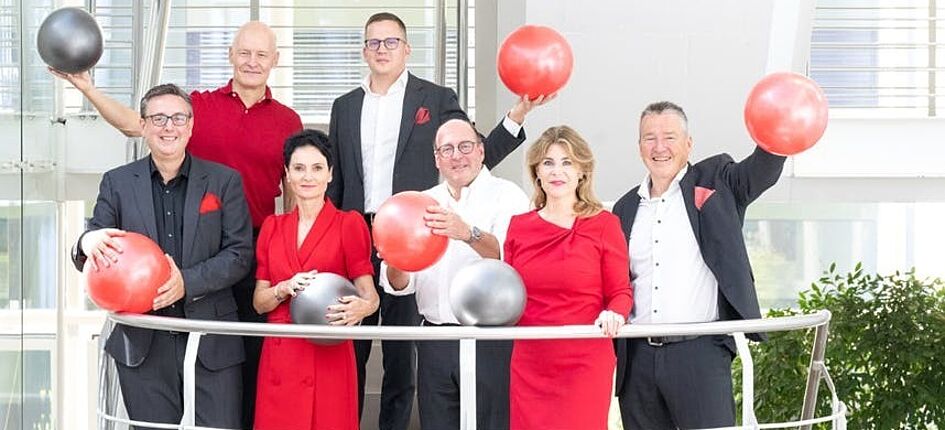
Venture Kick ranks fifth among start-up hubs in Europe in the Financial Times ranking; pictured is the Board of Directors. Image: zVg/Venturelab Ltd.
News
Dübendorf ZH/Seewen SZ – Researchers and technicians at the Swiss Federal Laboratories for Materials Science and Technology (Empa) are working with partners to develop new repair methods for concrete bridges. Shape memory steel is to be used to maintain the reinforcement of the bridges.
(CONNECT) The bridges built in the 1980s are showing increasing signs of fatigue and need to be repaired. Researchers and technicians from the Structural Engineering department at the Swiss Federal Laboratories for Materials Science and Technology (Empa) in Dübendorf are working on new methods for renovating these bridges. For their experiments, they are using a bridge deck made of ultra-high performance fiber-reinforced concrete (UHPFRC), reinforced with shape memory steel, according to a press release. This steel is an iron-based steel made from an alloy containing manganese, silicon and chromium, among other things. The fiber-reinforced concrete is bonded to this steel. After heating, the steel contracts and closes cracks that have appeared in the concrete.
The researchers led by Angela Sequeira Lemos and Christoph Czaderski have carried out corresponding experiments in Empa's construction hall. Five concrete slabs, each five meters long, simulate bridge elements. One of these remained unreinforced, while the others were reinforced with conventional reinforcing steel or shape memory steel. For the test, cracks were added to the panels to simulate real wear conditions. As a result, the combination of fiber-reinforced concrete and shape memory steel proved to be more functional. It was used to close cracks and lift sagging bridge sections. "We were able to show that our system not only works, but can actually revive existing bridges," Angela Sequeira Lemos is quoted as saying in the press release.
The research project was funded by Innosuisse and supported by the OST - Eastern Switzerland University of Applied Sciences and re-fer, a spin-off of Empa from Seewen, and the Association of the Swiss Cement Industry cemsuisse. A practical test on a real bridge could arouse the interest of the industry. "And as demand increases, material costs are also likely to fall - this technology could then have a lasting impact on bridge renovations," says Sequeira Lemos with conviction. ce/ww
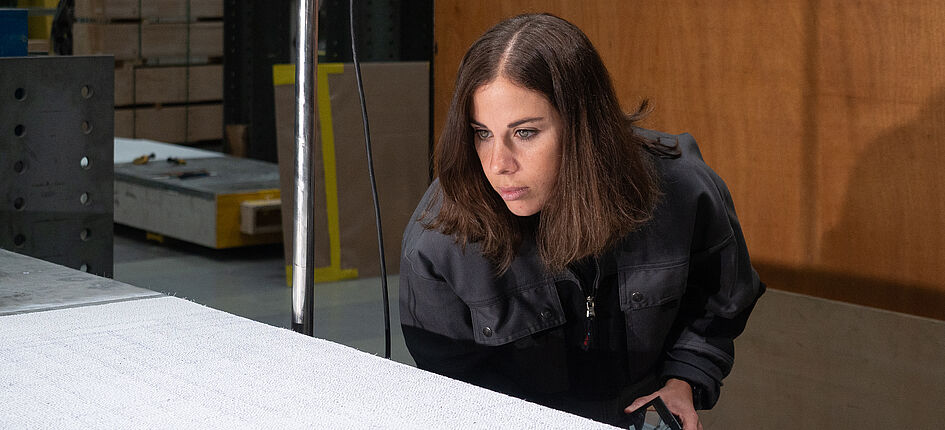
Empa researcher Angela Sequeira Lemos and her team deliberately cracked concrete slabs in experiments. Image: Empa
News
Zurich – The start-up Winduction has secured 1.15 million Swiss francs in pre-seed financing. The company intends to use the fresh capital to test its wireless vehicle charging project in real traffic.
(CONNECT) The start-up Winduction has successfully completed a pre-seed financing round with fresh capital of 1.15 million Swiss francs. According to a press release from the Schlieren-based start-up promoter Venture Kick, the company intends to use the funds to test its project for wireless vehicle charging in real traffic.
Winduction was founded in 2024 as a spin-off of the Swiss Federal Institute of Technology in Zurich (ETH). The company's technology is designed to allow vehicles to charge energy directly into batteries via charging elements integrated into the road surface and receivers integrated into the wheels. This is to take place at regular bus stops or other terminals without cables, for example. This form of charging is intended to reduce the size of batteries and avoid vehicle changes and downtimes. A feasibility study has already been carried out on an official bus route in Zurich. An integrated demonstrator with a PostBus is now to be tested in a pilot project using the acquired funds. This is done in cooperation with Thomann Nutzfahrzeuge AG from Schmerikon SG. ce/ww
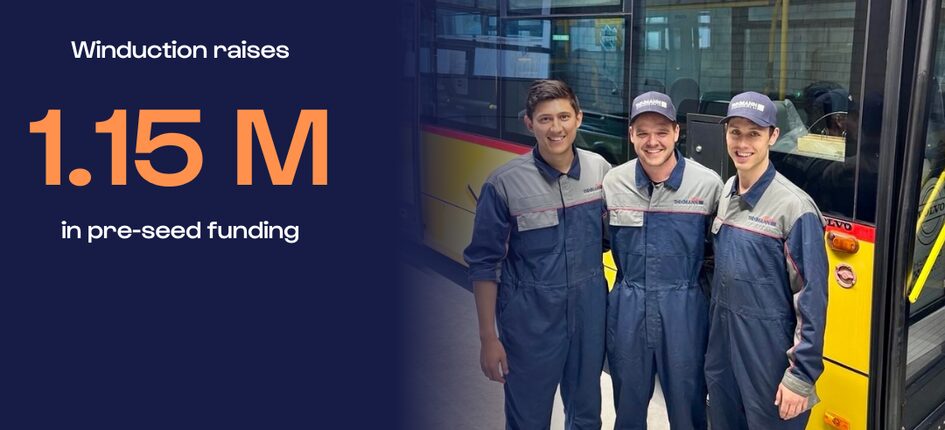
(from left to right) Sonam Bhuka (COO), Laurin Schwitter (CEO) and Sylvain Fricker (CTO) secure 1.15 million Swiss francs with Winduction. Image: zVg/Venturelab Ltd.
News
Zurich – OPTIML can further expand its Real Estate Decision Intelligence (REDI) platform with seed capital of 8 million euros. It is designed to help investors in the real estate sector and asset managers make data-based decisions about buying, selling and refurbishing properties and the right time to do so.
(CONNECT) OPTIML AG has secured 8 million euros in a seed financing round. The round was led by venture capital firms KOMPAS VC from Copenhagen and Planet A Ventures from Berlin. BitStone Capital (Cologne), The Bau Ventures (Berlin), Innovation Endeavors (Palo Alto, USA) and angel investors from the real estate and artificial intelligence sectors have also participated.
According to a press release, OPTIML will use the fresh capital to further expand its current market presence in more than 20 European countries and the USA and to hire additional staff at its headquarters in Zurich and its other center in Germany. In addition, the product expansion is to be driven forward.
Founded in 2022, the spin-off from the Swiss Federal Institute of Technology in Zurich has developed Real Estate Decision Intelligence (REDI), "a decision-making tool that helps real estate investors and managers protect net asset value and returns, optimize investment spend and internal rate of return, and manage transition risk from underwriting to exit, even as conditions change," according to the press release.
Current spreadsheets and statistical reports could not be applied to entire portfolios and would become obsolete as soon as framework conditions changed. In addition, according to OPTIML, they do not provide any decision-relevant and forward-looking evidence of what is to be financed, when this is to be done and with what impact on cash flow.
REDI is supposed to be this missing decision level. The software, which can be integrated into other software, is intended to lead the sector out of stagnation by means of secure decision-making protocols. "We have developed REDI with explainability and accuracy at portfolio level in mind, so that every recommendation can be traced back to inputs and specifications and stand up to rigorous scrutiny by lenders and IC," co-founder and CTO Jordi Campos is quoted as saying. ce/mm
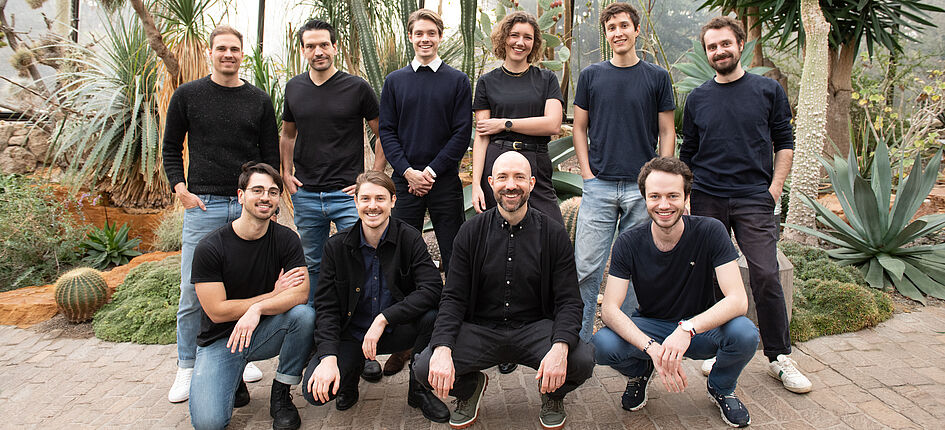
The OPTIML team has secured €8 million in seed funding. Image: zVg/OPTIML AG
News
Dübendorf ZH – Switzerland Innovation Park Zurich has secured a syndicated loan of up to CHF 445 million. The financial resources will be used to secure the realization of sectors A and B.
(CONNECT) Zürcher Kantonalbank, together with Luzerner Kantonalbank and Liechtensteinische Landesbank, has tailored a syndicated loan of up to 445 million Swiss francs for the Switzerland Innovation Park Zurich, as detailed in a press release. The Innovation Park Zurich (IPZ) in Dübendorf is thus securing the realization of Sectors A and B. "This successful transaction underlines the great trust in the Innovation Park
Zurich and its long-term potential for Zurich and Switzerland as a business location," Christof Domeisen, Chairman of the Board of Directors of IPZ Property AG, is quoted as saying. The loan can be drawn down in stages.
Sector A is the peripheral zone of the park, which is already "largely realized and in operation". The Swiss Federal Institute of Technology in Zurich (ETH), the University of Zurich (UZH) and users from industry are already conducting research here in the fields of robotics, autonomous systems, space and life sciences. Sector B, on the other hand, is a new construction area. The ground-breaking ceremony for the first building took place in September 2025, with construction work on the next building due to start this summer.
The development and realization of sectors A and B should be completed by 2032. Sector B will then have a floor area of around 100,000 square meters. "The syndicated loan gives us the financial strength we need to move forward quickly with the realization of the Innovation Park Zurich," says Andrea Thöny, Managing Director of IPZ Operation AG. ce/jh

Switzerland Innovation Park Zurich secures financing of up to CHF 445 million for further development. Image: Switzerland Innovation Park Zurich
News
Zurich – Researchers at the University of Zurich (UZH) are working on the development of antibiotics based on thanatin. The active ingredient, which is originally produced by tree bugs, is intended to find new ways to combat resistance.
(CONNECT) Antibiotic resistance is increasing alarmingly worldwide. According to a statement from the University of Zurich (UZH), more than 1 million people die every year from bacterial infections that cannot be treated with conventional antibiotics. Researchers at UZH led by chemist Oliver Zerbe are currently working on active substances that can counteract resistance. They use thanatin as a starting substance. According to the press release, this is an antibiotic natural substance produced by tree bugs, which use it to defend themselves against bacteria.
Thanatin in its natural form is not sufficient to protect people against bacterial infections. The active substance must be chemically modified. The UZH researchers working with Zerbe are focusing on a new class of antibiotics, Outer Membrane Protein Targeting Antibiotics - OMPTA. These are designed to destroy the outer protein shell of dangerous gram-negative bacteria so that they can then attack the bacterium. Thanatin proved to be an effective starting material. In a first step, the active substance should be able to attack two resistant bacterial strains. In another, the researchers are looking for a platform that can be used to continuously adapt thanatin to new target bacteria.
The project is currently supported by the Swiss National Science Foundation (SNSF) and the UZH Foundation. We are looking for a pharmaceutical company that is interested in the new active ingredient and is prepared to finance expensive test phases. "Follow-up funding after basic research at universities is the major challenge in the development of new antibiotics," Oliver Zerbe is quoted as saying in the press release. ce/ww

Researchers at UZH are working on developing antibiotics based on thanatin. Symbolic image: Edward Jenner/Pexels
News
Dübendorf ZH – At the beginning of the year, the Canton of Zurich created the Innovation Park Zurich specialist unit within the Office for Economy. It is managed by Benjamin Grimm. It should ensure the division of tasks between the players, coordinate the cantonal projects and involve the stakeholder groups.
(CONNECT) According to a press release, the canton of Zurich has created the Innovation Park Zurich office. In doing so, it is implementing a government council resolution from April 2025, which provides for the transfer of the coordination office, which was previously managed by an external mandate, into a standard organization. The specialist unit is located in the Office for Economy and began operations at the beginning of the year.
The specialist unit is to ensure the implementation of the division of tasks between the Department for Economic Affairs, the Innovation Park Foundation, IPZ Property AG and IPZ Operations AG. It should coordinate the cantonal projects and involve the various stakeholders in the local municipalities, the federal government, the business community and other partners.
In addition to the Innovation Park as the most important site development project in the canton, the specialist unit should also deal with the active development of economic areas as a key location factor. This involves areas for growth, transformation and the establishment of companies, particularly in or around the Innovation Park, but also throughout the canton.
Benjamin Grimm is the first head of the specialist unit. The geographer holds a Master's degree in Spatial Development and Infrastructure Systems from the Swiss Federal Institute of Technology in Zurich and a Master of Advanced Studies in Real Estate from the University of Zurich. He has worked at the Federal Office for Spatial Development and the Office for Spatial Development of the Canton of Zurich, among others. ce/ug

Visualisation of the Zurich Innovation Park. Image: Switzerland Innovation Park Zurich
News
Zurich/Schlieren ZH – Rapidata has raised 8.5 million dollars in an early financing round. The start-up wants to use this to scale its platform for human feedback and thus drastically accelerate the training of artificial intelligence models.
(CONNECT) Rapidata has closed a seed financing round with 8.5 million dollars. The round was led by Canaan Partners from Stamford in the US state of Connecticut and IA Ventures from New York. According to a press release, the venture capital companies Acequia from Seattle in the US state of Washington and BlueYard from Berlin have also participated.
Rapidata addresses one of the biggest bottlenecks in the development of artificial intelligence (AI): AI tools and systems such as Chat GPT, autonomous driving or Magic Erase rely on huge amounts of data. This data is filtered, annotated and validated by enormous amounts of repetitive human labor in low-wage countries.
The Zurich-based start-up, founded in 2023, solves this problem by not relying on permanent employees, but instead has a network of millions of people around the world who can be contacted using the same technology used for digital advertising. According to Rapidata, this enables it to offer data processing that is a thousand times faster and verified by humans. This is both more cost-effective than the competition and also enables human-in-the-loop capabilities for generative AI. This reduces feedback times from weeks to hours and lowers the cost of training AI models.
According to co-founder and CEO Jason Corkill, the win at the Schlieren-based start-up promoter Venture Kick provided his company with the financial basis to develop its platform. The funding program gave Rapidata the right focus at an early stage. Perhaps most importantly, "by participating in Venture Kick, we also came into contact with a number of external investors, which was helpful in organizing this financing round". ce/mm
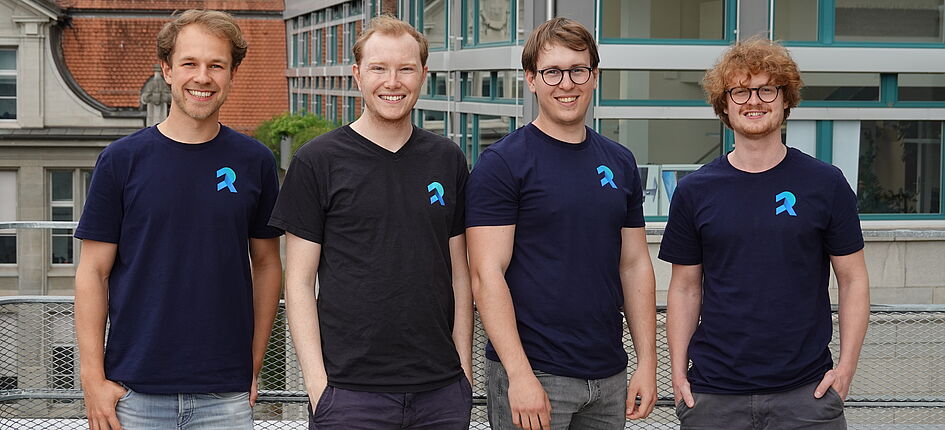
The Rapidata team has completed a seed financing round worth 8.5 million dollars. Image: zVg/Venturelab Ltd.
News
Schlieren ZH – The Schlieren-based biotech start-up ALP AI has secured financial support of CHF 40,000 from Venture Kick in Schlieren. This will enable the team to develop its platform for the early detection of immune reactions in drug development into a pilot project.
(CONNECT) ALP AI from Schlieren receives a financial injection of 40,000 Swiss francs in phase 2 of the Venture Kick funding program. According to a conversation with the biotech start-up, which was only founded in January 2026, published by Venture Kick, the content support provided in Phase 1 helped the team to "move from vision to focus", i.e. to develop a clearer prioritization and a practical plan "to turn a promising concept into a repeatable, partnerable platform".
This platform from ALP AI, which is registered in the commercial register under the name ALP Bio AG, enables biologics teams to identify the risk of anti-drug antibodies (ADA) at an early stage and prevent their formation before they derail drug development. Until now, these ADAs, i.e. adverse reactions of the immune system, have only been recognized in the late phase of drug development. To avoid the major financial risk this entails, ALP AI combines immune organoids derived from human tonsils with generative artificial intelligence. This predicts antibody sequences and redesigns them without impairing the function of the active substance.
According to ALP AI, the funding for phase 2 is now helping to turn the momentum into a measurable pilot project. "This step not only makes the platform convincing, but also trustworthy," says the start-up. "It also enables a targeted conference presence to acquire pilot customers and accelerate partner discussions. For us, these discussions are not marketing, but product validation in real time." ce/mm
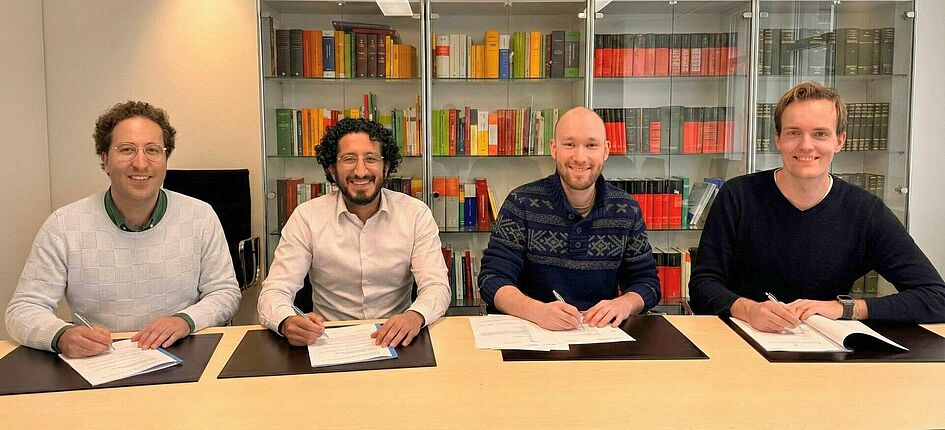
(from left to right) Dr Lucas Schaus (CSO), Punit Mehra (CBO), Anatol Ehrlich (CTO) and Dr Christian Vahlensiek (CEO) have secured financial support from Venture Kick in the amount of 40,000 Swiss francs for ALP AI. Image: zVg/Venturelab Ltd.
You need to load content from reCAPTCHA to submit the form. Please note that doing so will share data with third-party providers.
More InformationYou are currently viewing a placeholder content from Turnstile. To access the actual content, click the button below. Please note that doing so will share data with third-party providers.
More InformationYou are currently viewing a placeholder content from Vimeo. To access the actual content, click the button below. Please note that doing so will share data with third-party providers.
More InformationYou are currently viewing a placeholder content from YouTube. To access the actual content, click the button below. Please note that doing so will share data with third-party providers.
More InformationYou need to load content from reCAPTCHA to submit the form. Please note that doing so will share data with third-party providers.
More Information