News
Zurich – Researchers at the Swiss Federal Institute of Technology in Zurich (ETH) have investigated the chemical prerequisites for the emergence of life. They state that only certain planets are suitable for producing life. The findings could influence the search for such planets.
(CONNECT) Researchers at the Centre for Origin and Prevalence of Life at the Swiss Federal Institute of Technology in Zurich (ETH) have investigated the chemical basis for the emergence of life on Earth. According to their findings, an essential prerequisite is the presence of a certain amount of phosphorus and nitrogen, according to a press release.
The team led by Craig Walton and Maria Schünbächler shows that the formation of a planetary nucleus already determines whether these two elements are formed in sufficient quantities. This in turn requires a certain concentration of oxygen. If the oxygen content is too low, the phosphorus combines with heavy metals and sinks into the planet's core. If the oxygen concentration is too high, however, the nitrogen volatilizes in the atmosphere. The researchers found the required amount by studying the Earth's early history: 4.6 billion years ago, the conditions on Earth were exactly right to create the necessary concentrations of phosphorus and nitrogen.
"Our models make it clear that the Earth is exactly in this range. If we had had just a little more or less oxygen during the formation of the Earth's core, there would not have been enough phosphorus and nitrogen for life to form," Craig Walton, first author of the current study, is quoted as saying in the press release. Phosphorus is required for the formation of DNA and RNA, nitrogen for the generation of proteins.
Whether the necessary conditions exist on a planet depends on the composition of the respective central star of a solar system. Only if its chemical composition fulfills the above-mentioned requirements could the conditions for the emergence of life be present on the surrounding planets. The researchers therefore recommend focusing the search for life on solar systems that are similar to our own. The study has been published in the current issue of the journal "Nature Astronomy". ce/ww

A young star surrounded by a disc of gas and dust can give rise to planets if their core forms with an oxygen content suitable for life. Image: NASA-JPL
News
Zurich – LIVIT launches a chatbot supported by artificial intelligence. With this new service, the real estate service provider aims to expand its digital offerings for tenants.
(CONNECT) Zurich-based LIVIT AG has launched a chatbot supported by artificial intelligence (AI). According to a press release, the chatbot, called Livio, will digitally guide tenants through a catalog of essential questions about renting and housing. The real estate service provider, a subsidiary of Swiss Life, wants to use the innovation to expand its digital offerings.
The chatbot draws exclusively on verified content from the LIVIT website, which is constantly updated and expanded by a team of experts from the company's management, communications and digital business departments. Livio is currently in a beta phase.
"With Livio, we can help tenants in an uncomplicated way. Recurring inquiries are answered automatically, while employees can concentrate more on individual concerns," David Rivière, Head of Property Management at LIVIT AG, is quoted as saying in the press release. Livit is working with Zurich-based AI company Typewise on the technical implementation of the chatbot. ce/ww
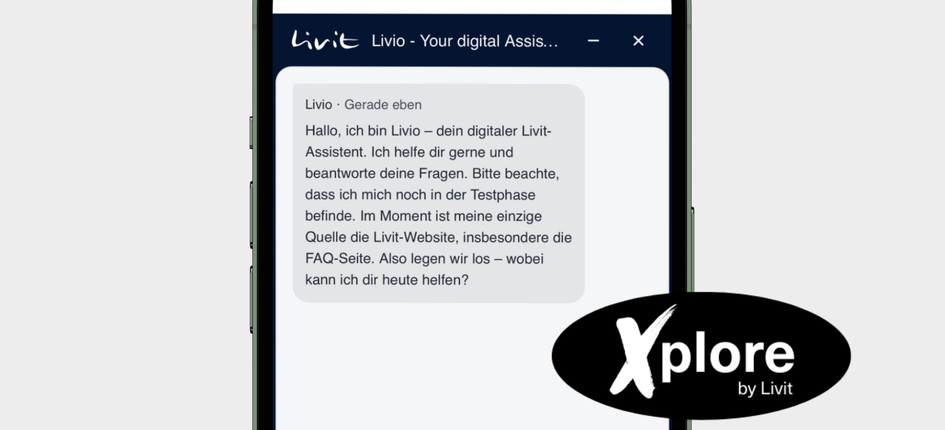
LIVIT AG has launched a chatbot supported by artificial intelligence. Image: zVg/Livit AG
News
Dietikon ZH/Copenhagen – The Danish investor Medley Ventures is participating in a pre-series A financing round for Oxara. The Dietikon-based Oxara AG develops cement-free and low-CO2 binding agents.
(CONNECT) Medley Ventures from Copenhagen is participating in a pre-Series A financing round for the building materials manufacturer Oxara, based in Dietikon. Medley Ventures is the venture capital fund of the founders of To Good To Go, an initiative against food waste. The investor is convinced by the combination of technological innovation, industrial scalability and real-world applicability, according to a press release.
Oxara replaces CO2-intensive cement with circular binders generated from recyclable and previously unused construction waste. According to the press release, the company's products can be easily integrated into conventional construction operations. Oxara intends to use the fresh capital to accelerate product development, certification pathways and industrial partnerships to enable a broader market launch in Switzerland and international markets.
"What convinced us is the vision behind Oxara: engineering excellence, real industrial impact and credible hope for a better future of construction. By making cement obsolete and waste recyclable, they show that innovation can change the way we build," Mathias Christensen, co-founder and CEO of Medley Ventures, is quoted in the press release. Gnanli Landrou, CEO and co-founder of Oxara, sees the funding as a strong endorsement from a company that is effectively committed to sustainability.
Oxara intends to raise fresh capital of CHF 20 million by March 2026 as part of a Series A financing. ce/ww
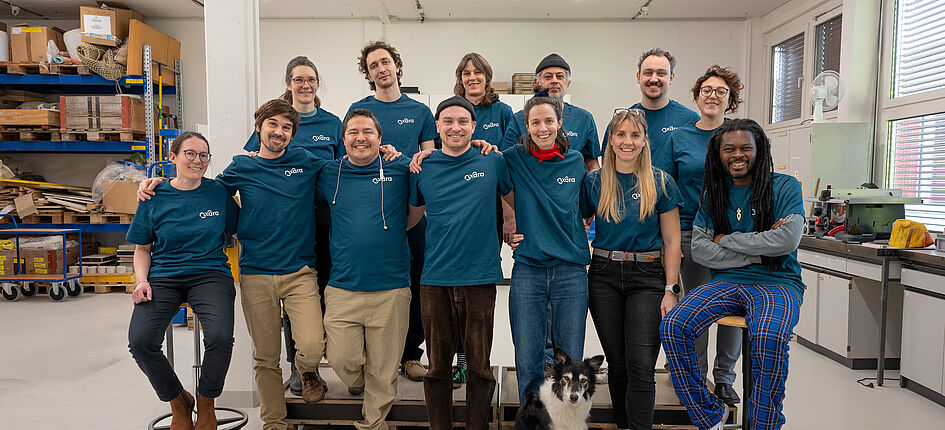
The Oxara team wins Medley Ventures as an investor for a pre-Series A financing round. Image: zVg/Oxara AG
News
Zurich – The canton of Zurich is defying the difficult export situation better than Switzerland as a whole. This is shown by the new Zurich Economic Board (Konjunkturboard Zürich), which from now on will prepare cantonal economic indicators every six months. The Office for Economy, Zürcher Kantonalbank and the Zurich Chamber of Commerce are cooperating on this.
(CONNECT) The new Konjunkturboard Zürich is positioning itself as a new tool for providing a well-founded and up-to-date assessment of the economic situation in the canton of Zurich. According to a press release, the first economic analysis was presented on February 4 and will be updated every six months from now on. Among other things, it refers to the regular economic surveys conducted by the Swiss Economic Institute (KOF ) at the Swiss Federal Institute of Technology in Zurich (ETH). It also bundles other economic indicators whose data is otherwise difficult to access and rarely prepared. The Economic Board is backed by the Cantonal Office for Economy, Zürcher Kantonalbank (ZKB) and the Zurich Chamber of Commerce (ZHK).
The economic analysis for the first quarter of 2026 paints a robust picture. In a nationwide comparison, the Canton of Zurich is slightly but consistently more positive than Switzerland as a whole in terms of key indicators. As a result, the Zurich economy was also less affected by the turbulence surrounding the US tariffs. The reason given is its broadly diversified industry and export structure. A slump in exports to the USA was largely offset by other export destinations.
According to the analyses, the business situation is showing an upward trend. The construction sector and financial services in particular are demonstrating stability, while the situation in industry is described as tense. As unemployment has risen over the past twelve months, the shortage of skilled workers has also decreased slightly in some areas. Experts expect the economy and the situation on the labour market to stabilize in 2026. Moderate growth in gross domestic product of 1 to 1.5 percent in real terms is expected in the canton in 2026.
"The Economic Board is a new and valuable tool for Zurich as a business location that gives us an even more up-to-date overview of economic developments," commented Carmen Walker Späh, Head of the Department for Economic Affairs. According to ZHK Director Raphaël Tschanz, it provides companies in the canton with clear and concise guidance: "The business cycle board translates key indicators into clear messages and thus makes it easier to plan. This allows trends and options for action to be identified at an early stage," says Tschanz.
The ZKB also emphasizes the networking concept, as the Konjunkturboard Zürich brings together important players in the canton of Zurich. "The Economic Board thus creates transparency and facilitates dialog between the real economy and the financial world," says ZKB chief economist Martin Weder. ce/yvh

The new economic indicator board shows the robust economic situation in the canton of Zurich. Symbolic image: Henrique Ferreira/Unpslash
News
Lucerne/Schlieren ZH/Risch ZG – Venture capital for Swiss start-ups grew by 23.9 percent in 2025 compared to the previous year. This is shown by the Swiss Venture Capital Report. It is published by the Startupticker Foundation, the Swiss Private Equity & Corporate Finance Association and Venturelab.
(CONNECT) For the first time since 2022, more money has flowed into Swiss start-ups than in the previous year. According to the recently published Swiss Venture Capital Report, the total amount of venture capital increased by 23.9 percent. Venture capital funds from Switzerland and abroad participated in 354 financing rounds (previous year: 357) with just under CHF 3 billion. In the first half of 2025, the report even recorded a year-on-year increase of 36%.
The Swiss Venture Capital Report is published every six months by the Lucerne-based Startupticker Foundation and its platform startupticker.ch and by Venturelab from Schlieren and its platform startup.ch. To this end, they cooperate with the Swiss Private Equity & Corporate Finance Association, the umbrella organization for Swiss venture capital firms.
The willingness to take risks also increased: investments in young and very young companies rose from CHF 864 million to over CHF 1.4 billion. The inflow of funds increased sharply, particularly in the ICT and biotech sectors. Less money flowed into cleantech start-ups. However, a third of the total volume of CHF 386 million generated in this area was attributable to Climeworks. The spin-off of the Swiss Federal Institute of Technology in Zurich recorded the second-largest financing round of the year with CHF 128 million.
Company valuations also developed positively: The transaction volume for two takeovers amounted to over CHF 1 billion and for a further seven more than CHF 100 million. Two Swiss start-ups went public: BioVersys and MindMaze Therapeutics.
Zurich leads the cantonal rankings in terms of both the number and volume of financing rounds, followed by Vaud and Basel-Stadt. According to the report, the majority of funds plan to further increase their investments in the coming months and years. ce/mm

Investment in Swiss start-ups rose by almost 24 per cent year-on-year to around CHF 3 billion in 2025. Symbolic image: Yashowardhan Singh/Unsplash
News
Dübendorf ZH – Chiral has received 12 million dollars in funding to further develop its industry-first robotic integration system for nanomaterials in silicon semiconductors. With this, Chiral wants to open up the next generation of chips beyond the limits of conventional silicon.
(CONNECT) The Dübendorf-based DeepTech start-up Chiral Nano has closed a seed financing round with 12 million dollars. It was led by Crane Venture Partners from London. The venture capital firms Quantonation and HCVC, both from Paris, and Founderful from Zurich have also invested. State funding came from the Swiss innovation agency Innosuisse.
According to a statement, the funding supports Chiral's goal of making post-silicon computer chips based on nanomaterials manufacturable on a wafer scale. The spin-off from the Swiss Federal Institute of Technology in Zurich, which was founded in 2023, aims to develop the next generation of chips beyond the limits of conventional silicon.
"Nanomaterials have shown outstanding performance in research for years, but without scalable and controllable manufacturing, their impact remains limited," Chiral CEO Seoho Jung is quoted as saying. "Chiral has the necessary skills to turn breakthroughs at material level into industrial reality." Chiral uses the industry's first robot-assisted integration system for nanomaterials in silicon wafers.
"Our customers will soon be announcing results that show how Chiral's technology has improved the performance of their devices," announces Jung. "At the same time, we are moving from development to implementation, with our first commercial systems being installed at customers this year." ce/mm
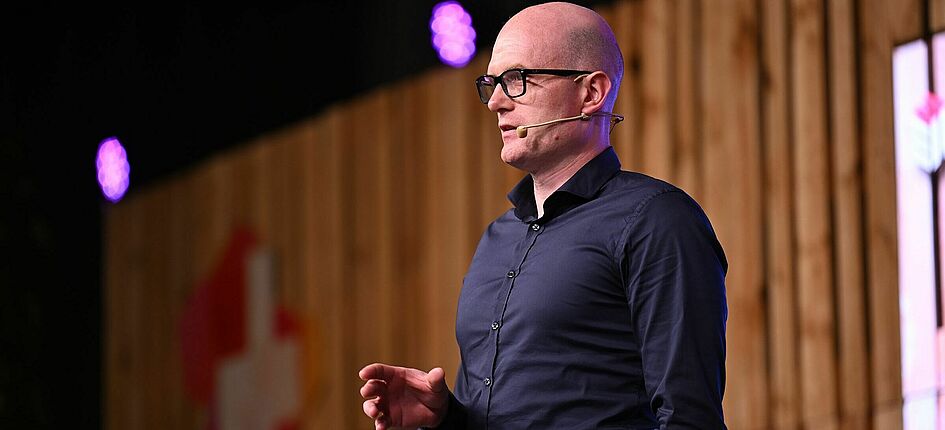
Natanael Lanz (CTO and co-founder of Chiral Nano AG) receives start-up capital of 12 million dollars for his company. Image: Neue Zürcher Zeitung AG
News
Kloten/Adliswil ZH – LOXY Schweiz AG has acquired tracker.ch. With its expertise in GPS positioning, device connectivity and data transmission in the Internet of Things (IoT) for SMEs, LOXY is specifically strengthening the IoT area of its cloud business platform based on artificial intelligence and machine learning.
(CONNECT) LOXY Schweiz AG is taking over tracker.ch AG from Adliswil, including the operating assets and the team, according to a statement. LOXY Switzerland is part of LOXY International AG, which is also based in Kloten. Founded in 2025, the wholly owned subsidiary is developing a cloud business platform based on artificial intelligence and machine learning with integrated IoT architecture.
LOXY Switzerland describes itself as a digital co-pilot for the management and key personnel of SMEs. Among others, LOXY works together with the transport and logistics company Sieber and the recycling company REMONDIS. "For us, LOXY offers the unique opportunity to integrate and efficiently manage vehicles of all brands and types on a single platform," Sieber is quoted as saying on the LOXY website. According to REMONDIS, it estimates that the use of LOXY 4.0 and the LOXY 4Drivers app has "optimized and improved internal processes". "LOXY has also made the extremely complex process of collecting and disposing of hazardous waste more efficient and simpler."
With the company tracker.ch, founded in 2010, LOXY Switzerland is specifically expanding its IoT area, particularly with regard to GPS tracking, device connectivity and IoT data transmission. According to LOXY, the company intends to make further targeted investments in this area. Nothing will change for tracker.ch customers in terms of support and services. ce/mm

LOXY Schweiz AG acquires tracker.ch AG from Adliswil, including its operating assets and team. Symbolic image: Radisson US/Unsplash
News
Zurich – The University of Zurich (UZH) has celebrated special research achievements. Numerous awards were presented at a gala event.
(CONNECT) The University of Zurich hosted a gala ceremony to highlight special achievements in research and innovation. According to a press release, the winners of the FAN Awards, the UZH 3R Awards and graduates of the UZH Entrepreneur Fellowship Program were honored.
"In the fast-paced world of research, we often rush from one milestone to the next and forget to properly appreciate what we have achieved," Elisabeth Stark, Vice-Rector Research, is quoted as saying. In her speech, she emphasised "the return to competitive research funding" from the European Research Council.
A team of four researchers from the fields of spiritual care, computer science, computational linguistics and educational science received the UZH Postdoc Team Award. The work is of particular social relevance and provides answers to religious and spiritual questions on the basis of thousands of UN documents. According to the university, the UZH Postdoc Team Award was initiated in 2022 and honours interdisciplinary postdoc teams for outstanding and independent scientific achievements.
Zoe Marti from the Faculty of Mathematics and Natural Sciences, Stephanie Santschi from the Faculty of Humanities and Stefano Statunato from the Faculty of Law received the FAN Award, which is endowed with CHF 5,000. The Fund for the Advancement of Young Academics (FAN) of the UZH Alumni thus promotes outstanding achievements in the fields of law and economics, medicine and natural sciences as well as the humanities and social sciences.
Fabiola Jörger on the one hand and Markus Seeger and Johannes vom Berg on the other also received the UZH 3R Award. This award recognises UZH employees who are committed to refining and reducing animal experiments (Replace, Reduce, Refine). Finally, two graduates of the UZH Entrepreneur Fellowship Program, Celestin Mutuyimana and Thomas Look, were honoured. ce/hg
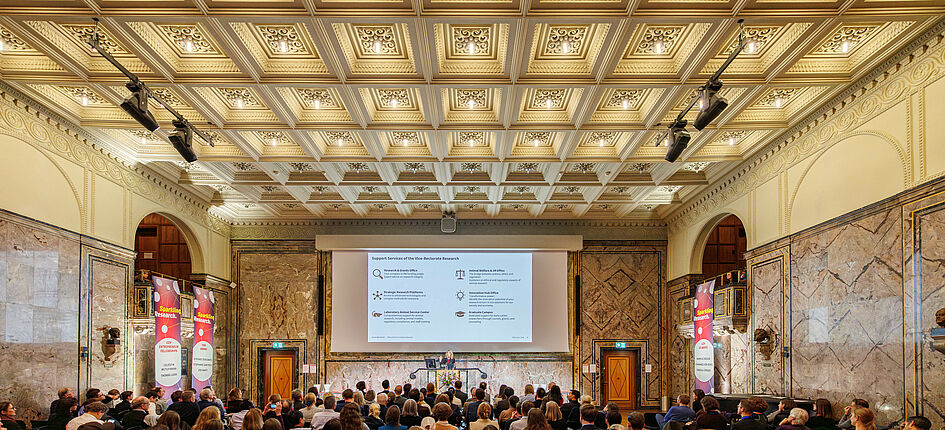
The University of Zurich held a gala celebration to highlight special achievements in research and innovation. Image: zVg/Nicolas Jonvi/University of Zurich
News
Dietikon/Winterthur ZH – Planzer and the Zurich University of Applied Sciences (ZHAW) have inaugurated the new Planzer Logistics Research Lab. The laboratory is used to develop innovative logistics and mobility solutions and to promote young talent.
(CONNECT) Planzer and the ZHAW have inaugurated the Planzer Logistics Research Lab. According to a press release, the joint laboratory at the ZHAW in Winterthur is intended to create space for "concrete solutions for the future-proof and sustainable design of logistics". At the same time, it is intended to unite science, practice and the promotion of young talent in one place. Four research projects supported by Innosuisse and the European Union are currently underway.
The four research projects deal with the question of how urban areas can be supplied sustainably, according to a statement from the laboratory. They combine new mobility approaches, modern data usage and innovative ways of working and include both traditional and future-oriented new means of transportation. Among other things, the aim is to achieve "spatially compatible, fast, reliable and personal delivery of all consignments with a minimal footprint for all areas supplied and the environment", according to the lab's project description on the ZHAW website.
Planzer wants to use the laboratory not only to benefit from research expertise, but also to promote young talent. The lab is intended to provide a place where young adults can gain access to the world of logistics, be inspired and be supported in their education and career. ce/nta
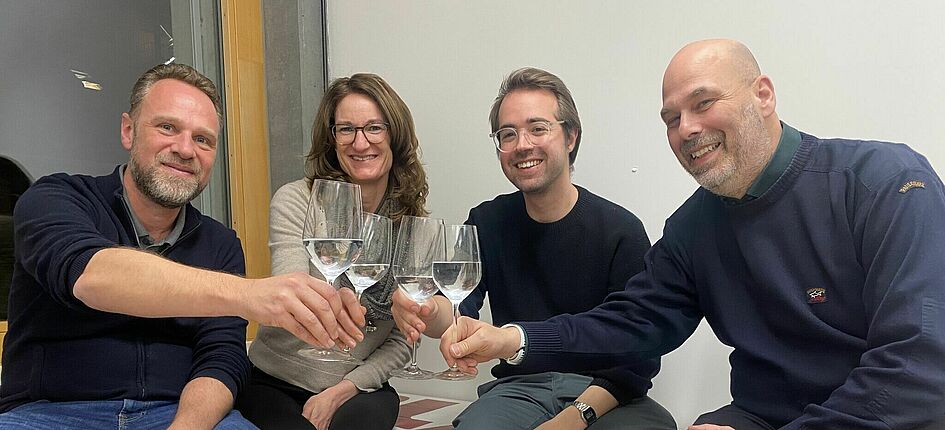
(from left to right) Björn Lindner (Head of Innovation at Planzer), Maike Scherrer (Professor at the ZHAW School of Engineering), Joel Weingart (PhD student at the ZHAW Institute of Sustainable Development) and Michael Stoll (Managing Director of Planzer Synergistics AG) officially inaugurated the Planzer Logistics Research Lab. Image: zVg/Planzer Transport AG
News
Zurich/Shanghai – Researchers at the Swiss Federal Institute of Technology in Zurich (ETH) and the University of Shanghai have built a natural gel mesh that closes even hard-to-heal wounds. Infrared light is used to reprogram pro-inflammatory immune cells into a regenerative cell type.
(CONNECT) A team led by ETH Professor Raffaele Mezzenga and researchers from the University of Shanghai have developed a hydrogel that not only combats bacteria in wounds, but also actively promotes wound healing. According to a press release, this water-based gel has reduced the bacterial load by 95 percent in preclinical animal tests. The treated wound closed within 15 days, which was not the case with untreated control wounds. The study was recently published in the journal "Nature Communications".
The hydrogel is applied directly to the wound and remains there during the healing process. It is absorbed into the tissue and slowly degrades itself. In the gel, the researchers have imitated reticular protein structures that release immune cells in order to capture pathogens and render them harmless. "In contrast to many synthetic approaches, we rely on a natural, protein-based system," Mezzenga is quoted as saying.
It consists of a dense network of tiny protein fibers made from the still inactive antibacterial enzyme lysozyme. It is activated by irradiation with near-infrared light. This releases individual lysozyme molecules, which then kill bacteria. The gel also releases magnesium ions under this light. They cause pro-inflammatory immune cells to be reprogrammed into a regenerative cell type. The immune system calms down and the wound heals. When the light is switched off, the gel returns to its net shape.
"Our technology combines antibacterial effect, anti-inflammation and wound healing," says Qize Xuan from the University of Shanghai, explaining the innovation. He is the first author of the study and a former visiting doctoral student in Mezzenga's laboratory. "This could one day open up new possibilities, particularly for diabetic patients with chronic wounds or those with antibiotic resistance." The team is now looking for industrial partners for clinical studies. ce/mm
A team from ETH Zurich has collaborated with researchers from Shanghai University to develop a hydrogel that not only combats bacteria in wounds but also actively promotes wound healing. Symbolic image: Dmytro Vynohradov/Unsplash
News
Zurich – UNISERS has delivered its first fully automated and production-ready factory system to a major manufacturer of semiconductors. The young company is thus taking a big step towards mass production. Your solution controls contamination on wafers and in process liquids.
(CONNECT) UNISERS AG has sold its first factory tool for contamination control in semiconductor production to a "leading semiconductor manufacturer", according to the company. As the spin-off from the Swiss Federal Institute of Technology in Zurich, which was founded in 2019, explains in its press release, this is a fully automated, production-ready system that is set to revolutionize contamination control for optimized chip production yields. UNISERS uses its two proprietary technologies Surface Enhances Particle Sizing and Surface Enhanced Raman Spectroscopy. They are designed to avoid the costly fluctuations in yield caused by contamination on wafers and in process liquids.
This milestone "reflects years of work on a fundamentally new approach to detecting and classifying impurities at the molecular level and builds on the success of our laboratory tools already in use with customers," co-founder and CTO Ali Altun is quoted as saying. "With this system, which is now being used in the factory, we are taking a decisive step towards mass production."
At the same time, UNISERS has strengthened its management team. Chuck Milligan has been appointed CEO and long-time KLA manager Oresta Donzella has been appointed strategic advisor. With the first system in use at a customer's plant, "UNISERS is moving from validation to scale-up," says Milligan, and thus from laboratory and pilot environments to continuous, automated use in production. Accordingly, in 2026 UNISERS will focus on scaling its factory platform and increasing its use in customers' production environments. ce/mm

According to company information, UNISERS AG has sold its first factory tool for contamination control in semiconductor manufacturing to a ‘leading semiconductor manufacturer’. Symbolic image: zVg/Bermix Studio/Unsplash
News
Kemptthal ZH – Haelixa has secured 2 million euros in a pre-Series A financing round. The company, which specializes in DNA-based technology for tracing textiles and other products, intends to invest in further global expansion and counterfeit protection for luxury brands.
(CONNECT) Haelixa can invest in international expansion and targeted team growth with fresh capital of EUR 2 million. According to the company, which was founded in 2016 as a spin-off from the Swiss Federal Institute of Technology in Zurich, the funds from a pre-series A financing will also be used to expand its range and work more closely with textile brands and partners in the supply chain.
The financing round was led by two existing investors, the venture capital firm Verve Capital Partners from Zug and Zürcher Kantonalbank. The Luxembourg-based 212 NexT fund, which focuses on promoting B2B tech start-ups, has also invested.
In addition, there is start-up funding of 230,000 dollars from the Philanthropy Asia Alliance, which is committed to sustainable and inclusive growth in Asia through its global mentoring program The Amplifier. Since December 2025, Haelixa has been part of a group of three scale-ups that stand for innovation and circularity in the textile value chain. The Amplifier is supported by Shein, the online retailer for fast fashion made in China.
Haelixa has developed a DNA-based technology that provides physical evidence of the origin and authenticity of textiles and other products. This helps brands to protect compliance, brand value and consumer trust in the face of increasing regulatory controls and rising risks of fraud, undeclared admixtures and counterfeiting. It is already used for textiles, precious metals and gemstones and meets the criteria of the Global Organic Textile Standard (GOTS) and OEKO-TEX.
"This investment will allow us to expand globally as traceability expectations continue to rise," Haelixa CEO Patrick Strumpf is quoted as saying. "It also allows us to expand into anti-counterfeiting and offer luxury brands a strong new added value." ce/mm
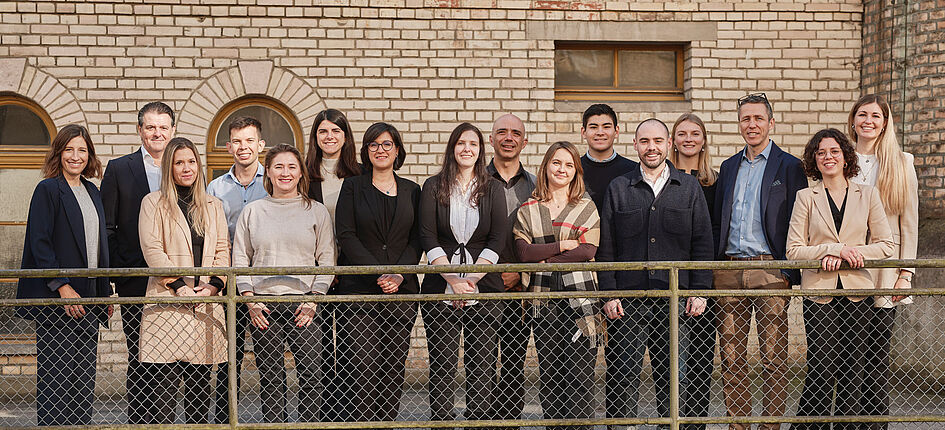
With fresh capital of €2 million, the Haelixa team can invest in international expansion and targeted team growth. Image: zVg/Haelixa AG
You need to load content from reCAPTCHA to submit the form. Please note that doing so will share data with third-party providers.
More InformationYou are currently viewing a placeholder content from Turnstile. To access the actual content, click the button below. Please note that doing so will share data with third-party providers.
More InformationYou are currently viewing a placeholder content from Vimeo. To access the actual content, click the button below. Please note that doing so will share data with third-party providers.
More InformationYou are currently viewing a placeholder content from YouTube. To access the actual content, click the button below. Please note that doing so will share data with third-party providers.
More InformationYou need to load content from reCAPTCHA to submit the form. Please note that doing so will share data with third-party providers.
More Information