News
Oberwil BL/Bussnang TG/Wallisellen ZH – BLT Baselland Transport AG’s Waldenburgerbahn is the first in Switzerland to be allowed to run semi-automatically. The train drives and brakes autonomously, but is monitored by a human. Stadler Signalling has developed the NOVA Pro train control system for this purpose in Wallisellen.
(CONNECT) According to a statement from BLT Baselland Transport AG, the Federal Office of Transport has given the green light for semi-automated transport on the Waldenburgerbahn (WB) line between Liestal and Waldenburg. The NOVA Pro train control system takes care of driving and braking. Vehicle operators are still on board, monitor the operation and can intervene if necessary.
NOVA Pro was developed by Stadler Rail at its site in Wallisellen. It enables the exchange of information between the vehicles and the trackside safety system. It regulates the speed, controls the level crossings in an optimized manner and stops automatically at the stop.
BLT, based in Oberwil, has renewed the infrastructure of the 13-kilometer route and installed a new generation of safety and control systems. Since the end of 2022, it has been using ten compositions built by Stadler at its plant in Valencia, Spain, on the route. In addition, the railroad wants to enable vehicles to be maneuvered without drivers in its new depot in Waldenburg from the end of 2026.
Philipp Glogg lists a number of advantages of partial automation "Travel operations will be more consistent, more resource-friendly and more energy-efficient. The WB will run even more punctually," the Chief Technical Officer of BLT is quoted as saying in the press release. This could reduce delays and prevent early departures at stops.
Marc Trippel calls the project forward-looking. "For Stadler Signalling, it is an important milestone in the further development of modern, digital train control systems - and at the same time a significant step for automated rail traffic in Switzerland," the Executive Vice President Division Stadler Signalling is quoted as saying. ce/ug
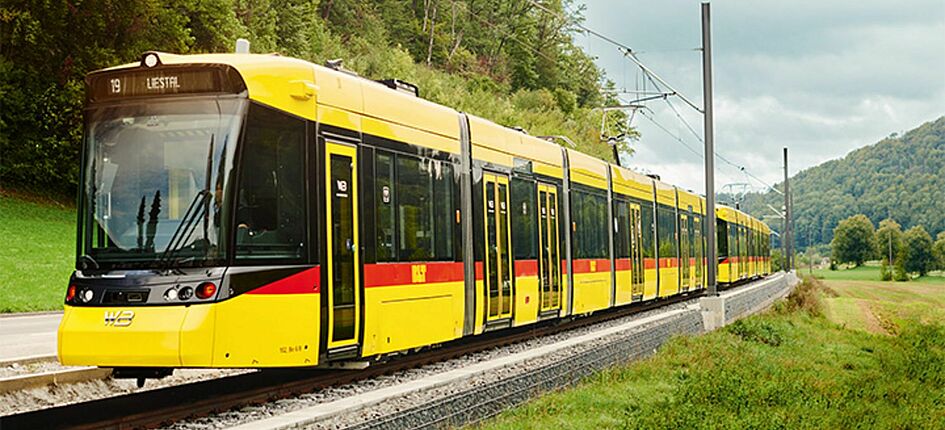
The Waldenburgbahn between Waldenburg and Liestal will be partially automated in future. Image: Stadler Rail AG
News
Zurich – Neurologist Tobias Weiss and biologist Miaomiao Sun from the University of Zurich have been awarded one of this year’s Pfizer Research Prizes. A total of twelve scientists from Switzerland have been honored.
(CONNECT) Neurologist Tobias Weiss and biologist Miaomiao Sun from the University of Zurich (UZH) have been awarded a Pfizer Research Prize 2026. The prize was awarded for her work on drugs for the treatment of glioblastomas, the most aggressive forms of brain tumors, according to a press release.
The two researchers worked together with Magdalena Krol and Maciej Bialasek, their cooperation partners from the biotech Cellis and the University of Warsaw, on the effect of macrophages in interaction with glioblastoma cells. Macrophages are immune cells that interact with glioma tumor cells and can therefore contribute to the growth of glioblastomas. In experiments, the scientists modified the macrophages in such a way that they were able to transport active substances to the tumor cells and inhibit their growth. Tests on mice showed that the active substances docked to the tumor cells and triggered a sustained anti-tumor immune response. The experiments were tested on human glioblastoma models. The tests with the mice showed a longer lifespan of diseased animals. The effect of direct tumor destruction combined with the immune response generated via macrophages could lead to a new therapeutic procedure for the treatment of glioblastomas.
This year's Pfizer Research Prizes, worth a total of 100,000 Swiss francs, were awarded to twelve scientists from Basel, Fribourg, Geneva, Lausanne and Zurich. In addition to Tobias Weiss, Miaomiao Sun and Maciej Bialasek in basic research for oncology, Rémi Vernet, Eugenio Fernandez and Nicolas Mach from the University of Geneva and Geneva University Hospital were honored in the field of clinical research/oncology for their work on inactivated tumor cells and capsules - a combined immunotherapy against cancer. Other winners are Bojana Müller-Durovic (Basic Research for Infectious Diseases/Immunology) from the University/University Hospital of Basel (the Epstein-Barr virus hijacks the metabolism to transform B cells), Teofila Seremet Caplanusi, Jeremy Di Domizio and Antoine Girardin (Clinical Research for Infectious Diseases/Immunology) from University/University Hospital Lausanne (a molecular map enables personalized skin therapies) and Lucas Spierer and Frederik Plourde (Digital Health) from University of Fribourg/BeweLab SA (a digital health solution to reduce unhealthy binge eating). ce/ww
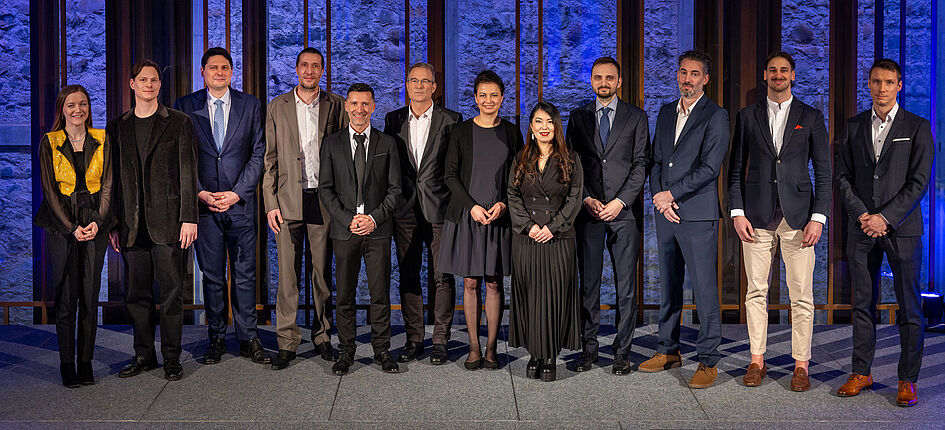
(from left to right) Teofila Seremet Caplanusi, Antoine Girardin, Eugenio Fernandez, Rémi Vernet, Jeremy Di Domizio, Nicolas Mach, Bojana Müller-Durovic, Miaomiao Sun, Maciej Bialasek, Lucas Spierer, Frederik Plourde and Tobias Weiss are the winners of the Pfizer Research Award 2026. Image: Alex Colle/Pfizer Research Prize Foundation
News
Zurich/Kloten ZH – Eberhard Bau will be using solar diesel from Synhelion from 2027. The companies have signed a long-term purchase agreement for the renewable fuel. Eberhard Bau wants to reduce the CO2 footprint of its construction machinery.
(CONNECT) The construction company Eberhard Bau from Kloten will in future operate its machinery with solar diesel from the Zurich-based cleantech company Synhelion. The long-term purchase agreement now announced in a press release provides for the use of renewable diesel from 2027. According to Synhelion, its use reduces net CO2 emissions by up to 100 percent compared to fossil fuels. The sustainable fuels can be used by all existing combustion engines.
Eberhard Bau was Synhelion's first acceptance customer from the construction industry, which had little leverage to defossilize construction machinery and construction sites. So far, solar diesel has been used by companies in the aviation, shipping and road transport sectors. However, construction machines are heavy, are used in undeveloped terrain and are difficult to electrify due to their high power requirements. Solar diesel creates a sustainable solution for CO2 reduction "where there was previously no practicable alternative", says Silvan Eberhard, Head of Logistics at Eberhard Unternehmungen.
According to Synhelion, it has been operating the world's first industrial plant for the production of solar fuels since 2024 with DAWN, which produces in Germany. The construction of the first commercial plant is being planned and is scheduled to go into operation in 2027.
In addition to Eberhard Bau AG, Swiss International Air Lines, Pilatus Flugzeugwerke, Zurich Airport, AMAG Group and the Lake Lucerne Navigation Company have concluded purchase agreements for renewable fuel with Synhelion. ce/heg
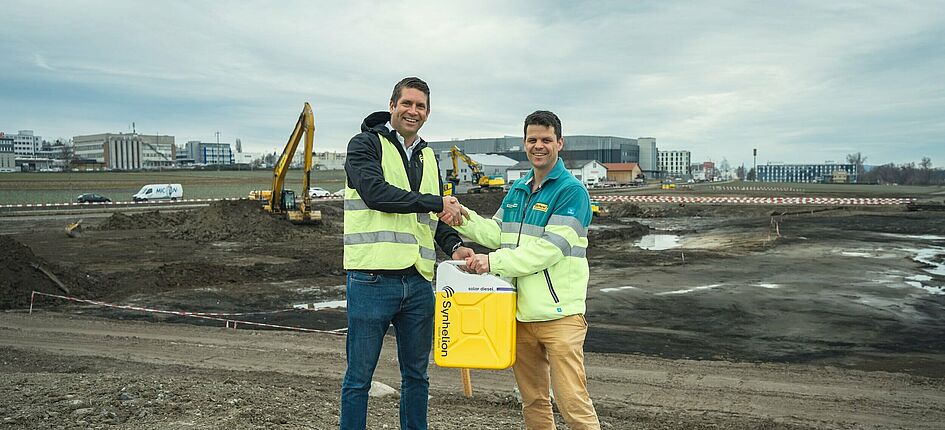
(from left to right) Philipp Furler (Co-CEO and co-founder of Synhelion) and Silvan Eberhard (Head of Logistics at Eberhard Unternehmungen) celebrate the agreement on the purchase contract for solar diesel for construction machinery. Image: Synhelion AG
News
How do people, products, organizations and an entire region like the Zurich Airport region achieve top performance in the real estate and construction industry? This key question was the focus of the ImmoLunch held by the FRZ Zurich Airport Region on January 29, 2026. The event kicked off the ImmoSummit 2026, which will take place on June 10, 2026 in The Hall.
The real estate and construction industry is facing far-reaching changes. Increasing demands on quality, sustainability, innovation and efficiency mean that sheer size, experience or market power are no longer enough. Sustainable real estate projects are created where talents are developed in a targeted manner, bundled across disciplines and translated into concrete added value.
The ImmoLunch brought together 103 participants from the real estate, construction and construction-related sectors and thus focused on a key success factor in the industry. It is not the individual project that determines competitiveness, but the ability of organizations to lead people and ideas to peak performance in the long term.
The Zurich airport region offers excellent conditions for this. Innovative start-ups, efficient construction and real estate companies and qualified specialists come together here. However, it is not the existing potential alone that is decisive, but how this is made effective in the interplay between project development, construction, operation and organization. It was precisely this development from talent to sustainable performance that formed the core of the event.
The event focused on the question of how talent in real estate companies, in products and processes and at an individual level can be recognized, promoted and developed in a targeted manner. After a short pitch by Rematter, Jan Schibli from the Schibli Group, André Burri from SwissSkills and Götz Hilber from Rematter AG discussed these topics in a moderated panel chaired by Monika Schärer from 1st Unit GmbH.
Jan Schibli, owner of the Schibli Group, emphasized that sustainable development is created where people enjoy their work and their lives. This joy is closely linked to long-term economic success. He emphasized that corporate values and the personal values of talents must be congruent in order for development to be possible. Mentors who authentically exemplify values play a central role in this. Jan Schibli also made it clear that there is not so much a shortage of skilled workers, but rather a lack of companies that can properly train and inspire talent and skilled workers.
André Burri, Managing Director of SwissSkills, emphasized intrinsic motivation as a key factor in promoting talent. He explained that companies need to know their own values, trust them and consciously lead talent into unfamiliar situations. Many highly capable talents are often too modest and do not have the confidence to take the next step. A strong team and genuine appreciation of their own efforts are particularly important for talented people.
Götz Hilber, co-founder and CEO of Rematter AG, pointed out that potential often remains undiscovered, even though it is present in the idea, the material and the people. Only the interplay of these levels enables real development. Meaning and purpose are guiding principles and can trigger the intrinsic motivation of talented individuals in the long term.
The ImmoLunch was deliberately designed as a preliminary stage to the ImmoSummit 2026. It offered space for reflection, new perspectives and an exchange on one's own role in talent development before these topics are further explored and jointly developed at the ImmoSummit on June 10, 2026 in The Hall.

News
Zurich – Researchers at the University of Zurich are working on a model that can be used to develop personalized therapies for cancer patients who have suffered a heart attack. The Onco-Acs tool combines cancer-related and cardiovascular factors that are generated from an extensive database.
(CONNECT) Cancer patients with a heart attack are exposed to a significantly higher mortality risk. In order to develop personalized therapies, researchers from the Center for Molecular Cardiology at the University of Zurich, together with international colleagues, have developed a tool supported by artificial intelligence (AI) that enables a more accurate prognosis based on symptoms. According to a press release, the researchers examined a study of more than 1 million heart attack patients from England, Sweden and Switzerland, including over 47,000 people with cancer. The study showed that the heart attack patients had a remarkably poor prognosis: one third of those examined died within six months.
The newly developed Onco-Acs tool uses AI to combine cancer-related and cardiovascular factors from the extensive data set. The doctors then want to use the findings to predict both mortality and events such as severe bleeding or ischemic incidents. "Depending on the characteristics of the tumor, cancer patients may have an increased risk of bleeding, an increased tendency to arterial blood clots, or both - each of which requires different treatment," Florian A. Wenzl from the Center for Molecular Cardiology and the National Health Service England and lead author of the study, is quoted in the press release. "For targeted treatment, it is therefore important that we can better assess the individual risk profile in the clinic."
In the future, Onco-Acs is intended to provide treating physicians with information for developing a personalized therapy that weighs up the benefits and risks. The current study has been published in the journal The Lancet. ce/ww
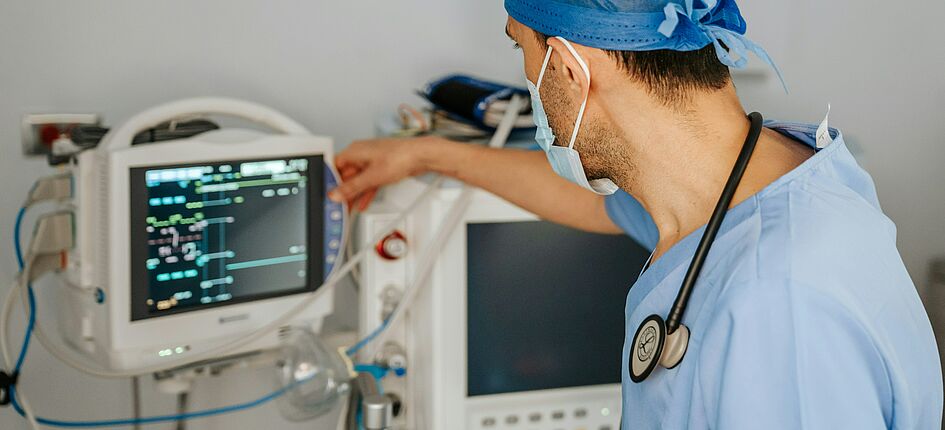
Researchers at the Centre for Molecular Cardiology at the University of Zurich are working on a model that can be used to create personalised therapies for cancer patients who have suffered a heart attack. Symbolic image: César Badilla Miranda/Unsplash
News
Dübendorf ZH/Lausanne/La Chaux-de-Fonds NE – The Swiss Federal Laboratories for Materials Science and Technology (Empa) and the Swiss Federal Institute of Technology Lausanne are investigating metallic glasses on the International Space Station (ISS) under the leadership of Antonia Neels. These are manufactured by the PX Group.
(CONNECT) Empa is conducting several tests with metallic glasses as part of the European Space Agency's (ESA) THERMOPROP project. In addition to researchers from Empa and the Swiss Federal Institute of Technology in Lausanne, an industrial partner is also on board, according to a statement from Empa. The PX Group from La Chaux-de-Fonds manufactures metallic glasses for the watch industry, which uses these hard, flexible materials for precise mechanisms and robust cases.
These glasses are created by the particularly rapid cooling of metals. They are as hard as quartz glass and their smooth surface is particularly resistant to scratches and corrosion. At the same time, they are also elastic. According to Empa, this makes them a sought-after material for applications in medicine and space technology.
Even better manufacturing processes require a more precise understanding of the physical properties. This is why the team, under the aegis of Prof. Dr. Antonia Neels, is investigating the physical properties of metallic glasses in their liquid form. This is only possible by eliminating the Earth's gravitational pull, because gravity would deform the round droplets and thus falsify the measurements. At Empa, Neels heads the Center for X-ray Analysis and at ESA the THERMOPROP project.
The scientist emphasizes the concrete applicability of this research: "The data from the experiments on the ISS flows into computer simulations, which in turn can be used to develop and optimize industrial processes. Our partner has already been able to incorporate our findings from the project into improved manufacturing processes."
But this knowledge also finds its way into spaceships and satellites. In a second project with ESA called SESAME, material samples were exposed to the harsh conditions in space on the outside of the European laboratory module Columbus. "We want to know whether a longer stay under space conditions changes the structure of the material. Because the structure defines the material properties," says Damien Terebenec, who is researching metallic glasses with Neels at Empa. Both experiments will probably run until the end of the ISS in 2030. The projects are being carried out as part of ESA's Program de Développement d'Expériences Scientifiques (PRODEX) and are also supported by the Swiss Space Office. ce/mm
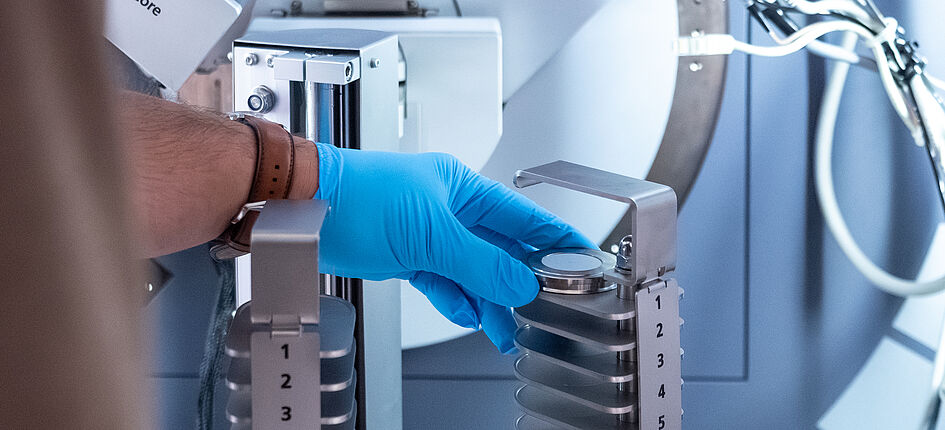
The twin of this sample is located on the outside of the ISS as part of the SESAME experiment. Image: Empa
News
Dietikon ZH/Budapest/Stockholm – The Dietikon-based drone supplier Xer Technologies has received approvals in Switzerland and Hungary for its drones designed for industrial applications. The company has also been taken over by Renewable Ventures Nordic AB from Stockholm, which has now changed its name to Xer Tech Holding AB.
(CONNECT) Xer Technologies from Dietikon has received an operating license for its X8 industrial drone in both Switzerland and Hungary for flights that are not carried out in direct line of sight (Beyond Visual Line of Sight/BVLOS). According to a press release, the approval in Hungary relates to the partner company TP Aviation Inspections.
The BVLOS operating licenses in Switzerland and Hungary confirm "that our X8 platform has reached a level of technical and regulatory maturity that allows it to be used commercially in several European markets," CEO Erik Herlyn is quoted as saying in the press release. "This strengthens our market position, lowers the hurdles for concluding new customer contracts and creates favorable conditions for scalable growth."
In a further announcement, Xer Technologies informs that the Swedish company Renewable Ventures Nordic AB has completed its acquisition of Xer Technologies and renamed itself Xer Tech Holding AB. ce/jh
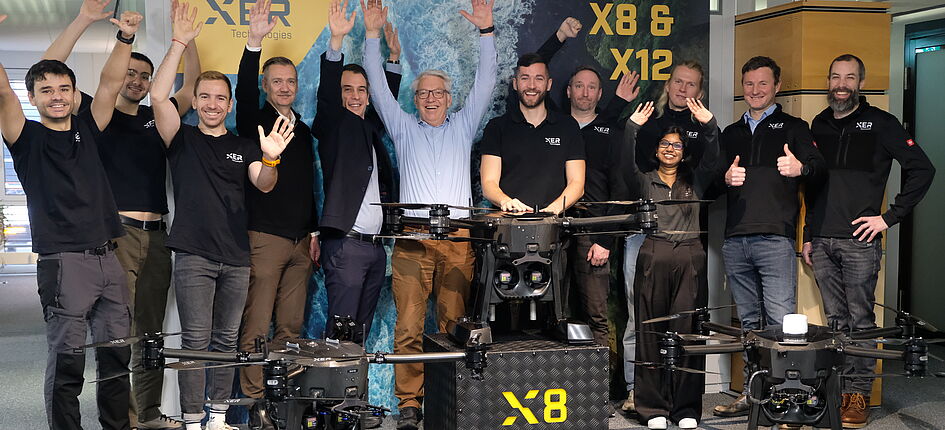
The Xer Technologies team receives approvals for its industrial drones in Switzerland and Hungary. Image: zVg/Xer Technologies AG
News
Schlieren ZH/Indianapolis – Repertoire Immune Medicines, based in Schlieren and the USA, is collaborating with Lilly in the development of tolerizing therapies for autoimmune diseases. In return, Repertoire will receive 85 million dollars upfront and potential milestone payments of 1.84 billion dollars.
(CONNECT) Repertoire Immune Medicines has entered into a strategic collaboration with Eli Lilly and Company, an international research-based pharmaceutical company based in Indianapolis, Indiana, USA, to develop tolerizing therapies for immune disorders, according to a press release. These therapies are intended to restore the dynamic balance of the immune system, which fights infections, in those affected. They are intended to enable a lasting remission of their diseases without the general immunosuppression that is common with currently available therapies.
The research is aimed at programmable immune drugs targeting T cells. Repertoire is pioneering the discovery of T cell receptor epitopes using its proprietary DECODE platform. The biotech company based in Cambridge, Massachusetts, and the Bio-Technopark Schlieren-Zurich is thus decoding the entire immune synapse.
Under the terms of the agreement, Repertoire will use its DECODE platform to discover and develop candidates for the development of tolerizing therapies. Repertoire manages the cooperation activities up to the nomination of the development candidates. Lilly is responsible for clinical development, manufacturing, approval and marketing. In return, Repertoire will receive an upfront payment of 85 million dollars and potential milestone payments of up to 1.84 billion dollars.
This offers Repertoire, according to Dr. Torben Straight Nissen, Chairman and CEO of Repertoire, "the opportunity to translate the unique discoveries of our DECODE platform into potentially paradigm-shifting new medicines for autoimmune patients by addressing the root cause of immune dysregulation and restoring their immune system to a healthier state." Lilly's leadership in immunology gives Repertoire "great hope for the impact our innovation can have in the hands of such an exceptional partner". ce/mm
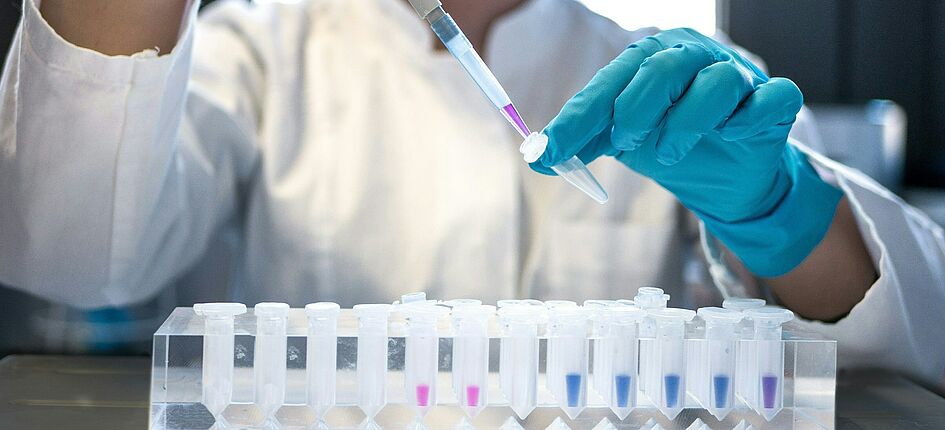
Repertoire Immune Medicines has entered into a strategic collaboration with the international research-based pharmaceutical company Eli Lilly and Company to develop tolerance-inducing therapies for immune disorders. Symbolic image: Julia Koblitz/Unsplash
News
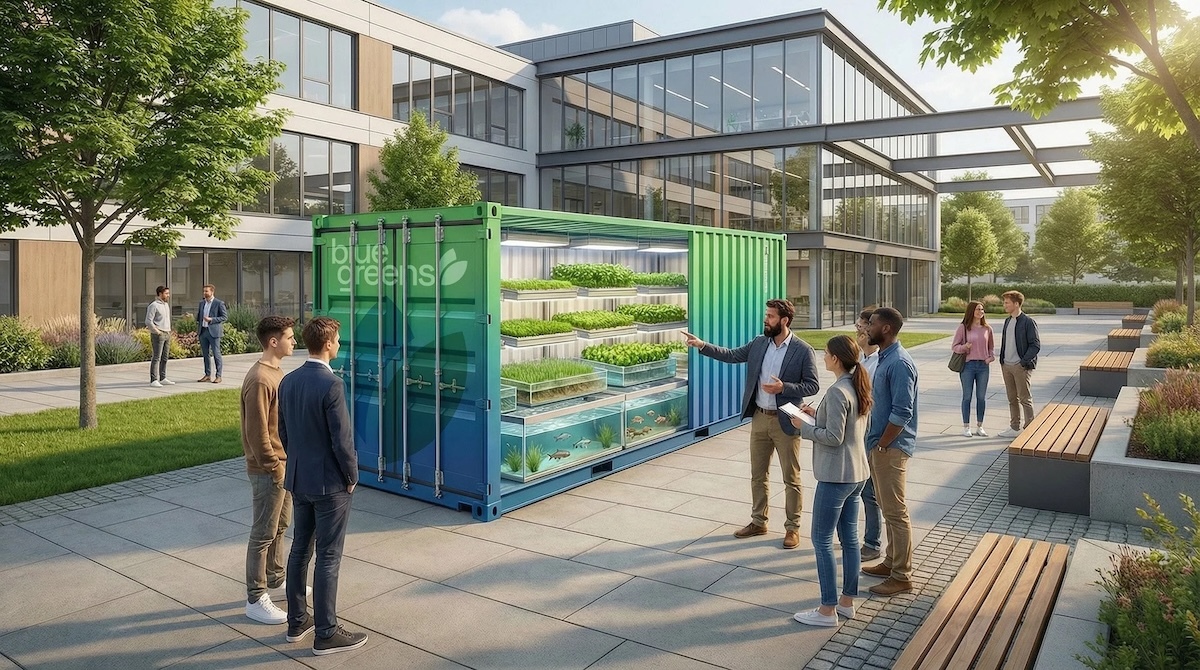
BlueGreens develops modular container solutions for sustainable food production according to the highest biodiversity standards. In the BlueGreens BOX, microgreens, herbs, vegetables, mushrooms, insects, fish and crustaceans are grown in completely closed systems – regardless of climate, season and location.
Local food production is seen as the key to greater security of supply, sustainability and resilience. But between urban areas, global supply chains and climatic extremes, traditional agriculture is increasingly reaching its limits. This is exactly where BlueGreens comes in: The Zurich-based company develops modular container solutions with which fresh food can be produced directly where it is needed - regardless of the weather, season and location.
At the heart of the concept is the so-called BlueGreens BOX: a modular production space in container design that uses completely closed cycles. Microgreens, herbs, vegetables, mushrooms, insects, fish and crustaceans grow in parallel in these systems - controlled by digitally monitored processes and without the use of problematic additives. Water, energy and nutrients remain in the system and waste is consistently avoided.
"In future, food production must not only be efficient, but also transparent and resilient," says Manuel Vock, founder and CEO of BlueGreens. "With closed, circular systems, we create predictable quality - regardless of global supply chains or climatic fluctuations."
The BlueGreens BOX is designed to be flexible and scalable. Individual containers can be combined to form larger clusters, adapted to different climate zones and configured for different usage scenarios - from gastronomy and retail to industrial areas, education and community projects.
Sensor technology, digital monitoring and precise control enable constant monitoring of hygiene, use of resources and yield in real time. At the same time, the ecological footprint is significantly reduced as long transportation routes, cold chains and volatile imports are eliminated.
"Sustainability must not be a model for doing without," says Vock. "Our approach shows that ecological responsibility and economic efficiency can go hand in hand - especially in urban areas."
A central element of the BlueGreens approach is proximity to consumption. Production takes place directly where it is needed: on company premises, in cities, at hotels or in remote regions and on islands. For restaurants and hotels, this means hyper-local freshness, for companies a visible commitment to sustainable management, and for educational projects a tangible learning platform for the circular economy and biodiversity.
Thanks to the modular design, both small pilot installations and larger systems are possible. BlueGreens accompanies partners from the initial idea through conception to ongoing operation - including technical and strategic support.
By combining food tech, the circular economy and modular system architecture, BlueGreens addresses key issues of the urban future. The company exemplifies a new generation of innovations that combine ecological impact, technological precision and economic scalability.
"Our vision is food production that is locally rooted and globally transferable," says Manuel Vock. "Zurich offers an ideal environment for this - as an innovation hub, testing ground and starting point for sustainable solutions with international potential."
You are currently viewing a placeholder content from YouTube. To access the actual content, click the button below. Please note that doing so will share data with third-party providers.
More InformationNews
Zurich – A first group of innovation centers from European universities are joining forces in the Relativity Collective to network their best tech talents. This highly selective start-up program is designed to bring them into contact with each other before their careers are fixed. ETH Zurich is also involved.
(CONNECT) Some of Europe's preeminent university centers for deep tech innovation are offering their best tech talent the newly created Relativity Collective. The program of this name is intended to bring together outstanding entrepreneurial talents across borders and open up new, more ambitious horizons for them. "With the right environment, the best will be able to skip the start-up phase and directly build a European scale-up with global impact," said Alexander Ilic, co-founder of the participating ETH AI Center at the Swiss Federal Institute of Technology in Zurich (ETH), in a press release.
According to the report, the Relativity Collective start-up program is being set up against the backdrop that while Europe produces exceptional talent, networks for young entrepreneurs are largely local. "As a result, many of the peer relationships that most influence ambition, speed and scale are formed too late - after the founders' reference points and trajectories are already established." Accordingly, the program is designed as a targeted intervention in this early phase.
The first group of up to 25 future founders brings together students and doctoral students from six universities. In addition to ETH, these are the Finnish Aalto University in Espoo, the Center for Digital Technology and Management, a joint research and teaching institute of the Technical University of Munich and the Ludwig Maximilian University of Munich, the KTH Royal Institute of Technology, Sweden's largest technical university in Stockholm and EnSpire Oxford, the Entrepreneurship Institute of the University of Oxford.
This group will meet in March 2026 for a three-day face-to-face program. The entire programme is organized by Rise Europe, an alliance dedicated to strengthening European start-up ecosystems. The initiative reflects a shared belief that building the next global technology giant in Europe requires more than just capital and infrastructure. ce/mm

The Swiss Federal Institute of Technology Zurich participates in Relativity Collective, a programme that connects top tech talent from European universities. Image: Gian Marco Castelberg /ETH Zurich
News
Schlieren ZH/Copenhagen – InterAx from Schlieren is to develop a drug candidate against obesity together with the Danish company Alveus Therapeutics. In return, InterAx receives an advance payment and, depending on progress, further milestone payments.
(CONNECT) InterAx Biotech and Alveus Therapeutics, which has offices in Copenhagen and Philadelphia, Pennsylvania, will jointly develop a differentiated small molecule drug candidate for metabolic diseases, initially for obesity. According to a press release, the two companies have concluded a license agreement for this purpose. It includes an upfront payment and future potential milestone payments of an undisclosed amount for development, approval and commercialization.
InterAx is making its deep signal discovery platform available for this project. It was developed to optimize the signal profile of drug candidates. InterAx investigates the effects of treatments on diseases before the start of preclinical studies. This analysis is traditionally not available for very early programs. Alveus contributes its extensive research and development expertise in obesity, diabetes and cardiometabolic diseases.
The joint drug candidate is intended to overcome the limitations of current obesity drugs, InterAx CEO Andrew Roberts is quoted as saying. "Our Deep Signal platform is specifically designed to deal with the complexity of GPCR signaling. Alveus' extensive metabolic expertise makes the company the ideal partner to bring this therapeutic drug candidate to patients."
G protein-coupled receptors, or GPCRs for short, are the largest family of membrane receptors that transmit extracellular signals such as hormones and neurotransmitters into the cell interior. The Deep Signal platform focuses on these GPCR small molecules and decodes complex biological processes by uncovering disease mechanisms at the level of cellular signaling.
"InterAx's unique platform integrates drug chemistry, protein structure, cellular signaling and therapeutic efficacy - the essential expertise for the effective and efficient development of highly differentiated candidates," said Jacob Jeppesen, Chief Scientific Officer and Head of Research and Development at Alveus. "We look forward to applying this unique approach in our joint program." ce/mm
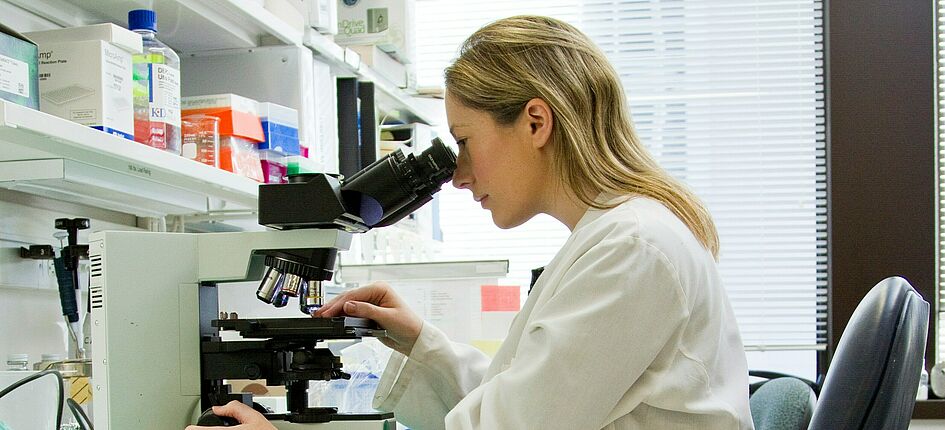
InterAx Biotech and Alveus Therapeutics intend to jointly develop a differentiated small molecule drug candidate for metabolic diseases. Symbolic image: National Cancer Institute/Unsplash
News
Zurich – The Technology Fund has provided a guarantee for the Zurich start-up Scandens. The spin-off of the Swiss Federal Institute of Technology in Zurich offers software solutions for energy-related real estate analysis. They show which renovations are worthwhile in terms of return on investment and the environment.
(CONNECT) Scandens can finance upcoming entrepreneurial developments with a guarantee from the Technology Fund. According to a statement from Dominik Bucher, co-founder and CCO of the Zurich-based cleantech company, receiving this guarantee confirms its approach: "Enabling the right investment decisions for real estate portfolios - economically sound and future-proof" and at the same time making the best possible decisions for the climate and the environment. "We are delighted to be part of the technology fund," says Bucher.
Founded in 2021 as a spin-off of the Swiss Federal Institute of Technology in Zurich, the company launched software in 2023 that makes it easier to plan and implement energy-efficient building renovations. With this internet application based on artificial intelligence, owners of real estate portfolios as well as private homeowners can check whether and which renovation measures make economic and ecological sense.
According to a press release from Scandens, the software displays over 500 renovation combinations and creates a plan that serves as the basis for implementation. This should save time and promote sustainable decisions.
With the Technology Fund, the federal government promotes innovations that reduce greenhouse gases or resource consumption, promote the use of renewable energies and increase energy efficiency. Guarantees make it easier for innovative companies to take out loans. The guarantee is granted to banks or other suitable lenders. A maximum of CHF 25 million per year will flow from the proceeds of the CO2 levy into a technology fund to cover guarantee defaults. ce/mm
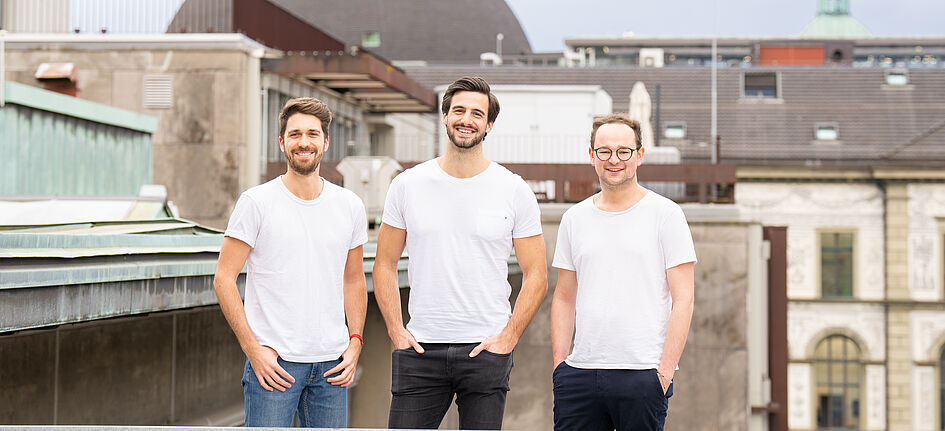
(from left to right) Co-founders Dominik Bucher, Diego Sigrist and Kuba Szczesniak receive a guarantee from the Technology Fund for Scandens. Image: Scandens AG
You need to load content from reCAPTCHA to submit the form. Please note that doing so will share data with third-party providers.
More InformationYou are currently viewing a placeholder content from Turnstile. To access the actual content, click the button below. Please note that doing so will share data with third-party providers.
More InformationYou are currently viewing a placeholder content from Vimeo. To access the actual content, click the button below. Please note that doing so will share data with third-party providers.
More InformationYou are currently viewing a placeholder content from YouTube. To access the actual content, click the button below. Please note that doing so will share data with third-party providers.
More InformationYou need to load content from reCAPTCHA to submit the form. Please note that doing so will share data with third-party providers.
More Information