News
Zurich – The UZH Foundation has raised 75 million Swiss francs in private donations for the University of Zurich (UZH) in 2025. One of the major donors is the Emil Frey Group. With Claudia Coninx-Kaczynski and Denise Tonella, the Foundation Board has gained two well-connected new members.
(CONNECT) In 2025, the UZH Foundation had its most successful year since its establishment in 2012. According to a press release, the University of Zurich Foundation achieved a new donation record in 2025 with 75 million francs in private third-party funding.
Major contributions include a donation of 12.7 million Swiss francs from the Emil Frey Group for the new UZH Center for the Future of Personal Mobility. The Werner Siemens Foundation in Zug has provided 8 million Swiss francs for the SonoGuard - Deep Tissue Wound Monitoring with Ultrasound Spectroscopy project at the Ingenuity Lab, which focuses on high-resolution ultrasound technology for medicine. The Citrin Foundation from Singapore has donated over 5 million Swiss francs to the Urea Cycle Disorders Translational Center at the University Children's Hospital Zurich.
This brings the total amount of all private third-party funds raised since 2012 to 440 million francs, raised by 2,700 private individuals, companies and foundations. "Because they want to make a difference to society, because they want to help shape the future," Annelise Alig Anderhalden, CEO of the UZH Foundation, is quoted as saying in the press release. "Research at UZH makes a lasting contribution to finding solutions for current and future challenges."
In 2025, the UZH Foundation was also able to recruit two well-connected new members to its Foundation Board, Claudia Coninx-Kaczynski and Denise Tonella. ce/ug
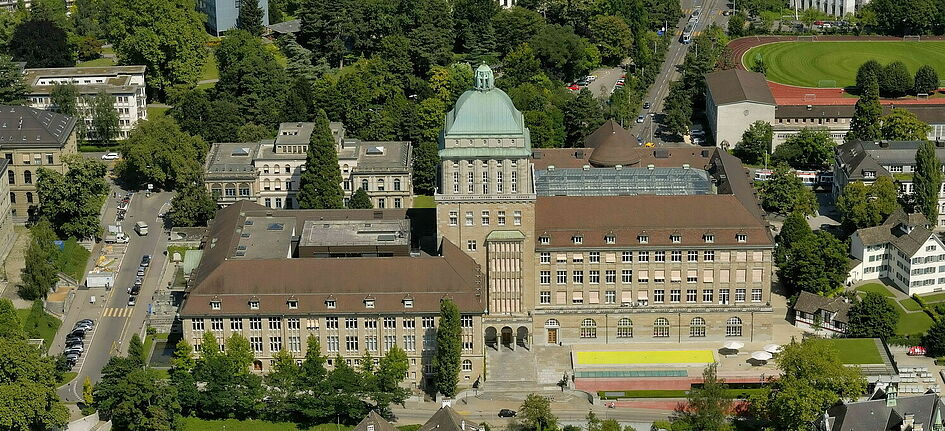
The University of Zurich Foundation raised a total of 75 million Swiss francs in private third-party funding in 2025; aerial view of the main building. Image: Manfred Richter/University of Zurich
News
Zurich – The population of the Limmat Valley has grown by 1 percent per year over the past decade, while the number of people in employment has increased by 2.5 percent. Motorized private transport has fallen by 10 percent. Public transport grew by 14 percent, according to the Limmattal traffic monitoring system.
(CONNECT) The Limmat Valley is one of the most dynamic regions in Switzerland. The population of the Limmat Valley between Schlieren ZH and Würenlos AG grew by 9,200 to 108,000 people between 2015 and 2024, or by 1 percent per year. At the same time, the number of employees grew by 9500 to 68,500, an annual increase of 2.5 percent.
Nevertheless, according to the Limmattal traffic monitoring, motorized private transport has decreased. Traffic at 20 counting points on the cantonal roads was 28,000 vehicles lower in 2024 than in 2015, a decrease of 10 percent.
This was made possible by an increase in public transport. Around 29,000 more passengers per day were counted in 2024 than in 2016, an increase of 14 percent. This is thanks to both the S-Bahn as the backbone of public transport and the Limmattal line, which opened in 2019 and will be extended to Killwangen in 2022.
"The Limmattal line has triggered a significant shift from motorized private transport to public transport and thus created a sustainable overall transport solution in the Limmat Valley," said Carmen Walker Späh, Head of the Department for Economic Affairs, in the press release on the traffic monitoring. ce/ug

The Limmattalbahn has contributed significantly to the growth of public transport and the decline in car traffic in the Limmattal valley. Image: Aargau Verkehr (AVA)
News
Dübendorf ZH – FireDrone is building the first heat-resistant drone for fire operations and inspections in industry. The flying robot developed at the Swiss Federal Laboratories for Materials Science and Technology provides data and images from areas where the health and lives of emergency personnel are at risk.
(CONNECT) The first heat-resistant drone is set to help firefighters in particular make quick and informed decisions in the future. The flying robot was developed at the Swiss Federal Laboratories for Materials Science and Technology (Empa). The start-up FireDrone is continuing the project. The Dübendorf-based spin-off from Empa and the Swiss Federal Institute of Technology in Lausanne receives support from various funding programs such as Venture Kick, Gebert Rüf Stiftung and Innovation Booster Robotics.
"Today, firefighters have to enter burning buildings themselves to locate hazardous substances or missing persons," says Fabian Wiesemüller from Empa's Laboratory for Sustainability Robotics and co-founder of the start-up company, quoted in a report from his research institute. "With the FireDrone, we can send a drone into hazardous areas for the first time to do just that and thus significantly minimize the risk during firefighting operations." In the future, the FireDrone could also inspect cement or steel works and waste incineration plants during operation.
The FireDrone flies at temperatures of up to 200 degrees Celsius. It is protected by patented insulation made of ultra-light aerogel. Empa has spent years researching their chemical composition - from the selection of starting materials to polymerization and solvent processes. The FireDrone also has an internal temperature management system that continuously cools and monitors the electronics.
The team is also developing the FireDrone Nest, a mobile, thermally insulated docking and maintenance station. "The step from research project to practice would not have been possible without Empa's many years of support," says Wiesemüller. "Now it's about putting the technology into real-life applications." Tests in real environments are already underway. ce/mm
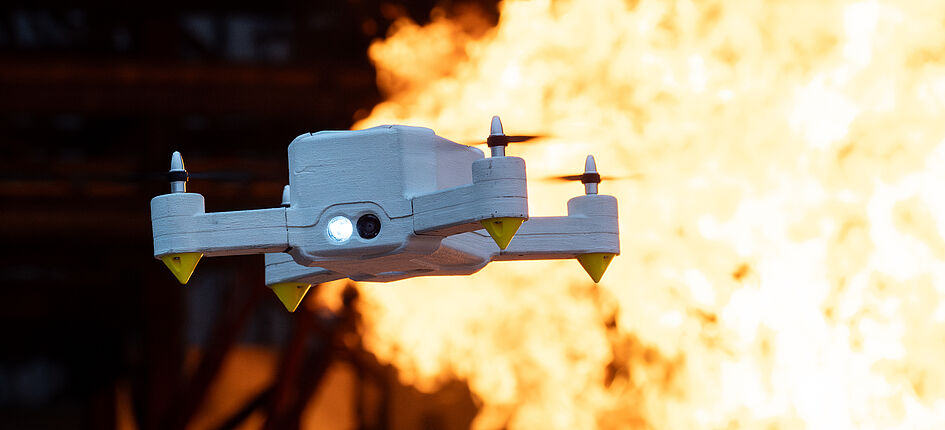
The FireDrone is the first drone that can withstand extreme heat. Image: Empa
News
Winterthur – The Winterthur Cluster Initiative has established itself as a central hub for innovation and growth in the region. That is the conclusion for 2025 of the initiators, the Winterthur Chamber of Commerce, Technopark Winterthur and House of Winterthur.
(CONNECT) The sponsors of the Winterthur Cluster Initiative can look back on an "extremely successful year 2025", according to their press release. In an economically challenging environment, the initiative has "established itself as a central hub for innovation and growth in the region". The initiators - the Chamber of Commerce and Employers' Association Winterthur (HAW), Technopark Winterthur and House of Winterthur - are delighted with the stable networks and consistent cooperation between business, educational institutions and research facilities. This was reflected in "valuable synergies" at events and joint projects.
The cluster initiative was launched in 2020 and covers three sectors: energy, healthcare and machinery. They are intended to strengthen the innovation activities of the participating companies through the active exchange of knowledge and experience and targeted development projects, thereby securing prosperity in the region.
Emission-free aviation, the digital product passport and green hydrogen were among the topics discussed at various well-attended events in 2025. In addition, "groundbreaking advances" in axial flux motors and the potential of solid-state batteries for electromobility were presented at the Startup Nights.
The fifth award ceremony for the best student work of the year, which is endowed with 10,000 francs, is described as a highlight of the year. It is awarded by the Johann Jacob Rieter Foundation of the Winterthur spinning technology company Rieter and the HAW.
In 2026, those responsible for the three clusters are planning to coordinate their programs even more closely. The aim is to make optimum use of interfaces and promote cross-thematic innovations. ce/mm
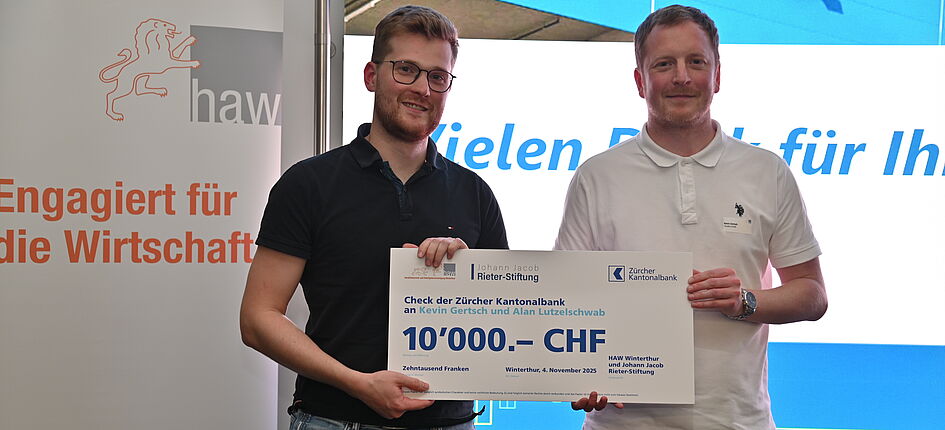
The Winterthur Cluster Initiative once again honoured the best student work in 2025, including that of Alan Lützelschwab (left) and Kevin Gertsch. Image: Winterthur Chamber of Commerce
News
Zurich/Dübendorf ZH/Lausanne – At the first IMD AI Update in Zurich, numerous executives from the Swiss economy presented thought models and strategies on artificial intelligence (AI). The event was organized by echo originals with the management institute IMD as a knowledge partner.
(CONNECT) 350 managers from business and research took part in the first IMD KI Update in Zurich. On January 20th, they learned about thought models, decision-making mechanisms and strategies from numerous colleagues who appeared as speakers. The event concluded with a speech by German philosopher and author Richard David Precht. This new and annual series of events is organized by echo originals from Dübendorf and the International Institute for Management Development (IMD) in Lausanne.
Her conclusion of the IMD AI Update 2026 is: "Artificial intelligence must be in people's heads". Neuroscientist and AI investor Pascal Kaufmann, for example, was certain that "by 2030, science will have cracked the brain code", according to the organizers' press release. A so-called brain port then acts as an interface in the brain. What will count most in AI in the future is trust. He sees Switzerland as one of the leaders in certain areas, thanks in part to the two Federal Institutes of Technology in Zurich and Lausanne.
CEO Daniel Bischofberger explained how Accelleron, the manufacturer of exhaust gas turbochargers for large diesel engines from Baden AG, uses AI to create value: "We in management create the framework, the team creates the return, the result." The aim now is to think more holistically in the future and integrate AI into the business model.
According to Nimrod Malinas, founder and CEO of the start-up Robonnement from Altstätten SG, which rents out robots, the changes brought about by AI are so crucial that they are clearly the responsibility of the CEO. Barnaby Skinner from the NZZ Media Group complained that instead of having users on their own sites via Google search, "AI is stealing our content" and taking users away from the media. Now it is a matter of "recapturing the data and marketing it ourselves again". Entrepreneur and board member Cornelia Diethelm from the Centre for Digital Responsibility, the think tank for digital ethics, also pointed out that AI is not objective and neutral and that company management must take responsibility for the shadow AI used by employees without authorization.
Richard David Precht continues to see humans in the foreground because AI is neither emotional nor imaginative. That is why morally gifted people are still needed. But he warned: "We don't know what political form we will have. We could end up with techno-feudalism." The next IMD KI Update will take place on March 2nd, 2027 in Zurich. Tickets are already available at a special price. ce/mm
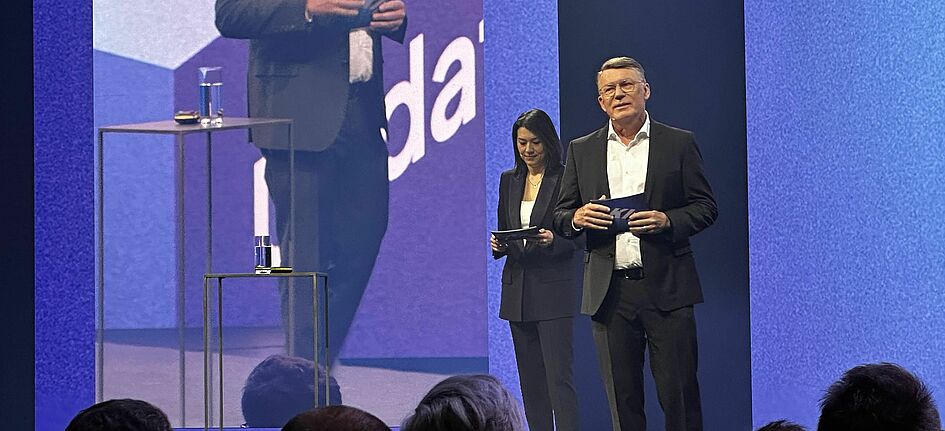
Stefan Michel, Professor of Management and Dean at the IMD Business School, is co-initiator of the first IMD AI Update Event in Zurich, together with the Echo Group. Image: zVg/International Institute for Management Development (IMD)
News
Eschlikon TG/Zurich – Corvaglia and FluidSolids are entering into a strategic partnership. The Thurgau-based provider of closure solutions for packaging and the Zurich-based specialist for compostable plastics want to promote the production and marketing of bio-based materials worldwide.
(CONNECT) The Corvaglia Group, based in Eschlikon, and FluidSolids AG, based in Zurich, want to jointly launch bio-based material alternatives for the global packaging industry. According to a press release, they are entering into a strategic partnership for this purpose.
Corvaglia is contributing its expertise in development, mold construction and injection molding technology to the partnership. Founded in 1991, the specialist for closure solutions for the packaging industry claims that its 300 employees produce around 20 percent of PET bottle closures for the refreshment industry.
FluidSolids, founded in 2011, specializes in the production of fibre-based, home-compostable materials. It uses organic side streams for the production of high-performance alternatives to petroleum-based plastics.
Corvaglia licenses the technology from FluidSolids. In this way, the company aims to open up new markets and offer more sustainable solutions for existing products. Thanks to material production, it can extend its own value chain.
"Our customers expect solutions that are technologically mature and sustainable in the long term," said Chairman of the Board of Directors Romeo Corvaglia in the press release. "The partnership with FluidSolids allows us to combine new material technologies with our industrial expertise and thus respond specifically to the future requirements of the packaging industry."
The partnership is also an important step forward for FluidSolids. "The strategic partnership with corvaglia creates concrete added value for our customers and enables us to scale our technology internationally and provide comprehensive technical support," says Beat Karrer, founder and CEO of FluidSolids. ce/ug
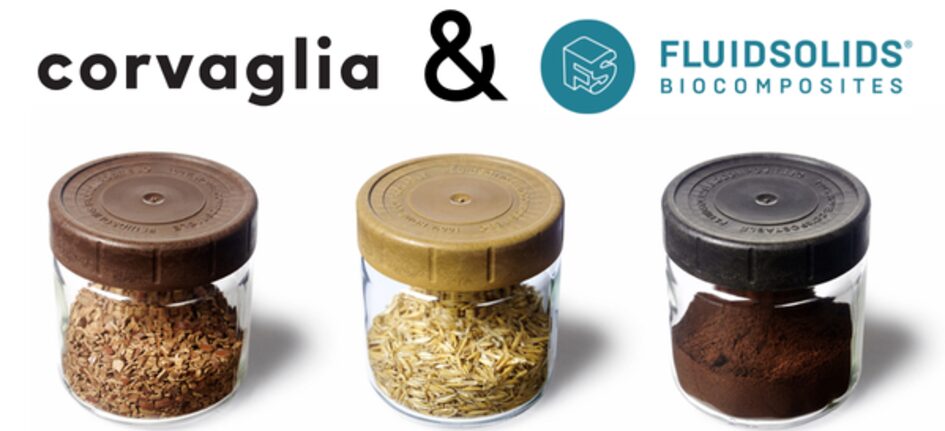
Corvaglia and FluidSolids are jointly launching bio-based materials for the packaging industry. Image: zVg/Corvaglia Holding AG
News
Russikon ZH – LAEMMLE Chemicals AG has developed a new synthetic bio-hydraulic oil. Biomass was used as the raw material for the sustainable product instead of fossil raw materials. After use, the oil is completely biodegradable.
(CONNECT) LAEMMLE Chemicals AG, based in Russikon, has developed a new fully synthetic hydraulic oil. According to a press release, the product called ROXOR TERRA PRIME SYNTH 46 is produced almost entirely from biomass instead of fossil raw materials. The product therefore meets the latest technical, ecological and regulatory requirements.
The bio-hydraulic oil is rapidly biodegradable and non-toxic. "A bio-hydraulic oil that not only protects the environment in the event of an oil spill, but also builds on the circular economy right from the raw materials stage, is a first in the oil industry," Silvan Lämmle, CEO Marketing and Sales, is quoted as saying in the press release. The oil is ISO 15380-certified and has no hazard symbols. In addition to its high technical performance, it is also elastomer-compatible. This means that hose and seal damage can be largely avoided. Due to its good lubricity, the addition of additives is not necessary. According to the company, fossil raw materials are conserved by up to 46 percent and carbon dioxide emissions are reduced by 25 percent. According to the press release, high oxidation stability contributes to a long service life and thus to high economic efficiency. ce/ww
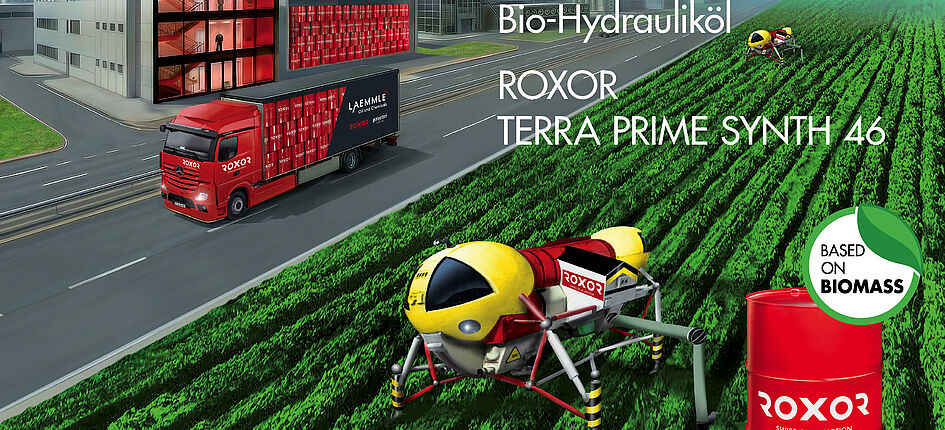
LAEMMLE Chemicals AG has developed a new fully synthetic bio-hydraulic oil. Image: zVg/LAEMMLE Chemicals AG
News
Dübendorf ZH – The Swiss Federal Laboratories for Materials Science and Technology (Empa) is researching new methods for measuring batteries as part of the EU HyMetBat project. These methods will be used to develop sustainable and recyclable batteries with high performance.
(CONNECT) Researchers in the High-Performance Ceramics department at the Swiss Federal Laboratories for Materials Science and Technology (Empa) in Dübendorf are working on new measurement methods that can be used to visualize mechanical and electromechanical changes in batteries under operating conditions. The new methods will be used to develop new sustainable and recyclable batteries, according to a press release.
The research is part of the EU project HyMetBat (Hybrid metrology for sustainable and low-carbon footprint battery materials). The project runs until 2028. The researchers in Dübendorf are investigating the causal chain between material selection, material synthesis, processing, electrode production, cell construction, operation and failure of batteries. Methods such as neutron and X-ray analyses are combined with electroanalytical procedures.
"We want to understand batteries during charging and discharging - to record their stress ECG, so to speak," Artur Braun, physicist and group leader in the High-Performance Ceramics department at Empa, is quoted as saying in the press release. "To do this, we combine state-of-the-art radiation sources with electrochemical methods and theoretical calculations." Among other things, the investigations serve to support project partners such as the Federal Office of Metrology (METAS) in quantitatively classifying and metrologically validating processes. Empa is part of a consortium of 30 partner institutions coordinated by the German Physikalisch-Technische Bundesanstalt (PTB) in Berlin. ce/ww
Researchers at the High-Performance Ceramics Department of the Swiss Federal Laboratories for Materials Science and Technology (Empa) in Dübendorf are working on new measurement methods that can be used to visualise mechanical and electromechanical changes in batteries under operating conditions. Symbolic image: Roberto Sorin/Unsplash
News
Zurich/Hagen im Bremischen – Swiss Learning Hub AG has been honored with the eLearning Award 2026 for its SwissPOD training. The digital program was developed together with Swisstransplant to support specialist and nursing staff.
(CONNECT) The Swiss Learning Hub has been awarded the eLearning AWARD 2026 in the Knowledge Standardization category, according to a press release. The award went to the digital SwissPOD training course. It was developed in partnership with Swisstransplant and is aimed at medical professionals involved in organ and tissue donation.
The prize is awarded by the "eLearning Journal" of the north German Siepmann Media. According to the publisher, 300 entries were received in its 16th year. 73 winning projects received awards in the various categories.
SwissPOD training is about quality assurance in medical documentation processes. It reportedly combines practical scenarios, interactive elements and audiovisual learning media to not only impart theoretical knowledge to specialists and nursing staff, but also to provide them with targeted support in the safe and consistent recording of clinical data. The aim is to increase national transparency and medical traceability in the field of organ donation in the long term.
According to the Swiss Learning Hub, the SwissPOD training shows "how innovative further training can relieve the burden on everyday clinical practice, standardize processes and strengthen patient safety". The company also won an eLearning AWARD last year. At the time, his ESG training was recognized in the Innovation/Corporate Sustainability category. ce/mm
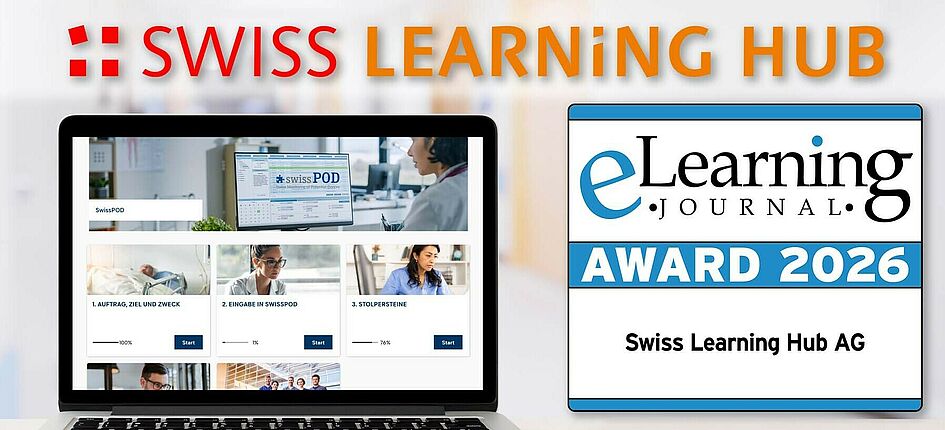
The Swiss Learning Hub has been awarded the eLearning AWARD 2026 in the category of knowledge standardisation. Image: Swiss Learning Hub AG
News
Zurich – With its TRANSFORM funding line, the University of Zurich (UZH) is providing start-up funding for two new interdisciplinary projects. They are called CrimeLab and Responsible AI and combine and expand the various topic-related research projects at the university.
(CONNECT) Two new projects are receiving financial support from UZH's university funding program TRANSFORM. According to its press release, the CrimeLab project will receive CHF 1.5 million in funding over the next four years. The CrimeLab will be a transdisciplinary center for crime research. It is intended to bundle the research that has been carried out for some time at various faculties of UZH, as well as in non-university institutions such as the Zurich Forensic Science Institute, the Zurich prison system and the city and cantonal police.
"However, it was often left to chance whether the various research groups knew about each other and whether they pooled their resources in interdisciplinary projects," law professor Thierry Urwyler is quoted as saying. He is a member of the CrimeLab Board of Directors. Urwyler is convinced that a common platform and a common data pool are needed to create such links. One of the four main research areas deals with new forms of crime, such as criminal law and autonomous mobility or new types of crimes involving artificial intelligence (AI) such as phishing and ransomware attacks.
The Responsible AI project aims to ensure that AI is used responsibly. It will receive CHF 1.7 million from the TRANSFORM funding program. This project also aims to bundle, better network and make visible the expertise available in many university areas. It focuses on transparent, fair and socially responsible AI systems and the associated ethical, legal and social issues.
A professorship is to be created at the Department of Informatics and the Department of Mathematical Modeling and Machine Learning. "In view of the dominance of large tech companies, universities play an important role as independent bodies for critical and responsible AI research," says professor Reinhard Furrer, one of the project leaders. ce/mm
UZH supports the CrimeLab and Responsible AI projects to strengthen crime research and responsible AI. Symbolic image: Tara Winstead/Pexels
News
Schlieren ZH/Villigen AG – GratXray AG is opening a new development laboratory in the Healthechpark Zürich-Schlieren (HTPZ). The new laboratory is intended to accelerate the development of the company’s own breast CT system senoa and make the early detection of breast cancer more accessible.
(CONNECT) GratXray AG, based in Villigen, has announced the opening of its new development laboratory in the Healthtechpark Zurich-Schlieren in a press release. The company is a spin-off of the Paul Scherrer Institute(PSI) and the Swiss Federal Institute of Technology in Zurich (ETH) and has set itself the goal of making reliable early breast cancer detection accessible to all women. The new laboratory will now accelerate the development of senoa, GratXray's breast computed tomography (CT) system.
According to the company, senoa is revolutionizing breast cancer diagnostics with pain-free, high-precision 3D imaging. Senoa dispenses with the compression required for conventional mammography and prioritizes patient comfort. This will make breast cancer imaging more accessible, especially for women who have previously avoided it out of fear or discomfort.
GratXray is also committed to innovation in medical imaging as a whole. Together with research partners, the company develops modern technologies to improve its devices and research new clinical applications. ce/nta
GratXray AG has opened a new development laboratory in the Healthtechpark Zurich-Schlieren. Symbolic image: Julia Koblitz/Unsplash
News
Zurich/Zug – The Zug-based real estate investment manager Empira will be relying on Optiml’s Real Estate Decision Intelligence platform in the future. The aim is to consistently implement its transition-to-green investment strategy and secure long-term value creation.
(CONNECT) Empira wants to use Zurich-based OptimI 's Real Estate Decision Intelligence (REDI) to strengthen data-based decision-making in the areas of investments, funds, asset management and sustainability management. According to a press release, the aim is an integrated approach that holistically combines financial performance, climate impact and regulatory requirements. Optiml's REDI platform supports Empira in making informed investment decisions, developing science-based decarbonization pathways at fund and asset level, and planning capital-efficient investment and remediation strategies.
Empira uses the platform in particular as part of its Transition-to-Green fund, which targets energy-inefficient properties with repositioning potential and uses government incentives for green renovations and comprehensive asset management to create high-quality, sustainable residential and office properties
"Digital decision intelligence is essential today to achieve both stable returns and credible decarbonization from the moment we receive an initial investment memorandum," said Torsten Bergmann, Vice President Investment Advisory at Empira. "Optiml provides us with the analytical depth we need to deliver consistent, scalable impact across all our funds and supports our transition-to-green strategy with reliable decision-making processes."
The introduction of the OptimI solution underlines the industry trend towards data-driven wealth optimization, in which sustainability and financial performance are evaluated holistically, according to the press release. The real estate sector is responsible for around 40 percent of total energy-related CO2 emissions worldwide. Industry players are therefore increasingly obliged to present credible and financially robust decarbonization strategies. ce/yes

Real estate investment manager Empira intends to use Zurich-based OptimI's Real Estate Decision Intelligence (REDI) to strengthen data-driven decision-making in the areas of investment, funds, asset management and sustainability management. Symbolic image: Sean Pollock/Unsplash
You need to load content from reCAPTCHA to submit the form. Please note that doing so will share data with third-party providers.
More InformationYou are currently viewing a placeholder content from Turnstile. To access the actual content, click the button below. Please note that doing so will share data with third-party providers.
More InformationYou are currently viewing a placeholder content from Vimeo. To access the actual content, click the button below. Please note that doing so will share data with third-party providers.
More InformationYou are currently viewing a placeholder content from YouTube. To access the actual content, click the button below. Please note that doing so will share data with third-party providers.
More InformationYou need to load content from reCAPTCHA to submit the form. Please note that doing so will share data with third-party providers.
More Information