News
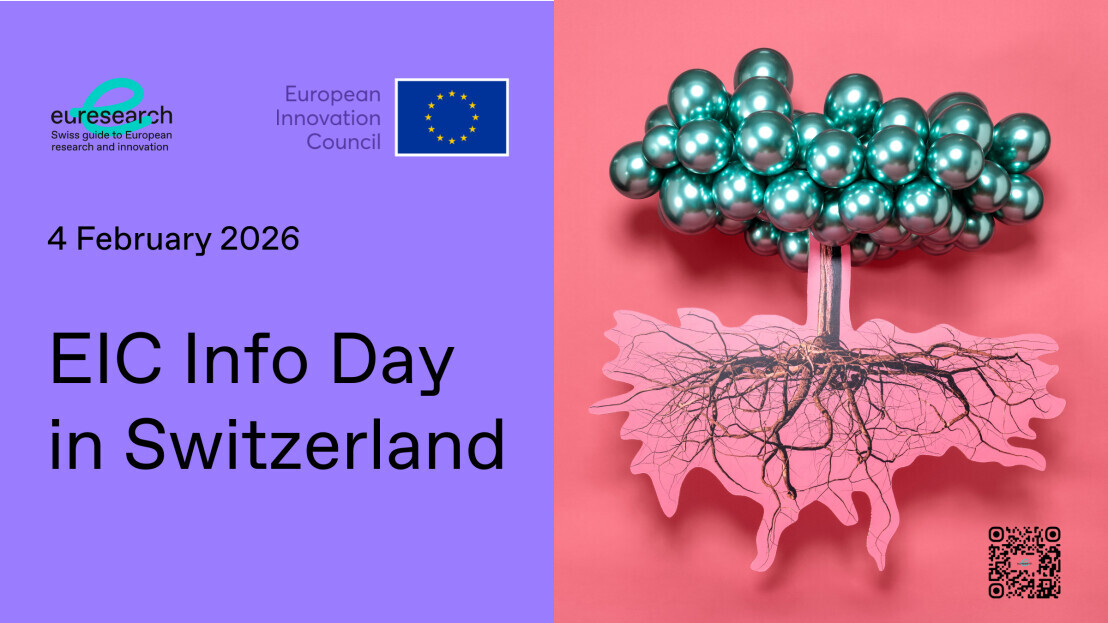
Euresearch, in collaboration with the European Innovation Council (EIC), will host the EIC Info Day in Switzerland on 4 February 2026 at the Kursaal in Bern.
With a budget of € 1.4 billion for 2026, the EIC programme, which is part of Horizon Europe, offers great opportunities for Swiss-based researchers and innovators to access Europe’s most ambitious funding instruments for scientific and technological breakthrough development, deep-tech innovation, and scale-up financing.
This full-day event will cover the entire EIC portfolio — from early-stage ground-breaking research to market-ready deep-tech innovation and scale-up support — delivered with insights directly from experts of the European Innovation Council.
Join us to gain strategic guidance and practical advice, learn from proven success stories and engage in thematic networking sessions.
The event will be held in English. A provisional agenda is presented below with speakers details to be confirmed shortly.
For further information, please contact eic@euresearch.ch
News
Zurich – Cybersecurity specialist Exeon Analytics launches the new Exeon.UEBA solution. This detects internal and identity-driven threats by analyzing the behavior of users, applications and company resources.
(CONNECT) Exeon Analytics presents Exeon.UEBA, a solution for analyzing user, entity and application behavior that protects organizations from identity-driven threats, according to a statement. The UEBA (User and Entity Behavior Analytics) solution supplements the established Network Detection & Response solution Exeon.NDR with a further layer of security.
Exeon.UEBA focuses on suspicious behavior within legitimately used systems by analyzing log data from user and administrator identities, enterprise applications and service accounts. The solution evaluates events as a coherent pattern of behavior and processes large volumes of log data in real time using stream-based analysis.
The main advantage of the UEBA solution is that it reduces the workload of security operations teams, according to the press release. Intelligent correlation reduces false positives and lowers the risk of false negatives, as even complex, multi-stage attack patterns are recognized. Exeon.UEBA also uses intelligent data handling to reduce SIEM (Security Information & Event Management) costs by only forwarding security-relevant results to downstream SIEM or SOAR (Security Orchestration, Automation and Response) systems.
"Attacks today use trust instead of vulnerabilities. With Exeon.UEBA, we create transparency about user and application behavior and enable security teams to detect internal and identity-based threats early, efficiently and with significantly less effort," says Gregor Erismann, Co-CEO of Exeon Analytics. ce/yes

Gregor Erismann, Co-CEO of Exeon Analytics, is launching his company's new UEBA solution to defend against identity-based attacks. Image: zVg/Exeon Analytics AG
News
Zurich/Baden – The Z-Forum on sustainability and innovation presented scalable solutions for sustainable development over two days in Zurich and Baden. National and international experts have focused on resilience and used Switzerland as a role model.
(CONNECT) The Z-Forum brought together researchers and practitioners for two days in Zurich and Baden to discuss a new approach to achieving sustainability goals. In particular, they have identified opportunities that lie in the link with the concept of resilience. This refers to the ability of systems to cope with stress. If this is integrated into the design of solutions, it opens up great potential for sustainable, scalable and economical solutions. This was evident in the areas of cyber security, energy, agriculture and healthcare.
"There was a consensus among the participants that we should move away from a purely normative understanding of sustainability," explained Philipp Aerni. He is the Director of the Center for Corporate Responsibility and Sustainability (CCRS), which organized the conference together with the Switzerland Innovation Park Central in Risch-Rotkreuz ZG, the city of Baden and the Basel-based MDPI Sustainability Foundation . It was also supported by the Zurich Chamber of Commerce (ZHK), the Swiss Federal Institute of Technology in Zurich (ETH) and the Universities of Zurich, Basel and Lucerne. According to Aerni, this broad partnership approach was deliberately chosen to bring together and strengthen innovation ecosystems.
According to ZHK Director Raphael Tschanz, resilience is playing an increasingly important role for economic areas today. "At the Z-Forum, we are discussing these issues at exactly the right time," he said. Practical examples from Switzerland, such as Zurich, Zug or Baden, were a recurring focus, as were international projects that were examined for application in Switzerland. "The two-day exchange among international experts was very inspiring," summarized Thomas Lütolf, Head of the City of Baden's Business Contact Point and Baden 4.0.
Specifically, the development of agriculture, for example, was up for debate. Louise Fresco, the former president of Wageningen University, called for subsidies for innovation. If fossil resources, including by-products, are no longer available in the near future, the importance of the agricultural sector will also increase. "I've been wondering for a long time where the blockchain for food waste is," says Fresco.
This also involved a comparison of innovation approaches. Author Keyu Jin discussed how decentralized the ecosystem in China is on closer inspection - an aspect of the resilience of the local economy. According to Ian Roberts, CTO of the Swiss Bühler Group, Europe would do well to learn from the Chinese perspective on scaling. Like Nora Teuwsen, Head of ABB Switzerland, he represented the Swiss economy and presented how resilience is anchored in corporate strategies. "One of the cornerstones is this: We must all learn to enter into partnerships," explained Ian Roberts. ce/yvh

Author Keyu Jin discussed the advantages and disadvantages of Chinese economic development with the audience digitally. Image: zVg/Z-Forum
News
Zurich – Benetics AI is presenting the first automatic recognition and analysis of construction plans in emails at Swissbau. The Benetics AI email assistant analyzes construction plans in Outlook attachments and automatically assigns updated plan statuses to the executors. Outdated versions are blocked.
(CONNECT) According to a press release, the Benetics AI email assistant is designed to help avoid one of the most expensive sources of error in everyday construction work: incorrect execution due to outdated plans. This assistant was developed by Benetics AG. The Zurich-based software company, founded in 2022, will be presenting it as a world first at Swissbau in Basel from January 20th.
After the 2024 voice assistant for tradespeople, which is also based on artificial intelligence (AI), "the AI email assistant is the second world first from Benetics AI", CEO Ferdinand Metzler is quoted as saying. "This brings us another step closer to our vision: less time-consuming admin work, more focus on what makes the trade strong: productive work."
The e-mail assistant recognizes construction plan PDFs in incoming e-mail attachments and compares them with existing plans in all existing projects. It automatically notifies you when a new plan status is received. And at the touch of a button, it ensures that no one is working on the old plan status.
The AI assistant is embedded directly in Microsoft Outlook and can be integrated from there into other systems such as SharePoint or other DMS and CDE solutions. The open API of Benetics AI and new connectors on Make.com and Zapier reportedly enable flexible integrations. "This creates a continuous digital planning flow right through to the fitter on the construction site for the first time," the press release states.
"Outlook integration brings even more structure to the construction process," says Bledar Beqiri. He is head of assembly in plant construction at the Basel-based Rosenmund Haustechnik AG and a user of the AI e-mail assistant. "New planning statuses reach our teams faster and without detours. This reduces sources of error and gives our project managers more certainty in execution." ce/mm

Benetics AI presents an AI email assistant at Swissbau that automatically recognises and analyses construction plans and blocks outdated versions. Image: Benetics AG
News
Zurich – An international research group led by the University of Zurich (UZH) is investigating the use of the Alzheimer’s drug memantine for the treatment of sickle cell anemia. It is very inexpensive and is now proving to be effective and far better tolerated than the common preparation Hydroxyurea.
(CONNECT) Researchers led by UZH are currently testing the efficacy and safety of the Alzheimer's drug memantine outside of its approved indication, namely for the treatment of sickle cell anemia. In earlier preclinical studies, the team was already able to show that memantine, which has been used to treat Alzheimer's disease for around 20 years, has a stabilizing effect on red blood cells, according to a statement from UZH. The Phase 2 clinical trial now being conducted should clarify how safe and tolerable it is.
"In the best-case scenario, memantine would be an off-patent, well-tolerated, easy-to-store and very cost-effective drug," says study leader Max Gassmann, summarizing the team's hopes. "This would be particularly important for countries with a high disease burden and very limited resources - for example in Africa or India." It could also replace hydroxyurea for those sickle cell anemia patients who do not tolerate this common drug used to treat this most common genetic disease in the world.
The study has shown that the treatment is well tolerated. Over a period of two to three years, more than 25 laboratory parameters confirmed the safety of the drug. In addition, the clinical benefit is high: the number and duration of hospital stays decreased significantly. There were fewer painful episodes of the disease, especially in children. No serious side effects or treatment-related study discontinuations were observed. The research team is now planning a follow-up study to systematically analyze combination therapies. ce/mm

UZH researchers examine the blood of a sickle cell patient under a light microscope, clearly showing the sickling of the otherwise round red blood cells. Image: UZH
News
Zurich – An international research team led by the University of Zurich (UZH) has investigated links between infection with the Epstein-Barr virus and genetic conditions in multiple sclerosis (MS). The interaction of viruses and genes produces a protein that is the target structure of MS.
(CONNECT) An international research team from Hefei in China, the University of Tübingen and Imperial College in London, led by the Institute of Experimental Immunology at the University of Zurich (UZH), has investigated links between infection with the Epstein-Barr virus (EBV) and genetic constellations. This interaction makes it possible to develop multiple sclerosis, according to a press release.
Research shows that an EBV infection - known as mononucleosis - can lead to a strong immune response. As a result of this immune reaction, the body's own brain cell structures can also be altered via the HLA-DR15 molecule. Immune cells activated in this way produce a myelin protein, which is the target structure of MS. As a result, cells infected with protein fragments attack the myelin sheath of the nerve cells in the brain and spinal cord, which can lead to neurological deficits such as paralysis, visual disturbances or exhaustion.
"In addition to an EBV infection, genetic risk factors are also involved - in particular the so-called HLA-DR15 haplotype," research director Roland Martin is quoted as saying in the press release. "Our results show how the most important risk factors from the environment and genes can jointly contribute to MS and trigger an autoimmune reaction against myelin components in the brain."
Research is currently being carried out into vaccination options against EBV infection, which is also responsible for other autoimmune diseases such as rheumatoid arthritis or systemic lupus. The current study has been published by Cell Press. ce/ww

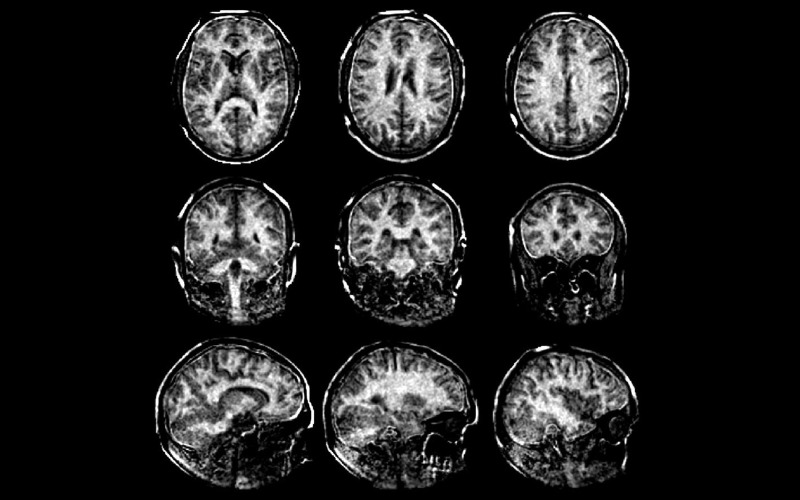
An international research team led by UZH has investigated links between infection with the Epstein-Barr virus and genetic constellations in multiple sclerosis. Symbolic image: Pavel Danilyuk/Pexels
News
Wädenswil ZH/Zurich – Researchers at the Zurich University of Applied Sciences (ZHAW) are initiating a feasibility study into the use of photovoltaics (PV) on agricultural land. On behalf of the canton, they observed the potential for energy production on ten farms in the canton of Zurich.
(CONNECT) Researchers at the Zurich University of Applied Sciences(ZHAW), which is based in Wädenswil with its Department of Life Sciences and Facility Management, are supporting a feasibility study for the use of photovoltaics on agricultural land in the canton of Zurich. According to a press release, the ZHAW is launching the Agri-PV competence booster project on behalf of the Canton of Zurich's Office for Waste, Water, Energy and Air (AWEL).
As part of the study, the university is supporting ten farms, each with an individual feasibility study. This involves analysing areas and crops, assessing yield options, checking grid connections and permits, and calculating profitability and market opportunities. Additional options and battery storage concepts can also be included as an option. According to the press release, 90 percent of the costs will be covered thanks to the support of the AWEL. Each participating company receives an individual report.
The researchers had already investigated the possibilities of photovoltaics on eight agricultural areas in advance. Taking into account agronomic, technical and economic aspects, they identified a high potential for this form of energy production. ce/ww

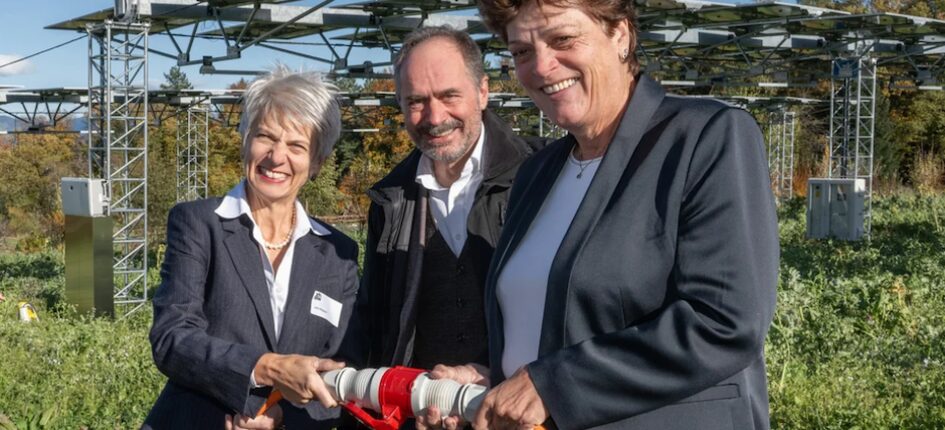
Researchers at ZHAW are conducting a feasibility study on the use of photovoltaics on agricultural land in the canton of Zurich. Image: zVg/Zurich University of Applied Sciences (ZHAW)
News
Zurich/Dublin – LatticeFlow acquires the Dublin-based company AI Sonar. With its platform, LatticeFlow is introducing the first comprehensive artificial intelligence (AI) governance solution. It enables companies to identify shadow AI that poses a risk to compliance and reputation.
(CONNECT) LatticeFlow 's acquisition of AI Sonar enables it to offer AI discovery to support governance for the first time to enterprises and software vendors. AI Sonar has developed a platform for detecting so-called shadow AI. With this acquisition, LatticeFlow says it is introducing the first end-to-end, evidence-based AI governance solution that securely combines on-site AI detection and assessment with centralized governance processes offered as Software-as-a-Service. It covers generative AI as well as agent-based and traditional AI systems.
This detects unauthorized use of AI tools or AI applications by employees or end users that have not been formally approved by the internal IT department. If IT teams are unaware that generative AI such as ChatGPT is being used to automate tasks such as text editing and data analysis, there is a danger that this could unknowingly create significant risks in terms of data security, compliance and the company's reputation.
LatticeFlow will market AI recognition under its own name in future. The company is also setting up a research and development site at AI Sonar's headquarters in Dublin. There, the AI Sonar development team will further develop AI recognition for companies and fully integrate it into the LatticeFlow product line. LatticeFlow also conducts research and development in Zurich and in the Bulgarian capital Sofia.
AI Sonar is a wholly owned subsidiary of CloudSphere Ltd. founded in September 2025. According to CEO and co-founder Dr. Petar Tsankov, the acquisition of AI Sonar strengthens LatticeFlow's leadership position in evidence-based AI governance "by making it clear that AI governance is a technical discipline, similar to cybersecurity, and needs to be embedded directly into the technology stack rather than managed via paper checklists or dashboards." ce/mm
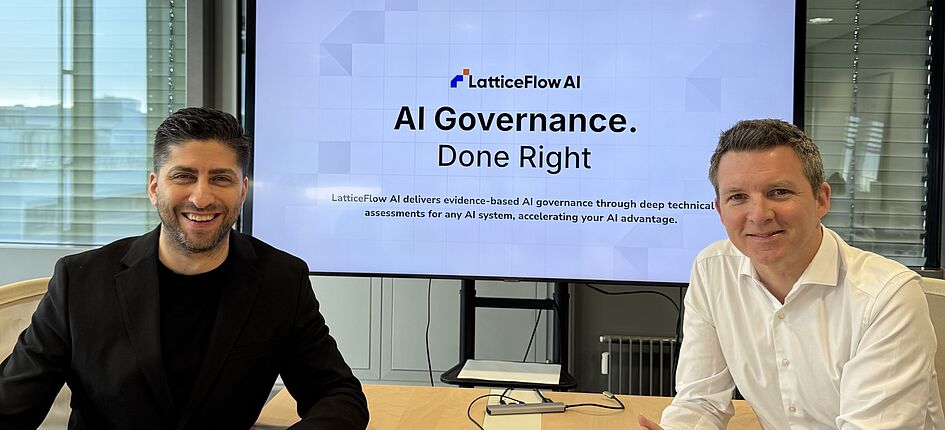
(from left to right) Petar Tsankov (CEO and co-founder of LatticeFlow) and Paul Mansfield (CTO of Cloudsphere, a subsidiary of AI Sonar) announce that LatticeFlow is acquiring the Irish company AI Sonar. Image: zVg/LatticeFlow AG
News
St.Gallen/Zurich – Researchers at the Swiss Federal Laboratories for Materials Science and Technology (Empa) and TI Solutions have developed new polymer cables. The cables with a thin titanium-silver coating are suitable for MRI examinations.
(CONNECT) Researchers at the Swiss Federal Laboratories for Materials Science and Technology (Empa) in St.Gallen and industry partner TI Solutions, based in Zurich, have developed a special polymer cable for MRI examinations, as detailed in a press release. Magnetic resonance imaging (MRI) is an important diagnostic imaging procedure. Investigations are carried out in parallel with brain wave measurements, electrocardiograms or stimulation of deep-seated brain structures using temporal interference stimulation (TI). Due to the high magnetic fields and radio waves used, no metallic objects that could cause mechanical destruction or thermal heating may be used in the apparatus.
According to the press release, this electrode cable consists of a bundle of polymer fibers covered with a titanium-silver layer less than half a micrometer thick. The new cables allow both cardiological and neurological measurements as well as temporal interference stimulation of deep brain layers. "Our aim was to develop a cable with a very low but precisely defined metallic conductivity," Dirk Hegemann, Head of Research at Empa's Advanced Fibers Laboratory, is quoted as saying in the press release. "The conductivity must be high enough for the signal to be transmitted, but not so high that it interacts with the radio or magnetic waves." Sven Kühn, Head of Research at TI Solutions, adds: "With the MRI-compatible cables developed in the Empa laboratory, our medical research partners have the opportunity for the first time to visualize the effect of TI in the brain using MRI safely and without interference." The company specializes in research in the field of temporal interference stimulation. The development of the new polymer cables was funded by Innosuisse. ce/ww
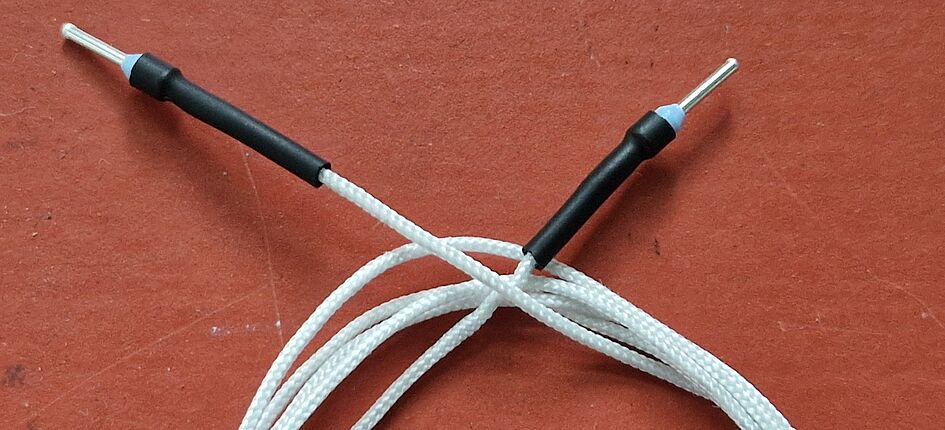
A cable developed by Empa and TI Solutions consists of bundled polymer fibres with a thin metal coating. Image: Empa
News
Zurich – A total of 13 deep tech start-ups have made it through to the next round of the ZKB Pionierpreis Technopark 2026. The number of applications has risen by around 40 percent, with the majority coming from the Zurich region. 64.5 percent of all submissions deal with artificial intelligence technologies.
(CONNECT) The ZKB Pionierpreis Technopark has received 76 applications this year, more than ever before - around 40 percent more than last year. The eight-member jury has now selected 13 of them for the next round. This pre-selection forms the basis for the nomination of the five finalists. They can present their projects at the award ceremony on May 12, 2026 at Technopark Zurich.
Of this year's top 13, a good half are developing solutions for a greener future. Three come from the biotech sector and two from robotics. The following have qualified for the next round in alphabetical order: Aseptuva (Bern), CCRAFT (Neuchâtel), Chiral Nano (Dübendorf ZH), FimmCyte (Basel), GlycoEra (Wädenswil ZH), KLARK (Landquart GR), NovaMea (Saint-Sulpice VD), RoBoa (Zurich), RTDT Laboratories (Zurich), Scrimber CSC (Thun BE), SolidWatts (Pully VD), Unbound Potential (Thalwil ZH) and Winduction (Zurich).
This year, most of the applications (47) came from the Zurich region. 16 were received from French-speaking Switzerland. 36 percent have a connection to the Swiss Federal Institutes of Technology in Zurich or Lausanne and 7 percent each to the University of Zurich or the Swiss Federal Laboratories for Materials Science and Technology. The vast majority of start-ups, namely 64.5 percent, deal with artificial intelligence (AI), machine learning or other AI technologies.
The Pionierpreis has been awarded by Zürcher Kantonalbank (ZKB) and the Technopark Zurich Foundation for over 20 years and is considered one of the most important deep-tech innovation prizes in Switzerland. It honors projects at the transition from innovative idea to market maturity. In this phase, CHF 100,000 in prize money for the winner and CHF 10,000 each for two further finalists will support further development. In addition, an audience award worth 5000 francs will be presented. ce/mm

The finalists of the ZKB PionierpreisTechnopark 2025. Image: zVg/Technopark Zurich
News
Baar ZG/Schlieren ZH/Epalinges VD – The SWISSFINTECHLADIES presented the SwissFinTechDiversity Award 2026 at their Art and Startup Night at the World Economic Forum in Davos. Three awards for outstanding achievements by women in the fintech sector went to the Swiss companies Yainvest, Pregnolia and Undae.
(CONNECT) Three women-led companies have received this year's SwissFinTechDiversity Award: Yainvest from Baar, Pregnolia from Schlieren and Undae Science from Epalinges. The award is presented by SWISSFINTECHLADIES from Cham ZG for outstanding achievements by women in the fintech sector. The award ceremony took place on January 18 during the World Economic Forum in Davos at the Art and Startup Night of the Association of Women with an Affinity for Tech and Finance.
According to its press release, the SwissFinTechDiversity Award is part of the Swiss Fintech Awards initiative and complements the established Swiss Fintech Week in Zurich. The SWISSFINTECHLADIES award focuses specifically on female entrepreneurship, investment and innovation within the Swiss fintech ecosystem. The aim is "the representation and recognition of women in the larger Swiss FinTech landscape", according to the press release. "Our goal is to position Switzerland as a leading global FinTech location - together and regardless of gender."
Yainvest is a provider of wealth and investment management solutions based on behavioral finance (BhFS) and risk management. CEO Yulia Myronova co-founded the Baar-based company, a subsidiary of BhFS GmbH, which is also based in Baar, in 2023. The expertise in BhFS research is provided by co-founders from research at the Universities of St.Gallen and Zurich. Yainvest was a finalist in the Early Stage category at the Swiss FinTech Awards 2025.
Pregnolia won the Innovation Award of the Year for Gynecology and Obstetrics at the Femtech World Awards 2025. Founded in 2016 by Sabrina Badir, the spin-off from the Swiss Federal Institute of Technology in Zurich and University Hospital Zurich has developed a world-first device to improve prenatal care. With this instrument, gynecologists can measure the stiffness of the cervix. Their condition is an important indicator for determining the risk of premature birth.
Undae addresses sleep disorders with its Noctae system, collecting and processing data during sleep in a non-invasive way and at home. The sleep monitoring system from the start-up founded by Dr. Shanaz Diessler consists of an ultra-thin mat under the sheets and a small device for the bedside cabinet, the Noctae Hub. The accompanying app supplements the monitoring with questions, recommendations and a sleep diary. Undae was accepted into the Vanguard Accelerator at Biopôle Lausanne at the end of 2025 as one of three healthcare start-ups. ce/mm

Karen Wendt, President of SWISSFINTECHLADIES (left), presents the award to Elena de Weck, Co-Founder and Chief Client Officer at Yainvest (right). Image: zVg/SwissFinTechLadies
News
Zurich – Project Switzerland helps scale-ups to grow quickly and globally. To this end, 20 of the country’s most successful start-up founders are joining them. Tobias Rein from GetYourGuide, Samuel Müller from Scandit and serial tech founder Bettina Hein will also be there.
(CONNECT) "Project Switzerland is the place where you learn to grow globally." This is how series founder Bettina Hein sums up what this new national project aims to achieve. Because "Switzerland is strong in technical innovation, but we lack experienced managers who know how to scale a company properly," she is quoted as saying in a press release.
Hein is part of a 20-strong group of so-called Role Models who want to close this gap as the heart of Project Switzerland. They are all behind the biggest Swiss tech successes that have built companies with billion-dollar valuations or sales of over CHF 100 million.
The 46-year-old Hein is the founder of the US-based software company Pixability and the speech technology company SVOX, which was sold to Nuance Communications for 125 million dollars and is now part of Microsoft. Her latest project is the digital health start-up juli. The Lion's Den judge is a Young Global Leader at the World Economic Forum and was named Immigrant Entrepreneur of the Year in Boston in 2018.
Younger start-ups are networked with personalities like Hein. The role models support younger companies directly. "It's important to give something back," says Samuel Müller from Scandit. "We want to help others avoid the stumbling blocks we experienced on the way to Scandit's global success."
Project Switzerland was initiated by the Deep Tech Nation Switzerland Foundation. The twelve-month program offers direct access to the 20 role models, targeted matchmaking for challenges such as international expansion and leadership, and lifelong access to an exclusive alumni community.
Investors, board members and other players from the start-up ecosystem can nominate scale-ups until February 15, 2026. Eligible ambitious companies must have annual recurring revenues of between CHF 2 million and CHF 10 million, a market potential of more than CHF 200 million, more than 15 employees and have received at least CHF 2 million from professional investors. ce/mm
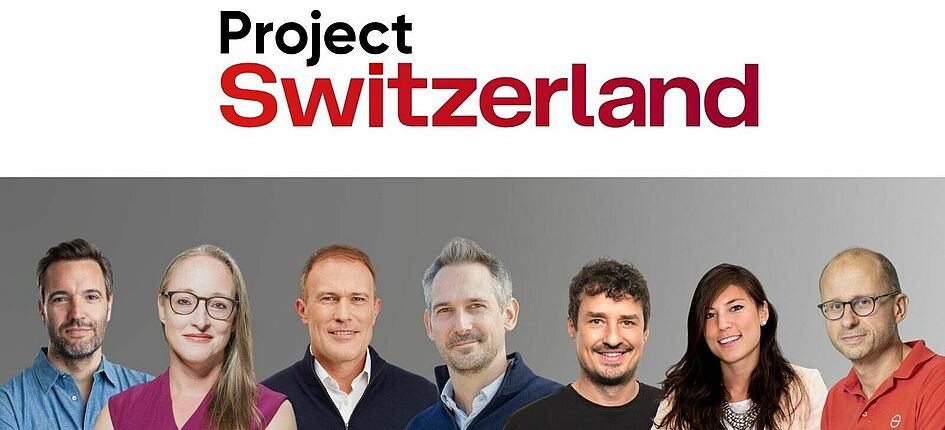
Project Switzerland supports promising scale-ups with experienced role models in their global growth. Image: Deep Tech Nation Switzerland
You need to load content from reCAPTCHA to submit the form. Please note that doing so will share data with third-party providers.
More InformationYou are currently viewing a placeholder content from Turnstile. To access the actual content, click the button below. Please note that doing so will share data with third-party providers.
More InformationYou are currently viewing a placeholder content from Vimeo. To access the actual content, click the button below. Please note that doing so will share data with third-party providers.
More InformationYou are currently viewing a placeholder content from YouTube. To access the actual content, click the button below. Please note that doing so will share data with third-party providers.
More InformationYou need to load content from reCAPTCHA to submit the form. Please note that doing so will share data with third-party providers.
More Information