News
Kilchberg, Zurich/Vienna — 3VC has invested in the Zurich-based startup Aderis. The Vienna-based venture capital fund aims to help Aderis become the European market leader in ERP systems with its AI-native Live Finance platform.
(CONNECT) The Zurich-based startup Aderis is receiving funding from the Vienna-based venture capital fund 3VC. Elian Kool, founder and CEO of Aderis, has developed an ERP system designed to replace legacy systems—most of which were developed before the year 2000 and have since been retrofitted with artificial intelligence (AI).
According to a statement from 3VC, these legacy systems “are reaching the end of their useful life, necessitating migration cycles; the pool of accounting professionals is shrinking structurally; and AI has only recently become capable of precisely automating key financial processes.” Europe alone offers billions of euros in potential for Aderis’s Live Finance platform, which aims to become the European market leader.
"At 3VC, we believe in next-generation ERP systems," the press release states. "The ERP system of the future must be AI-native, modular, and API-based." "We are convinced that teams should be able to use automated workflows without compromising the traceability of every decision and transaction. Elian Kool, CEO and founder of Aderis, shares this vision."
Kool co-founded Netcentric in 2012 and, from Zurich, built it into a successful digital marketing consulting firm operating throughout Europe with over 600 employees. “We are convinced that Elian’s vision, his experience, his ability to execute quickly, and his ability to recruit and motivate top talent are crucial to succeeding in a market where competition is fierce among several well-funded companies,” said 3VC.
Aderis' ERP system is an AI-native ERP platform for consumer goods companies that operate in various countries, with different branches and currencies. According to the information provided, the first customers include companies from the manufacturing industry, e-commerce, medical technology, and the hospitality industry, among others. "These customers," according to 3VC, "were impressed by Aderis' ability to go live within a few days and achieve a clear ROI." ce/mm

Aderis secures funding from the venture capital fund 3VC. Stock image: Ambre Estève/Unsplash
News
Baar, ZG/Zurich — Arviem and Nexxiot have entered into a strategic partnership. The goal is to pool expertise in the areas of IoT technology, freight transparency, and asset intelligence to drive the digital transformation of supply chains in Asia.
(CONNECT) Arviem, a freight monitoring service provider based in Baar, and Nexxiot, a Zurich-based company specializing in asset information and logistics IoT (Internet of Things) technology, have entered into a strategic partnership. According to a press release, the companies plan to work together to advance the digitization of supply chains in Asia, with a particular focus on Singapore, Vietnam, and Indonesia.
As part of the partnership, Arviem will provide an IoT-agnostic platform for supply chain transparency, enabling customers to select the technology best suited for their freight monitoring needs. Nexxiot, in turn, will enable the digitization of transportation vehicles in global logistics networks through specialized IoT technology, secure connectivity, and asset intelligence solutions. As a result, customers benefit from a broader range of monitoring technologies and data-driven insights.
Another key component of the partnership is the integration of Nexxiot’s Asset Intelligence platform and its permanently installed Smart Asset technology into Arviem’s portfolio of freight visibility solutions. According to the press release, the companies are thereby helping customers “increase operational efficiency, enhance cargo security, minimise risks, optimize asset utilisation, and improve decision-making through reliable real-time visibility.”
According to the companies, the partnership will initially focus on Asia, as manufacturers, logistics service providers, and shippers in that region are driving their investments in the digital transformation of the supply chain and end-to-end shipment transparency more aggressively than in other regions. ce/nta
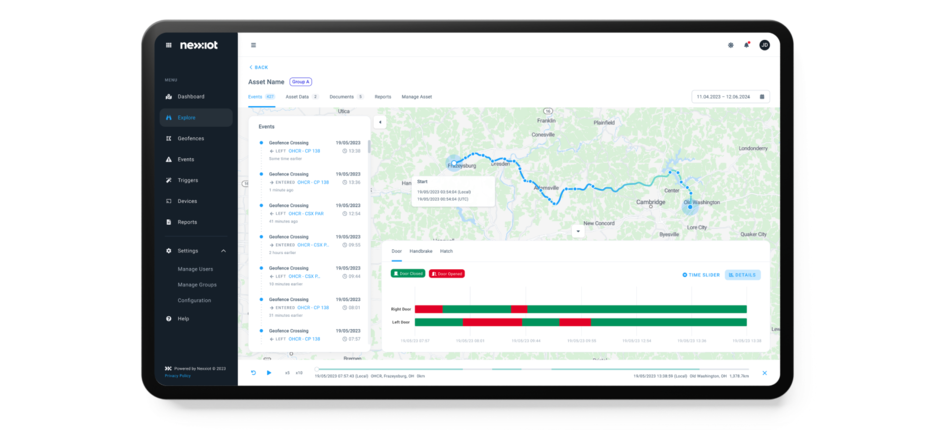
Nexxiot uses IoT technology to enable the digitalisation of transport vehicles in global logistics networks. Image: Courtesy of Nexxiot AG
News
Zurich — RESLIDES has launched its ANI.MAL Collection with the Cow and Jaguar sandal styles. The animal-print shoes from the manufacturer of modular, recyclable sandals are designed for urban wearers and combine sustainability with stylistic freedom.
(CONNECT) According to a press release, RESLIDES has launched its ANI.MAL Collection line of sandals, featuring the Cow and Jaguar designs. ANI.MAL sandals are based on the proven RESLIDES system, which combines modular straps, buckles, and soles. The strap, which is printed with a cow or jaguar pattern, can therefore be paired with all existing RESLIDES sandals.
The goal is to combine fashion, sustainability, and individuality. According to co-founder Lars Arendt, additional models are already in the works: “With the ANI.MAL Collection, we want to show just how much stylistic freedom a modular concept offers—from a single pair of sandals to countless looks. And that’s just the beginning: We plan to continue expanding the collection and bring even more expressive strap and sole color variations to the market.”
Like all modular RESLIDES straps, the new ANI.MAL straps—made from recycled PET—are manufactured in Italy and are recyclable. Since its founding in 2021, RESLIDES has positioned itself as an alternative to traditional cork sandals and fast fashion. Thanks to their interchangeable and recyclable components, all modules can be processed into new sandal components at the end of their life cycle.
The collection is now available online for the markets in Switzerland, Germany, Austria, Italy, Spain, France, Belgium, Denmark, and the Netherlands. ce/ja
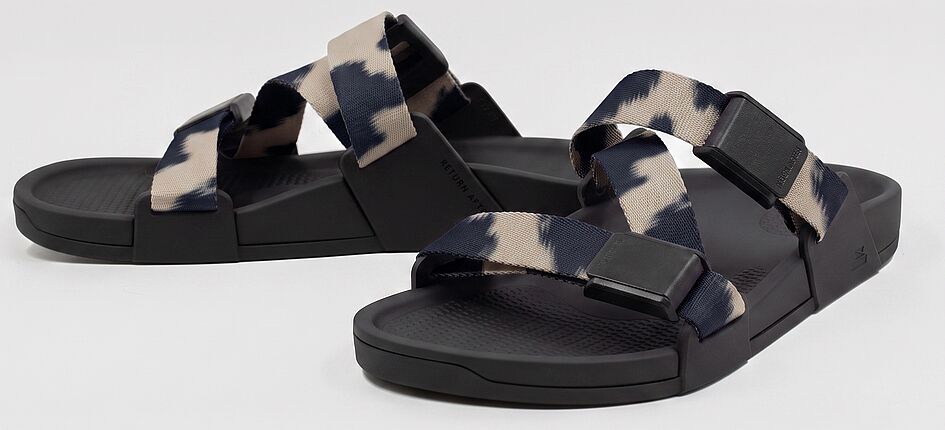
RESLIDES is launching its ANI.MAL Collection range of sandals, featuring the Cow (pictured) and Jaguar designs. Image: courtesy of RESLIDES GmbH
News
Dübendorf, ZH — Researchers led by the Swiss Federal Laboratories for Materials Testing and Research are investigating how the behavior of hydrogen ions in ceramic membranes relates to the membranes’ material structure. The goal is to lay the groundwork for more efficient membranes and thereby improve the production and use of green hydrogen.
(CONNECT) An international research team led by the Swiss Federal Laboratories for Materials Science and Technology (Empa) is investigating the fundamentals of hydrogen ion (proton) transport in ceramic membranes. The central question is how the material structure of such specialty ceramics influences the absorption and movement of protons. According to Empa, understanding these relationships should, in the long term, enable the development of more efficient membranes for fuel cells and electrolysers.
In their current series of experiments, the researchers are focusing on lanthanum-cerium oxide (LCO), a material that can absorb many protons but is barely able to conduct them. It is precisely this property that is expected to provide new insights into the relationship between material structure and proton conductivity. To this end, the team is using, among other things, high-resolution neutron measurements at the Paul Scherrer Institute (PSI) in Villigen, Aargau, as well as additional experiments at major research facilities in the United States and Japan.
Previous work by the Empa team had already shown that proton transport in ceramic conductors is closely linked to the vibrations of the crystal lattice and that embedded protons can themselves alter these lattice vibrations. The new project aims to shed more light on these processes and to test theoretical models experimentally. Green hydrogen is considered an important energy source for the energy transition. More efficient and durable membranes could help make its production and use more cost-effective.
The project is funded by the Swiss National Science Foundation (SNSF) under the External Lead Agency program. ce/ja
An international research team led by Empa is investigating the fundamentals of proton transport in ceramic membranes; pictured: the hydrogen system in Empa’s ‘move’ mobility demonstrator. Photo: Empa
News
Zurich – Human activities are significantly increasing the frequency of fires in the Arctic. According to a study led by the University of Zurich, between 2001 and 2013, fires occurred 2.5 times more frequently in areas where people are active than in climatically comparable areas without human influence.
(CONNECT) An international research team led by the University of Zurich (UZH) has studied the impact of human activities on fires throughout the Arctic region. Researchers from NASA's (National Aeronautics and Space Administration) Goddard Space Flight Center and the University of Münster also participated in the study.
For the years 2001 through 2013, the team compared illuminated areas with unilluminated regions that had similar climatic conditions. According to a press release, fires occurred 2.5 times more frequently in the illuminated areas. More fires also occurred in the surrounding areas, “which points to a strong spatial correlation between human activities and the occurrence of fires,” according to lead author Cengiz Akandil of UZH. However, temperature, humidity, and dry conditions also remain important factors in Arctic wildfires.
To measure human presence, the researchers used satellite data on artificial nighttime lighting, which indicates the presence of settlements and industrial activity. At the regional level, the correlation between illuminated areas and fires varied in strength. The team also attributes this to differences in fire prevention and firefighting efforts.
Fires in the Arctic can damage infrastructure and ecosystems, accelerate the thawing of permafrost, and thereby release additional carbon. This, in turn, can affect the global climate. The smoke can also travel far beyond the region.
In light of the ongoing development of the Arctic and climatic conditions that are increasingly conducive to wildfires, Gabriela Schaepman-Strub of the Institute of Evolutionary Biology and Environmental Sciences at UZH sees a growing need for action. "It is becoming 'increasingly important to integrate fire prevention into land-use planning, industrial operations, and strategies for protecting communities,'" said the study's director. ce/as

Researchers at UZH have investigated the impact of human activities on fires across the Arctic region, including in Russia (pictured). Image: Monja Šebela/SentinelHub/Copernicus Sentinel data 2021
News
Zurich/Dübendorf, ZH — The University of Zurich (UZH) and the Swiss Federal Institute of Technology Zurich (ETH) invite you to Scientifica 2026, taking place August 22–30. Under the theme “How We Create Knowledge,” the Science Festival offers exhibitions, guided tours, workshops, and lectures in Zurich and Dübendorf.
(CONNECT) The programme for Scientifica 2026 is now available online. From August 22 to 30, approximately 1,000 researchers will offer insights into their work through a variety of event formats. This year, Switzerland's largest science festival is exploring the question of how scientific knowledge is generated and why research must be transparent and verifiable.
The event kicks off on August 22 with a public open house held in collaboration with the Swiss Federal Laboratories for Materials Testing and Research (Empa) at Innovation Park Zurich in Dübendorf. The programme includes, among other things, race cars, rocket engines, and autonomous drones. The following day, UZH's Irchel Campus and ETH's Hönggerberg Campus will open their doors. Among other things, visitors can pilot a lunar lander, gain insights into quantum physics, or learn about forest and climate research.
As a partner of Scientifica, the City of Zurich is organizing the "Science and the City" event series from August 24 to 28. The range of topics extends from virtual reality to weight-loss injections and dementia, all the way to money and wastewater treatment. Free online registration is required for the events; registration opens on August 17.
The Scientifica will conclude on 29th and August 30: Events at the UZH and ETH campuses. At around 80 exhibition booths, scientists will present their current projects from all research areas at the two universities. Workshops, shows, science cafés, and tours of laboratories and other workspaces that are not normally open to the public round out the program.
Scientifica has been organized by UZH and ETH Zurich since 2011 and is aimed at adults, families, and young people alike. Admission is free. For workshops, guided tours, and shows with limited seating, free tickets will be distributed on-site one hour before the start of each event during the two festival weekends. ce/as

Scientifica kicks off on 22 August with a public open day at the Innovation Park Zurich in Dübendorf. Photo: Switzerland Innovation Park Zurich
News
Zurich/Dübendorf, ZH — Two industrial design students from the Zurich University of the Arts (ZHdK) each spent two months in a laboratory at the Swiss Federal Laboratories for Materials Science and Technology (Empa) as part of the Artists in Labs programme. Both sides benefited from new perspectives.
(CONNECT) As part of the "Artists in Labs" master's programme, the ZHdK and the Swiss Federal Laboratories for Materials Testing and Research (Empa) have given two industrial design students in the Transdisciplinary Studies in the Arts programme the opportunity to immerse themselves in the world of scientific research. For two months, Madeleine Hykes was a guest at the Urban Energy Systems Lab, and Karya Anliak was a guest at the Cellulose & Wood Materials Lab. The goal of this programme is to foster an intensive dialogue between design and science.
Madeleine Hykes used art to make systemic issues in energy policy tangible. “Madeleine brought entirely new perspectives to our projects,” Georgios Mavromatidis, head of the Urban Energy Systems Lab, is quoted as saying in an Empa report. “Her artistic approach encouraged us to view energy and cities through a more human lens. She challenged us to think differently about the questions we ask and how we communicate our work.”
After her internship, the Hykes Laboratory invited her to supplement its academic presentation at a conference in Graz with her insights on sufficiency and sustainable transformation. “The effort required to integrate the art student into the lab was modest compared to the added value she generated,” Mavromatidis concludes.
At the Cellulose and Wood Materials Lab, Karya Anliak explored a concept she calls “microbial industrial design”: The Turkish-Luxembourgish designer combined cellulose nanocrystals available in the lab with living bacteria to develop a new material: “It challenges the negative associations we have with bacteria and their non-sterile world, and explores crafts, ceramics, and bacterial 3D printing as an embodied way of designing objects we use in everyday life.” Like Hykes, Anliak experienced a fundamental shift in perspective: “It’s about,” she says, “finding a common language in which we can communicate.” ce/mm

Madeleine Hykes, a Master’s student at the Zurich University of the Arts (ZHdK), brought a whole new perspective to Empa’s Urban Energy Systems Laboratory. Photo: Empa
News
Zurich/Casablanca/Osaka — Kanadevia Inova has signed a concession agreement for a major waste-to-energy project in the Moroccan port city of Casablanca. The Zurich-based company will build and operate the facility, in partnership with other companies, next to one of Africa’s largest landfills.
(CONNECT) Kanadevia Inova AG has signed a 33.5-year project and operating contract for a waste-to-energy plant in Casablanca. It encompasses the design, financing, construction, and operation of the facility, which, according to a press release, is scheduled to begin generating energy from waste in June 2030. The Zurich-based company, which specializes in waste-to-energy and biogas plants, is a wholly owned subsidiary of Kanadevia Corporation of Osaka, one of Japan's leading wholesalers.
For this project, Kanadevia Inova is establishing a special purpose company (SPC) in which Nareva—one of Africa’s largest companies specializing in sustainable energy and water desalination, headquartered in Casablanca—and the Japanese trading company Itochu also hold stakes. The special-purpose entity will implement the project and enter into contracts for engineering services, procurement, and construction, as well as long-term maintenance contracts.
The new plant will generate approximately 1 terawatt-hour of electricity per year. That is equivalent to the annual electricity consumption of about 1 million people. It will be equipped with combustion and boiler systems, as well as the Autaro automatic combustion control system from Kanadevia Inova. In addition, the project includes a 50-megawatt solar power plant, a 4-megawatt facility for the collection and utilization of landfill gas, and a leachate treatment plant.
In addition, according to the information provided, the facility will be designed to allow for the integration of carbon capture and storage technologies. This is intended to further reduce greenhouse gas emissions and support decarbonization. ce/mm
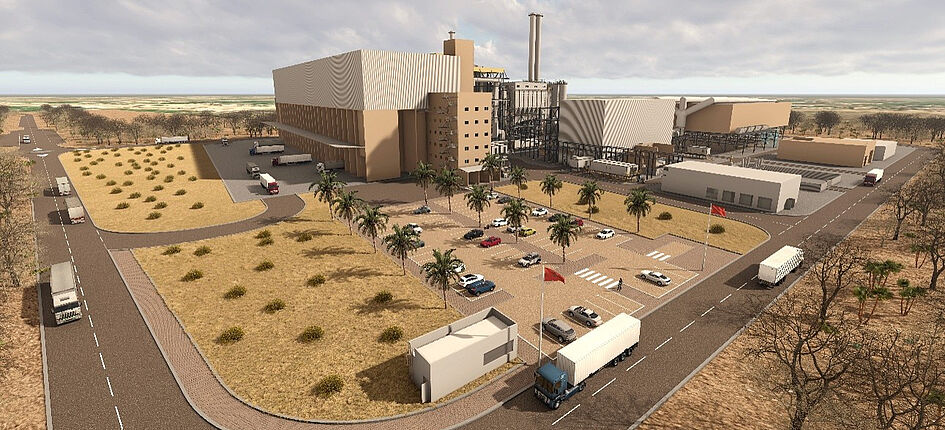
This artistic rendering of the integrated waste-to-energy plant in Casablanca combines waste treatment, renewable energy generation and landfill management infrastructure. Image: Kanadevia Inova AG
News
Zurich — The brain is better able to regenerate after injuries or illnesses than previously thought. A team from the University of Zurich (UZH) has discovered that certain cells are responsible for repairing injured tissue. It may be possible to activate this mechanism for therapeutic purposes.
(CONNECT) Researchers at the University of Zurich have made a discovery that offers new avenues for the targeted regeneration of damaged brain tissue. For the first time, they were able to observe how the cell nuclei of adult brain cells—specifically those of a particular type of astrocyte—organise their own regeneration. However, according to a press release from the university, these cells do not merely divide; they “send” their cell nuclei to assist wherever they are needed: “The newly formed cell nuclei of the daughter cells travel long distances to repopulate the damaged region of the brain and reconnect the astrocyte network,” team leader Bruno Weber is quoted as saying.
The star-shaped support and supply cells are essential for the proper functioning of neurons. They supply the nerve cells with nutrients, help regulate blood flow, and keep the brain tissue healthy. For a long time, it was believed that the adult brain could not fully replace lost astrocytes. Now, this assumption has been refuted by a new study by the two co-first authors, Marina Herwerth and Matthias Wyss, from the Institute of Pharmacology and Toxicology at UZH.
If the mechanisms that have now been discovered can be selectively activated, this could help restore astrocyte networks, thereby improving the repair of damaged brain tissue and enhancing recovery from certain brain disorders. “We were able to identify numerous genes and signaling pathways that are temporarily activated during repair,” Weber emphasises. "In the future, they could serve as starting points for influencing these regenerative processes in the context of disease." ce/mm
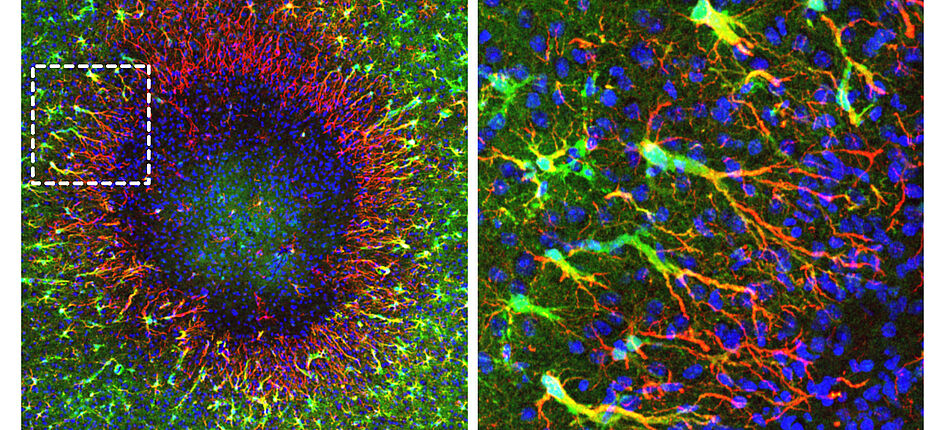
Regenerative astrocytes repair brain injuries by extending new cell nuclei along their processes into the damaged tissue. Image: Institute of Pharmacology and Toxicology/University of Zurich
News
Zurich/Zug/Aubonne VD/Bengaluru — With nordfen and condenZero from Zurich, as well as Klepsydra (Zug), three Swiss space tech pioneers are participating in the Bengaluru Space Expo for the first time. They will be participating in the Swissnex and Innosuisse Startup Camp India from September 7 to 11. Perovskia Solar is also participating.
(CONNECT) The three space tech startups— nordfen and condenZero from Zurich, and Klepsydra Technologies from Zug—are traveling to India as part of Startup Camp India – SpaceTech 2026. According to a press release from Swissnex India, they will participate in the Bengaluru Space Expo 2026 from September 7 to 9, one of the largest space trade shows in Asia, with participants from 20 countries.
During the remainder of their stay, they will connect with Indian startups, companies, and research institutions to explore opportunities for collaboration and joint innovation. As announced by the trade show organizers, Swissnex India is the trade show's new innovation partner.
Startup Camp India is organized by Swissnex, Switzerland's global network for education, research, and innovation, and the innovation agency Innosuisse. As part of the Swiss Consulate General in Bengaluru, India, Swissnex India supports Swiss universities, startups, and research-intensive companies in entering the Indian market and exchanging knowledge in India.
Nordfen, based in Zurich, develops artificial intelligence (AI)-powered simulation software that converts real-world geographic data into realistic 3D environments. These virtual yet realistic training environments and physical simulations developed by the startup founded in mid-2025 by graduates of the Swiss Federal Institute of Technology in Zurich are being used in the development of remotely controlled vehicles and AI agents to protect critical infrastructure—such as industrial facilities and power grids—from drone attacks. Nordfen is part of the ESA BIC Switzerland incubation programme run by the European Space Agency (ESA).
CondenZero, a deep-tech company also based in Zurich, is a spin-off from the Department of Physics at the University of Zurich that was founded in 2019. The startup develops specialized equipment for cryo-electron microscopes that can keep samples at ultra-low temperatures for up to 24 hours. This enables researchers to examine materials and biological samples in much greater detail.
Klepsydra Technologies develops edge AI software for the aerospace, robotics, and automotive industries. The patented Edge AI software solutions from the Zug-based company—which was spun off from the California-based robotics firm Farm-ng in 2018—help computers process up to ten times more data while using 50 percent less energy.
As Swissnex India announced separately, Perovskia Solar, based in Aubonne, will participate in this trip to India for the second time “as part of a more in-depth engagement” to bring its technology to the Indian market. Spun off from the Swiss Federal Laboratories for Materials Science and Technology in 2020, this startup specialises in ultra-thin, digitally printed, and custom-made perovskite solar cells that use ambient light to power devices in the Internet of Things. ce/mm
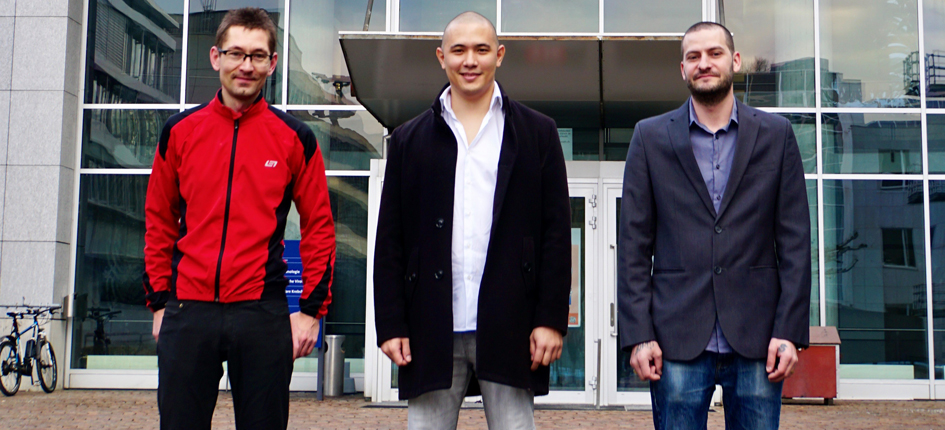
The CondenZero team is taking part in the Bengaluru Space Expo 2026 alongside Nordfen and Klepsydra. Image: Courtesy of Venture Kick
News
Zurich/Aarwangen (Cant. Bern)/Basel – Dorfbeck Nyfeler has reduced the amount of wasted bakery and pastry products by 37 percent. The company achieved this with the help of the Food Save management programme offered by the United Against Waste organisation. He also used the forecasts created by GoNina in Zurich for production planning.
(CONNECT) United Against Waste Switzerland is successfully implementing its Food Save Management pilot project for the bakery and confectionery industry. As the Basel-based association—a coalition of Swiss food companies— has now announced, Dorfbeck Nyfeler AG of Aarwangen, for example, was able to reduce its food waste by 37 percent.
Through its approach, United Against Waste’s Food Save Management initiative highlights where food is lost and shows how to take targeted action to address the problem. The initiative also makes use of software developed by the Zurich-based startup GoNina. With the help of artificial intelligence, the company—which promotes the circular economy as a member of Circular Economy Switzerland —generates accurate demand forecasts based on factors such as sales data and weather forecasts. This is intended to make production more targeted and less waste is disposed of. “We are very pleased that GoNina was able to play a part in this,” GoNina said in a statement regarding Nyfeler’s positive results, in which GoNina also expressed its gratitude for the excellent and trusting collaboration.
In addition to GoNina's demand forecasts, Nyfeler optimised its product lineup, according to a press release from United Against Waste. In addition, employees received training and were made more aware of the issue. As part of these processes, a new product was also developed: Brösmeli-Glück—a Food Save bread made from breadcrumbs. According to the association's press release, it helps make better use of valuable resources and, thanks to its high water-retention capacity, stays fresh for a particularly long time.
“The project shows that Food Save offers many avenues for action in bakeries, ranging from technological solutions to new product ideas,” concludes United Against Waste. "But reliable data is the foundation of any effective reduction measure." We would also like to extend a “big thank you” “to the Nyfeler team for their openness, dedication, and willingness to try new approaches.” ce/mm
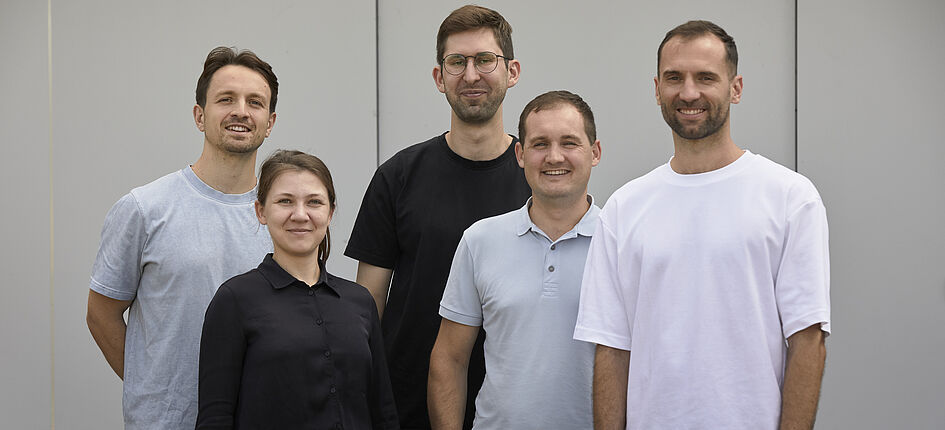
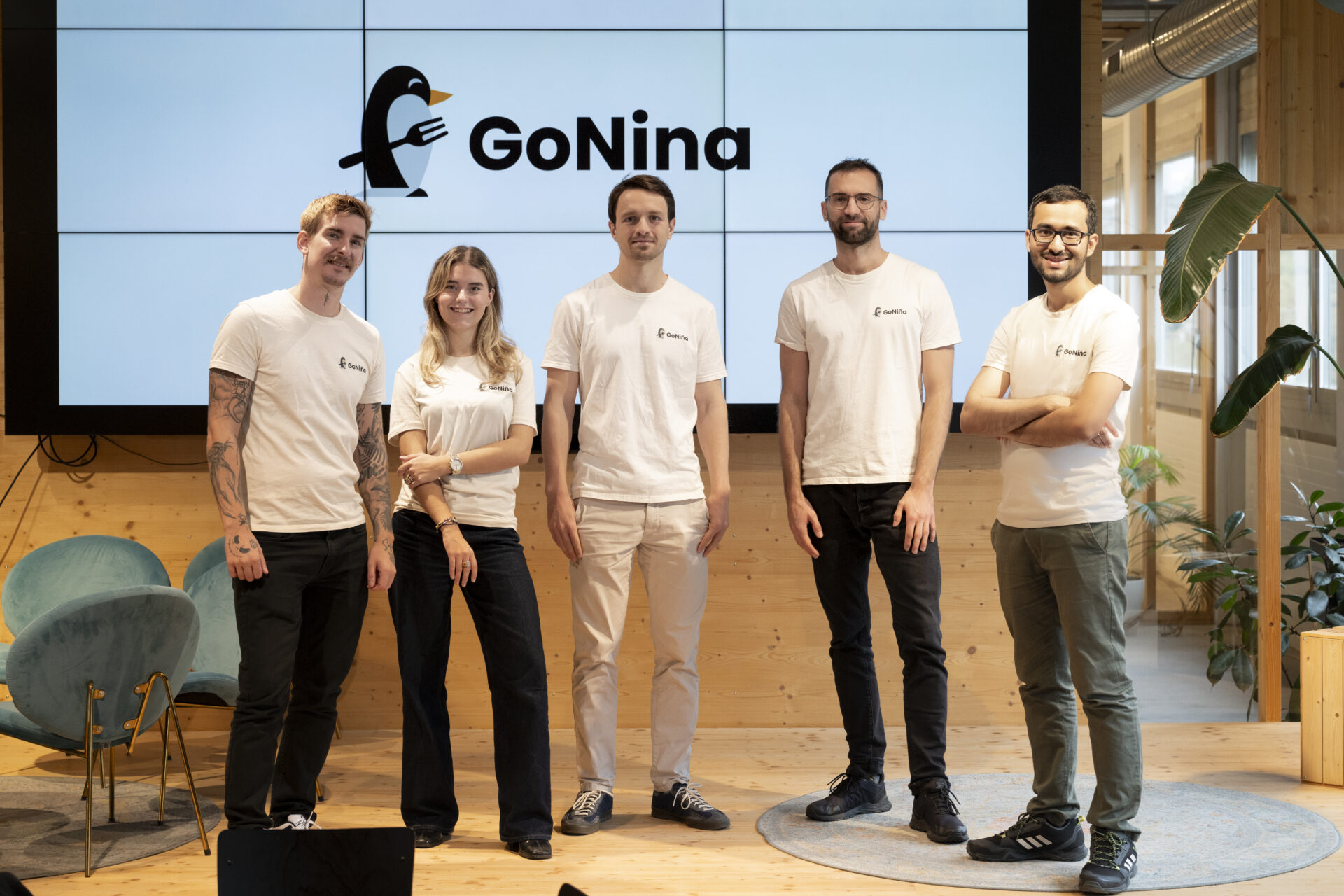
The Go Nina team is helping Dorfbeck Nyfeler to reduce food waste by 37 per cent using AI forecasts. Image: courtesy of GoNina AG
News
Zurich — Exclaim Robotics, founded by CEO Helen Oleynikova, is making its public debut with a pre-seed funding round. The Zurich-based startup develops mobile robots for data centers. They should be able to safely maintain the next-generation racks, which are powered by 800 volts of direct current.
(CONNECT) Helen Oleynikova has announced that Exclaim Robotics, the startup she founded and leads as CEO, has raised $5 million in a pre-seed funding round. This round was led by the venture capital firms Founderful of Zurich and Playfair of London.
Exclaim Robotics develops mobile robots for routine maintenance and repair work in artificial intelligence (AI) data centers. "The pace of innovation in data center infrastructure is reminiscent of the space race," Oleynikova is quoted as saying in a report by EU-Startups magazine. “Power density is pushing the entire industry to the limits of physics. Liquid cooling, 800 volts of direct current throughout the building, possibly superconducting busbars cooled with liquid nitrogen—manual maintenance is becoming more dangerous every year, and this is precisely the task that robots should take over.”
Oleynikova brings 15 years of experience in robotics from Willow Garage, Google, Microsoft, NVIDIA, and the Swiss Federal Institute of Technology in Zurich (ETH). Her numerous publications have been cited 5,125 times since 2015. She earned her Ph.D. at ETH Zurich with a dissertation on mapping and planning in complex, unstructured environments. She was a co-developer of nvblox, the 3D mapping library for collision avoidance that is integrated into NVIDIA Isaac ROS and used by robotics teams worldwide.
“AI data centers are growing faster than they can be staffed or maintained securely,” emphasises Antonia Albert, Principal at Founderful. “Helen and her team from ETH Zurich, NVIDIA, Microsoft, and Google are exactly the right people to tackle this challenge. We’re supporting Exclaim because Helen is exactly the kind of founder you need when a difficult problem becomes urgent.”
The CEO is supported by founding engineer Patrick Pfreundschuh, who also earned his Ph.D. from ETH, developed the BIEVR-LIO LiDAR-inertial odometry system, and was part of the winning team at the DARPA Subterranean Challenge. According to Oleynikova's announcement, two more founding engineers will join the company in the coming months, and additional positions have already been posted. ce/mm
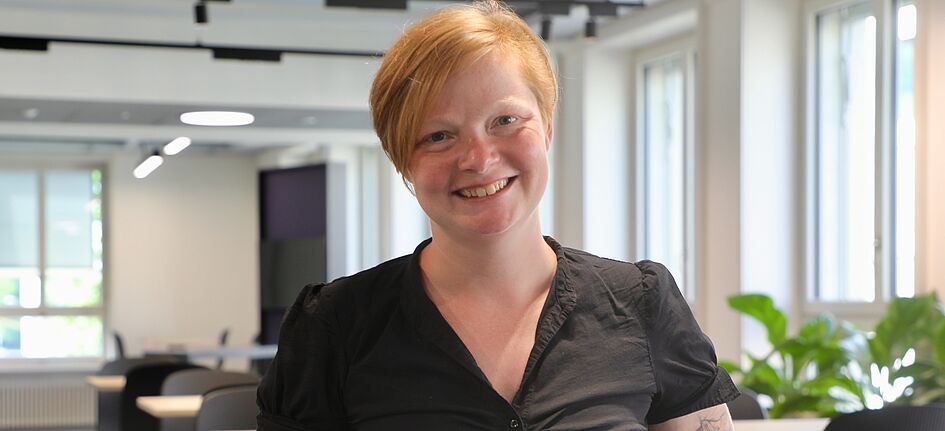
Exclaim Robotics, founded by Helen Oleynikova, who is also its CEO, has announced that the start-up has raised $5 million in a pre-seed funding round. Image: Courtesy of Anna Andersson/Exclaim Robotics
You need to load content from reCAPTCHA to submit the form. Please note that doing so will share data with third-party providers.
More InformationYou are currently viewing a placeholder content from Turnstile. To access the actual content, click the button below. Please note that doing so will share data with third-party providers.
More InformationYou are currently viewing a placeholder content from Vimeo. To access the actual content, click the button below. Please note that doing so will share data with third-party providers.
More InformationYou are currently viewing a placeholder content from YouTube. To access the actual content, click the button below. Please note that doing so will share data with third-party providers.
More InformationYou need to load content from reCAPTCHA to submit the form. Please note that doing so will share data with third-party providers.
More Information