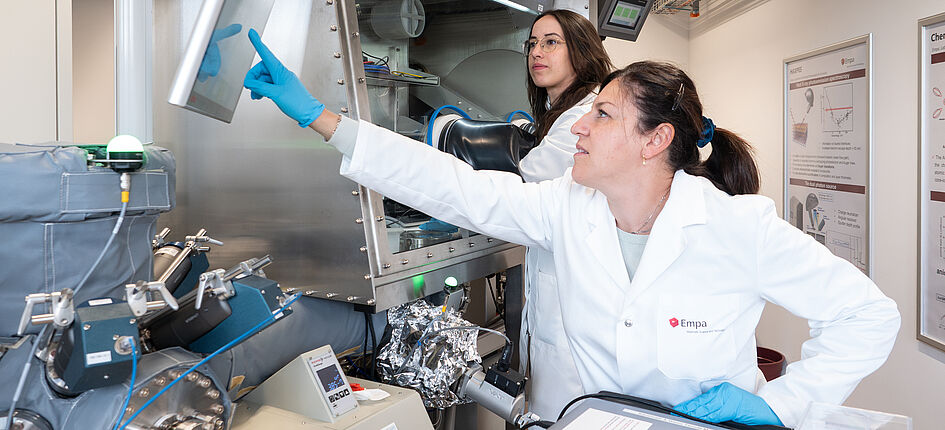
News
Winterthur — Paved schoolyards create an overheated environment. Researchers at the Zurich University of Applied Sciences (ZHAW) were commissioned by the Building Department of the Canton of Zurich to investigate how public spaces can be made more heat-resistant through the use of greenery and soil restoration.
(CONNECT) Heat in schoolyards isn't just due to unusual weather conditions. Paved playgrounds and heated buildings that don't cool down at night also contribute to this. On behalf of the Building Authority of the Canton of Zurich, an interdisciplinary team from the Zurich University of Applied Sciences (ZHAW) has now investigated how schools can be designed to be more heat-resistant. According to a press release, a study was conducted using the Rychenberg and Im Lee cantonal schools in Winterthur as examples to determine to what extent redesigning the outdoor areas could improve the environment.
The rooms at both schools were analyzed using modern climate simulations. It became apparent that the south-facing facades are subject to high to extreme thermal loads. It was determined that the perceived temperature over the sealed surfaces was more than 15 degrees Celsius higher than the measured air temperature. Students tend to avoid these areas. The ZHAW team, in collaboration with Landscale AG, has developed four sets of measures to address this situation: greening of rooftops and terraces, soil restoration and ground-level planting, structured shading of recreational areas, and climate optimization. Simulations covering the period from 2035 to 2060 showed that a perceived temperature reduction of 20 degrees would be achievable. In addition, 1,200 square meters of new recreational space is expected to be created by 2035, and a total of 3,300 square meters by 2060. The study prioritizes the removal of impervious surfaces from existing land.
“Measures that simultaneously increase shade, cooling, and the quality of the outdoor environment have the greatest impact on students’ well-being and on the usability of outdoor spaces for classes and during breaks,” said Anke Domschky, project manager and lecturer at the ZHAW’s Institute for Urban Landscape, is quoted as saying in the press release.
At the Im Lee Cantonal School, the team examined the thermal comfort inside the building. Recommendations were made to implement facade improvements on the south side, install automated nighttime ventilation, and, in the next phase, use hybrid systems. These plans will be implemented at the Rychenberg Cantonal School as part of the ongoing renovation project, with a total investment of 3 million Swiss francs. The study builds on a conceptual study by Krebs and Herde Landscape Architects and was developed in collaboration with the landscape architecture firm Landscale. ce/ww

The ZHAW is investigating how schools can be made more heat-resistant. Photo: Stefan Kubli/ZHAW
News
The world’s first AI business directory went live on July 31, 2026. And it comes from Switzerland.
Switzerland Leads the Way: The World's First AI Business Directory Is Now Online
What many would have expected from a Silicon Valley deep-tech company actually comes from St. Gallen. The Cohaga AG launches with ranQ The world's first AI-powered business directory. Following a successful funding round in March 2026, the next milestone is now on the horizon. Even before its official launch, several hundred companies are already using ranQ. A strong indication of just how rapidly the market for AI visibility is growing.
Change is real
The way people search for information is changing fundamentally. More and more often, people are asking questions directly to ChatGPT, Claude, or Gemini instead of searching for them on Google. Users receive ready-made answers, not a list of links. For businesses, this means that visibility no longer comes solely from search engines, but increasingly from AI-generated responses.
The Campaign
To draw attention to this change, Cohaga will launch a creative guerrilla campaign in the coming days. It is intended to surprise, inspire reflection, and spark conversation both in public spaces and on social media. Further details will be announced at launch.
“Most companies continue to invest almost exclusively in their Google visibility. At the same time, search queries are increasingly shifting toward AI systems. That’s exactly what we want to draw attention to. AI visibility will be just as important as traditional SEO in the future.” Fabio Mätzler, CEO of Cohaga AG
What is ranQ all about?
ranQ is Cohaga AG's platform for Generative Engine Optimization, or GEO for short. Simply put, it's about visibility in the age of artificial intelligence. Companies learn how visible they are in AI-generated responses and how they can be recognized, cited, and recommended more frequently by systems such as ChatGPT, Claude, or Gemini. It's no longer just about appearing on page one of Google; it's about becoming part of the answer itself.

News
Zurich/Dübendorf, ZH — A study by the Swiss Federal Institute of Technology Zurich shows that sustainable construction can be economically attractive. Using the example of the parking garage at the Empa and Eawag research campus, the study explains that planning in advance to repurpose a building for broader use can increase its value.
(CONNECT) A new study by the Institute for History and Theory of Architecture at the Swiss Federal Institute of Technology Zurich (ETH) shows how sustainable construction can be economically viable. Using the example of the hybrid-construction parking garage on the research campus of the Swiss Federal Laboratories for Materials Science and Technology (Empa) and the Water Research Institute According to a press release, the study conducted by Eawag in Dübendorf demonstrates how rezoning a building—a consideration incorporated into the construction planning from the outset—can result in an increase in value.
Although, according to the study’s author, Bernhard Kümmerli, “requirements for economic sustainability in architecture are not yet systematically taken into account,” it became apparent that the clients, Empa and Eawag, had factored in the possibility of future repurposing. In Scenario 1, as private vehicle traffic declines, the parking areas are envisioned for use as office or commercial space. In the more far-reaching Scenario 2, in which passenger transport could be carried out via public transit or through combined mobility, a complete transformation and repurposing is integrated into the planning. To this end, a modular design consisting of demountable prefabricated components was chosen, a light-filled wooden facade was installed, and the ceiling height was maintained at a level suitable for office use.
According to calculations prepared in collaboration with the consulting firm Wüest Partner, a partial renovation of the campus parking garage would result in future cost savings of approximately 6 million Swiss francs, while a complete renovation would yield savings of approximately 12 million Swiss francs. The study demonstrated the benefits of sustainable design, despite construction costs that were 22 percent higher than those of a conventionally built parking garage.
“Such well-founded statements on economic sustainability have been lacking until now,” Kevin Olas, head of the Real Estate Division at Empa, is quoted as saying in the press release. Such financial analyses, which take potential future benefits into account, are extremely valuable for sustainability in the construction industry. “If the net present value method is consistently applied in the future, it could significantly accelerate the transition to climate-friendly construction practices,” said Olas. ce/ww
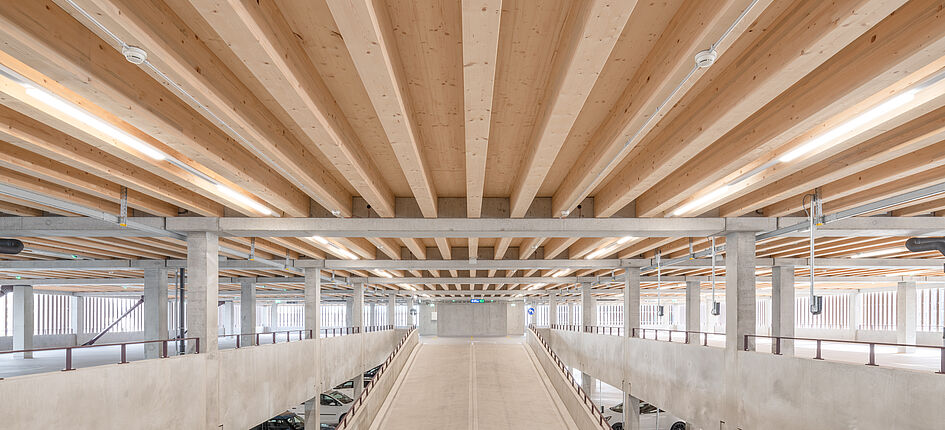
The timber car park on the co-operate research campus run by Empa and Eawag is an example of sustainable architecture. Image: SAM Architekten/Fabio Compagno
News
Zurich — Ahead Health will also launch its health services in Germany and the Netherlands. With $10 million in new funding, the Zurich-based preventive health company plans to accelerate its expansion.
(CONNECT) Ahead Health plans to launch its health services in Germany and the Netherlands starting in August 2026. According to a press release, the Zurich-based preventive health company has secured $10 million in funding to drive its expansion. The financing round was led by 3VC and RTP Global.
Ahead Health sees itself as a platform for proactive and personalized healthcare. It combines comprehensive blood tests, full-body MRI scans, and an artificial intelligence (AI)-powered platform where each member can enter their own medical history—all consolidated into a single, medically reviewed checkup.
According to the press release, Ahead Health has established a network of more than 20 partner centers in Switzerland and developed a growing range of services that provide customers with an ongoing picture of their health rather than a one-time examination. The first location in Germany has opened in Munich; in the Netherlands, patients can sign up for a health checkup. Ahead Health works on the ground with the local healthcare system and established clinics, laboratories, radiology centers, and physicians.
"Health care today is still largely designed to respond once people are already sick," Anna Erat, Chief Medical Officer of Ahead Health, is quoted as saying in the press release. “The real opportunity lies in identifying the earliest signs that could lead to disease or suboptimal health, and in empowering people to optimize their long-term health and well-being through clear, personalized measures—supported by the best technologies available today.” Peter Lasinger, a partner at 3VC, says that, based on his firm’s investment, he is convinced that Ahead Health “combines a deeply rooted, mission-driven culture with meticulous attention to detail and outstanding technical excellence,” which is transforming healthcare from the ground up. ce/ww
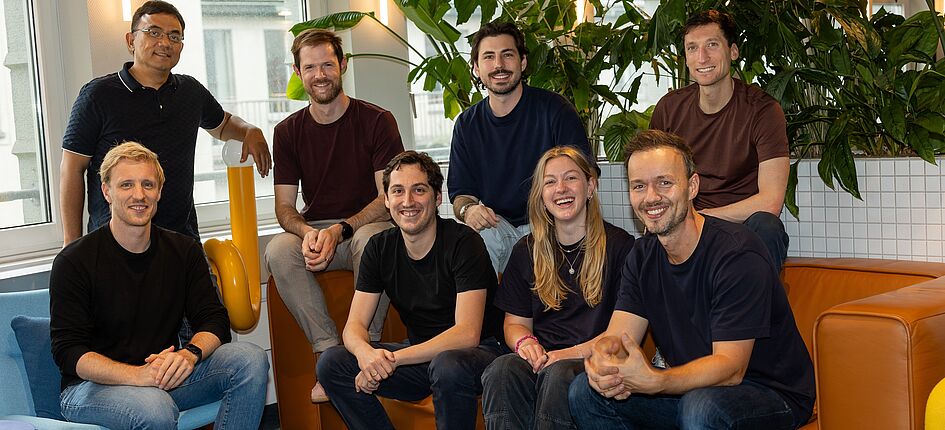
The Ahead Health team plans to launch its health services in Germany and the Netherlands from August 2026. Image: Courtesy of Ahead Health AG
News
Zurich/Jülich — The German state of North Rhine-Westphalia is providing funding to the Zurich-based cleantech company SYNHELION as part of the “Produktives NRW” programme. The aim is therefore to support a commercial facility for the production of synthetic fuels at Brainergy Park Jülich.
(CONNECT) The Zurich-based cleantech company SYNHELION has been selected by the German state of North Rhine-Westphalia to receive funding. According to a press release, the "Productive NRW " programme is set to provide support for the construction of a commercial facility for the production of synthetic fuels at Brainergy Park Jülich.
SYNHELION's solution is one of the nine market-ready projects selected by the NRW funding programme. A total of 90 million euros is available for the nine projects. The DAWN pilot plant in Jülich has industrially validated the technology developed by SYNHELIONS, a spin-off of the Swiss Federal Institute of Technology Zurich (ETH). The new facility is intended to demonstrate commercial operation. SYNHELION produces renewable synthetic fuels that can directly replace fossil fuels without requiring any modifications to existing engines or the fuel infrastructure. These include synthetic kerosene (SAF), synthetic diesel, and synthetic gasoline. According to the company, these fuels reduce CO2 emissions by up to 100 percent and are particularly well-suited for transportation sectors that are difficult to electrify, such as aviation and long-distance transport.
“Being selected for the Produktives.NRW funding programme confirms the relevance of our technology and our commercialization strategy,” Philipp Furler, co-CEO and co-founder of SYNHELION, is quoted as saying in the press release. “We would like to thank the state of North Rhine-Westphalia for supporting our project. By building our next facility in Jülich, we are strengthening Germany’s position as an industrial hub for renewable synthetic fuels and contributing to a more resilient, diversified energy supply that is less dependent on imports.” ce/ww
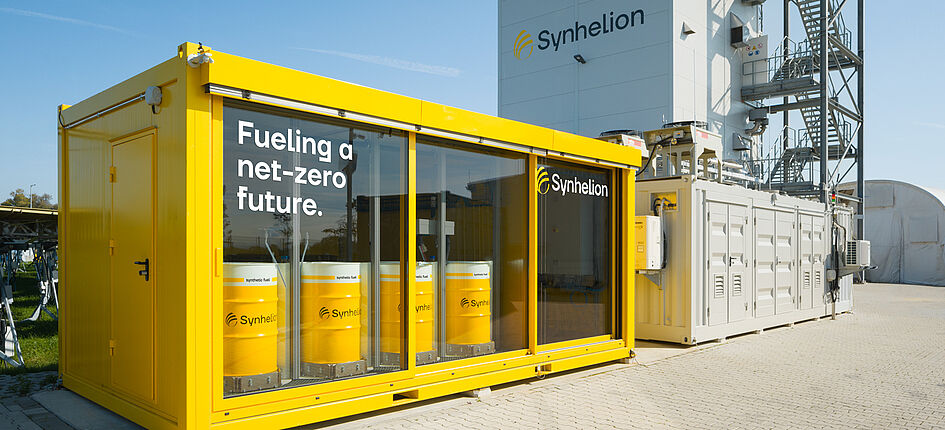
Synhelion’s first synthetic fuel plant, DAWN, is located in Jülich. Image: Synhelion
News
Dübendorf, ZH — Researchers at the Swiss Federal Laboratories for Materials Science and Technology (Empa) are investigating the extent to which existing fossil-fuel infrastructure can supply raw materials for the energy transition. Steel and copper, in particular, could be promising sources.
(CONNECT) To transition from fossil fuels to renewable energy, new infrastructure must be built. This new building, in turn, requires new raw materials and building components. Researchers at the Swiss Federal Laboratories for Materials Science and Technology (Empa) in Dübendorf are investigating the extent to which existing fossil-fuel infrastructure can provide raw materials for the energy transition. According to a press release, the team from the Technology and Society department analyzed 22 different materials found in today's coal mines, oil and gas platforms, fossil fuel power plants, and large pipelines.
“To understand the potential of this ‘urban mine,’ we first need to know what materials it contains,” says Hauke Schlesier, a researcher at Empa and lead author of a recently published study, as quoted in the press release. Copper and steel, in particular, stood out as valuable raw materials: “Copper is used in transformers and cables, while steel is used for structural components,” said Schlesier.
Recycling these two raw materials makes sense simply because recovering steel largely prevents the emission of particulate matter, carbon dioxide, and slag, while the electrochemical recovery of copper largely prevents the generation of toxic waste from primary production. In addition, the study estimates that by 2050, up to between 4 and 11 trillion dollars in follow-on costs related to environmental and health damage caused by primary extraction could be saved, according to Schlesier. The study was recently published in the journal *Nature Communications *. ce/ww
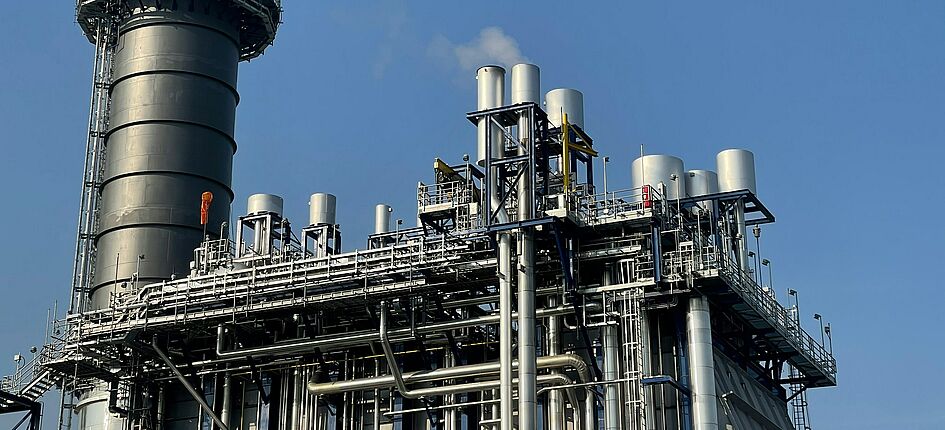
Researchers at Empa are investigating the potential of fossil fuel infrastructure as a source of raw materials for the energy transition. Stock image: ADIGUN AMPA/Unsplash
News
Zurich/Riga — The Zurich-based deep tech startup nordfen is developing simulation technology for the Latvian center of excellence Drone Force – Europe in Riga to create realistic virtual training environments. These are intended to complement the training of drone pilots throughout Europe.
(CONNECT) According to a press release, Nordfen has entered into a partnership with Drone Force – Europe. Based in the Latvian capital of Riga, this nonprofit center of excellence specialises in drone education and training and in promoting cooperation in Europe. It is contributing its training infrastructure, its expertise in training, and its training programs to this partnership.
Founded in mid-2025 by three graduates of the Swiss Federal Institute of Technology Zurich (ETH), this deep tech startup creates realistic virtual training environments using its simulation technology and leveraging geographic and satellite data. Applications for this technology include protecting critical infrastructure from unmanned threats, so-called adversarial testing, and simulations of drone attacks on industrial facilities and power grids.
As demand for these applications rises, so does the need for qualified drone pilots. "In this context, 'Drone Force – Europe offers something that no software company can achieve on its own: real students, highly qualified instructors, and field-tested curricula,'" co-founder and CEO Jack Kendall is quoted as saying in a report by "startupticker.ch." "We provide the technology to scale the entire operation—from pilot training to drone technology." The new training solutions are intended for use not only in Latvia but throughout Europe.
Nordfen's entry into the Latvian market is supported by the Latvian Investment and Development Agency. "The fact that a Swiss startup that emerged from the ETH Zurich innovation ecosystem is investing in Latvia confirms our country's high level of expertise in the field of drone technology," said Laura Štrovalde, the organization's deputy director. "I am convinced that this memorandum of understanding marks the beginning of a new phase in Latvian-Swiss innovation cooperation."
Since May 2026, Nordfen has also been part of the 20th cohort of ESA BIC Switzerland, the local accelerator program of the European Space Agency (ESA). The incubator is operated by ETH. ce/mm
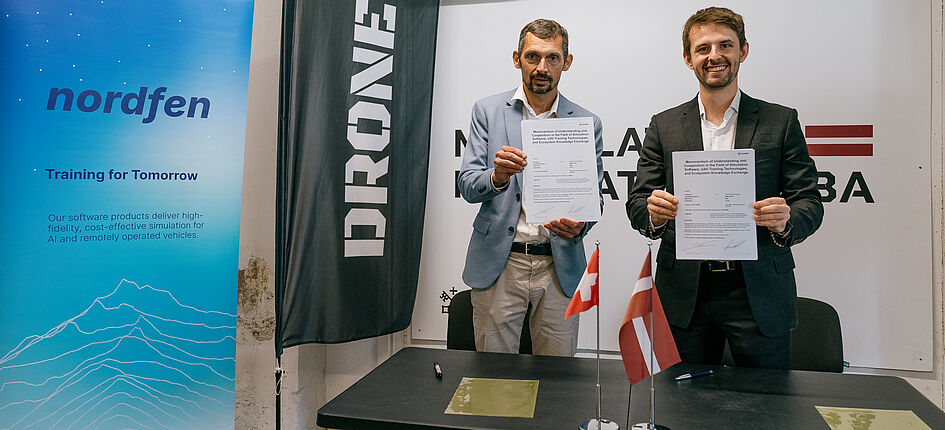
Nordfen has entered into a partnership with Drone Force – Europe. Photo: Janis Spurdzins/Investment and Development Agency of Latvia.
News
Muri near Bern/Zurich — Delemed AG, a company based in Muri near Bern that specializes in software for medical practices, is collaborating with Intonate GmbH, which is based at Technopark Zurich. As part of this, Delemed is expanding its product line to include Intonate’s artificial intelligence (AI)-powered features for medical documentation.
(CONNECT) Delemed supports doctors and medical practice staff with medical documentation. According to a press release from Intonate, the company is now also utilizing its artificial intelligence (AI) in this process. The software developed by the alumni initiative of the Student Project House at ETH Zurich —founded in 2024 and based at Technopark Zurich —records patient consultations and dictations and converts them, along with documents, into structured medical reports and progress notes.
According to the information provided, healthcare professionals can now automatically forward these medical reports to the Delemed product pex II, “without the tedious copy-and-paste step and even more efficiently,” according to Intonate. “The new features are particularly useful in those areas of daily practice that are especially time-consuming,” Delemed explains in a press release.
Based in Muri near Bern, the company has been developing and marketing software solutions since 1992 for medical, dental, and chiropractic practices, group and solo practices, small clinics, and dental hygiene practices. It describes the pex II practice management software as the centerpiece of its practice solution. The modular software integrates billing, administration, and practice management into a single, integrated interface. It supports medical practices with everything from patient management—including scheduling, service entry, billing, and collections—to electronic medical records, document management, statistics, and various interfaces.
"Intonate is thus reaching hundreds more medical practices in Switzerland and streamlining administrative processes," Intonate said in its press release. Since the use of new technologies in the medical field requires a particularly high level of security and trust, the new features will, according to the information provided, be processed exclusively in Switzerland and operated in compliance with the DSG at an ISO-certified data center. ce/mm

Delemed AG is collaborating with Intonate GmbH. Stock image: freestocks/Unsplash
News
Zurich/Munich — valuemize AG has raised an undisclosed seven-figure sum in a pre-seed funding round. The Zurich- and Munich-based startup sells software that provides cost transparency throughout a product’s entire lifecycle before it is launched on the market.
(CONNECT) Valuemize has received seven-figure funding from various investors. The venture capital firms involved were xdeck (Cologne), HEARTFELT(Berlin), OMA Business Angels (Munich), superangels (Munich), Prequel Ventures (Berlin), PRXS Technology and Investment (Berlin), as well as former executives and experts from BCG, Celonis, and McKinsey, and the founders of CDTM.
They all expect that valuemize—the startup unveiled in Munich in 2024 and registered in the Swiss Commercial Register in 2025—will be successful with its new software category, Lifecycle Cost Intelligence. “Our platform bridges the gap between ERP and PLM and enables management, R&D, finance, and procurement to simulate the financial impact of every decision in real time,” according to a statement by Michael Domanegg, who is responsible for the business as part of the leadership team.
"Until now, the people responsible for cost management have spent 'over 60 percent of their time on data archaeology,' chasing down fragmented Excel spreadsheets and internal alignments, without making use of the historical data in their ERP and PLM systems or advanced simulation capabilities," according to valuemize.
“We built valuemize because we’ve experienced this pain ourselves.” The leadership trio brings experience from product cost engineering at ABB/Accelleron, from leading technical teams at SAP, and from other major industrial companies. "We are not outsiders," writes Domanegg. "We are insiders who are fixing the system we grew up in." ce/mm

Valuemize has secured seven-figure funding from various investors. Stock image: Ambre Estève/Unsplash
News
Lucerne/Winterthur — Researchers at the Lucerne University of Applied Sciences and Arts and the Zurich University of Applied Sciences, in collaboration with partners, have developed a green brick facade. GreenBrick is designed to lower the ambient temperature around buildings by up to 4 degrees while also reducing water and resource consumption as well as noise pollution.
(CONNECT) The Lucerne University of Applied Sciences and Arts (HSLU), in collaboration with the Zurich University of Applied Sciences (ZHAW) and companies in the construction industry, has developed the GreenBrick green facade system. According to a press release, the research project—supported by Innosuisse, the Swiss Agency for Innovation Promotion—combines clay bricks with mosses and drought-tolerant plants such as ferns and cranesbill.
GreenBrick operates on the principle of evaporative cooling. Simulations and field tests show a cooling effect of up to 4 degrees Celsius in the immediate vicinity of the building. "The effect is particularly noticeable in densely built-up urban areas with little wind," said building services engineering expert Markus Koschenz of HSLU.
At 1.3 liters of water per square meter per day, the system requires less water than existing greening solutions and should preferably be irrigated with rainwater in a closed-loop system. GreenBrick is also intended to promote biodiversity and improve noise protection.
Thanks to its modular design, individual components can be replaced, dismantled, or reused. The facade system is suitable for both new construction and retrofitting existing buildings, and can be combined with other curtain wall systems, such as solar panels. “Our goal was to create a resource-efficient green facade that makes a tangible contribution to quality of life, especially in the city,” says materials designer Cornelia Gassler of HSLU.
In addition to the ZHAW, GreenBrick’s project partners include Skygardens AG (Fislisbach AG), Lüchinger Meyer Partner AG (Zurich), Waldhauser+Hermann AG (Münchenstein BL), Wagner System AG (Willisau, LU), and Zürcher Ziegeleien AG (Regensdorf, ZH). ce/as
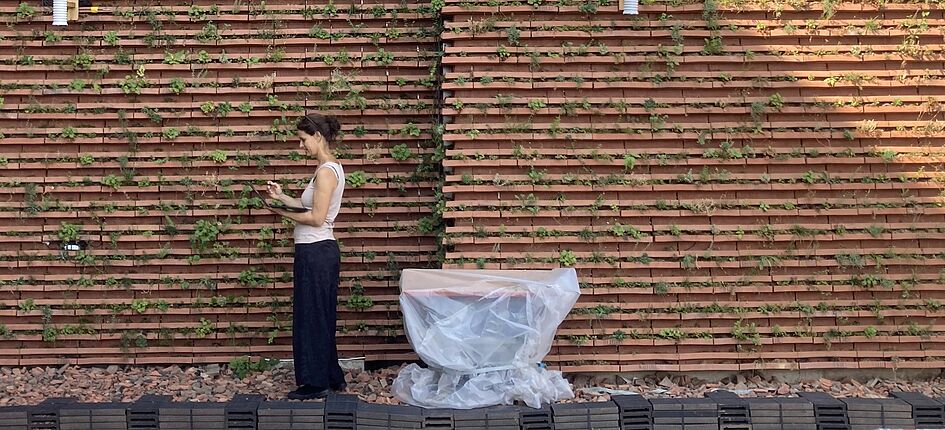
The HSLU, in collaboration with the ZHAW and companies from the construction industry, has developed the GreenBrick green façade system. Image: Lucerne University of Applied Sciences and Arts
News
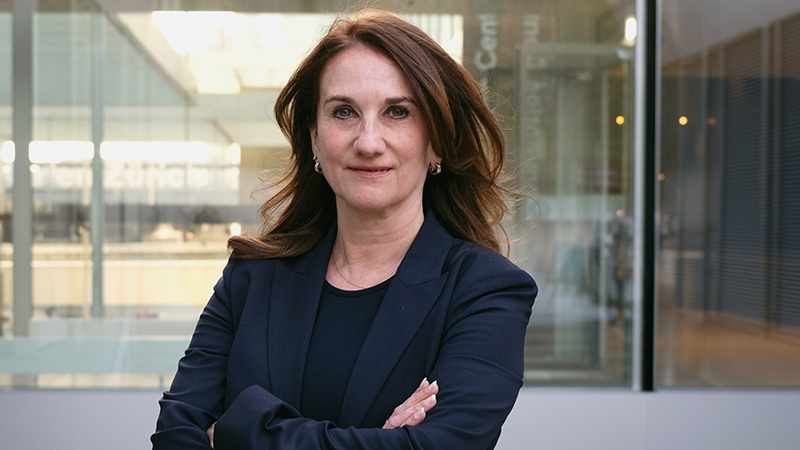
ArianeGroup and Beyond Gravity of Zurich have signed a long-term supply contract. The federally owned space agency is to supply a total of 27 payload fairings for the Ariane 6 launch vehicle developed by the Franco-German space consortium. Beyond Gravity CEO Barbara Frei-Speiter will speak at the Open-i innovation conference about Switzerland’s role in the European space ecosystem.
Long-Term Supply Contract for the Ariane 6
ArianeGroup and Beyond Gravity have signed a long-term contract for the operational phase of the European heavy-lift launch vehicle Ariane 6. The Swiss aerospace company will supply a total of 27 payload fairings for flight models 16 through 42—including 20 units that are 20 meters long and 7 units that are 14 meters long.
For Beyond Gravity, this record-breaking order represents a significant milestone, as it confirms the company's ability to manufacture highly complex launch vehicle structures in series production and to the highest quality standards. The contract also ensures that the production plant in Emmen, Lucerne, will remain at full capacity for the coming years.
“With our ability to mass-produce highly complex launch vehicle structures to the highest quality standards, we are making a key contribution to the competitiveness of the European space industry.” – Barbara Frei-Spreiter, CEO of Beyond Gravity
A Proven Partnership for Europe's Access to Space
Beyond Gravity has been manufacturing payload fairings for the European launch vehicle program since the launch of Ariane 1 in 1979. At the signing ceremony, Christophe Bruneau, CEO of ArianeGroup, emphasized that such cooperation is essential to ensuring that Europe has independent and competitive access to space.
Insights into the Swiss Space Ecosystem at Open-i
As part of the Open-i innovation conference in Zurich, Barbara Frei-Spreiter will give a presentation on current developments in the Swiss space ecosystem. Against the backdrop of the new Ariane contract, she will highlight how Beyond Gravity is holding its own in a dynamic market environment and the role that Swiss technology plays in the European space industry.
News
Zurich – ZuriQ has secured $25.5 million in seed funding. With the new capital, the quantum computing company plans to expand its team and invest in research and development. The goal is to scale the architecture of its processors to a two-dimensional plane.
(CONNECT) ZuriQ secured $25.5 million in new capital in a seed funding round. According to a press release, the Zurich-based quantum computing company plans to expand its team and invest in research and development. The funding round was led by Quantonation. Other participants included Forward.one, Extantia, Firgun Ventures, and all investors from the previous round. As early as 2025, the company—a spin-off of the Swiss Federal Institute of Technology Zurich (ETH)—had secured $4.2 million in pre-seed funding.
Quantum computers do not work with bits like conventional computers, but with quantum bits or qubits. Like a bit in a classical computer, a qubit can assume either the state 1 or 0, but it can also assume an infinite number of states in between. Qubits can also communicate with each other, i.e. be quantum entangled. One approach to "connecting" qubits is the so-called ion trap technique. Until now, these ion traps have been based on one-dimensional ion chains. ZuriQs has developed a technology using a combination of electric and magnetic fields to trap ions in a two-dimensional grid. To this end, the company has developed a demonstrator that demonstrates how the technology works in a 3x3 array—that is, with nine ions. The manufacturing processes are now to be scaled so that the increased number of ions will enable the construction of a commercially viable chip. “The companies that kicked off the race with ion traps started with one-dimensional designs, which, while useful intermediate steps, do not address the real challenge: successfully transitioning to two dimensions in order to scale up production,” Pavel Hrmo, CEO of ZuriQ, is quoted as saying in the press release. "This funding enables us to translate our technological momentum into commercial scaling." ce/eb
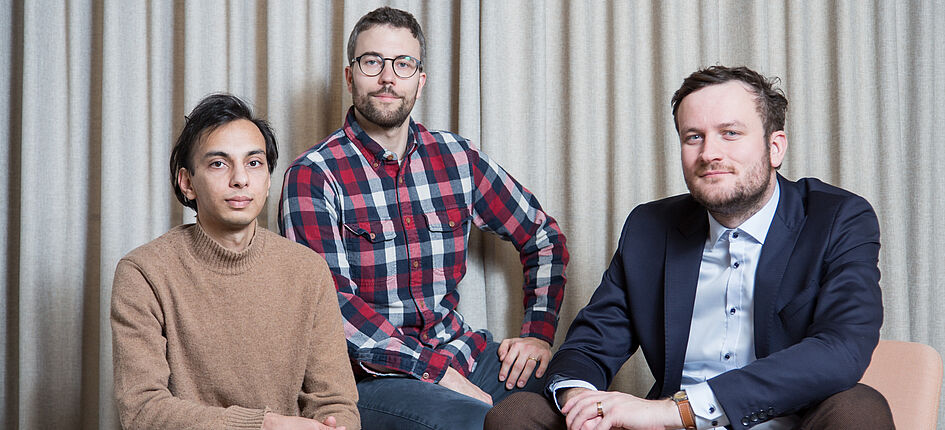
ZuriQ founders: (from left): Shreyans Jain, Tobias Saegesser and Pavel Hrmo. Photo: Daniel Kunz, www.danielkunzphoto.com, Adliswil, Switzerland
You need to load content from reCAPTCHA to submit the form. Please note that doing so will share data with third-party providers.
More InformationYou are currently viewing a placeholder content from Turnstile. To access the actual content, click the button below. Please note that doing so will share data with third-party providers.
More InformationYou are currently viewing a placeholder content from Vimeo. To access the actual content, click the button below. Please note that doing so will share data with third-party providers.
More InformationYou are currently viewing a placeholder content from YouTube. To access the actual content, click the button below. Please note that doing so will share data with third-party providers.
More InformationYou need to load content from reCAPTCHA to submit the form. Please note that doing so will share data with third-party providers.
More Information