News
Schlieren, Canton of Zurich/Täby — The Swedish company Europa Biosite is taking over distribution of the newly launched immunoMUSE kits from arcoris bio. The goal is to expand the reach of the MUSE platform—developed by the company based at the Bio-Technopark Schlieren-Zurich—in Europe and North America.
(CONNECT) Arcoris bio, based at the Schlieren-Zurich Bio-Technopark, and the Swedish company Europa Biosite have entered into a partnership. According to a press release, the provider of products and services for the life sciences industry will distribute the newly launched immunoMUSE kits from arcoris bio in several European countries and in North America.
arcoris bio’s MUSE technology enables the simultaneous detection of multiple biomarkers “with exceptional sensitivity and streamlined workflows,” according to the company. “By facilitating the detection of target molecules at low concentrations in a single sample and enabling higher sample throughput, MUSE is ideally suited to advance applications in digital pathology and translational research.”
CEO Matyas Vegh describes Europa Biosite as an ideal distribution partner: “By combining our innovation with Europa Biosite’s extensive commercial and scientific network, we can help more researchers gain valuable biological insights and drive the next generation of applications in spatial biology and digital pathology.”
According to Sebastian Buchert, Group Product Director at Europa Biosite, the technology meets the growing demand for highly sensitive multiplex immunofluorescence workflows. "We are convinced that immunoMUSE offers researchers a unique opportunity to make the most of their existing antibody expertise while achieving outstanding analytical performance. We look forward to offering this solution to our customers throughout Europe and North America." ce/mm

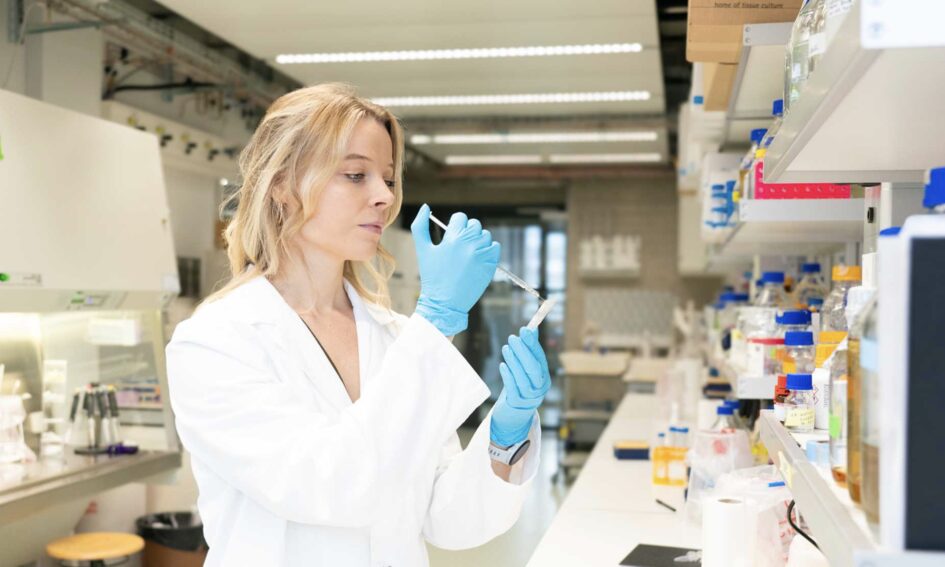
Arcoris bio and the Swedish company Europa Biosite have entered into a partnership. Image: Courtesy of Arcoris bio AG
News
Zurich — Researchers at the Swiss Federal Institute of Technology in Zurich (ETH) have studied the planet Venus using computer analyses and simulations. Contrary to previous assumptions, they were able to detect volcanic and tectonic activity.
(CONNECT) Researchers at the Swiss Federal Institute of Technology in Zurich (ETH) have used new computer models to demonstrate that Venus is a tectonically active planet. According to a press release , the team led by Taras Gerya, professor of geodynamics in the Department of Earth and Planetary Sciences, was able to use high-resolution, three-dimensional images to show that changes to the surface had occurred only very recently. The research refutes previous assumptions that Venus is geologically inactive.
Using measured data, the researchers simulated rift valleys on Venus in high resolution and, for the first time, in three dimensions. The resulting simulations showed that rift flanks rise when younger geological movements occur. About 8 percent of Venus's surface is covered by rift zones, some of which are about 40 kilometers long. The current simulations are also confirmed by images from the Magellan probe, which completed its mission in the 1990s.
Based on the models and calculations, the researchers conclude that Venus remains an active planet to this day. "The results help us better assess the tectonic activity on Venus," Taras Gerya is quoted as saying in the press release.
The European Space Agency (ESA) is planning the EnVision mission for the early 2030s. Gerya and ETH geophysics professor Paul Tackley, along with their collaborators, are currently developing instruments that the Venus orbiter will use to scan the planet's surface. The latest study has been published in the journal*Nature Geosciences*. ce/ww

Researchers at ETH Zurich have used new computer models to demonstrate that Venus is a tectonically active planet. Image: JPL-Caltech/NASA
News
Winterthur — Medyria has received 3.5 million Swiss francs from investors. With this move, the medtech company—which specializes in sensor technologies for cardiac catheter measurements—aims to accelerate the approval process and market launch of its flagship product, PyCath, in the United States.
(CONNECT) Medyria AG has completed a funding round totaling 3.5 million Swiss francs. According to a press release, this funding will enable the medtech company, based at Technopark Winterthur, to take “a decisive step toward the global commercialization of the PyCath system.”
PyCath provides cardiology professionals with real-time information on the key physiological parameters CRF (coronary flow reserve) and FFR (fractional flow reserve), which provide insights into blood flow to the heart muscle and narrowing of the coronary arteries. In addition to these indices, PyCath measures blood flow velocity using its own sensor.
The latest round of funding is intended to drive Medyria’s expansion in the U.S., according to Medyria founder and CEO Mauro M. Sette: “This funding not only confirms the disruptive potential of our PyCath technology, but also gives us the necessary leeway to navigate the FDA ’s 510(k) clearance process and build out our commercial infrastructure in the United States.” "We are fully focused on making this groundbreaking diagnostic solution available to American physicians, with the ultimate goal of improving treatment outcomes for patients worldwide."
This latest investment follows a funding round last year in which Medyria secured 1.5 million Swiss francs for the further development of PyCath. As early as 2012, Medyria had won the Venture Kick funding program; in 2016, it was named one of the TOP 100 Swiss Startups; and in 2018, it completed a Series B funding round of 3.7 million Swiss francs. ce/mm

Medyria AG has completed a funding round worth 3.5 million Swiss francs. Stock image: fauxels/Pexels
News
Villigen AG/Zurich — Researchers at the Paul Scherrer Institute (PSI) and the University of Zurich (UZH) have discovered and deciphered the structure of a protein that, among other things, plays a role in tumor growth in half of all melanomas. Researchers are now looking for active compounds that block this structure.
(CONNECT) Researchers at PSI and UZH have paved the way for new cancer therapies that could be used to treat one of the most dangerous forms of cancer: malignant melanoma. They have discovered a previously unknown protein structure, a mutation of the protein called B-Raf.
Half of these tumors—also known as melanomas—and an additional 7 percent of all other types of cancer exhibit a mutation in this protein. "Cancer tumors affected by B-Raf mutations are considered particularly aggressive and difficult to treat," explains Yasushi Kondo of the PSI Center for Life Sciences in a PSI press release. He is also the lead author of the team's study, which has now been published in the journal *Molecular Cell*.
The B-Raf protein is part of a key signaling pathway in all human cells. When it receives the appropriate signal, two B-Raf proteins bind to form what is known as an active dimer, thereby giving the go-ahead for the next switch. If it fails to come on, traffic comes to a stop. Mutated B-Raf bypasses this control mechanism, allowing the tumor to grow unchecked.
During their investigations of the molecular structure of B-Raf dimers at the Swiss Synchrotron Light Source at PSI and at the Diamond Light Source in Didcot, England, as well as their analyses of human cells at the University of Zurich, the scientists discovered a previously unknown form of B-Raf dimers. This is linked to another protein, MEK1. "In this study, we were able to produce, for the first time, a high-resolution visualization of the exact structure of this formation in its active, functional form," said Kondo.
This is helpful in the development of drugs. Because “the more precisely we know the structure of the building blocks, the more precisely we can design active ingredients that are truly compatible.” For this reason, researchers at PSI, with support from the Swiss Cancer Research Foundation, are already searching for molecules that bind to the protein complex that has now been decoded and can thus block the unwanted signal. ce/mm

PSI researcher Yasushi Kondo is investigating how the signalling protein B-Raf influences the growth of cancer cells and how this growth can be prevented. Image: Markus Fischer/Paul Scherrer Institute (PSI)
News
Zurich – The Zurich-based company Gieni has launched the autonomous AI agent system GieniABX. With this new solution, the company aims to close the so-called “execution gap” in existing artificial intelligence (AI) systems and enable companies to execute business processes autonomously.
(CONNECT) The Zurich-based company Gieni has launched the autonomous AI agent system GieniABX. According to a press release, the platform coordinates multiple interacting AI agents that independently plan, coordinate, and complete complex tasks. The goal is to close the so-called "execution gap" in today's AI applications and to carry out business operations largely autonomously.
According to the company, GieniABX can connect to more than 3,000 applications, including Microsoft Outlook and industry-specific systems. The platform is controlled entirely through natural language and continuously learns from the tasks it performs to constantly improve its performance.
Companies also benefit from integration into existing Microsoft environments. GieniABX is natively integrated with Microsoft 365, Microsoft Teams, and Microsoft Copilot. The solution was developed on Microsoft Azure and uses Microsoft AI Foundry to orchestrate AI workflows, as well as Microsoft Entra ID for identity and security management.
Another key focus of the platform is data sovereignty. According to Gieni, cloud operations are conducted exclusively on Microsoft servers in Europe. In addition, the solution can be run entirely on-premises (on your own devices) if needed.
"Swiss companies want the productivity gains that AI offers, but not at the expense of their data sovereignty." GieniABX can run on servers in Switzerland or locally at the customer's site, as desired, and does not store passwords or chat histories. "Through the Microsoft Marketplace and our channel partners, it's now easy for any company to get started," Timur Göreci, Gieni's Chief Operating Officer, is quoted as saying in the press release. ce/ja

(from left to right) Timur Göreci and CEO Derek Tanner have launched GieniABX, the autonomous AI agent system, with Gieni. Photo: Stöhlker AG
News
Zurich/Freiburg im Breisgau/Ingolstadt — On July 23, Mimic Robotics unveiled the new FLUX-mimic video-action model, developed in collaboration with the German company Black Forest Labs. In Audi’s production facilities, robots are already able to visually learn complex manipulation tasks in a very short amount of time.
(CONNECT) Mimic Robotics has introduced FLUX-mimic, a next-generation video action model. The Zurich-based company specializing in physical artificial intelligence (AI) developed it in collaboration with Black Forest Labs from Freiburg im Breisgau. It is already being tested and implemented at the German automaker Audi.
According to a press release, FLUX-mimic combines mimic's expertise in the fields of robot learning, precise manipulation, and production implementation with the visual intelligence architecture of Black Forest Labs' new FLUX 3 video model. With mimic-video, mimic had broken new ground and introduced innovative video-action models—that is, AI systems that link visual data, such as videos, to specific actions or movements.
This is the foundation of FLUX-mimic: It uses a generative video model that already understands dynamics and behavior through extensive pre-training on video data. Next, an action decoder is trained to predict robot actions directly from this visual prediction. According to mimic, this approach allows the model to be fine-tuned for a specific manipulation task using just 30 minutes of robot data, whereas earlier approaches required 30 hours or more. This is intended to shorten implementation cycles from months to weeks.
At Audi, these robots have already performed complex manipulation tasks “that would have been simply impossible with conventional robotics,” according to Christoph Schneider of the Audi Production Lab. Mimic co-founder and head of product Stephan-Daniel Gravert describes Audi as “exactly the manufacturing partner for whom we developed FLUX-mimic.” Their production environments require automation that is flexible enough to handle unstructured tasks, reliable enough for continuous operation, and can be integrated without months of development work. Through this partnership with Audi, we aim to demonstrate that FLUX-mimic meets these requirements in real production lines.” ce/mm
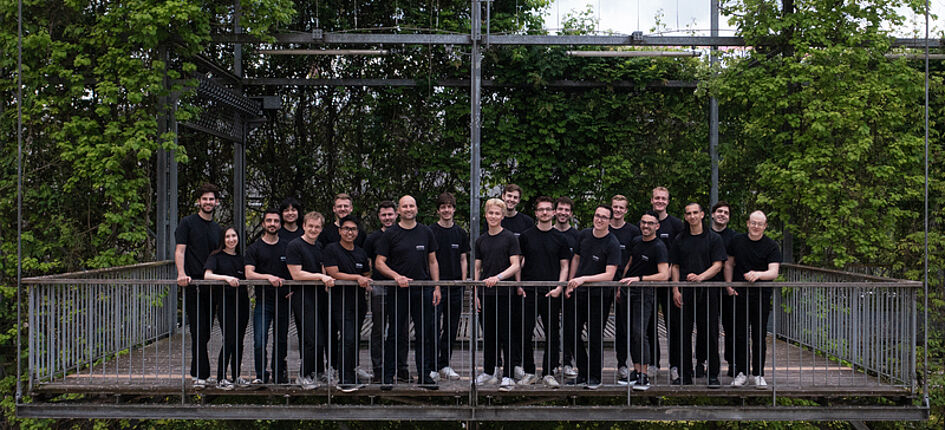
The team at Mimic Robotics has launched FLUX-mimic, a next-generation video action model. Image: Mimic Robotics AG
News
Zurich — The Swiss Federal Institute of Technology Zurich (ETH) has launched a new startup support programme in partnership with UBS. UPortunity is designed to help young entrepreneurs turn their ideas into marketable businesses.
(CONNECT) The Swiss Federal Institute of Technology Zurich (ETH) has launched the new UPortunity support program for startups in partnership with UBS. According to a press release, the university aims to use this initiative to fill a gap in its support programmes related to entrepreneurship. In addition to researchers who can apply for funding from ETH funds, this initiative is also intended to support recent graduates.
A new cohort begins twice a year. Teams with up to five members are eligible to participate. There is a project budget of 5,000 francs for each project, and three members of a selected team will also receive financial support for three months. Through various activities, the teams are intentionally mixed while working on the projects to encourage a lively exchange of ideas and foster connections.
“There is an incredible wealth of talent and ideas at ETH. With this new programme, we can now also support people who have developed a good idea during their studies and would like to bring it to life after graduation,” Cornelia Walther, director of the UPortunity programme, is quoted as saying in the press release.
UPortunity is funded as part of the partnership between ETH Zurich and UBS. The bank also contributes its expertise through consultations and workshops. Lukas Döbelin, Head of Academic Partnerships at UBS, sees the programme as “an environment that combines talent, entrepreneurial spirit, and concrete support.” According to the press release, Cara Ammann has already benefited from the programme. She is now continuing to drive the development of a prosthetic socket through her startup, Softletics. ce/ww

Young entrepreneur Cara Ammann (centre) explains to interested visitors at Demo Day how her flexible prosthetic socket works. Photo: Jasmin Frei/ETH Zurich
News
Dübendorf, ZH/Greater Noida — Loft Dynamics is partnering with the Indian helicopter company Indocopters Private Limited. As part of the partnership, Indocopters is installing Loft Dynamics’ first Airbus H125 TXi VR full-motion simulator in India and establishing the first VR training center for the Airbus H125 in South Asia.
(CONNECT) Indocopters, an Indian helicopter maintenance, repair, and overhaul (MRO) provider, is installing the first Airbus H125 TXi VR full-motion simulator from Loft Dynamics in India and establishing the first virtual reality (VR) training center for the Airbus H125 in South Asia, according to a press release. The goal is to support the growing H125 fleet in the region with a modern and easily accessible training facility.
The H125 TXi VR Full-Motion Simulator features a motion system with six degrees of freedom, an integrated glass cockpit, and a 360-degree VR environment with force feedback controls. This allows for realistic and safe training in both standard procedures and emergency situations, as well as in difficult weather conditions, high-altitude mountain operations, and landings in confined spaces.
According to Loft Dynamics, Indocopters will use the simulator for training on the Airbus H125, emergency and safety training, and select basic training courses. In addition to Indocopters, partner companies such as Global Vectra Helicorp Limited and other operators in the region are also expected to benefit from the facility. The simulator will be installed at the company's headquarters in Greater Noida, near New Delhi.
The investment is driven by the growing demand for the Airbus H125 in South Asia. Since Airbus Helicopters and Tata Advanced Systems launched India's first private H125 assembly line in early 2026, local production capacity has been growing. According to Loft Dynamics, more than 80 H125 helicopters are already in service in India, as well as in Nepal, Bhutan, Bangladesh, Sri Lanka, and the Maldives.
“The H125 serves as the backbone of numerous helicopter missions on the Indian subcontinent—from transport missions to rescue operations and high-altitude operations,” Ajay Shah, CEO of Indocopters Private Limited, is quoted as saying in the press release. "With the flight simulator from Loft Dynamics, we can train for critical scenarios—such as emergencies, difficult weather conditions, or landings in confined spaces—in a realistic, safe, and repeatable manner." ce/ja
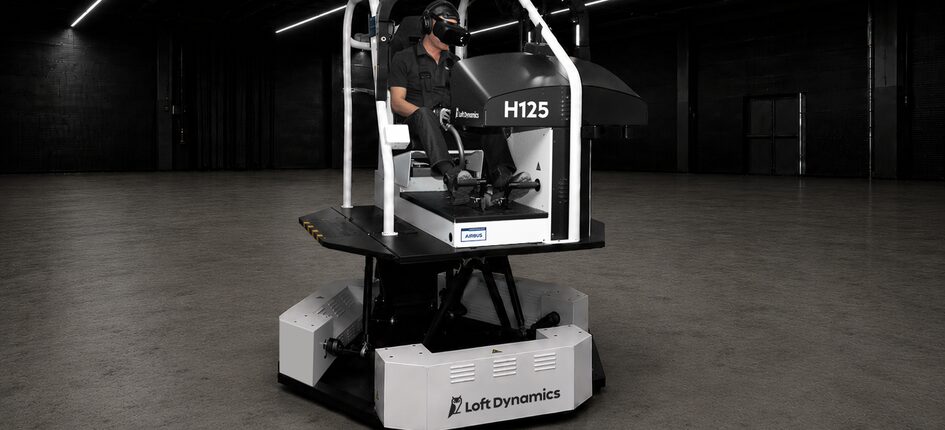
Indocopters is installing the first Airbus H125 TXi VR full-motion simulator from Loft Dynamics in India. Image: Courtesy of Loft Dynamics AG
News
Schlieren, Canton of Zurich/New York — Neurimmune, a biotech company based in Schlieren, will receive up to $425 million from Royalty Pharma for a portion of its licensing rights to the drug Cliramitug. The active ingredient is used to treat the rare heart disease amyloid transthyretin cardiomyopathy.
(CONNECT) Neurimmune has sold a portion of its licensing rights to the active ingredient cliramitug to Royalty Pharma of New York, according to a press release. The Schlieren-based company will receive $425 million for this, of which $125 million will be paid up front.
Cliramitug is used to treat transthyretin amyloidosis with cardiomyopathy (ATTR-CM), a rare and life-threatening heart disease. In 2022, Neurimmune entered into an exclusive global collaboration and licensing agreement with Alexion for cliramitug. Alexion is a subsidiary of the British pharmaceutical company AstraZeneca that specializes in rare diseases. Alexion is also responsible for the ongoing Phase 3 trial. The agreement now reached with Royalty Pharma covers 3 to 4 percent of the licensing revenue from global sales of Cliramitug. Royalty Pharma will pay $125 million up front and an additional $125 million in the first quarter of 2027. The remaining $175 million will be paid out based on certain milestones.
“We are fully committed to our highly successful partnerships with Alexion and AstraZeneca, but we are also pleased to close the transaction with Royalty Pharma,” Roger M. Nitsch, CEO and President of Neurimmune, is quoted as saying in the press release. "The proceeds will be used to fund Neurimmune's internal research and development programs, and we will retain a significant portion of our royalty payments and milestone payments for Cliramitug."
Neurimmune was spun off from the University of Zurich in 2006 and is based in the Bio-Technopark Schlieren-Zurich. ce/jh
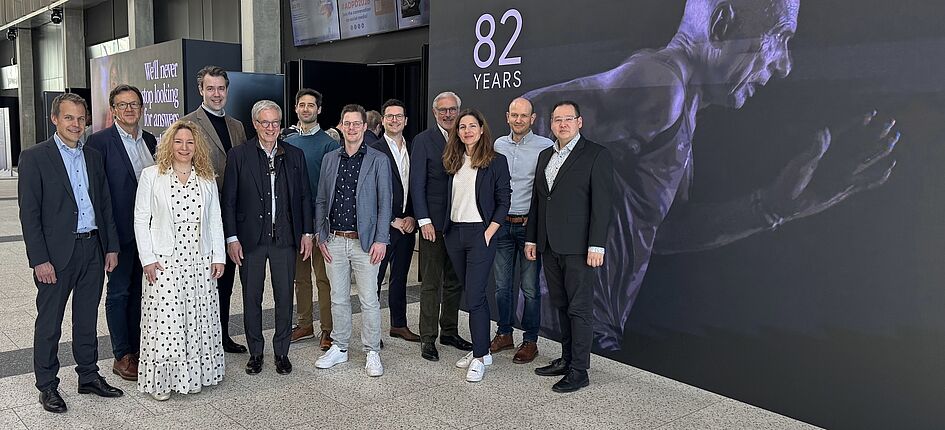
The Neurimmune team is to receive 425 million dollars. Image: courtesy of Neurimmune AG
News
AVI-SPL, provider of technology solutions that transform how people and technology connect, today announced the appointment of Natalia Landolt as General Manager for Switzerland.
ZURICH, Switzerland: AVI-SPL, provider of technology solutions that transform how people and technology connect, today announced the appointment of Natalia Landolt as General Manager for Switzerland.
Based in Zurich, Landolt will lead AVI‑SPL’s Swiss operations, driving business growth, customer success, operational excellence, and team development across a key European market and a major partner of the EU.
With more than 20 years of international leadership experience spanning business development, enterprise sales, and strategic account management, Landolt brings extensive expertise working with customers and partners across Switzerland, EMEA, and global markets. Throughout her career, she has successfully led growth initiatives, developed high-performing teams, and cultivated strong customer relationships.
Switzerland remains a strategic market for AVI-SPL as organisations continue to invest in workplace transformation, collaboration technologies, and digital experiences.
“Our recent expansion into Switzerland marks a significant step in our European growth strategy, and Natalia’s appointment is central to establishing AVI‑SPL’s presence in this key market,” said Michael Kellaway, Managing Director, Europe, AVI‑SPL. “Her proven leadership, commercial expertise, and deep understanding of the Swiss market position her to build our operations from the ground up, win trust with local customers, and deliver the exceptional outcomes that will define our long‑term success in Switzerland.”
In her new role, Landolt will work closely with AVI-SPL teams across Europe and globally to strengthen the company's market presence and help customers achieve greater business value through innovative technology solutions.
"I am excited to join AVI-SPL at such an important time for both the company and the industry," said Natalia Landolt, General Manager, Switzerland, AVI-SPL. "Organisations are increasingly looking for trusted partners to help them create connected, collaborative, and technology-enabled experiences. I look forward to working alongside our talented teams and customers to build on AVI-SPL's strong foundation in Switzerland and accelerate future growth."
Outside of her professional responsibilities, Landolt mentors student projects at a Swiss university and serves as a Board Member of Swiss Marketing Zurich.
About AVI-SPL
AVI-SPL is a digital enablement solutions provider who transforms how people and technology connect to elevate experiences, create new value, and enable organizations to thrive and grow. As the provider of collaboration technology solutions, including managed services, AVI-SPL’s highly-trained team works hand in hand with organizations worldwide – including over 86% of Fortune 100 companies – to strategize, design, deploy, manage, and support AV and UC solutions that are simple to use, scalable, serviceable, and measurable to ensure business objectives are achieved.

News
Zurich — Squirro, a company specialising in artificial intelligence (AI), has unveiled its so-called Agent Catalog. It includes 13 pre-built AI agents for finance, human resources, legal, sales, operations, and IT. The agents learn from one another and do not require a separate security clearance.
(CONNECT) Squirro, a developer of AI platforms for businesses, has released its AI agent catalog, which, according to a press release, includes more than a dozen pre-built AI agents for the finance, human resources, legal, sales, operations, and IT departments. Almost all of the agents have already been tested in production, with some having been developed in collaboration with customers in live environments.
According to Squirro, the catalog differs from conventional AI solutions in that new agents build on an existing foundation. While many AI applications must be developed from scratch for each new use case, Squirro’s approach leverages existing connections to enterprise systems and data, as well as existing security and compliance approvals.
If a company initially deploys an agent to solve a specific problem, subsequent agents can build on that foundation of knowledge. Instead of starting from scratch, they take over, among other things, system integrations, data access, and compliance and security audits that have already been conducted.
According to the company, this approach is particularly relevant for regulated industries. In that context, security and compliance audits often account for a significant portion of the implementation effort. The agents also draw on verified company data, cite sources to support their answers, and forward unclear cases to staff members. “The value lies not in a single agent, but in what the second agent learns from the first. The key question is whether each implementation lays a foundation that makes the next one faster—or whether companies have to start from scratch every time,” says Dave Clarke, CEO and co-founder of Squirro.
Squirro's clients include the Deutsche Bundesbank, the European Central Bank, and Henkel, among others. ce/ja

Squirro has published its catalogue of AI agents. Stock image: Christopher Gower/Unsplash
News
New York — The Swiss Federal Institute of Technology Zurich (ETH) ranks 9th in the Artificial Intelligence (AI) University Index compiled by the New York-based AI communications agency 5W. This first global ranking of its kind evaluates which universities stand out as academic hubs for AI development.
(CONNECT) Following the top eight universities in the 2026 AI University Index, ETH leads the second-best group of eight additional universities that scored between 77.9 and 70 points. This first edition of the rankings was compiled by the AI communications agency 5W, which has been named PR Agency of the Year multiple times at the American Business Awards. The top four spots are held by North American universities with scores ranging from 96.0 to 88.2. Stanford University holds the top spot. Next in line are the Massachusetts Institute of Technology (2), Carnegie Mellon University (3), and the University of California, Berkeley (4).
ETH also has the highest index of any European university. Following behind them in 10th and 11th place are the British universities of Oxford and Cambridge. The Swiss Federal Institute of Technology in Lausanne ranks 30th, and the Technical University of Munich ranks 40th. The next three spots were taken by Imperial College London (41), the Sorbonne in Paris (42), and the University of Edinburgh (43).
Of the 50 universities evaluated, 25 are located in the United States and seven in Europe. Three are based in Canada, three in China, and three in India. Six others are based in other Southeast Asian countries, and two are based in Israel. They were all evaluated based on six evaluation criteria.
"AI is being developed at a small number of universities, and this concentration is structurally driven," Ronn Torossian, founder and CEO of 5W AI Communications, is quoted as saying in a press release. “This benchmark is designed to help university administrators, prospective doctoral students, HR managers in the private sector, and donors identify where AI is actually being developed—using a reproducible methodology that anyone can verify and reweight.” ce/mm

The Swiss Federal Institute of Technology Zurich ranks 9th in 5W’s AI University Index. Image: ETH Zurich/Gian Marco Castelberg
You need to load content from reCAPTCHA to submit the form. Please note that doing so will share data with third-party providers.
More InformationYou are currently viewing a placeholder content from Turnstile. To access the actual content, click the button below. Please note that doing so will share data with third-party providers.
More InformationYou are currently viewing a placeholder content from Vimeo. To access the actual content, click the button below. Please note that doing so will share data with third-party providers.
More InformationYou are currently viewing a placeholder content from YouTube. To access the actual content, click the button below. Please note that doing so will share data with third-party providers.
More InformationYou need to load content from reCAPTCHA to submit the form. Please note that doing so will share data with third-party providers.
More Information