News
Schlieren, Canton of Zurich — InSphero is now offering laboratories involved in drug development human neural microtissues for in vitro safety assessment of the central nervous system. This allows neurotoxicity and functional impairments to be detected early in the studies.
(CONNECT) With its new product, 3D-InSight, InSphero enables early safety assessment for the central nervous system in drug development. The global provider of 3D cell-based testing methods and organ-on-a-chip systems for laboratory medicine offers it ready-to-use: The cortical 3D neural microtissue—which mimics the cerebral cortex—is available in so-called well plates or microtiter plates with standard 96- or 384-well formats.
Human neural microtissues are three-dimensional spheroids that better replicate the architecture, cell-cell interactions, and functional neural network activity of brain tissue than conventional two-dimensional in vitro cultures. According to a press release from the company, which is based at the Bio-Technopark Schlieren-Zurich, these reflect the complex neural biology that can be used in scalable neurotoxicity screenings to assess how safe a drug candidate is for the human central nervous system.
According to the information provided, the microtiter plates—each well of which contains a microtissue sample—allow for immediate screening and long-term studies lasting up to four weeks. This saves biotech companies the time, cost, and complexity of conducting their own 3D modeling and allows for early conclusions regarding neurotoxicity and functional impairments of the central nervous system during the course of the study.
Laboratories have the option of choosing between two predefined neuron-to-astrocyte ratios and cell count formats, depending on their experimental goals. Functional data can be obtained through calcium imaging or electrophysiology. The microtissues remain viable and functional for up to eight weeks. This supports long-term treatment with medications at the clinically prescribed dosage.
InSphero was spun off from the University of Zurich and the Swiss Federal Institute of Technology Zurich in 2009. ce/mm
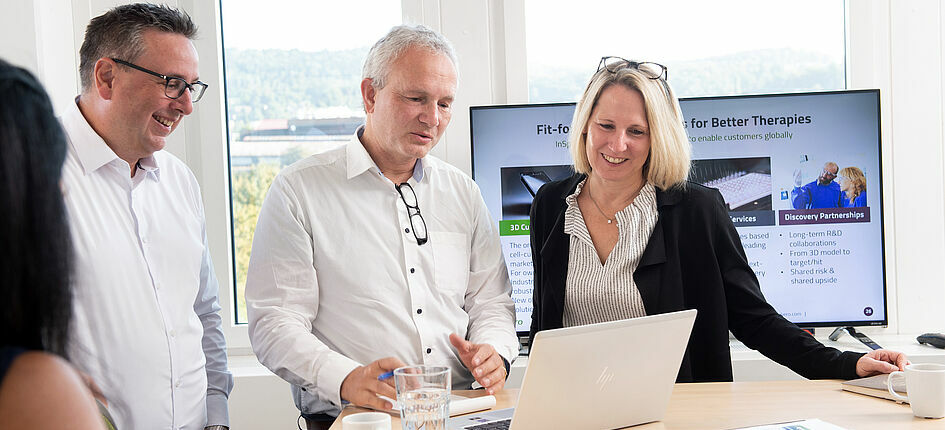
InSphero enables early-stage safety assessment for the central nervous system; pictured (from left to right) are Dr Jan Lichtenberg (CEO and co-founder), Dr Wolfgang Moritz (Head of External Collaborations, co-founder) and Dr Frauke Greve (Senior Product Manager). Photo: courtesy of InSphero AG
News
Zurich — Aionic AG has been selected for SPRIN-D, a funding initiative of the German Federal Agency. The company, which develops artificial intelligence-powered technologies for industrial data, is receiving 3 million euros in funding as part of the initiative. The project is scheduled to last two years.
(CONNECT) The Zurich-based startup Aionic AG (Aionic Labs) has been selected for a funding initiative by the German Federal Office for Innovation (SPRIN-D). As part of the Next Frontier AI initiative, the company is receiving a grant of 3 million euros to develop its artificial intelligence (AI)-powered technology for complex industrial data, according to a press release. In the next round of funding, Aionic Labs—which was founded by the Swiss Federal Institute of Technology Zurich (ETH) and Stanford University in California—could secure up to 26.5 million euros in funding.
Aionic is one of the ten companies selected to participate in the two-year program. Aionic Labs develops language models—known as Large Language Models (LLMs)—that, unlike well-known LLMs such as ChatGPT, can understand time-series data. Their range of applications extends from machine sensor data from industrial facilities to vital signs of patients in hospitals, load profiles of power grids, and inventory and supply chain data in logistics, all the way to transaction data from banks, insurance companies, and telecommunications firms.
“Europe boasts excellent research, a highly skilled workforce, and decades of specialized experience in critical industries such as manufacturing, healthcare, energy, telecommunications, financial services, and logistics. ‘Our AI models combine Europe’s strengths and take this strong foundation to the next technological level,’ says Robert Jakob, CEO and co-founder of Aionic Labs and director of the Agentic Systems Lab at ETH Zurich.” ce/ww

The co-founders of Aionic, Robert Jakob (left) and Thomas Kaar, have been selected with their company for a funding scheme run by SPRIN-D. Photo: Felix Adler/SPRIND
News
Zurich – The Singularity Group has completed the semi-annual rebalancing of its investment strategy. The Zurich-based investment boutique is continuing to focus on select semiconductor companies in the second half of the year. In addition, the company has been granted a FINMA license as a collective asset manager.
(CONNECT) The Singularity Group (TSG), a Zurich-based investment boutique and a collective asset manager newly licensed by the Swiss Financial Market Supervisory Authority (FINMA), has completed its semi-annual rebalancing of its investment strategy. As the company announced in a press release, it will continue to focus on select semiconductor technologies that are considered key components for the development of high-performance artificial intelligence (AI) systems.
The strategy for the second half of the year focuses on companies in the fields of assembly and interconnect technology, as well as high-bandwidth memory, a vertically stacked high-performance memory solution. According to TSG's assessment, these technologies face structural bottlenecks along the AI value chain, even though they are indispensable for the next generation of AI chips. "The barriers to entry in these niche markets are extremely high, and so is the demand. "This is the perfect combination for higher pricing and, as a result, unexpectedly strong earnings growth, which caught some investors off guard," CEO Evelyne Pflugi is quoted as saying in the press release. With this rebalancing, TSG is also reducing its exposure to companies whose business models are primarily based on cloud services. "We see hardly any pricing power left here," said Pflugi.
In addition to adjusting its investment strategy, TSG has also announced that it has retained its FINMA license. "This will enable access to new institutional client segments and strengthen networking within the asset management industry," CIO Pierre Guillier is quoted as saying. "This is an important milestone for us," said Guillier. Starting in August, Pierre Guillier and Alessia Favotto will take over management of the flagship Singularity Fund. Since the fund tracks the Singularity Index, the rule-based investment strategy remains unchanged. According to the company, the Singularity Fund ranks among the top ten funds in its Morningstar peer group across all time horizons. ce/ja

The Singularity Group has completed its half-yearly rebalancing of its investment strategy. Stock image: fauxels/Pexels
News
Dübendorf, ZH/Paris — Loft Dynamics is launching its first virtual reality (VR)-enabled flight simulator for the Airbus H145’s multi-crew configuration. Babcock France is one of the first companies to use the simulator for the helicopter.
(CONNECT) Loft Dynamics, a company based in Dübendorf, has launched its new H145 Multi-Pilot VR simulator. According to a press release, this is the first simulator that allows pilots and flight crews to train together in VR. The simulator is now available to operators and training organizations. Babcock France, a subsidiary of the British Babcock International Group, is among the first companies to have chosen the new platform.
The simulator was developed in close collaboration with Airbus Helicopters. It is based on flight dynamics, system data, and helicopter software provided directly by Airbus Helicopters, thereby simulating the helicopter's aerodynamics and performance characteristics. Pilots and crew members can thus train in a shared virtual environment for normal, abnormal, and emergency procedures.
“The H145 will be in service with a large global community that flies some of the most demanding missions in aviation. Until now, however, operators have had no way to train entire crews together in virtual reality,” explains Sébastien Borel, CEO of Loft Dynamics, in the press release. "Our H145 Multi-Pilot VR simulator changes this by making realistic, aircraft-specific multi-crew training accessible enough to become an integral part of pilot and crew training."
Babcock France is one of the largest operators of helicopter emergency rescue services in France. The company plans to use the Loft Dynamics simulator as part of its H145 training program and, in addition, to make the simulator available to operators and pilots throughout France and neighboring countries. This is intended to address the shortage of H145 simulators in the region. ce/nta
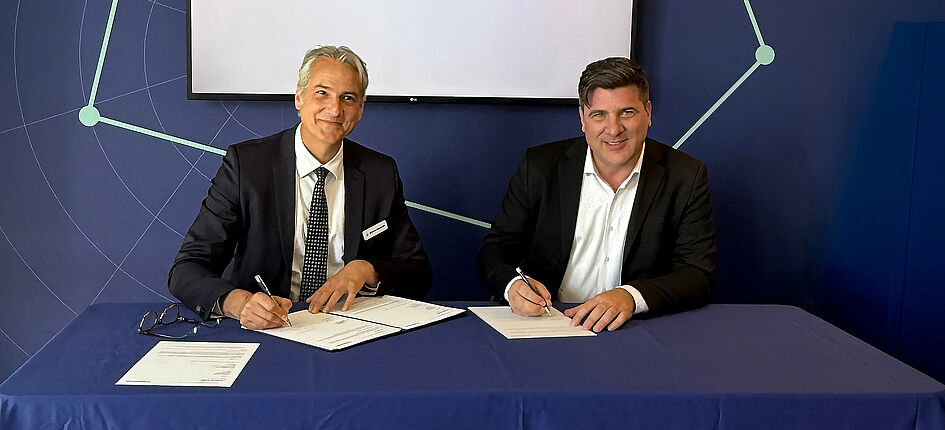
Pierre Basquin (left), Managing Director of Babcock France, and Sebastien Borel (right), Managing Director of Loft Dynamics, at the signing ceremony at the Farnborough International Air Show. Photo: courtesy of Loft Dynamics AG
News
Winterthur — The Zurich University of Applied Sciences (ZHAW) is investigating actual cyberattacks on Swiss organizations. The findings of the study, funded by the Swiss National Science Foundation, are intended to strengthen resilience in this area.
(CONNECT) The Zurich University of Applied Sciences (ZHAW) is investigating real-world cyberattacks to strengthen Switzerland's resilience in this area. According to a press release, the project “Understanding the Decision-Making of Experienced Incident Responders during Critical Cyberattacks on Swiss Organizations” by the ZHAW School of Management and Law aims to improve decision-making.
"Cyberattacks pose a growing threat to organizations worldwide," Nico Ebert, a project manager at ZHAW, is quoted as saying in the press release. "Nevertheless, we still have an incomplete understanding of how organizations actually make decisions and respond to attacks in such situations."
The project uses a decision-making process that has traditionally been employed in high-risk fields such as firefighting and emergency medicine. Actual cyberattacks that occurred were analyzed and discussed with expert partners. These include the International Forum of Incident Response and Security Teams (FIRST), the Healthcare Cyber Security Center (an association with 22 hospitals as members), the Financial Services Cyber Security Center (an association with 170 financial institutions as members), a network of Chief Information Security Officers, and the Network for Combating Digital Crime (NEDIK) of the cantonal police forces.
The analysis of all the information gathered is intended to strengthen Switzerland's resilience to cyberattacks. The project is supported by the Swiss National Science Foundation (SNSF). ce/ww
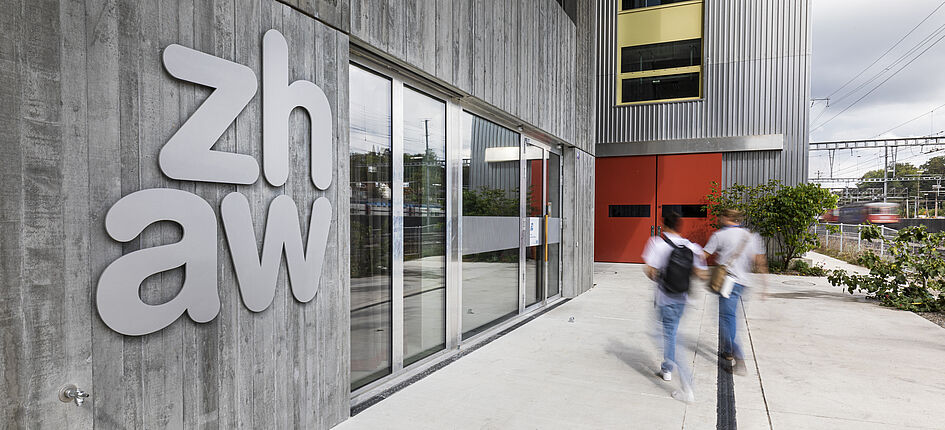
ZHAW is investigating real-world cyberattacks to strengthen Switzerland’s resilience in this area. Photo: Stefan Kubli/ZHAW
News
Zurich — Research on brain aging at the University of Zurich (UZH) is receiving 4 million Swiss francs in funding from the Horten Health Foundation. An international team aims to determine whether metabolic drugs can slow down the aging process.
(CONNECT) An international research team led by the University of Zurich (UZH) aims to determine whether metabolic drugs can slow down the aging processes in the human brain. According to a press release from the university, the researchers are receiving a grant of 4 million Swiss francs from the Lugano-based Horten Health Foundation to fund this research. In addition to the University Psychiatric Hospital of Zurich (PUK), the University of Basel and Stanford University in the U.S. state of California are participating in the PROMOTE research project.
Researchers view brain age as an important indicator of the health of the human brain. Aging processes can be identified by memory impairments and mental health conditions. To counteract the aging process, researchers are using GLP-1 antagonists in clinical trials. These medications are used to treat metabolic disorders such as diabetes mellitus and are considered to be well tolerated. Initial studies in the PROMOTE research series have shown that the drugs also offer a protective effect for the brain. With funding from the Horten Health Foundation, the scientists plan to investigate whether aging processes can also be slowed down. The findings from the research are expected to lead to new treatment approaches. ce/ww

Researchers at UZH are seeking to find out whether age-related changes in the brain can be slowed down using metabolic drugs. Stock image: Anna Shvets/Unsplash
News
Zurich — mimic robotics AG has unveiled the M1 robotic hand for industrial automation and the U1 exoskeleton. The wearable is designed to enable people to teach robots new tasks through natural hand movements while simultaneously collecting training data for artificial intelligence models.
(CONNECT) The Zurich-based robotics company mimic robotics has unveiled the M1 robotic hand and the U1 exoskeleton, an integrated hardware and software platform for industrial automation. Both systems, as well as the accompanying software, are developed and manufactured entirely in-house. The company is thus pursuing a full-stack approach in which hardware, data collection, and artificial intelligence (AI) models all come from a single source.
According to a statement from mimic, unlike large language models, robots cannot be trained using internet-based datasets. Instead, high-quality data from real hand movements is required. The U1 exoskeleton was therefore developed to capture such training data directly from human movements. “The goal is to collect robot data without needing the robot. Teleoperation cannot, in principle, be scaled,” CPO Stephan-Daniel Gravert is quoted as saying in the press release.
The M1 robotic hand is modeled after the human hand in terms of function. It has 21 joints and 15 actively driven degrees of freedom, including an opposable thumb. The fingers are moved by tendons connected to actuators in the forearm. As a result, the system is suitable for both lifting heavy loads and performing tasks that require fine motor skills. At the same time, the actuators serve as force sensors and provide additional data for controlling the AI.
The U1 wearable replicates the movements of the human hand exactly as they are on the robotic hand. Sensors, encoders, and a wrist-mounted camera precisely track movements and generate training data that can be used to efficiently transfer manipulation tasks to the robot. ce/ja
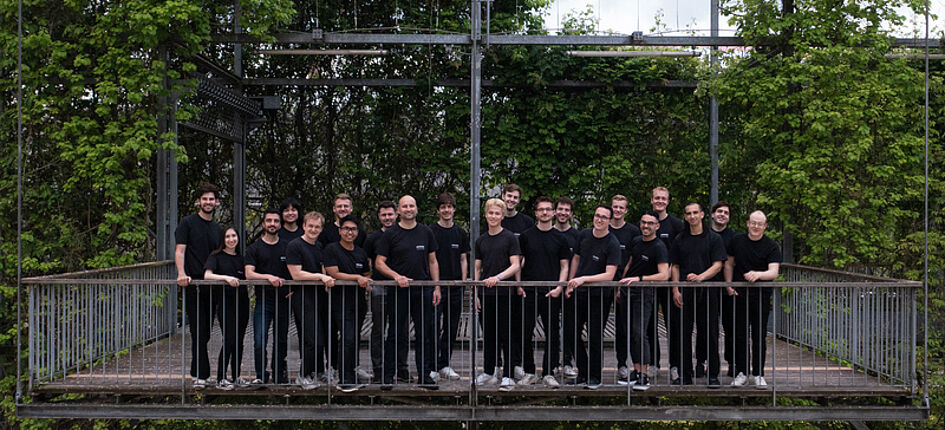
The team at Mimic Robotics has unveiled the M1 robotic hand and the U1 exoskeleton, an integrated hardware and software platform for industrial automation. Image: Mimic Robotics AG
News
Ittigen, Bern / Schlieren, Zurich — Swisscom Ventures is providing funding to the startup CDDS. With the fresh capital, the Schlieren-based company plans to scale up its development and production of defense drones.
(CONNECT) Swisscom Ventures, a startup incubator based in Ittigen, has provided funding to CDDS, a company based in Schlieren. According to a post by Swisscom Ventures on LinkedIn, the fresh capital will be used to advance the development of a new generation of defense drones.
Founded in 2025, the Schlierem-based startup specializes in the construction of AI-powered interception drones. Their specialty is intercepting small drones that are difficult to locate. CDDS systems detect these drones and destroy them while minimizing collateral damage. The interceptor drones are equipped with software for intercept calculations that uses AI to track the flight paths of the attacking drones. CDDS views its systems as an effective means of protecting critical facilities such as airports and energy infrastructure.
"Small, highly dynamic drones represent one of the fastest-growing security vulnerabilities we are seeing today," Alexander Schläpfer, an investment partner at Swisscom Ventures, is quoted as saying in the press release. “What convinced us was not only the technical approach, but also the cost-effectiveness behind it. CDDS enables a level of cost efficiency that makes this type of protection scalable—and that is ultimately what drives its practical implementation.” ce/ww

Swisscom Ventures is providing funding to CDDS, based in Schlieren. Stock image: Rock Staar/Unsplash
News
Schlieren, ZH/Zurich — RAROG, a Zurich-based startup in the engineering sector, is receiving 150,000 Swiss francs in funding from Venture Kick. RAROG is developing a portable search-and-rescue system to detect radio signals from everyday electronic devices. The goal is to locate missing persons more quickly, for example in the Swiss Alps.
(CONNECT) Venture Kick, a Schlieren-based startup incubator, is providing RAROG with 150,000 Swiss francs in funding. The startup is developing a wearable detection system that detects radio signals from smartphones, smartwatches, fitness trackers, and other electronic devices. The technology works independently of cellular networks and external infrastructure, and even under difficult weather conditions. This is intended to make search and rescue operations more efficient.
According to a press release, the funding is intended to enable the completion of product development, CE certification, and the production of an initial batch of the detection systems. In addition, RAROG intends to use this to prepare for its upcoming market entry. The technology is already being used in pilot projects for mountain rescue, including in the Swiss Alps. In the future, RAROG plans to make the system available to fire departments, civil defense organizations, and other emergency services as well.
"The Venture Kick journey challenged us with the right questions at exactly the right time and helped us build a solid foundation for our company," COO Uroš Hudomalj is quoted as saying.
The founding team includes CEO Alexander Marinšek, COO Uroš Hudomalj, and CTO Marko Hudomalj. Together, they bring a wealth of experience in engineering, operational management, and technology development. ce/ja
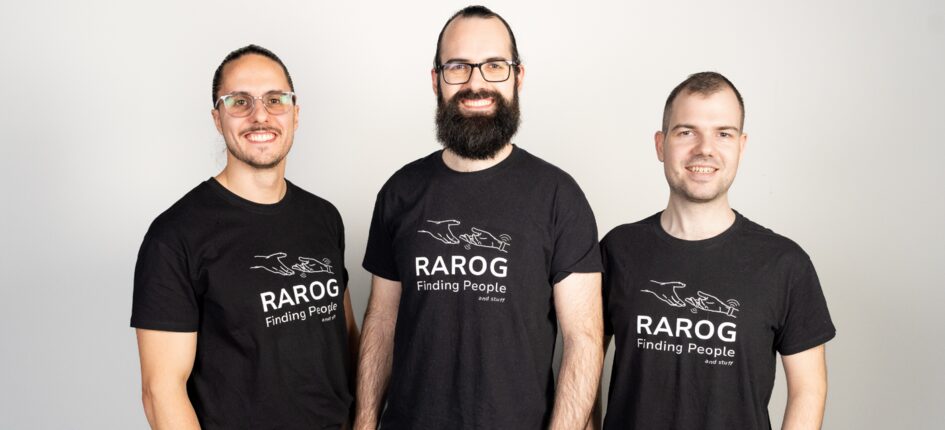
(from left to right) Co-founders Alexander Marinšek, Uroš Hudomalj and Marko Hudomalj have secured 150,000 Swiss francs in funding from Venture Kick. Photo: courtesy of Venturelab
News
Kloten, ZH — Nestermind has secured additional funding in the seven-figure range. With this fresh capital, the PropTech startup plans to further scale its customer-centric, AI-based platform and expand into the Swiss market.
(CONNECT) Nestermind AG, based in Kloten, has secured fresh capital in the seven-figure range in another seed financing round. According to a press release from startupticker.ch, the capital is expected to come from “strategic investors with deep roots in the Swiss real estate industry.”
Nestermind is currently developing a customer-oriented platform (CRM) specifically tailored to the real estate industry. The AI-powered platform is designed for real estate agents, property management companies, and marketing firms. It allows users to automate administrative processes and market their products more effectively.
"We build software that empowers marketers—not replaces them," Lucas Pelloni, co-founder and CEO of Nestermind, is quoted as saying in the press release. “The real estate business is and always will be a people business; it thrives on trust between people. But many of the steps involved in bringing a property to market can now be handled differently and more effectively. Nestermind bridges the gap between this tradition and the new world of artificial intelligence.” The company plans to use the fresh capital to scale its platform and expand its market coverage throughout Switzerland. ce/ww

Nestermind AG has secured fresh capital in the seven-figure range in a further seed funding round. Stock image: Ketut Subiyanto/Pexels
News
Zurich — Startups founded after June 30, 2021, can currently apply for the ZKB Technopark Pioneer Award 2027. The application deadline is September 21, 2026. The award for Swiss deep tech innovations comes with a cash prize of 100,000 Swiss francs.
(CONNECT) Startups founded after June 30, 2021, can now apply for the ZKB Technopark Pioneer Award 2027. The application period closes on September 21, 2026.
The award recognises a project that develops a new technology—whether a product, a process, or a concept—of an innovative nature at the intersection of science and industry. Special consideration will be given to applications that combine multiple ideas into a single innovative and competitive project. Other evaluation criteria include user-friendliness and marketability.
The winner will receive a cash prize of 100,000 Swiss francs. Two additional projects from among the five finalists will each receive 10,000 Swiss francs. According to the organisers, the award can be particularly valuable for projects on the cusp of moving from an innovative idea to market readiness, as many startups are still in a financially challenging development phase at this stage.
In addition to the prize money, participating companies benefit from the prestige of the Pioneer Award—which, according to the organisers, is one of Switzerland’s most prestigious innovation awards—as well as from increased public visibility. The five finalists are presented in detailed company profiles. In addition, a shortlist of about ten nominated projects will be presented to the media in the run-up to the awards ceremony.
All finalists, along with their delegations, are invited to the awards ceremony on May 11, 2027, at Technopark Zurich. The ZKB Pioneer Award has been presented annually since 2001 by the Zürcher Kantonalbank (ZKB) and the Technopark Zurich Foundation. ce/ja
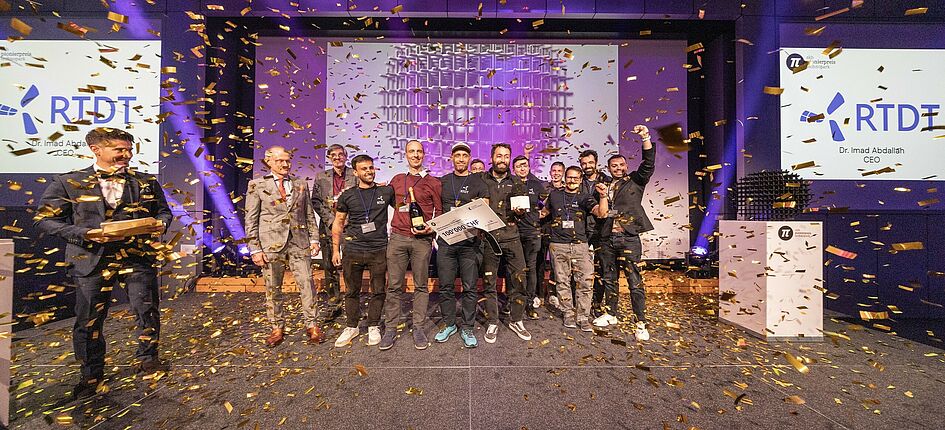
RDTD has won the ZKB Technopark Pioneer Award 2026. Image: Courtesy of the TECHNOPARK Zurich Foundation
News
Zurich — The Zurich Cantonal Government is proposing to the Cantonal Council a project-specific loan of 112 million Swiss francs for the Rochade Portal UZH building on the University of Zurich’s (UZH) Irchel Campus. The 655-million project is intended to enable the phased remediation of the site beginning in 2035.
(CONNECT) The Government Council of the Canton of Zurich has approved a project loan of 112 million Swiss francs as new expenditures for the planned Portal UZH building on the University of Zurich’s (UZH) Irchel Campus, to be submitted to the Cantonal Council. According to a press release, the total cost of the project is estimated at 655 million Swiss francs. Of that amount, 543 million Swiss francs are classified as committed expenditures.
The new building is scheduled to be ready for occupancy in 2035 and will provide the conditions necessary to renovate numerous buildings on the Irchel Campus, as well as the technical infrastructure, in phases without significantly disrupting the university’s operations. The campus currently has approximately 8,600 students enrolled in science and medical programmes. In addition, more than 3,000 employees work there.
The UZH campus consists of a six-story main building with lecture halls, seminar rooms, and teaching and study spaces, as well as a five-story laboratory wing with laboratories, offices, and common areas. The basements will house technical and logistical facilities for the entire campus.
The wood-concrete hybrid building is designed to meet the Minergie-P-ECO standard and aims to achieve Gold certification from the Swiss Society for Sustainable Real Estate (SGNI). The cooling system will include, among other things, nighttime cooling and geothermal probes. In addition, photovoltaic systems are being installed on roofs and facades.
In the long term, the UZH portal is intended to help bring activities that have been relocated back to the Irchel campus. ce/as
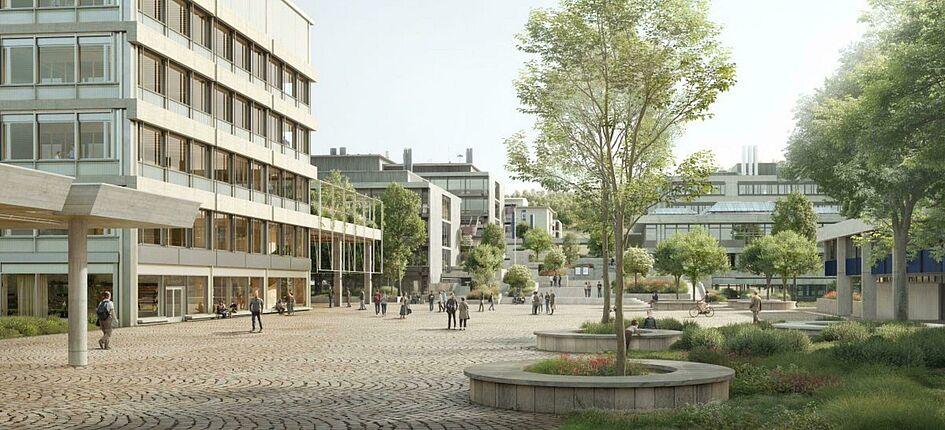
The building has the word ‘Portal’ in its name because it serves as the entrance to the Irchel Mitte campus for visitors. Photo: Filippo Bolognese Images
You need to load content from reCAPTCHA to submit the form. Please note that doing so will share data with third-party providers.
More InformationYou are currently viewing a placeholder content from Turnstile. To access the actual content, click the button below. Please note that doing so will share data with third-party providers.
More InformationYou are currently viewing a placeholder content from Vimeo. To access the actual content, click the button below. Please note that doing so will share data with third-party providers.
More InformationYou are currently viewing a placeholder content from YouTube. To access the actual content, click the button below. Please note that doing so will share data with third-party providers.
More InformationYou need to load content from reCAPTCHA to submit the form. Please note that doing so will share data with third-party providers.
More Information


