News
Schlieren, ZH/Aachen/Wellington — NexMR AG has been acquired by Magritek, a manufacturer of nuclear magnetic resonance (NMR) spectrometers. The technology developed by the ETH spin-off to amplify NMR signals is expected to expand the analytical capabilities of Magritek’s benchtop spectrometers, capabilities that were previously limited to larger systems.
(CONNECT) NexMR, a biotechnology company based in Schlieren, is now part of the New Zealand-German Magritek Group. Financial details of the transaction were not disclosed in the announcement.
NexMR's SmartSpin technology uses photohyperpolarization—a light-based process—to amplify NMR signals without the cost and technical complexity of conventional hyperpolarization systems. This allows for faster measurements with smaller sample sizes. Nuclear magnetic resonance spectroscopy is used, among other things, in drug discovery to analyze molecules.
In the future, the technology developed by the spin-off from the Swiss Federal Institute of Technology Zurich (ETH) will be integrated into Magritek's benchtop NMR spectrometer as part of the Spinsolve platform. The combination with Magritek's compact nuclear magnetic resonance spectrometers is expected to enable analyses that were previously only possible using larger and more complex systems.
Development of the first generation of these devices is already underway, and they are expected to be launched within the next twelve months. “We knew our technology needed the right home, and for us, that was clearly Magritek,” said Félix Torres, CEO of NexMR. Magritek CEO Federico Casanova is quoted as saying that the fact that photohyperpolarization makes biophysics accessible on benchtop devices is “a capability the field has long been waiting for.”
Magritek was founded in 2004 and, with its core product line, Spinsolve, operates in the field of cryogen-free benchtop NMR spectrometers. The company is headquartered in Wellington, New Zealand, and operates offices in Aachen, Germany, and Philadelphia, in the United States. ce/as

The biotechnology company NexMR is now part of the New Zealand-German Magritek Group. Stock image: Logan Gutierrez/Unsplash
News
Zurich — SeasON has secured a private investor who is injecting a single-digit million amount into the company. The capital is intended to accelerate the market launch of their technology for long-term heat storage. In addition, the startup is receiving funding from Innosuisse for a project with the Lucerne University of Applied Sciences and Arts.
(CONNECT) SeasON Energy AG has completed a financing round with a private investor. According to a press release, the investor is contributing a single-digit million amount to the green tech startup. SeasON plans to use the funding to bring its seasonal energy storage technology to market in the coming months. The installation and commissioning of the first five to ten storage systems is planned for the coming year.
SeasON is receiving additional support from Innosuisse. The Swiss Agency for Innovation Promotion is supporting a joint research project with the Lucerne University of Applied Sciences and Arts (HSLU) with a grant of 572,688 Swiss francs. The project, led by Benjamin Fumey, focuses on the development of a low-pressure water vapor compressor that is to be integrated directly into the sorption storage heat pump system. This is intended to improve temperature rise, power density, and controllability.
In addition, SeasON has filed its first European patent application. "With this move, we are protecting a key innovation in our technology on an international level," said CEO Marc Lüthi.
SeasON Energy AG was founded in late 2025 by Matica AG, headquartered in Wagenhausen, Thurgau, and HSLU. The company develops sorption heat pumps with long-term storage technology. In the summer, they store excess renewable energy for months and use it for heating in the winter with virtually no additional electricity consumption. ce/as
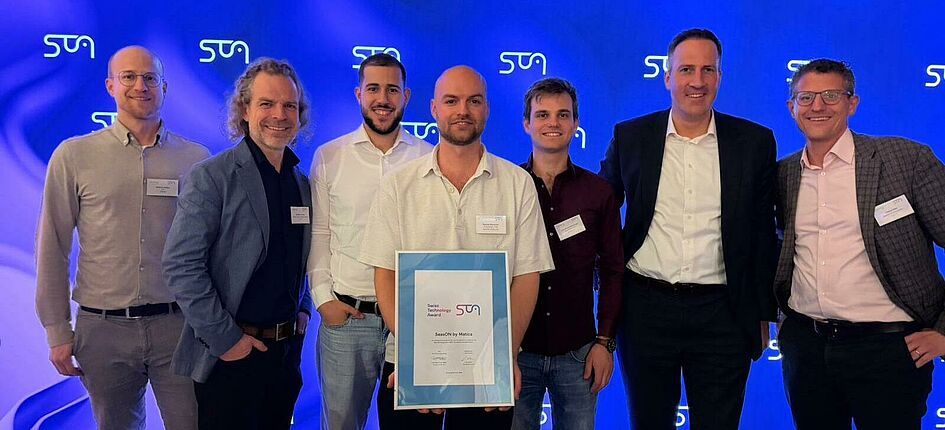
SeasON, a company launched by Matica AG and Lucerne University of Applied Sciences and Arts, has completed a funding round with a private investor. Image: courtesy of Matica AG
News
Zurich/Bern/Basel — Researchers at the universities of Basel, Bern, and Zurich are working on the development of a mini dental robot. In the future, the device will be used to precisely prepare teeth for crowns. This could help shorten treatment times.
(CONNECT) Researchers at the universities of Zurich, Bern, and Basel are working on the development of a dental robot that could simplify and speed up the preparation of dental crowns in the future. According to a press release from the University of Zurich's Center for Dental Medicine, the idea for the MIR (Miniature Intraoral Robot) originated there. According to the press release, an initial prototype was produced at the Biromed laboratory at the University of Basel.
The MIR measures 43 x 26 x 28 millimeters, making it easy to place in the mouth. The system is controlled externally via flexible shafts and cables from a computer workstation. According to the doctors, in the future the robot could use a scan to precisely plan how to remove the damaged tooth and prepare it for a crown. To ensure accurate measurements, the MIR should be mounted on a custom-made dental splint. “Even if the patient turns his or her head, the MIR moves with them,” Yukiko Tomooka, a researcher and the lead author of the study published in *IEEE Transactions on Medical Robotics and Bionics*, is quoted as saying in the press release. The dental robot is currently being tested on dental models made of synthetic resin and a ceramic with a hardness similar to that of tooth enamel. Position errors were less than 0.2 millimeters. In the future, this is expected to be further reduced through the use of sensors and position correction.
The project, funded by Innosuisse, was developed in collaboration with Camlog Biotechnologies GmbH of Basel. ce/ww
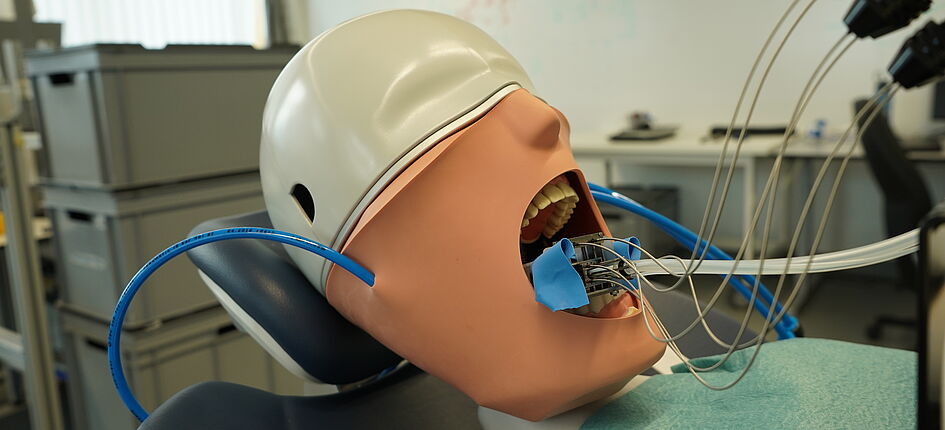
The dental robot’s motors and control system are located externally and are connected to the robot via flexible drive shafts, cables and hoses. Image: Catherine Weyer/University of Basel
News
Winterthur/Edmonton — The government of the Canadian province of Alberta is funding several projects aimed at reducing emissions from extraction technologies. Borobotics, based in Winterthur, is developing a drilling robot for geothermal drilling and is one of the companies receiving funding.
(CONNECT) The Alberta government is investing a total of 37 million Canadian dollars in ten projects aimed at advancing drilling technologies while reducing emissions. These projects have a total value of just under 179 million Canadian dollars, according to a press release. One of the ten projects is being carried out by Borobotics.
The company, based at Technopark Winterthur, is developing a drilling robot for geothermal drilling. The Alberta-funded project is therefore also aimed at developing “a compact and autonomous electric drilling robot for geothermal wells used in geothermal heat pumps.” The project is estimated to cost a total of 8.9 million Canadian dollars. The grant for Borobotics amounts to 4.4 million Canadian dollars (2.5 million Swiss francs). The project is being implemented in both Winterthur and Calgary, Alberta. In addition to Borobotics, companies from Norway, the Netherlands, the United States, and Alberta are also receiving funding. If successful, Emissions Reductions Alberta (ERA) expects all ten projects to result in annual savings of 24,100 metric tons of CO2 equivalents.
“Innovators from Alberta are driving world-leading drilling technologies that create jobs, strengthen competitiveness, reduce emissions, and open up new opportunities in geothermal energy, critical minerals, and CO2 capture,” said Grant Hunter, Alberta’s Minister of Environment and Protected Areas.
Borobotics is a spin-off of the Zurich University of Applied Sciences (ZHAW). According to a press release regarding funding from Venture Kick, the company's drilling robot, together with its auxiliary equipment, is expected to require up to 90 percent less space than previous solutions. The goal is to reduce the costs, noise pollution, and CO2 emissions associated with the drilling operation. ce/jh

As part of its funding for projects aimed at reducing emissions from extraction technologies, the government of the Canadian province of Alberta is also supporting Borobotics, based in Winterthur; pictured here is the parliament building in the provincial capital, Edmonton. Stock image: Pixabay
News
Dübendorf, ZH — Researchers at the Swiss Federal Laboratories for Materials Testing and Research (Empa) are working on the development of an electrolytic process that can be used to produce ethylene from recycled carbon dioxide. The research is being conducted as part of the EU-funded REACT project.
(CONNCET) According to a press release, researchers at the Materials for Energy Conversion laboratory at the Swiss Federal Laboratories for Materials Science and Technology (Empa), based in Dübendorf, are working on the development of an electrolytic process that can be used to produce the plastic ethylene from carbon dioxide emissions. The research is being conducted as part of the EU-funded REACT (Renewable Electrochemical Advanced Conversion of CO2 to Target Products) project. The programme will run for 48 months under Horizon Europe, from May 2026 to April 2030.
“The goal of the REACT project is to develop a functional prototype of an electrolyser for converting CO2 into ethylene, thereby significantly increasing the technology’s maturity,” Corsin Battaglia, head of the Empa laboratory, is quoted as saying in the press release. The research focuses on recycling carbon dioxide from industries where it is difficult to reduce emissions, such as the steel, cement, and chemical industries. Here, Empa is using an electrochemical tandem process that converts low-purity carbon dioxide into chemical feedstocks without the need for costly pretreatment. The energy required for this comes from renewable sources. Among other things, the study examines the effects of impurities on the service life of the catalysts used in the electrolyser. The researchers are using a parallel reactor developed at Empa for CO2 electrolysis.
REACT promotes circular carbon value chains. “What we learn and develop as part of REACT will also help advance other CO2 conversion technologies, such as those used to produce synthetic fuels,” said Battaglia. ce/ww
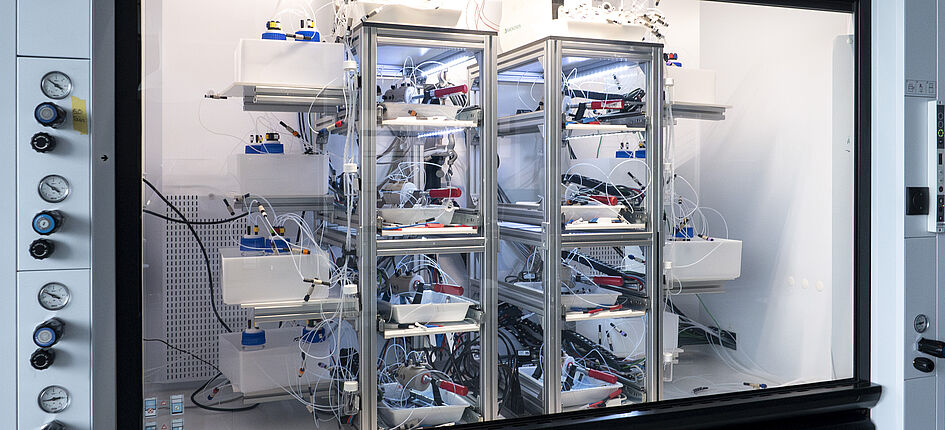
Thanks to the parallel reactor for CO₂ electrolysis in Empa’s Materials for Energy Conversion laboratory, researchers are able to investigate the catalyst’s performance. Image: Empa
News
Zurich/Les Mureaux — ArianeGroup and Beyond Gravity of Zurich have signed a long-term supply contract. The federally owned space agency is to supply a total of 27 payload fairings for the Ariane 6 launch vehicle developed by the Franco-German space consortium.
(CONNECT) ArianeGroup, based in Les Mureaux, and Beyond Gravity have signed a long-term supply contract for the operational phase of Ariane 6, the two companies announced in a joint statement. The federally owned space agency is to supply the prime contractor for the European heavy-lift launch vehicle with 20 payload fairings, each 20 meters long, and seven payload fairings, each 14 meters long, for Ariane 6 flight models 16 through 42. Depending on the mission, the Ariane 6 will be equipped with either a short or a long payload fairing.
Beyond Gravity has manufactured the payload fairings for all Ariane missions since the launch of Ariane 1 in 1979. "We are very pleased to continue our fruitful collaboration with Beyond Gravity," ArianeGroup CEO Christophe Bruneau is quoted as saying in the press release. “The agreement demonstrates that cooperation is essential to ensuring Europe’s competitive and independent access to space.”
According to Beyond Gravity CEO Barbara Frei-Speiter, this order—the largest to date for the company’s launch vehicle business—marks “an important milestone” both for the company and “for Europe’s space program as a whole.” “With our ability to mass-produce highly complex launch vehicle structures to the highest quality standards, we are making a key contribution to the competitiveness of the European space industry.” The press release does not provide any details regarding the financial value of the contract. ce/hs
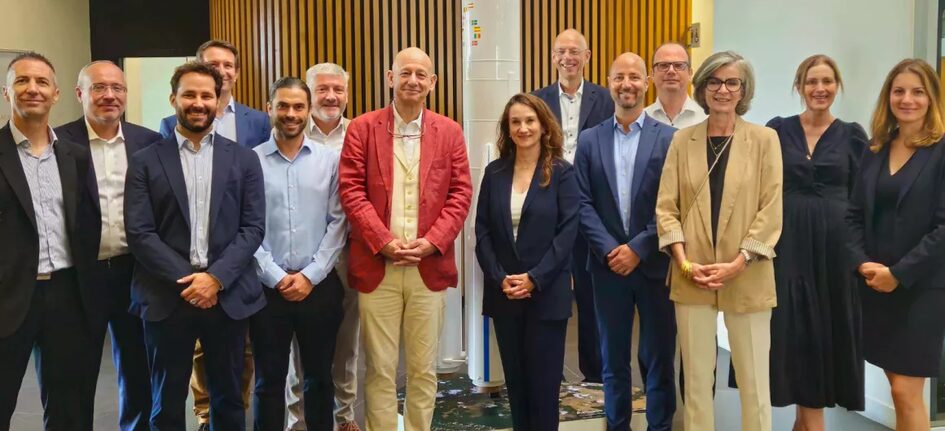
The management teams of ArianeGroup and Beyond Gravity at the contract signing ceremony; in the centre, wearing a red jacket, is ArianeGroup CEO Christophe Bruneau, alongside Beyond Gravity CEO Barbara Frei-Speiter. Photo: Beyond Gravity
News
Schlieren, Canton of Zurich — Venturelab has selected ten fintech startups that will have the opportunity to present their ideas in London in October. There, they meet potential investors or partners and have the opportunity to gain experience and make contacts.
(CONNECT) Venturelab has formed the new so-called Swiss national startup team for the fintech sector, according to a press release from the Schlieren-based startup incubator. As part of the Venture Leaders program, the startups will present themselves in London between October 26 and 30 and make valuable contacts for the future.
The jury, composed of investors and fintech experts, selected four startups from the Canton of Zurich: Delta Labs, based in Uetikon am See, is developing artificial intelligence software to automate customer support based on company-specific knowledge. Happy Pot GmbH, based in Zurich, offers the “first digital Swiss money pot” for group payments. ellexx universe AG, which is also based in Zurich, helps women improve their financial literacy and build wealth. And Zurich-based reilo AG won over the jury because it turns “nature’s bounty into financeable assets,” thereby making it easier for smallholder farmers to access credit.
Three more participants are from the canton of Zug. Schuman Financial AG, based in Zug, is bringing financial services to the blockchain, while CENSE AG, based in Baar, is developing software “that enables banks to verify crypto assets and efficiently manage money laundering risks.” Motif Labs GmbH, based in Zug, enables the provision of personalized investment advice and financial analysis “on a large scale.”
Also participating in the trip to London are ForenSwiss from Zollikofen, Bern; RAIIS GmbH from Appenzell; and Humbrela from Montreux, Vaud. ForenSwiss develops solutions to combat online fraud, RAISS offers an integrable calculation platform, and Humbrela optimizes insurance portfolios.
“The Venture Leaders fintech startups are achieving impressive results, and the London roadshow will showcase them to an international audience,” said Stefan Steiner, co-managing director at Venturelab. ce/jh

Venturelab is showcasing ten Swiss fintech start-ups in London this October; a view of Canary Wharf, London’s financial centre, from Greenwich Park. Stock image: Primrose/Pixabay
News
Zurich – Riverkin AG is receiving a grant of 1.39 million euros from Innosuisse. The company plans to use the funds to further develop its technology for real-time monitoring of rivers and lakes for use in the hydropower sector and to test it under real-world conditions.
(CONNECT) The cleantech startup Riverkin is receiving a grant of 1.39 million euros from Innosuisse, the Swiss Agency for Innovation Promotion. According to a press release from Venture Kick , the funds will go toward an innovation project with a total budget of 1.97 million euros, through which the company intends to further develop and validate its technology for use in the hydropower sector.
Riverkin develops what are known as water data ecosystems—sensor networks with a data platform for real-time monitoring of freshwater. The sensors measure parameters such as water temperature, water level, turbidity, sediment, and discharge. The measurement data is continuously processed automatically and is intended to help identify potential risks early on and implement appropriate countermeasures.
In the hydropower sector, the technology is intended to provide insights, in particular, into water movements and the dynamics of fine sediments. Such sediments can damage turbines and contribute to the silting up of reservoirs. The insights gained from the collected data are intended to help operators protect their infrastructure, maintain storage capacity, and comply with regulatory requirements.
Riverkin, a spin-off from the Swiss Federal Institute of Technology Zurich (ETH) founded by Jessica Droujko, has, according to the company, deployed its sensor technology in 22 operations across 11 countries to date. ce/as

Riverkin is further developing its technology for the real-time monitoring of rivers and lakes for use in the hydropower sector. Stock image: Sergio Cerrato – Italy/Pixabay
News
Zurich – 42 Zurich is opening a new educational campus at Spaces Z.One in Zurich-Oerlikon. Starting in January 2027, anyone interested can train to become a specialist in software development and artificial intelligence (AI), regardless of their educational background or origin.
(CONNECT) The nonprofit educational institute 42 Zurich is opening its campus at Spaces Z.One in Oerlikon. According to a press release, IT professionals specializing in software development and AI systems will be trained there starting in January 2027. The training program lasts 12 to 24 months and covers the fundamentals of IT in programming and systems, an internship at participating companies, and the architecture of autonomous systems.
In the age of artificial intelligence, understanding the systems behind it is becoming one of the most important skills for the future, says Cristina Bucher, CEO of 42 Zurich. She expects around 100 to 150 students to gain access to tech careers here, regardless of their previous educational background. “With 42 Zürich, we give opportunities to people who are often overlooked by the traditional education system: career changers, motivated tech-savvy individuals without a high school diploma, and people working in the care sector.”
According to Marc Oehler, CEO of cloud provider Infomaniak, the business world needs IT professionals to drive the development of its own technologies. "We have been collaborating with various Swiss universities for several years. "This has strengthened our confidence in Campus 42 Lausanne's ability to educate students with skills that complement those taught at universities—with a more practice-oriented curriculum."
According to the announcement, learning takes place through real-world projects, in collaboration with like-minded peers, through self-directed progress, and using a gamification approach in which students support one another and build their knowledge through projects. Students choose their own specializations. AI is firmly embedded in the curriculum. Those who still wish to pursue a formal qualification can, depending on their qualifications, earn a Swiss professional certificate or an RNCP certificate.
Cyrill Schuler, CEO of IWG Switzerland, Monaco & Gibraltar - Spaces Z.One, welcomes the arrival of 42 Zurich. “Together, we’ve done more than just create a workspace for students; we’ve laid the groundwork for 42 Zürich’s mission to come to life.”
The Concept 42 originated in France. The network now has over 50 locations in 30 countries. In Switzerland, Zurich is the second campus after Lausanne. The selection process begins on September 14. ce/heg
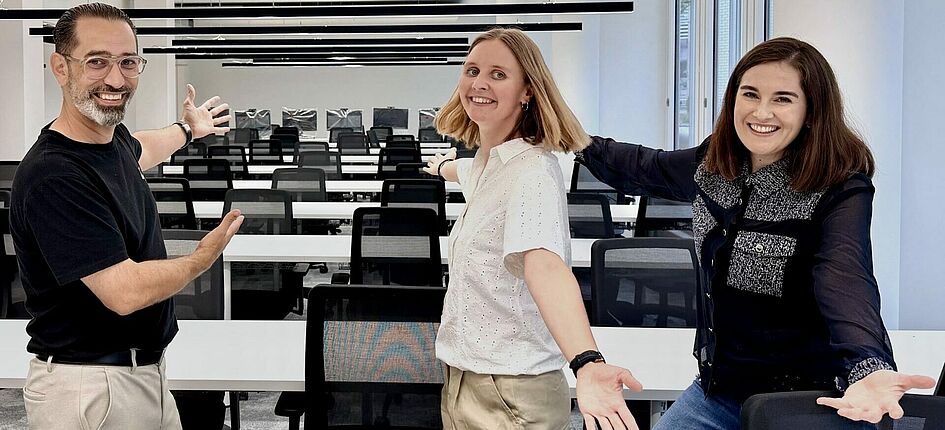
The core team at 42 Zurich (from left to right: Baschi Sale, Corina Schedler and Cristina Bucher) are looking forward to welcoming the students soon. Photo: courtesy of 42 Zurich
News
Dübendorf, ZH/Genoa/Daegu — Researchers led by the Swiss Federal Laboratories for Materials Science and Technology (Empa) are proposing a new scientific discipline. Sustainability Robotics aims to lay the groundwork for the environmentally, socially, and economically sustainable use of robots.
(CONNECT) Robotics and artificial intelligence are advancing rapidly, while at the same time environmental, social, and economic crises are intensifying. To address this dilemma arising from scientific and technological progress and global challenges, researchers led by the Swiss Federal Laboratories for Materials Science and Technology (Empa) are proposing a new scientific discipline called “Sustainability Robotics.” According to a press release, the international team—including Mirko Kovač from the Empa Laboratory of Sustainability Robotics in Dübendorf, Barbara Mazzolai from the Italian Institute of Technology (IIT), and Seokheun Song from the Daegu Gyeongbuk Institute of Science and Technology (DGIST) in Korea, has published a manifesto calling for robotics to contribute to a sustainable impact on the environment, society, and the economy. “Until now, robotics has focused primarily on what machines are capable of,” Mirko Kovač is quoted as saying in the press release. "The next step is to ask what role robots should play in building a sustainable future."
In the manifesto published in the journal *Nature Machine Intelligence*, the scientists present three guiding principles: robotic systems should be minimally invasive, universally accessible, and symbiotic. "Minimally invasive" means that the systems should keep their environmental, biological, and social impacts as low as possible. These include energy efficiency, repairability, and the circular economy as they apply to robots. Universal access means that it is not only wealthy regions that benefit from robotics. And when it comes to the use of robotics, symbiosis is essential to maximize benefits for people, the environment, and the economy.
The ideas called for here are already being put into practice by the Laboratory of Sustainability Robotics at Empa and the Swiss Federal Institute of Technology in Lausanne (EPFL). A competence center established at Empa (Competence Center for Sustainability Robotics, CCSR) is funded by the Canton of Schaffhausen and complements the activities initiated by the researchers. ce/ww
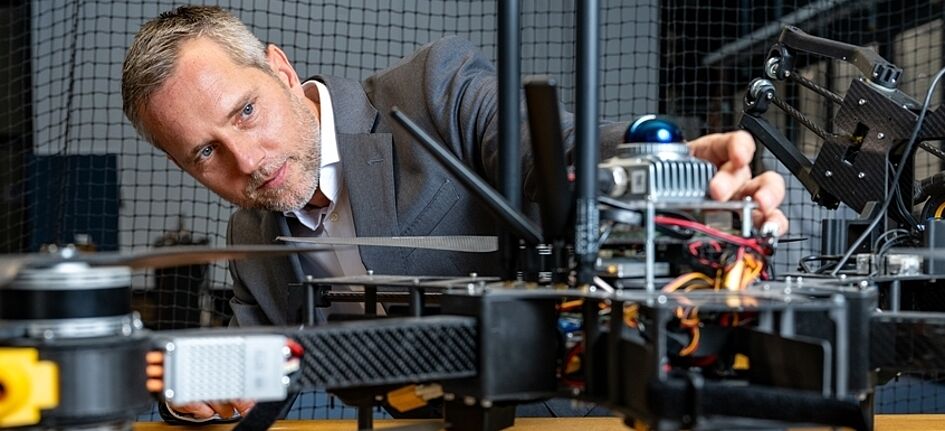
In a manifesto, Mirko Kovač calls for the establishment of Sustainability Robotics as a new scientific discipline. The aim is to consistently align robotics with environmental, social and economic sustainability goals. Image: Empa
News
Zurich – Beyond Gravity is supplying new navigation receivers for two NOAA weather satellites. Using GEORIX receivers for Lockheed Martin satellites, their position can be determined with an accuracy of less than 20 meters at a distance of 36,000 kilometers. This improves the accuracy of environmental and weather forecasts.
(CONNECT) Beyond Gravity, a Zurich-based aerospace company, is supplying the navigation modules for two weather satellites built by Lockheed Martin. According to a press release, these systems enable the satellites of the U.S. National Oceanic and Atmospheric Administration ( NOAA ) to be positioned with an accuracy of less than 20 meters from a distance of 36,000 kilometers.
Beyond Gravity's GEORIX navigation receivers were developed specifically for geostationary orbit and are scheduled to be deployed in the GeoXO (Geostationary Extended Observations) satellites starting in 2032. The high-performance, GNSS-enabled (Global Navigation Satellite System) receivers for multiple satellite constellations are developed and manufactured at Beyond Gravity's Vienna facility. “The more accurately our receiver determines the satellite’s position, the more accurate the weather and environmental data will be,” Kurt Kober, vice president of Electronic Solutions at Beyond Gravity, is quoted as saying in the press release.
GEORIX features an antenna optimised for geostationary Earth orbit, separate low-noise amplifiers, and advanced technologies such as a precise, force-model-based orbit propagator and state-of-the-art Kalman filtering. The navigation receivers can process individual frequencies for up to twelve satellites. The two weather satellites will be deployed in an eastern and a western constellation and are intended to continuously provide images and data on the Earth's atmosphere, landmasses, and oceans for operational forecasts and warnings. ce/w

The NOOA GeoXO weather satellites will provide important data on the Earth’s atmosphere. Image: NASA
News
The fourth Zürcher KMU Innovationstag 2026 made it clear: Innovation flourishes where openness to new technologies and resources meets a strong corporate culture. At the event organized by the Division of Business and Economic Development on July 7, 220 participants took part in workshops to discuss how SMEs can successfully navigate change.
Innovation doesn’t start with the perfect idea, but with the first step. This was evident from the keynote presentations at this year’s Zürcher KMU Innovationstag. That is how Bruno Schefer began to implement inclusion at his medical logistics company, Cosanum, 15 years ago. That sparked a major change: “Today we have a different work culture—and that’s what makes us innovative and successful.”
A survey of the audience showed that Zurich’s small and medium-sized enterprises (SMEs) are eager to tackle change: Hardly anyone described themselves as particularly optimistic or pessimistic, but almost everyone agreed with the statement, “We need to get to work.” Innovation Day is intended to provide inspiration for this: “Share ideas and launch new projects,” said Anita Martinecz Fehér, project manager for the Canton of Zurich’s Division of Business and Economic Development, in her welcome remarks.
AI: It’s the Mindset That Makes the Difference
Above all, successful innovation requires curiosity and the desire to improve things and take responsibility. Valérie Henzen of the “Digital Minds Society” emphasized this during the AI workshop: “It’s no longer about who uses AI, but who has the right mindset for it.” Prompting accounts for only a small part of the work. Rather, what is crucial is the judicious delegation of tasks and the critical review of the results.
Two real-world examples demonstrated just how quickly concrete applications can be implemented using AI: a website and a computer game were created within 15 minutes. Advice from AI experts: “Test one specific application per week.” Clear rules within the company would help introduce AI more quickly and in a more targeted manner.
Overcoming the Innovation Valley
For many innovations, however, weekly experimentation is not enough because they face a number of obstacles: Often, they lack time, venture capital, external expertise, testing infrastructure, or the right network. That is why the EuroTube Foundation supports small and medium-sized enterprises (SMEs) in the construction, energy, and infrastructure sectors by providing infrastructure, project partners, and consulting services. As Julian Ehwald of the foundation puts it: “Between basic research and industry lies the ‘valley of death in innovation.’”
When asked about innovations that had been shelved, the participants cited, among other things, failed grant applications, supply chain issues, and technical challenges. Julian Ehwald encouraged small and medium-sized enterprises: “In Switzerland, there are resources available at every stage—from research spin-offs through product development to market launch—that support innovation.”
Financial Support: From Microcredit to Succession Planning
“ahead” was created to ensure that support is provided not only for “major” technical innovations but also for in-house development. For the past year, the Startup and Innovation Center has brought together startup consulting, microloans, and innovation and project support for Zurich-based SMEs under one roof; it is funded by the city, the Canton of Zurich, and ZKB. “We’ve already conducted over 800 consultations,” said CEO Chantal Stäuble.
Another challenge in the long-term development of SMEs is finding a good succession plan. In the workshop on alternative financing options, Lukas Hotz of “generational” demonstrated how business succession can be successful even without a large amount of equity: “There are structures in which investors receive capital but no voting rights. This allows former employees, for example, to take over management of the company.”
The keynote presentation by employees of “Waldner Partner” demonstrated just how crucial ownership structures can be to a company’s success. Since 2020, this SME specializing in construction projects has been a cooperative without a CEO—and this innovation is paying off: “That’s one of the reasons we’re getting projects today.” At the same time, the changed structure has given rise to a new work culture.
Inspire Skilled Workers with a Positive Work Culture
Giovanni Crupi emphasized during the workshop on skilled workforce development that the importance of a good workplace culture in companies cannot be underestimated when it comes to developing and retaining skilled workers. As president of the “Swiss Engineering” association, the issue of gender equality is particularly close to his heart: “For me, this is a top priority.” Part-time work arrangements, for example, could help retain mothers—who are urgently needed given the shortage of skilled workers—in STEM professions.
The “Hirnpower at Work” workshop also made it clear that mental well-being is not just an “add-on,” but rather a mandatory health protection measure for companies. At the same time, however, it also serves as a catalyst for innovation. “Stress impairs our brain’s neuroplasticity,” explained neuroscientist Barbara Studer. Thus, companies that foster a sense of connection, purpose, autonomy, and humor would create better conditions for employee satisfaction—which in turn encourages curiosity and acts “like fertilizer for the brain.”
You can download the event program here: Program Overview: Zürcher KMU Innovationstag 2026
Workshop Presentations:
More presentations will follow.
Innovation doesn't start with the perfect idea, but with the first step. This was evident from the keynote presentations at this year's Zürcher KMU Innovationstag. That is how Bruno Schefer began to implement inclusion at his medical logistics company, Cosanum, 15 years ago. That sparked a major change: “Today we have a different work culture—and that’s what makes us innovative and successful.”
A survey of the audience showed that Zurich’s small and medium-sized enterprises (SMEs) are eager to tackle change: Hardly anyone described themselves as particularly optimistic or pessimistic, but almost everyone agreed with the statement, “We need to get to work.” Innovation Day is intended to provide inspiration for this: “Share ideas and launch new projects,” said Anita Martinecz Fehér, project manager for the Canton of Zurich’s Division of Business and Economic Development, in her welcome remarks.
AI: It's the Mindset That Makes the Difference
Above all, successful innovation requires curiosity and the desire to improve things and take responsibility. Valérie Henzen of the “Digital Minds Society” emphasized this during the AI workshop: “It’s no longer about who uses AI, but who has the right mindset for it.” Prompting accounts for only a small part of the work. Rather, what is crucial is the judicious delegation of tasks and the critical review of the results.
Two real-world examples demonstrated just how quickly concrete applications can be implemented using AI: a website and a computer game were created within 15 minutes. Advice from AI experts: “Test one specific application per week.” Clear rules within the company would help introduce AI more quickly and in a more targeted manner.
Overcoming the Innovation Valley
For many innovations, however, weekly experimentation is not enough because they face a number of obstacles: Often, they lack time, venture capital, external expertise, testing infrastructure, or the right network. That is why the EuroTube Foundation supports small and medium-sized enterprises (SMEs) in the construction, energy, and infrastructure sectors by providing infrastructure, project partners, and consulting services. As Julian Ehwald of the foundation puts it: “Between basic research and industry lies the ‘valley of death in innovation.’”
When asked about innovations that had been shelved, the participants cited, among other things, failed grant applications, supply chain issues, and technical challenges. Julian Ehwald encouraged small and medium-sized enterprises: “In Switzerland, there are resources available at every stage—from research spin-offs through product development to market launch—that support innovation.”
Financial Support: From Microcredit to Succession Planning
"ahead" was created to ensure that support is provided not only for "major" technical innovations but also for in-house development. For the past year, the Startup and Innovation Center has brought together startup consulting, microloans, and innovation and project support for Zurich-based SMEs under one roof; it is funded by the city, the Canton of Zurich, and ZKB. "We've already conducted over 800 consultations," said CEO Chantal Stäuble.
Another challenge in the long-term development of SMEs is finding a good succession plan. In the workshop on alternative financing options, Lukas Hotz of “generational” demonstrated how business succession can be successful even without a large amount of equity: “There are structures in which investors receive capital but no voting rights. This allows former employees, for example, to take over management of the company.”
The keynote presentation by employees of “Waldner Partner” demonstrated just how crucial ownership structures can be to a company’s success. Since 2020, this SME specializing in construction projects has been a cooperative without a CEO—and this innovation is paying off: “That’s one of the reasons we’re getting projects today.” At the same time, the changed structure has given rise to a new work culture.
Inspire Skilled Workers with a Positive Work Culture
Giovanni Crupi emphasized during the workshop on skilled workforce development that the importance of a good workplace culture in companies cannot be underestimated when it comes to developing and retaining skilled workers. As president of the “Swiss Engineering” association, the issue of gender equality is particularly close to his heart: “For me, this is a top priority.” Part-time work arrangements, for example, could help retain mothers—who are urgently needed given the shortage of skilled workers—in STEM professions.
The “Hirnpower at Work” workshop also made it clear that mental well-being is not just an “add-on,” but rather a mandatory health protection measure for companies. At the same time, however, it also serves as a catalyst for innovation. "Stress impairs our brain's neuroplasticity," explained neuroscientist Barbara Studer. Thus, companies that foster a sense of connection, purpose, autonomy, and humor would create better conditions for employee satisfaction—which in turn encourages curiosity and acts “like fertilizer for the brain.”
You can download the event program here: Program Overview: Zürcher KMU Innovationstag 2026
Workshop Presentations:
More presentations will follow.
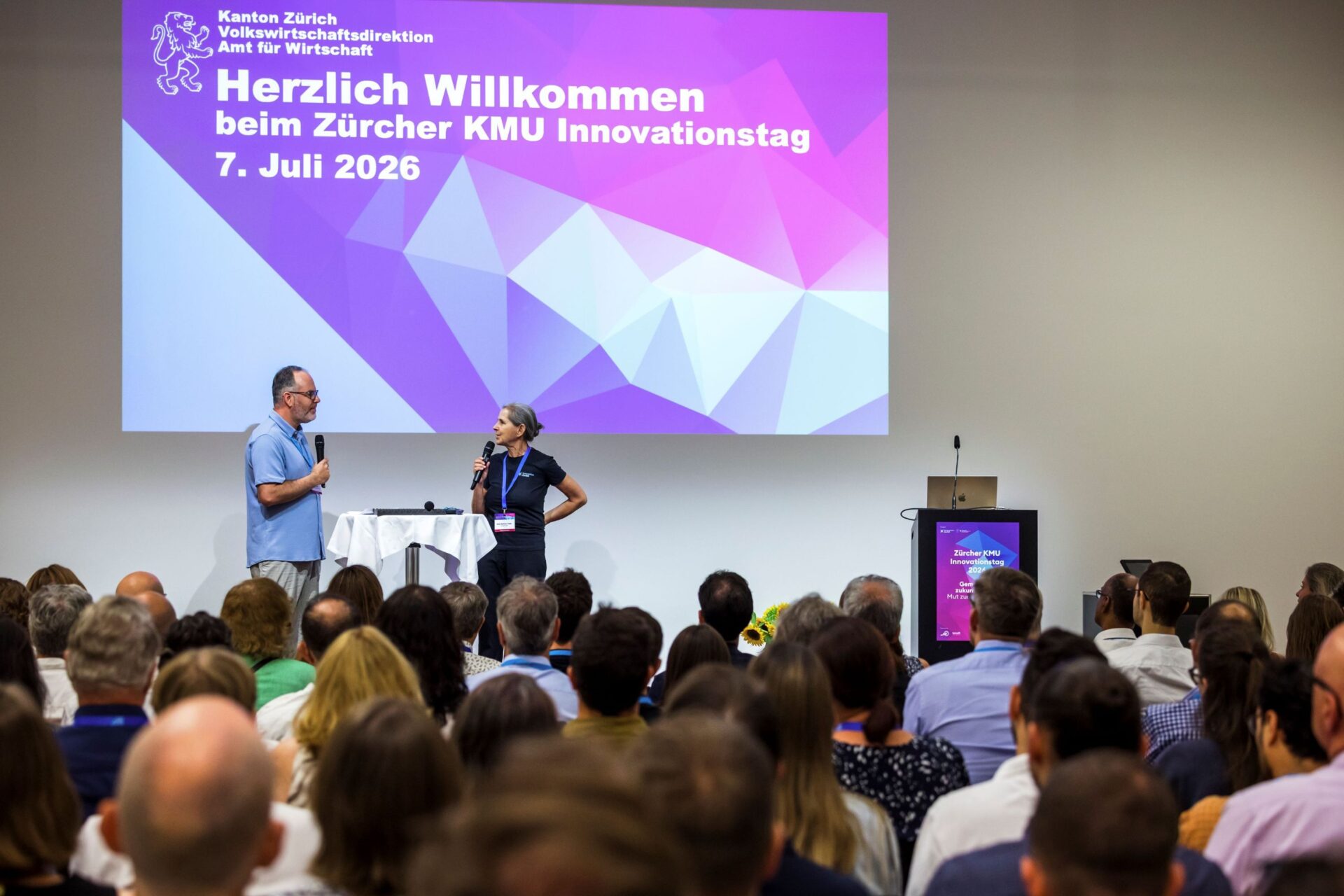
Presenter Stephan Lendi and Anita Martinecz Fehér from the Canton of Zurich’s Division of Business and Economic Development welcomed the participants to the Zurich SME Innovation Day 2026. Source: Alessandro Della Bella
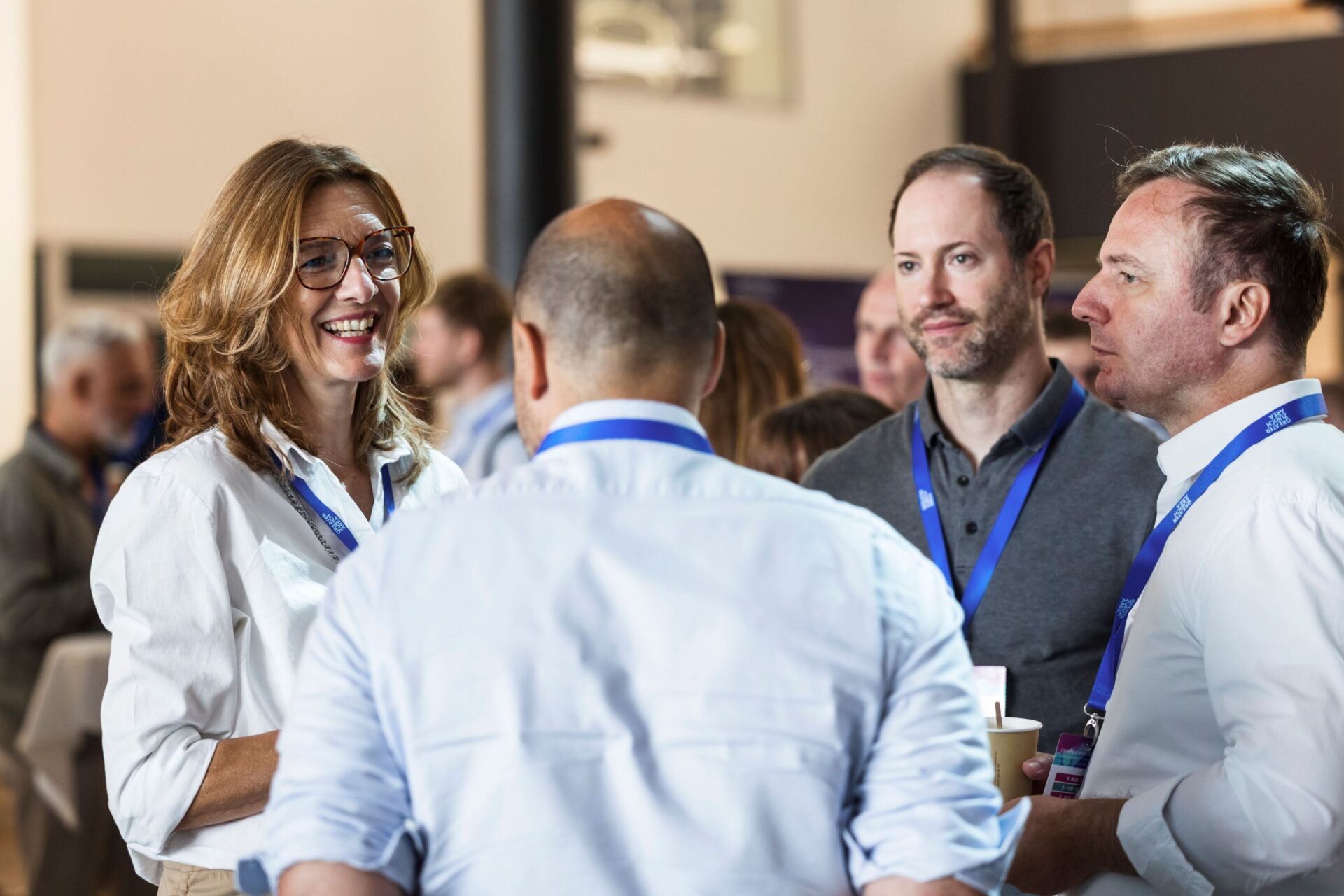
The Zürcher KMU Innovationstag offered participants plenty of opportunities for in-depth discussion. Source: Alessandro Della Bella
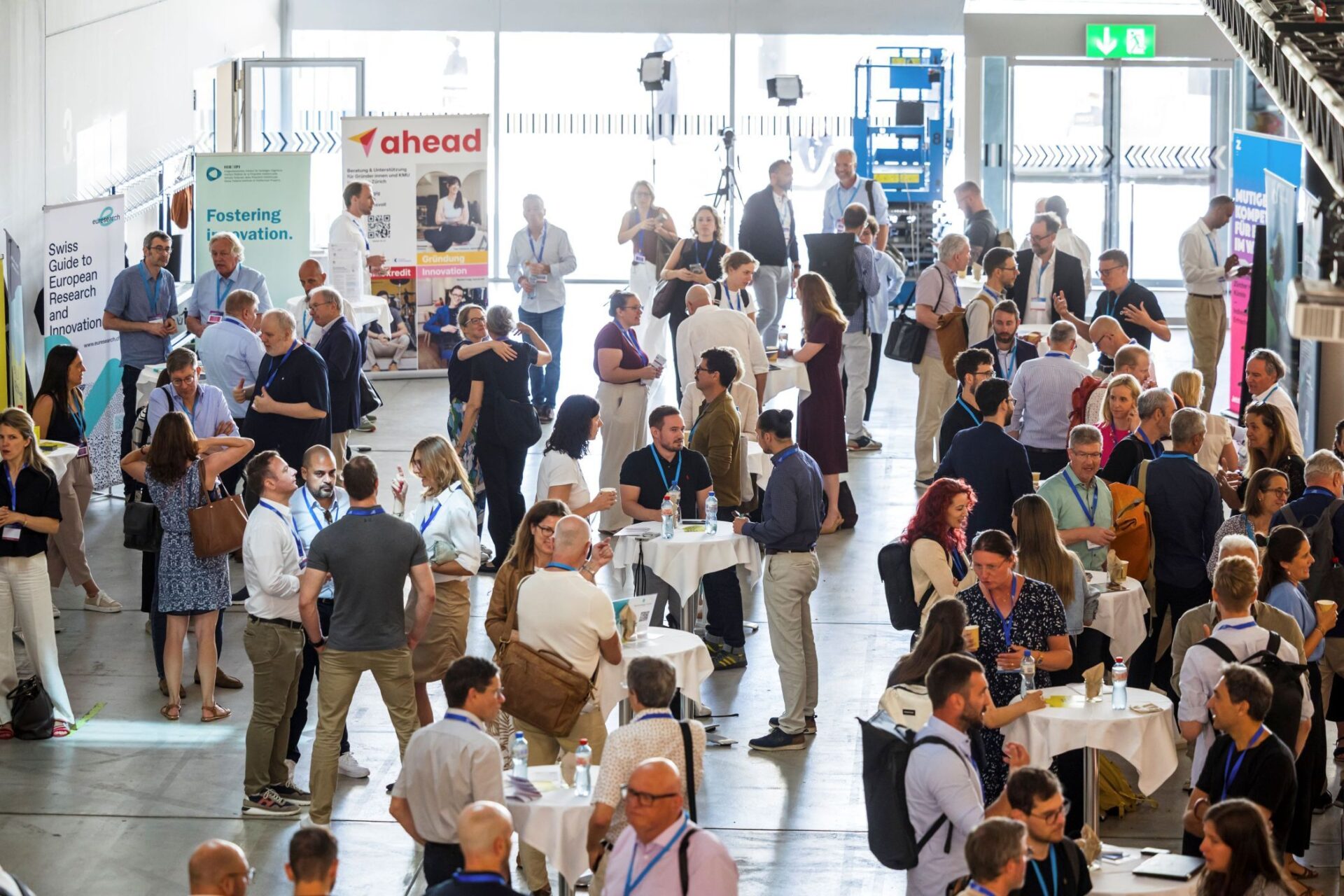
At the Zürcher KMU Innovationstag, the 220 participants exchanged ideas with one another in workshops and presentations. Source: Alessandro Della Bella
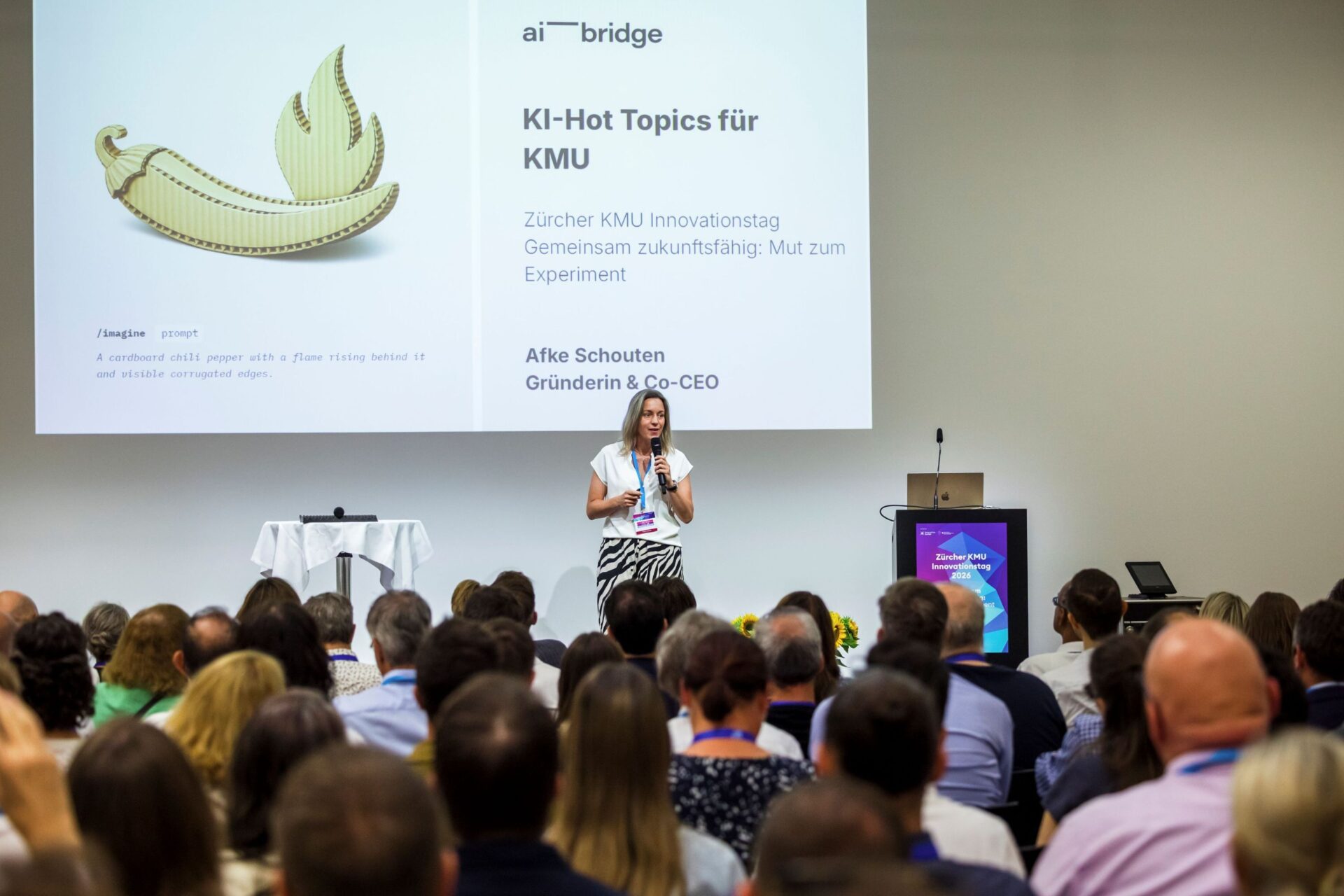
In her talk, Afke Schouten from AI Bridge spoke about ‘AI hot topics for SMEs’. Source: Alessandro Della Bella
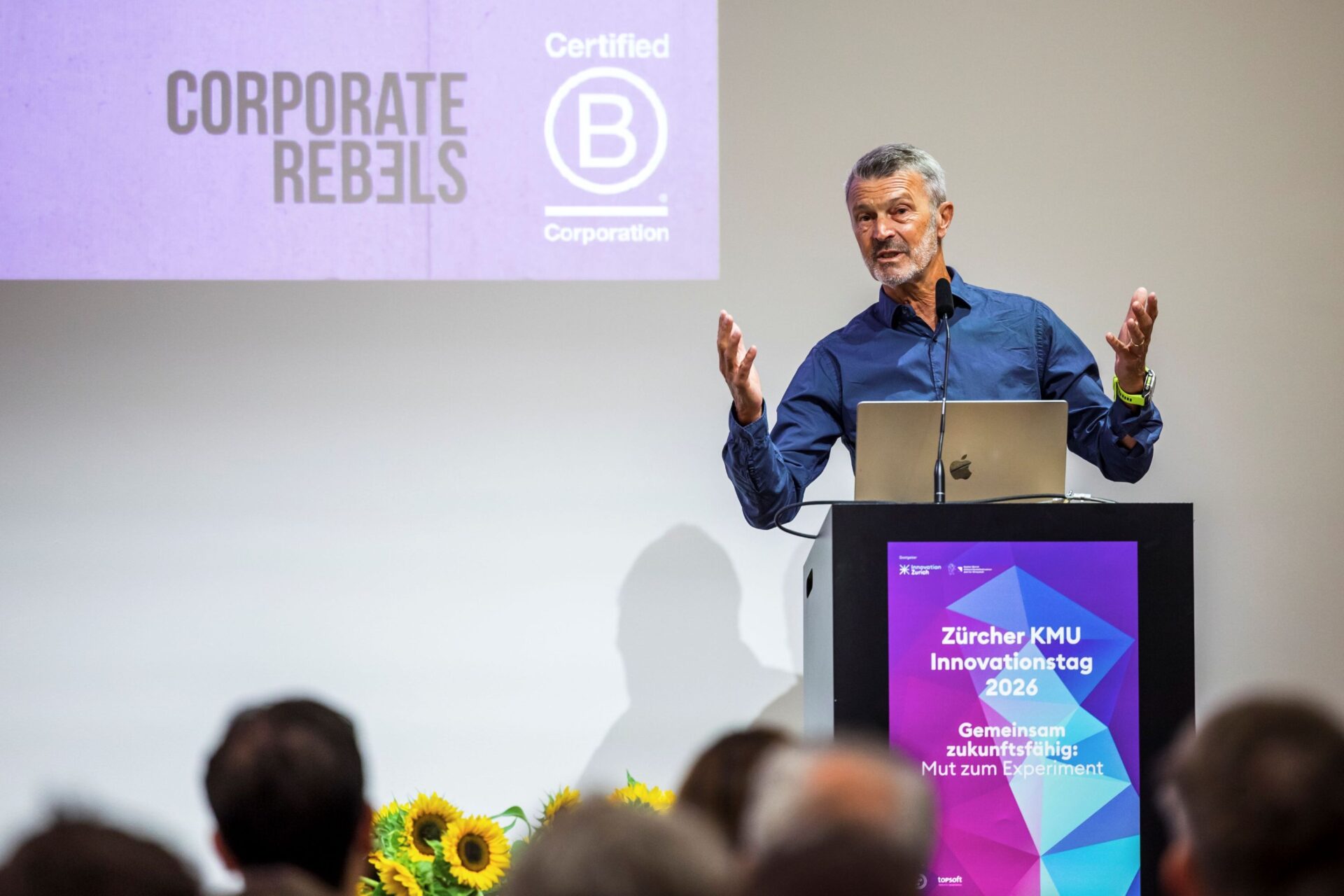
Bruno Schefer gave a talk on the topic of ‘Humancircularity as a principle of innovation and leadership for SMEs’. Source: Alessandro Della Bella
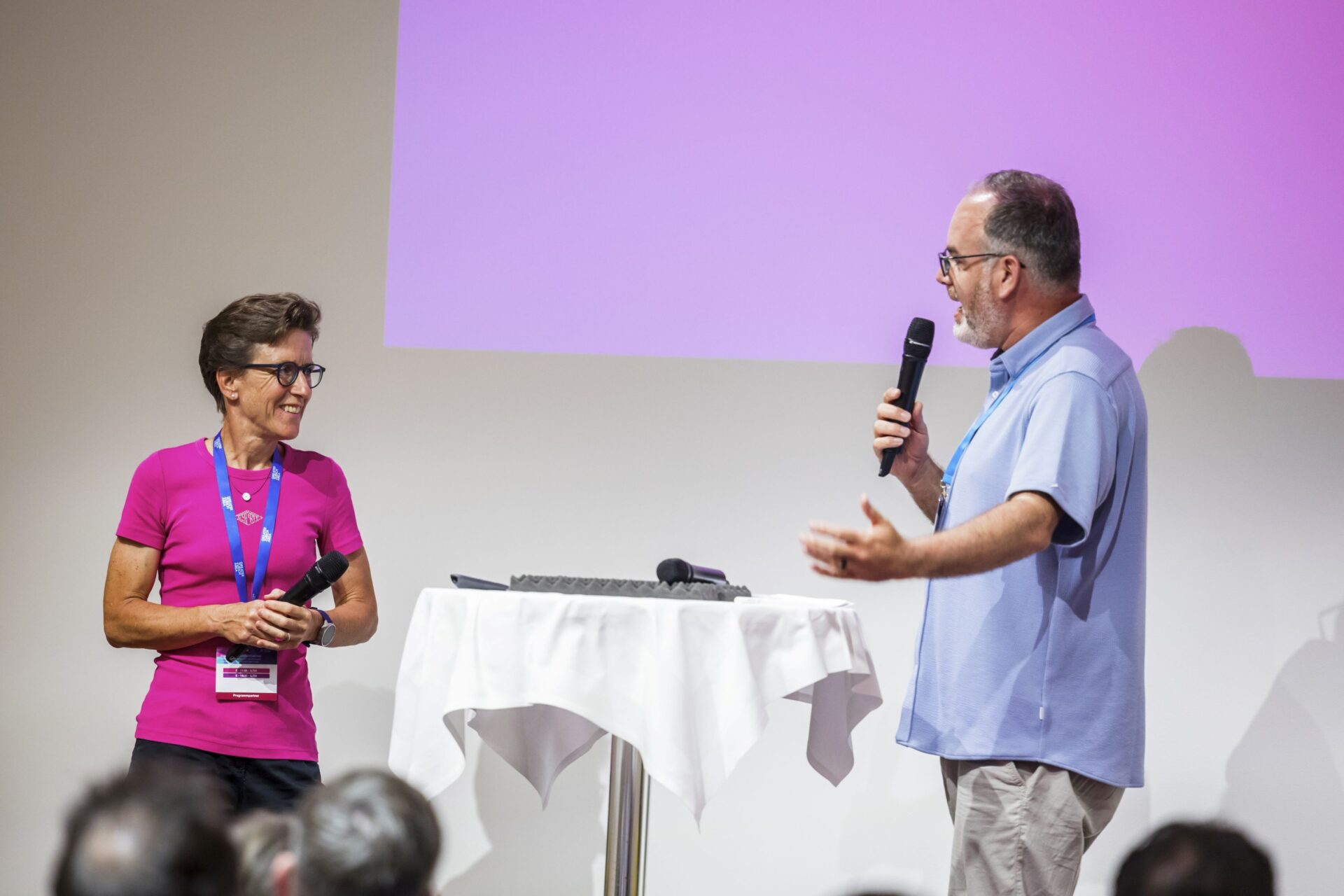
Presenter Stephan Lendi asked Claudia Schärer from SATW some questions about her talk on the topic ‘Is low-tech the new high-tech?’. Source: Alessandro Della Bella
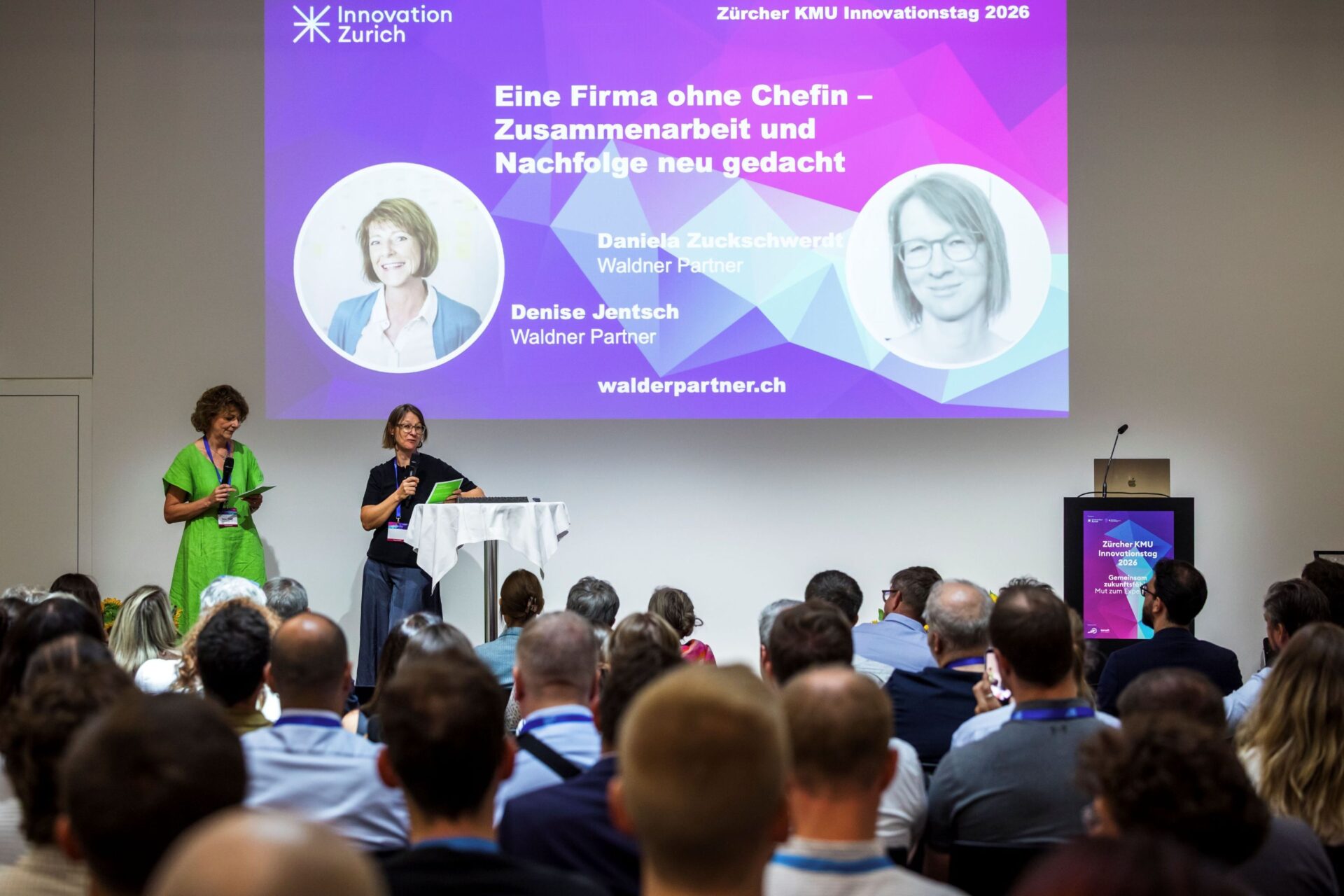
In their presentation, Denise Jentsch and Daniela Zuckschwerdt outlined solutions to the issue of succession. Source: Alessandro Della Bella
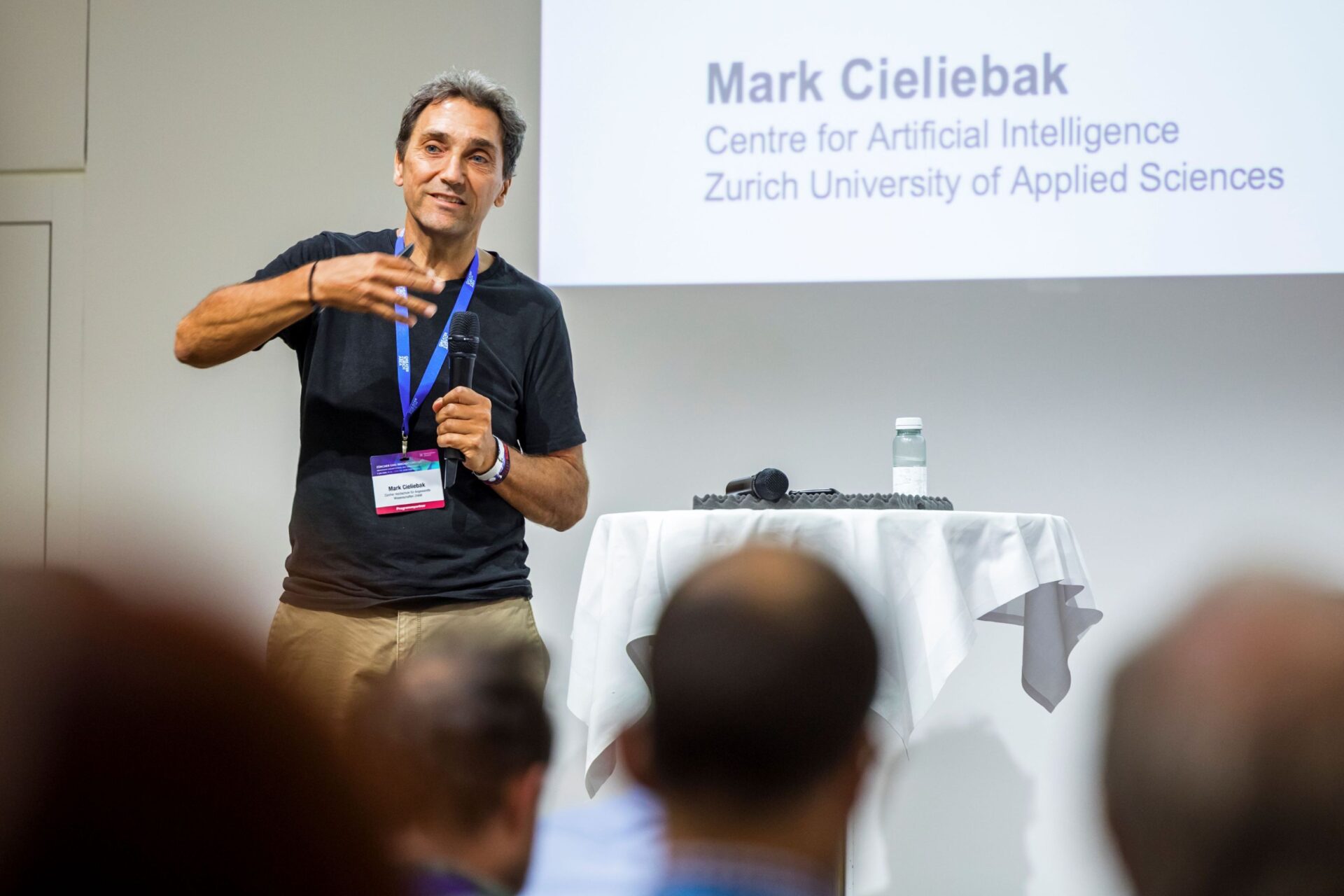
In his talk, Mark Cieliebak discussed language AI in practice. Source: Alessandro Della Bella
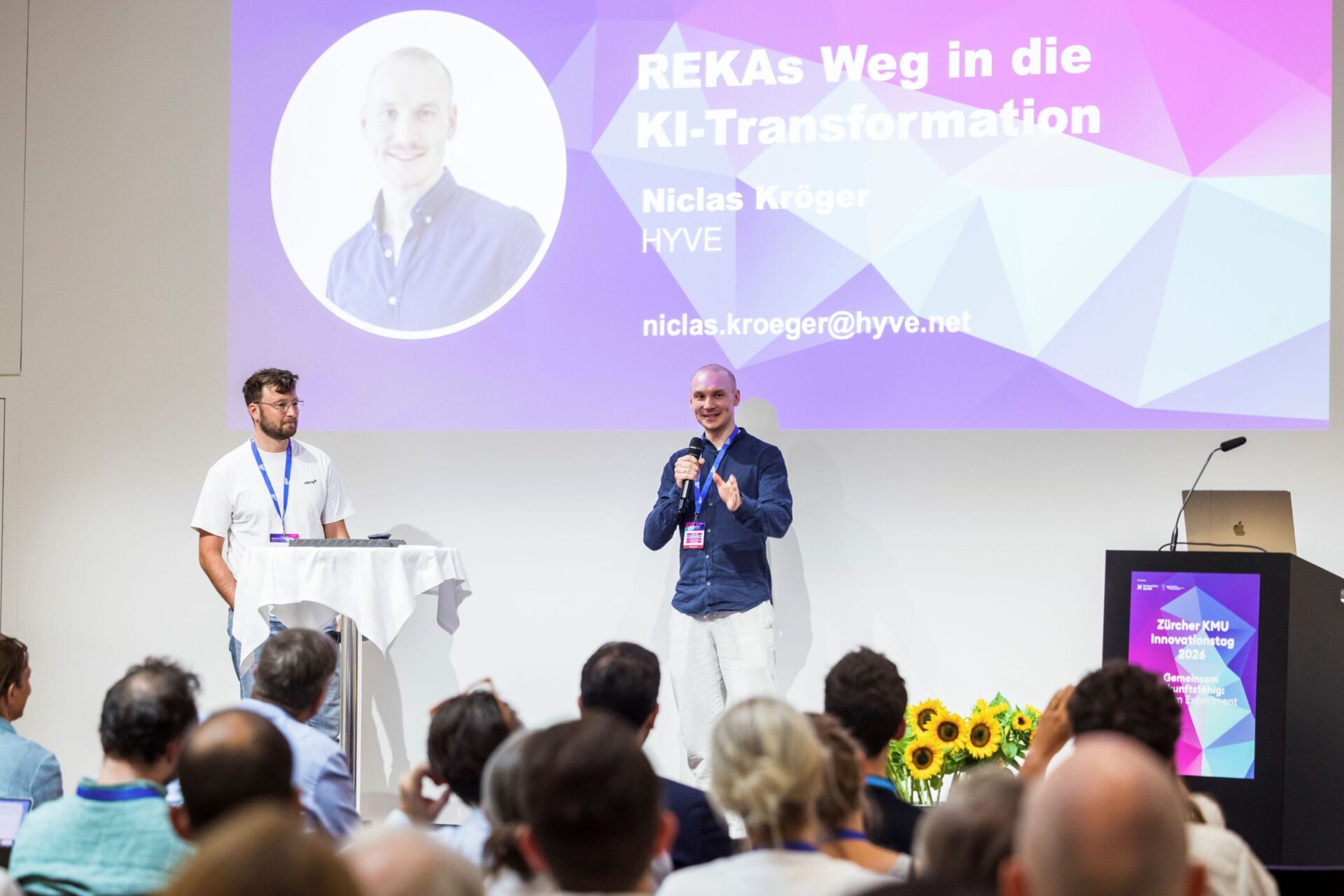
Niclas Kröger from HYVE gave a presentation on the topic ‘REKA’s Path to AI Transformation’. Source: Alessandro Della Bell
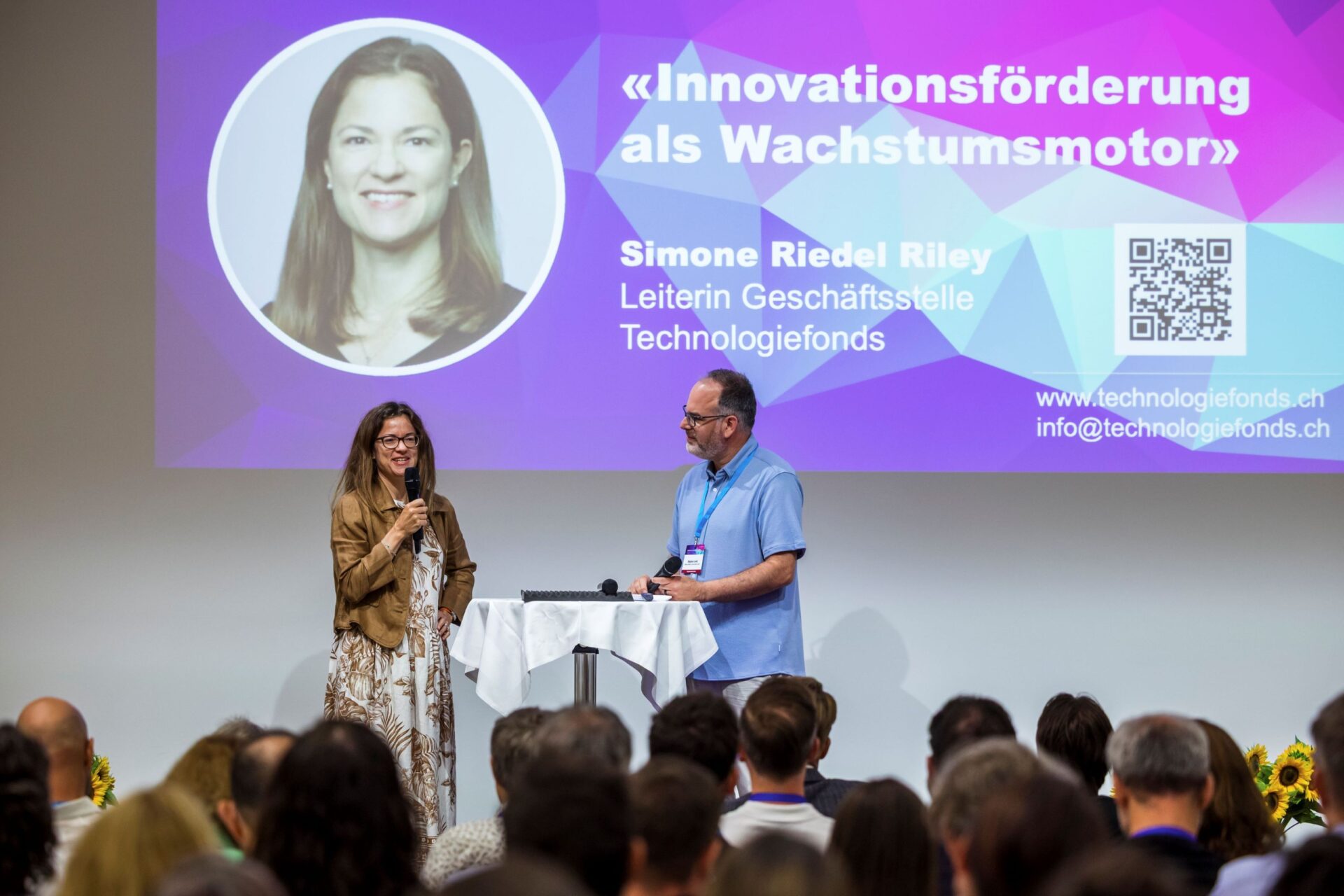
Simone Riedel Riley and presenter Stephan Lendi spoke about her presentation on ‘Promoting innovation as a driver of growth’. Source: Alessandro Della Bella
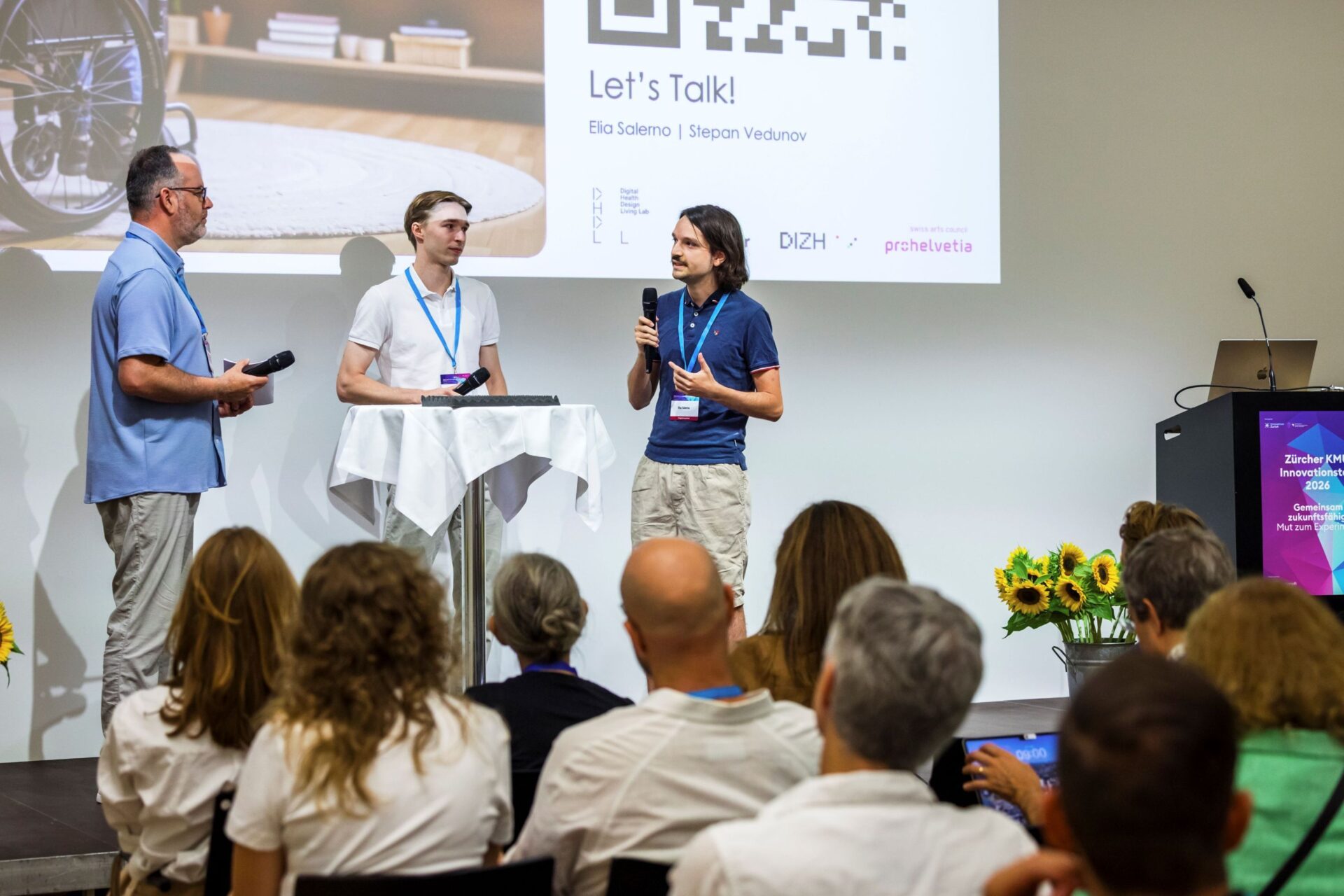
The presenter, Stephan Lendi, asked Stepan Vedunov and Elia Salerno (both from Kymu) questions about their presentation (from left to right). Source: Alessandro Della Bella
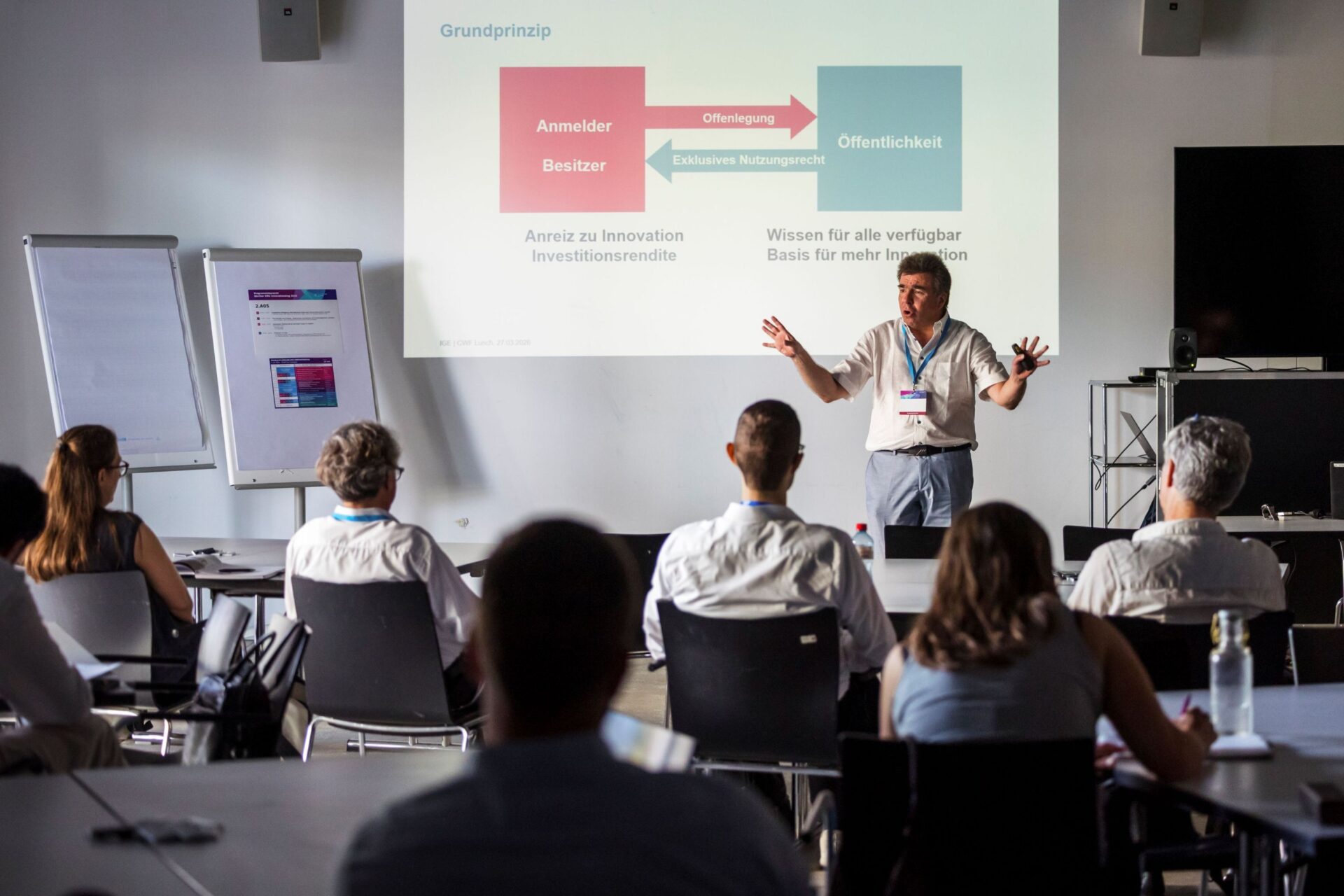
During the workshop entitled ‘Competitive Intelligence: What public data reveals about your competitors’, participants listened to a fascinating presentation by the Swiss Federal Institute of Intellectual Property. Source: Alessandro Della Bella
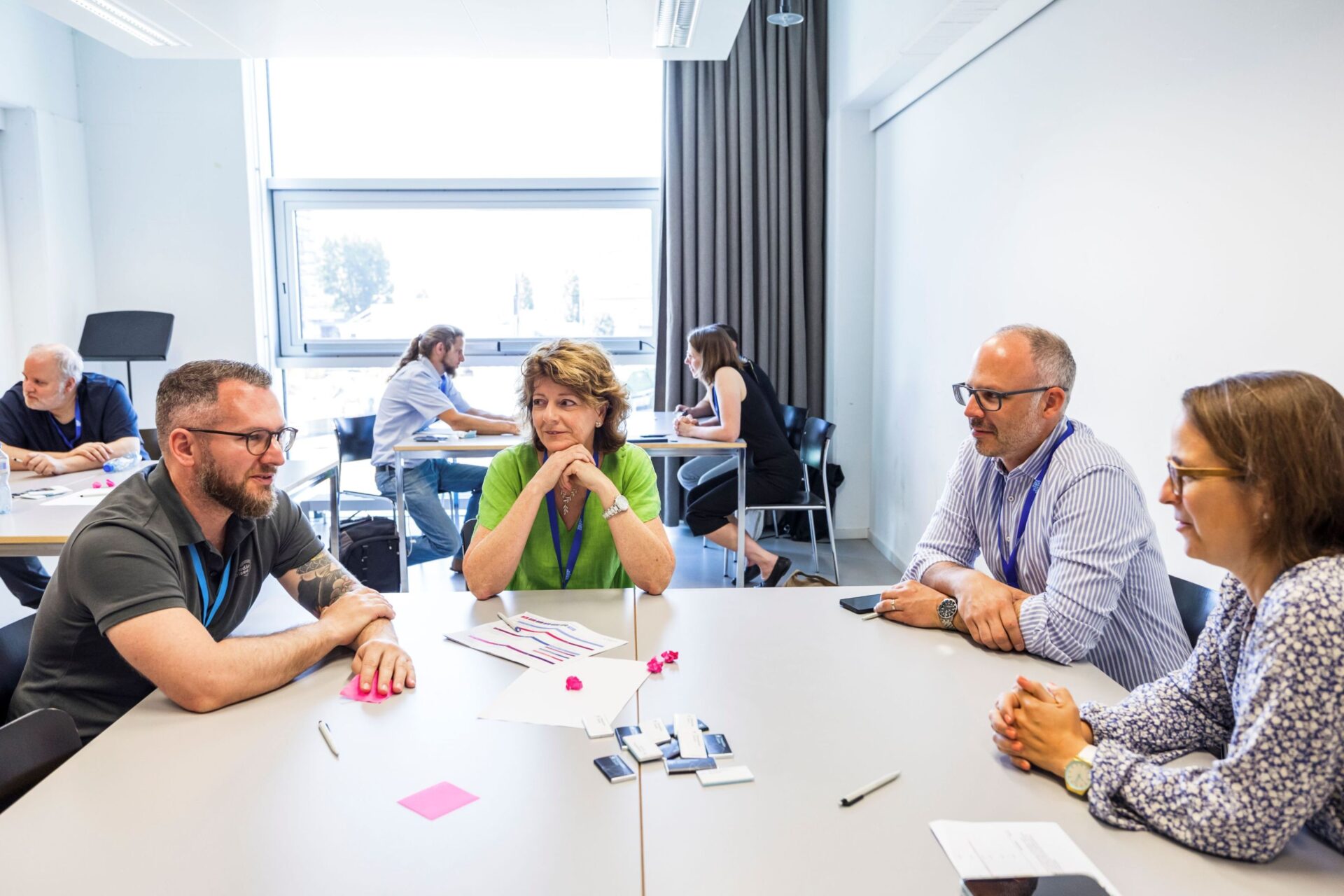
Participants were able to work together in workshops covering a variety of topics. Source: Alessandro Della Bella
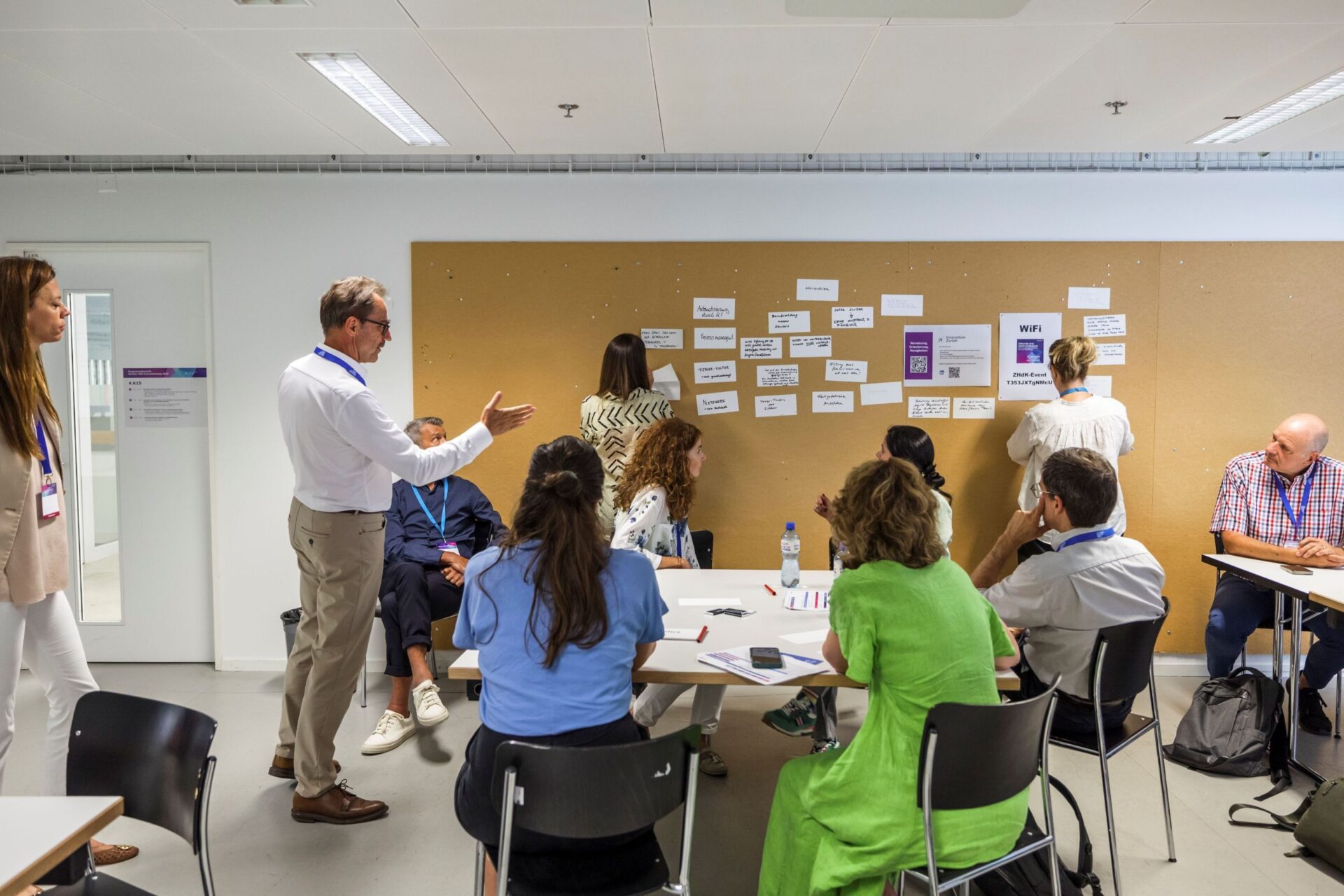
In the workshop ‘Launching Innovation, Securing Support’, the participants worked on ideas together. Source: Alessandro Della Bella
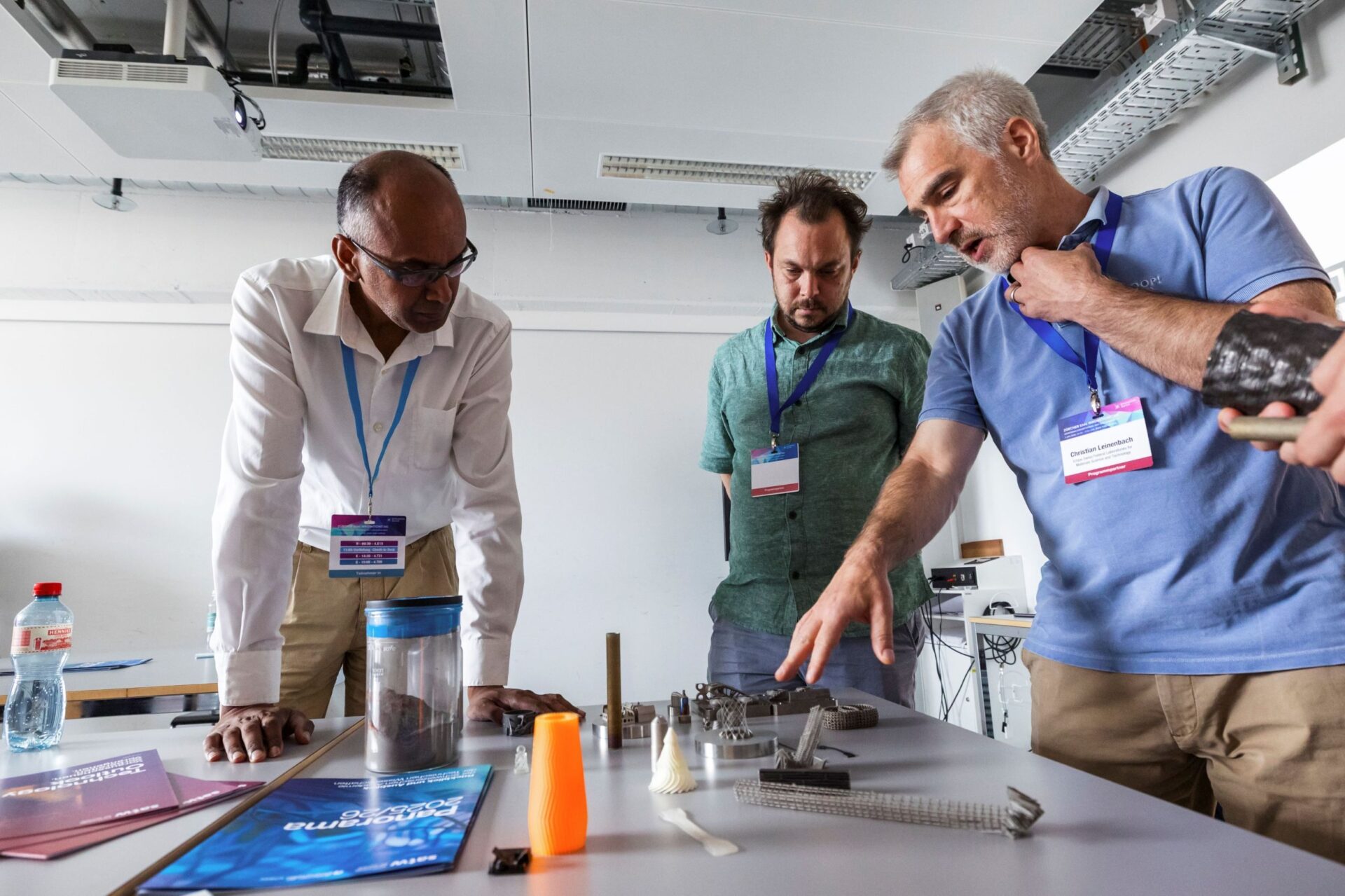
Using items produced by a 3D printer, the participants discussed the potential of industrial 3D printing in the workshop of the same name. Source: Alessandro Della Bella
You need to load content from reCAPTCHA to submit the form. Please note that doing so will share data with third-party providers.
More InformationYou are currently viewing a placeholder content from Turnstile. To access the actual content, click the button below. Please note that doing so will share data with third-party providers.
More InformationYou are currently viewing a placeholder content from Vimeo. To access the actual content, click the button below. Please note that doing so will share data with third-party providers.
More InformationYou are currently viewing a placeholder content from YouTube. To access the actual content, click the button below. Please note that doing so will share data with third-party providers.
More InformationYou need to load content from reCAPTCHA to submit the form. Please note that doing so will share data with third-party providers.
More Information